№ 06 · July–August 2025 · Botswana
Okavango Delta.
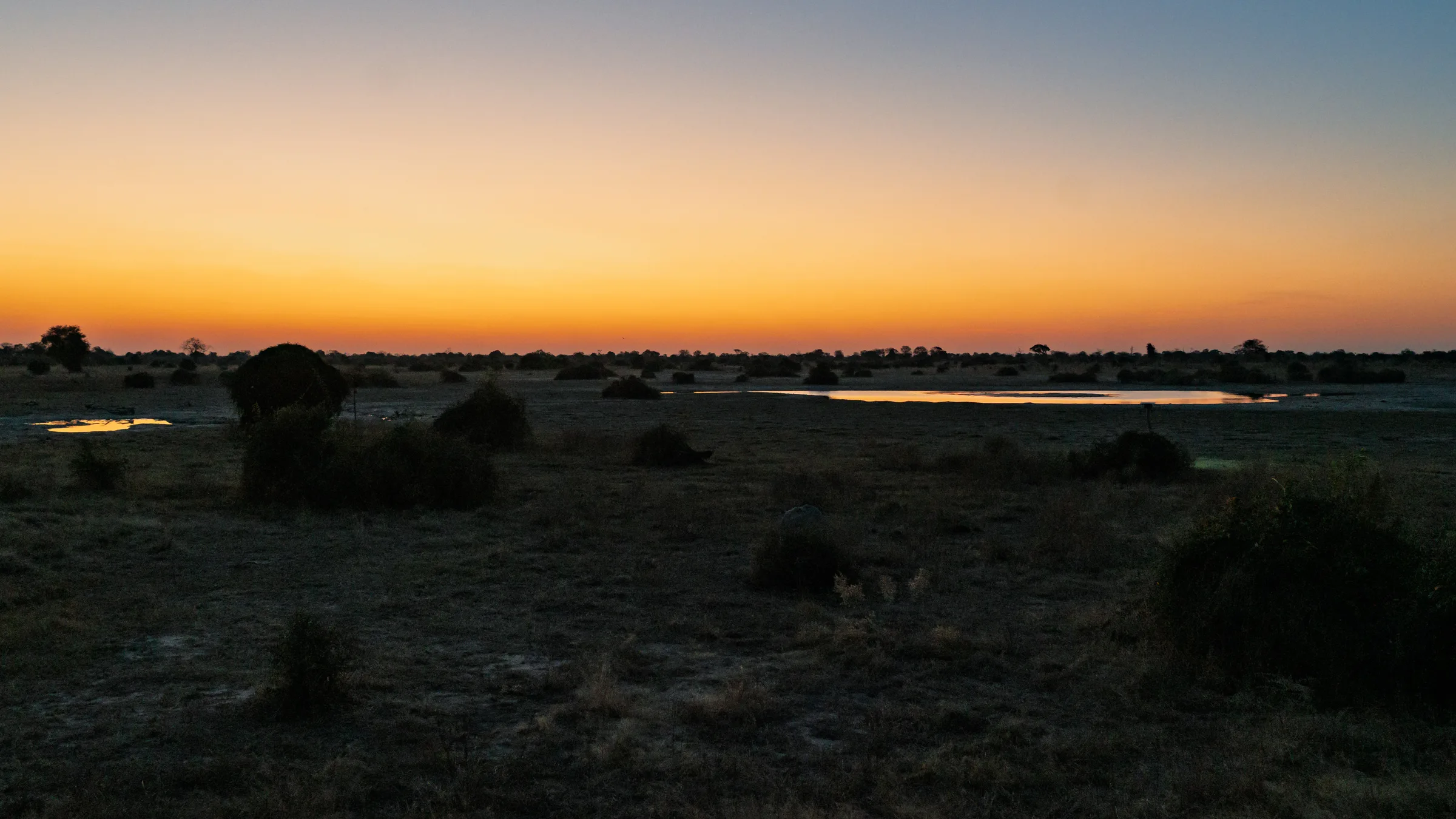
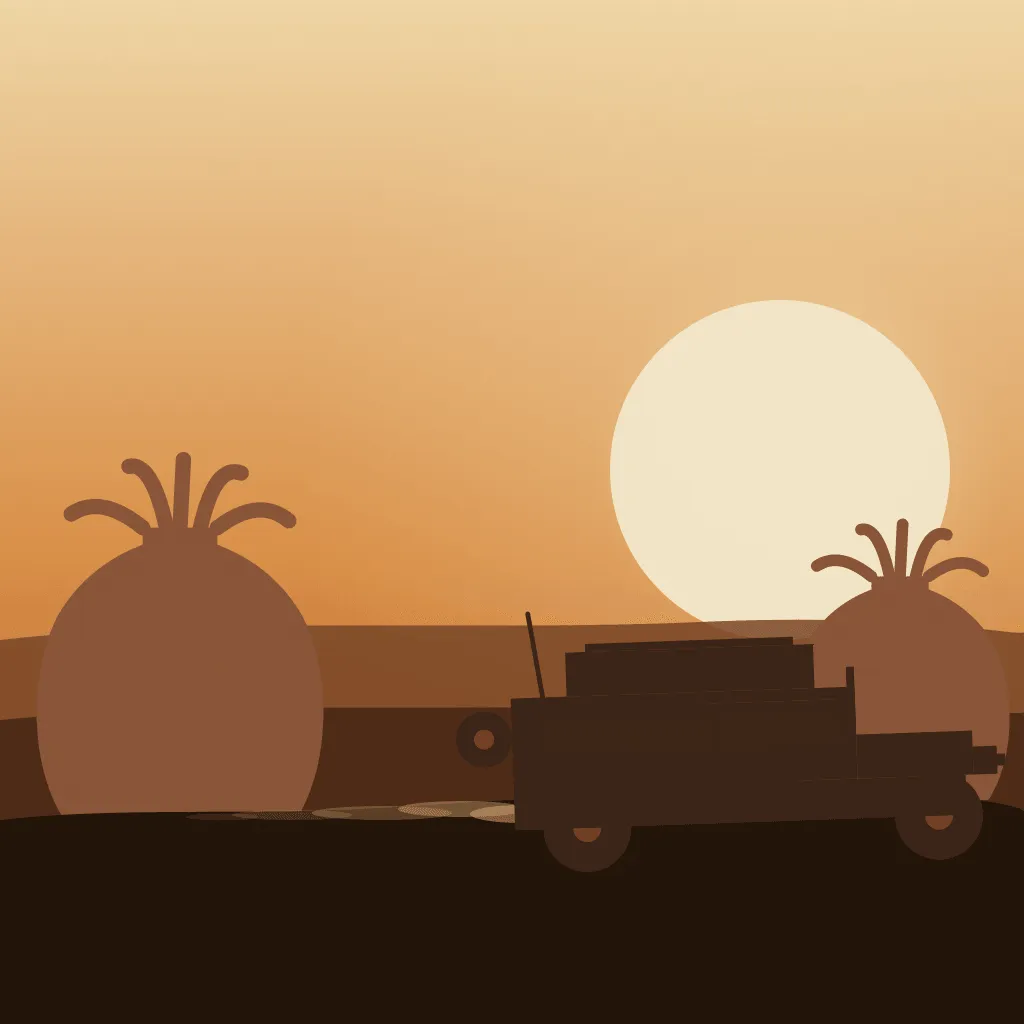
A week-long trip into the Okavango Delta — wetland safari on a mokoro, lions at dawn, and endless plains painted by the setting sun.
The Okavango — a river that never found the sea
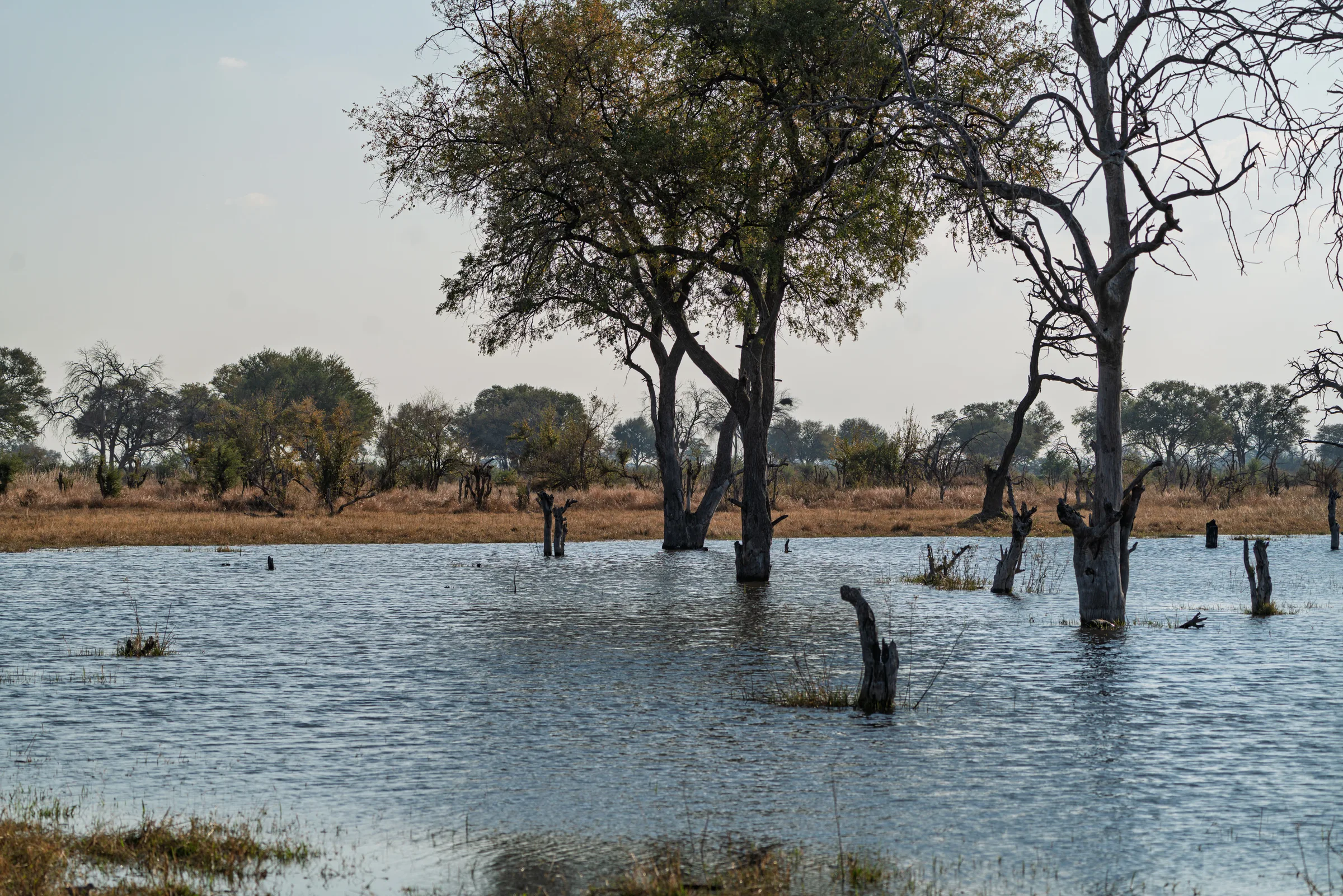
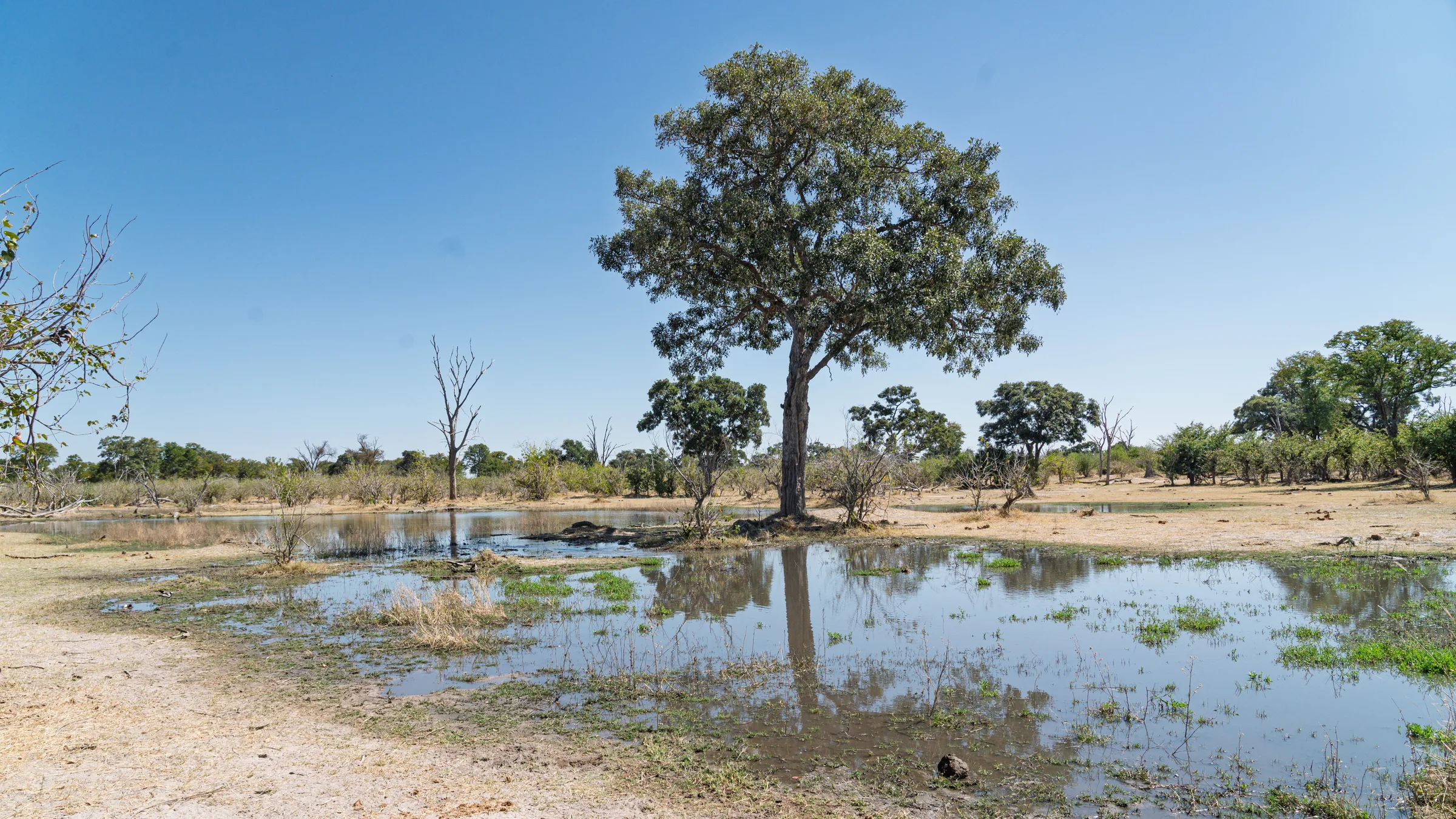
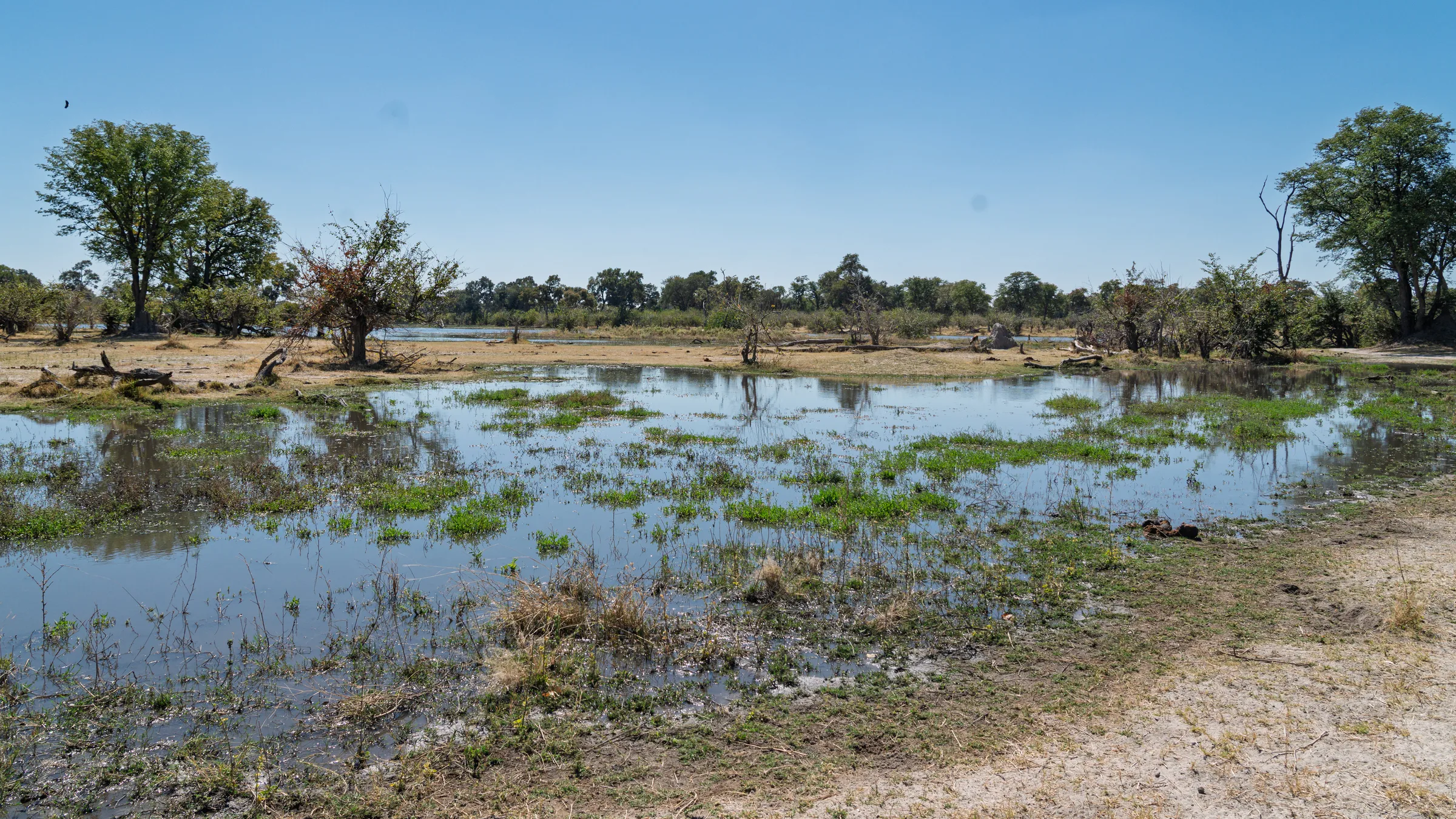
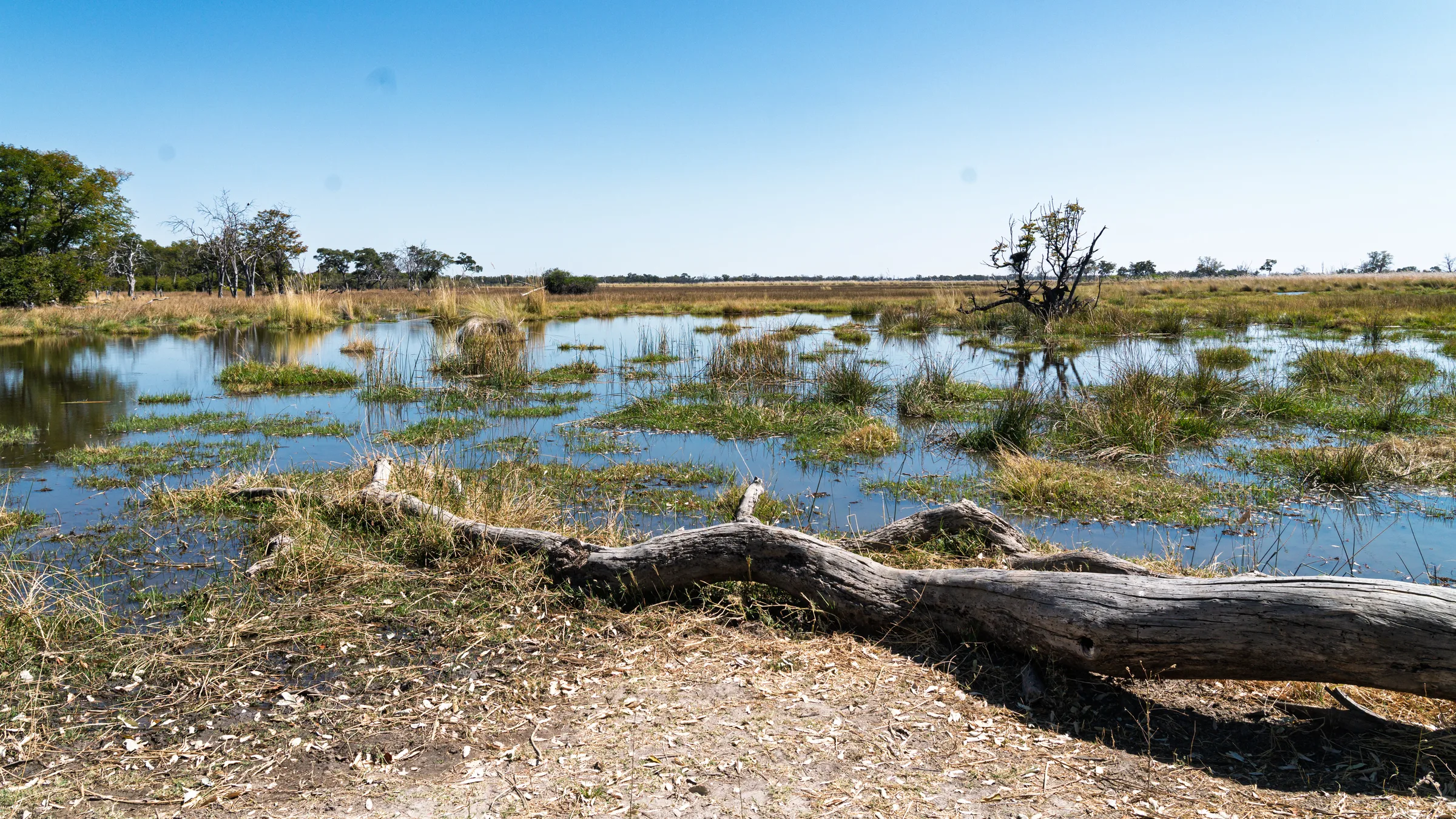
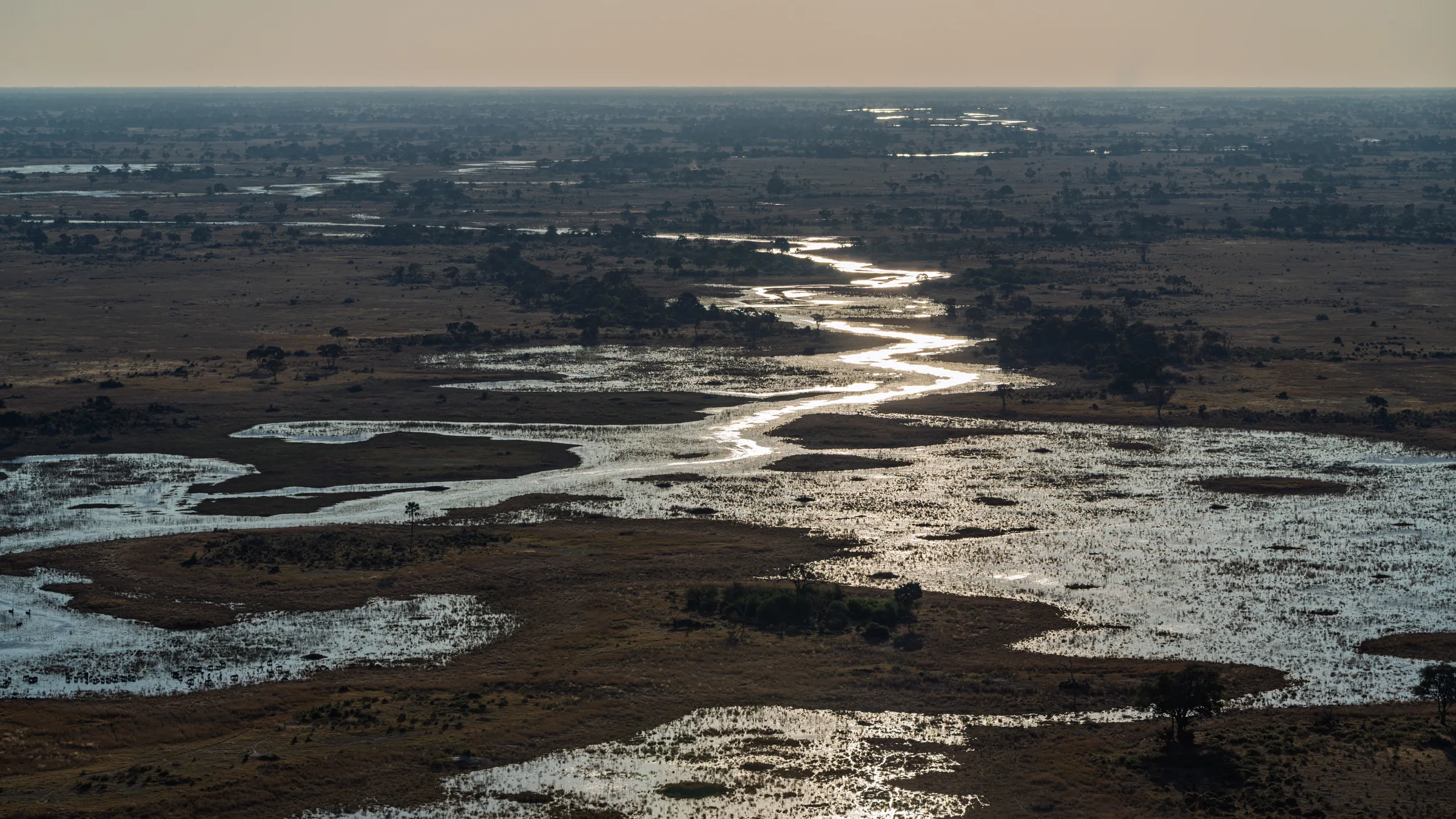
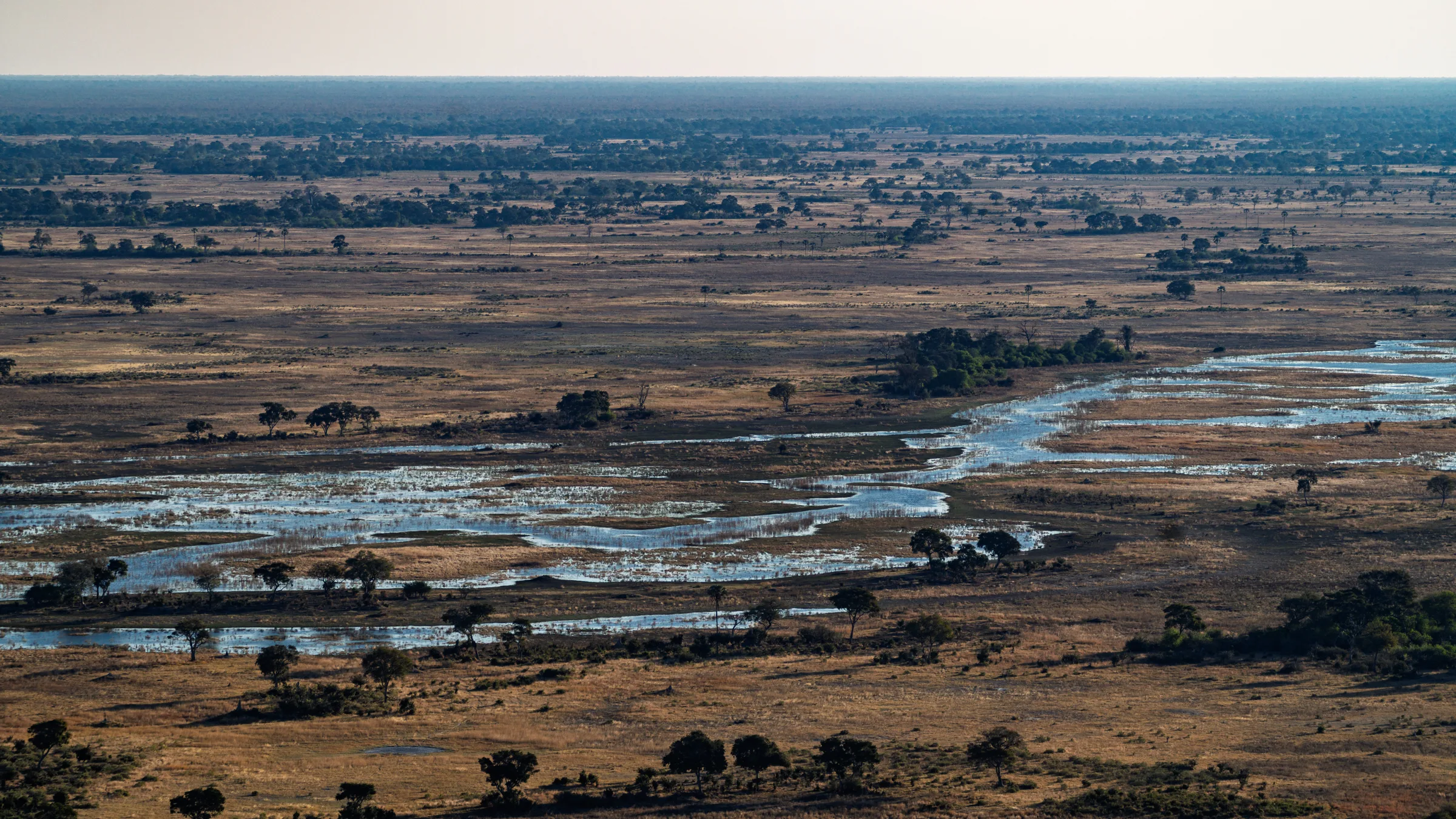
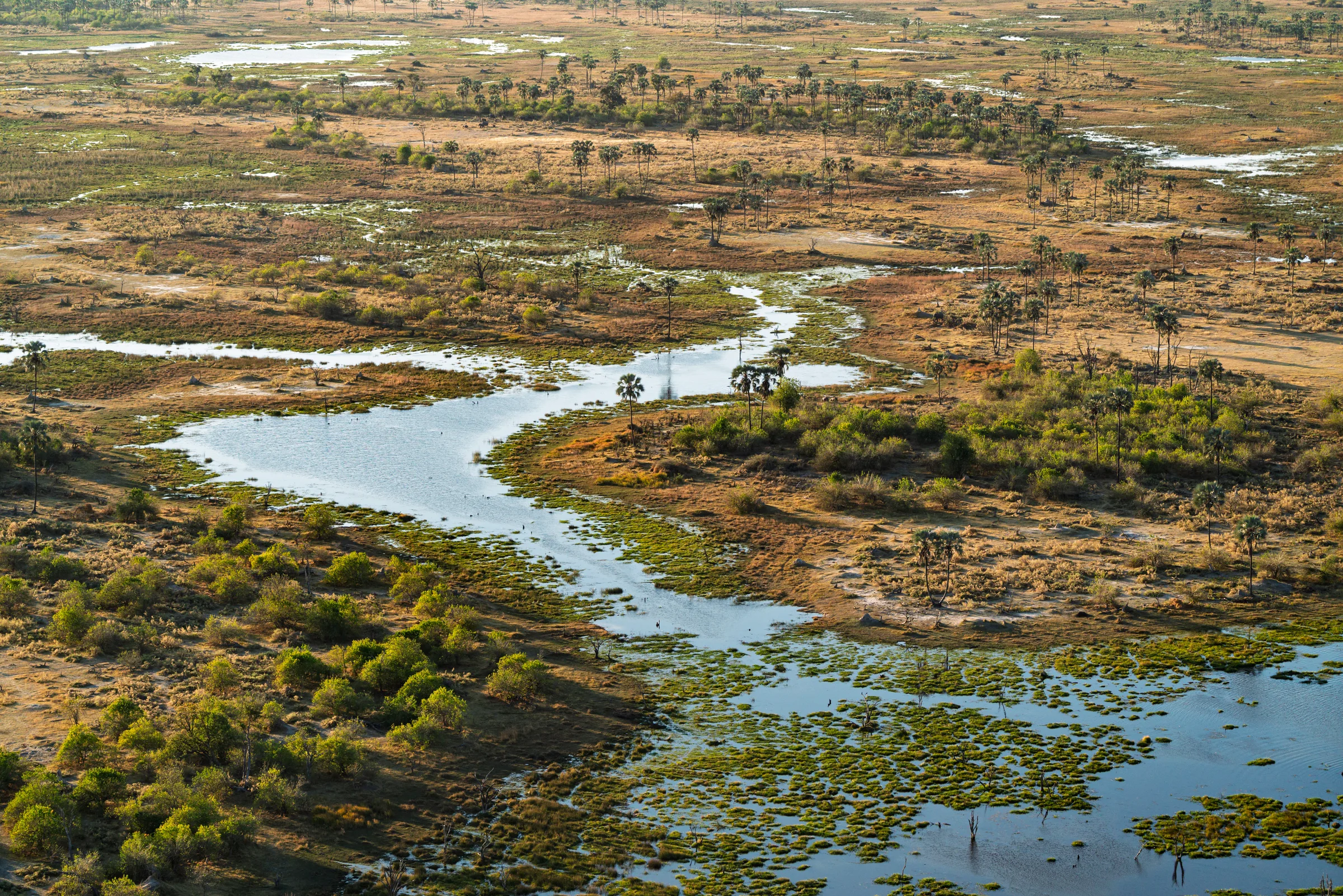
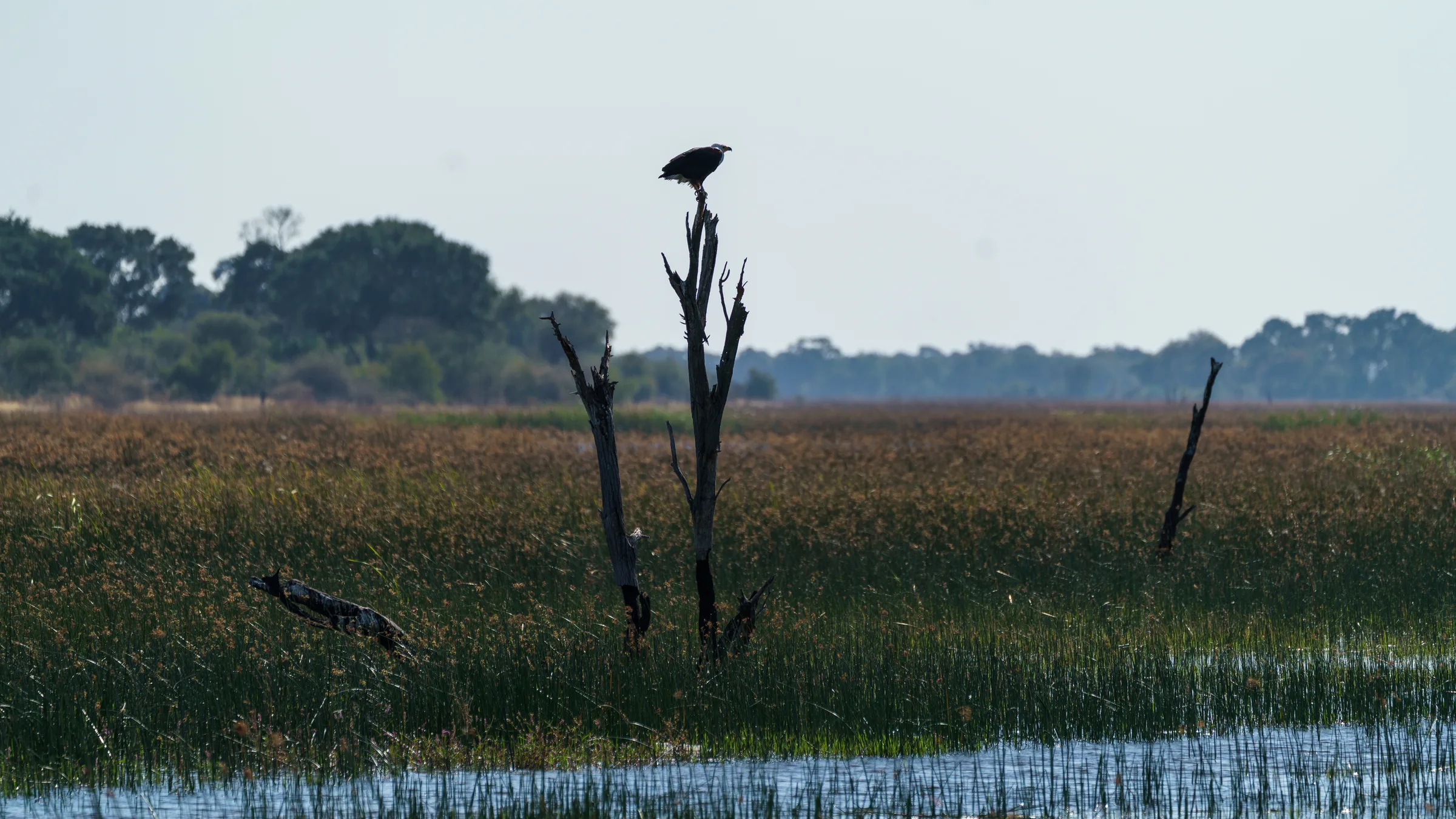
Most rivers end in an ocean. The Okavango, after nearly twelve hundred kilometres from the Angolan highlands, flows into the Kalahari and disappears — it evaporates, spreads out like fingers in the sand, feeds a labyrinth of papyrus and water. What forms is the world’s largest inland delta: fifteen thousand square kilometres of wetland in the middle of one of Africa’s driest regions.
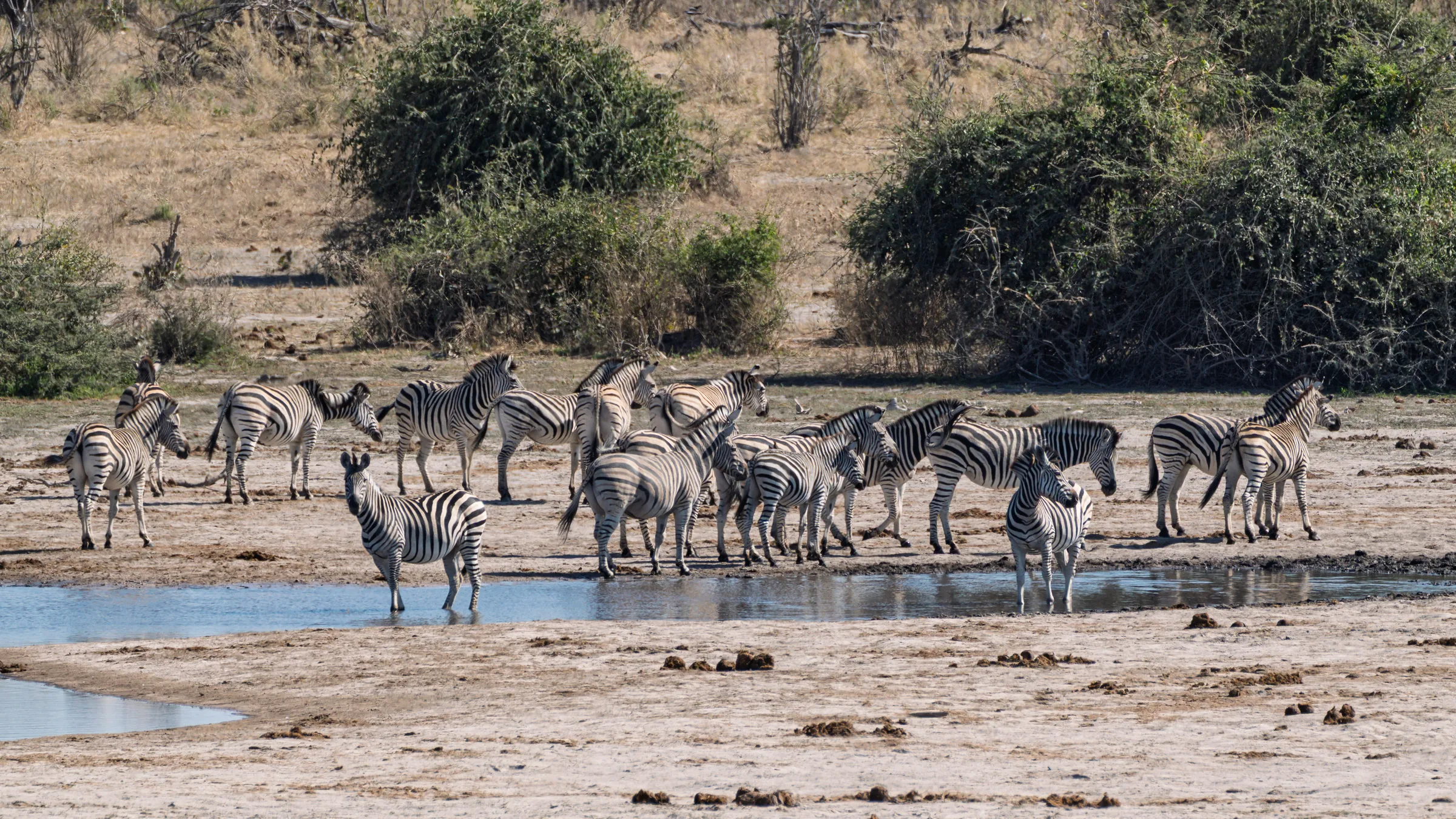
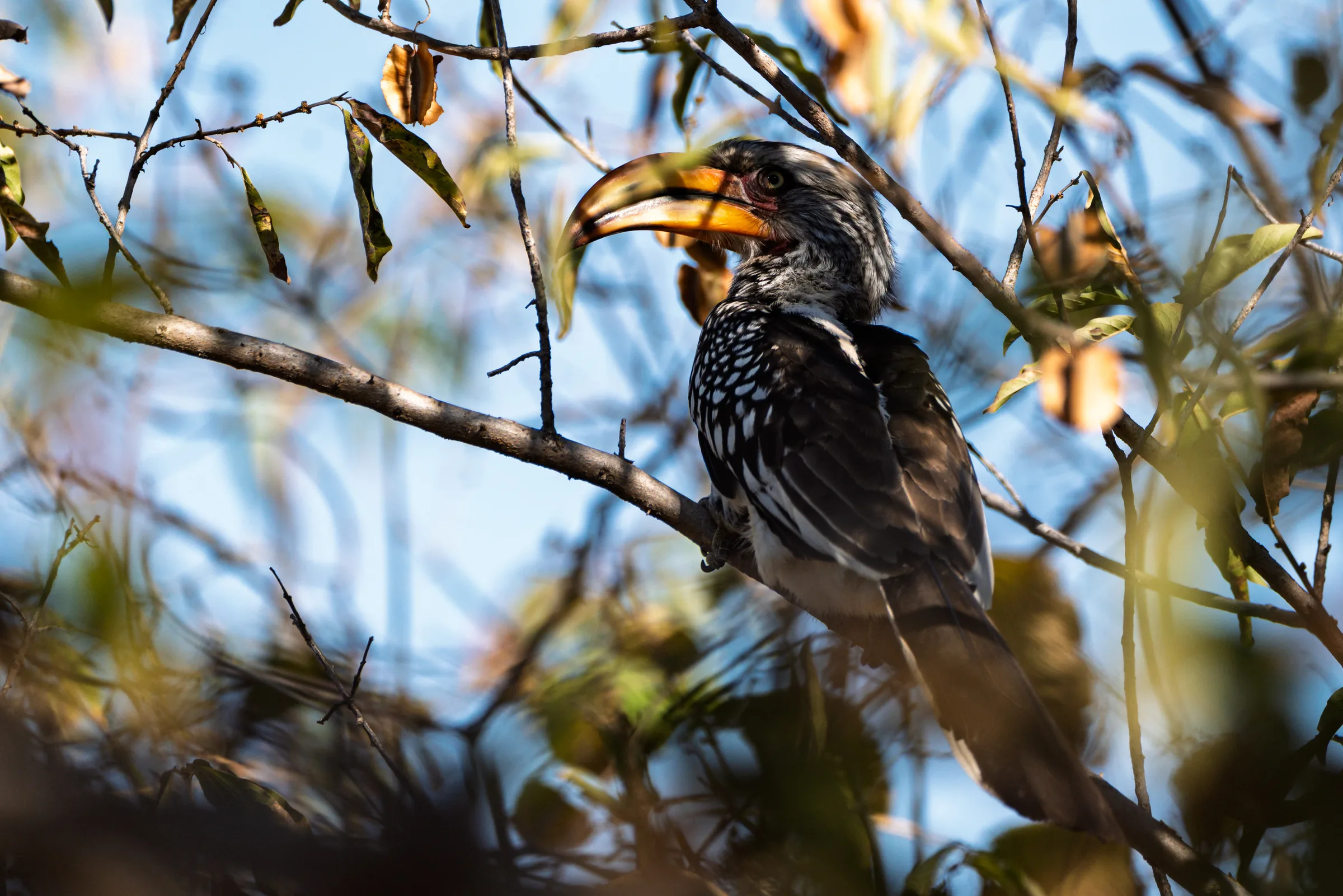
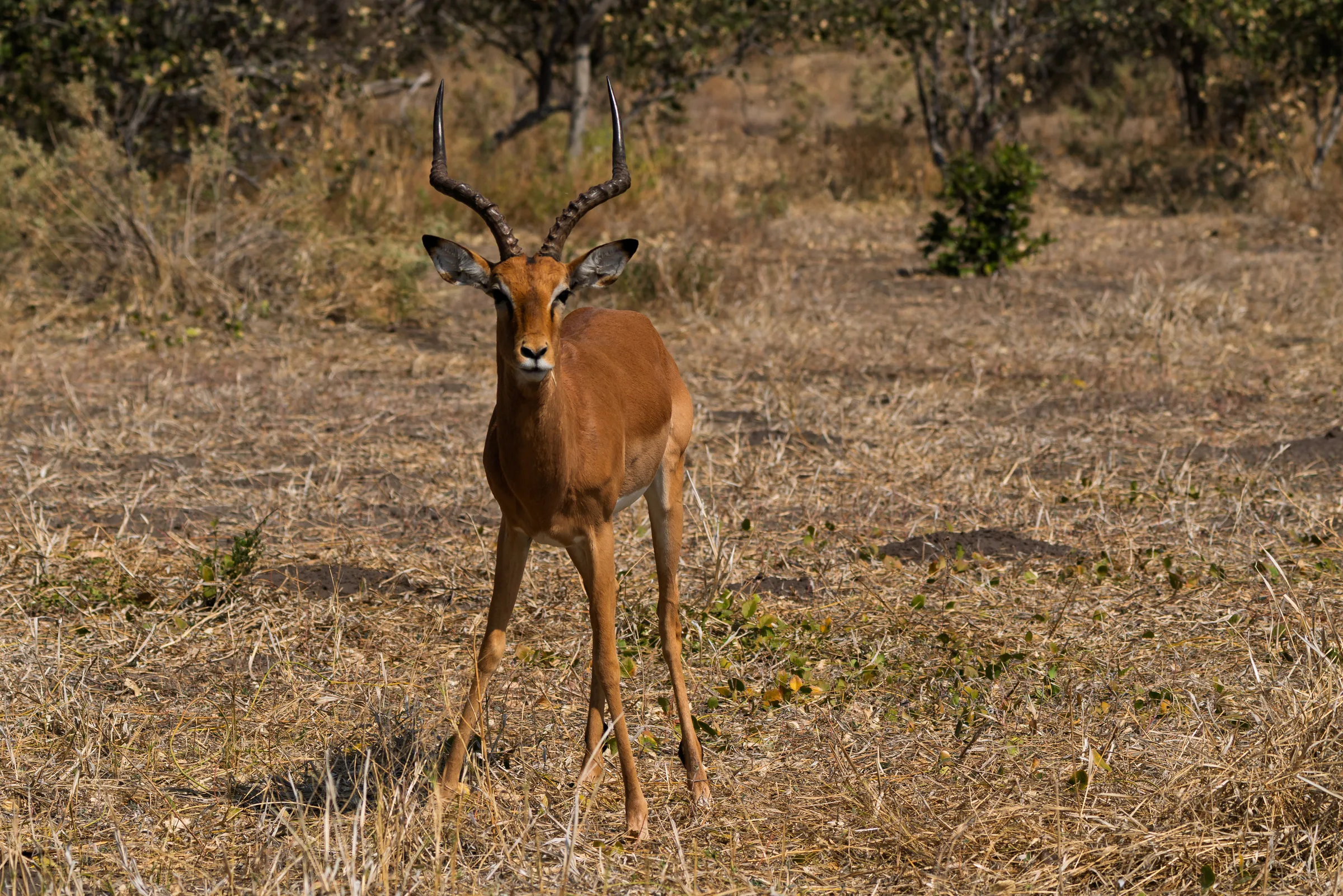
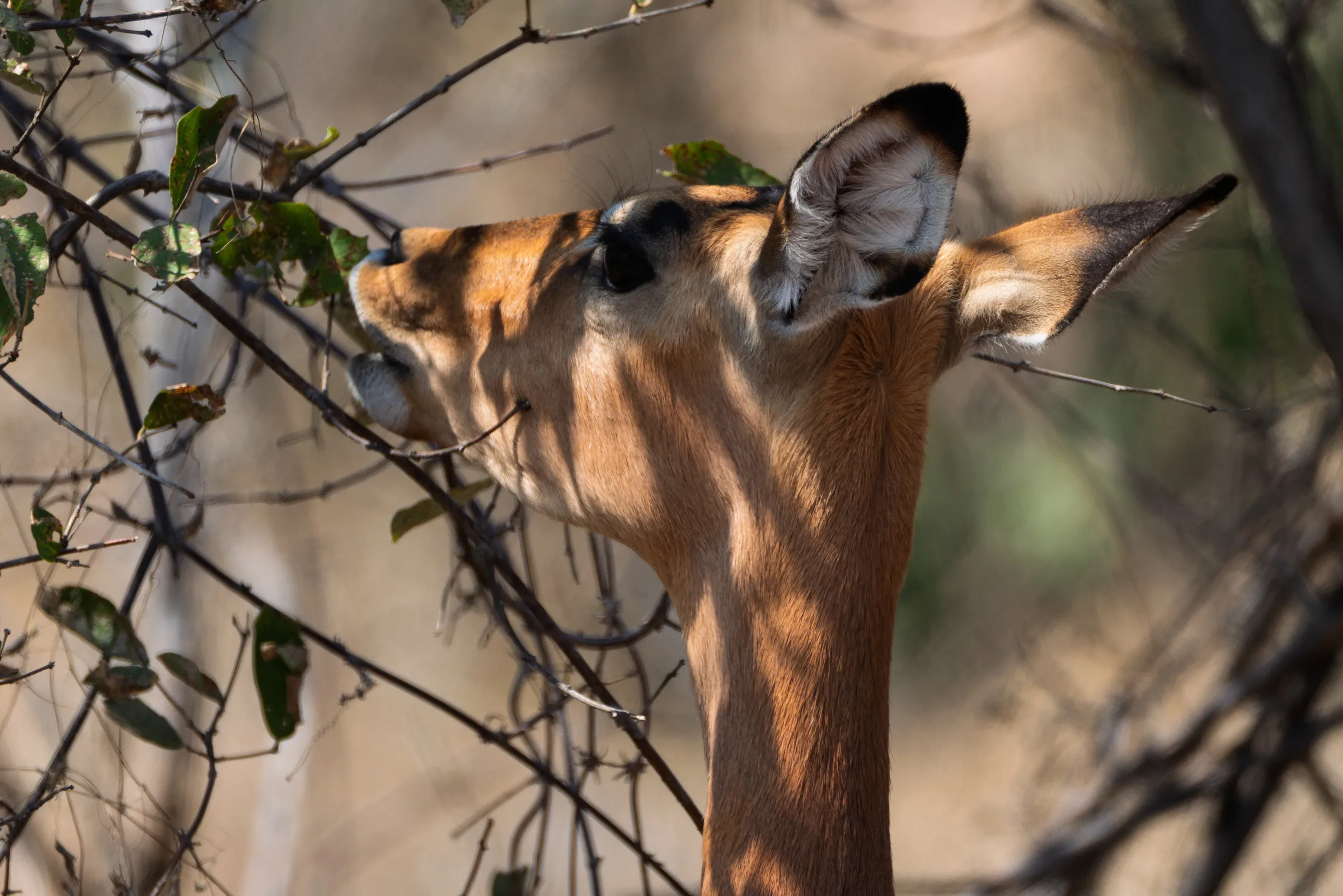
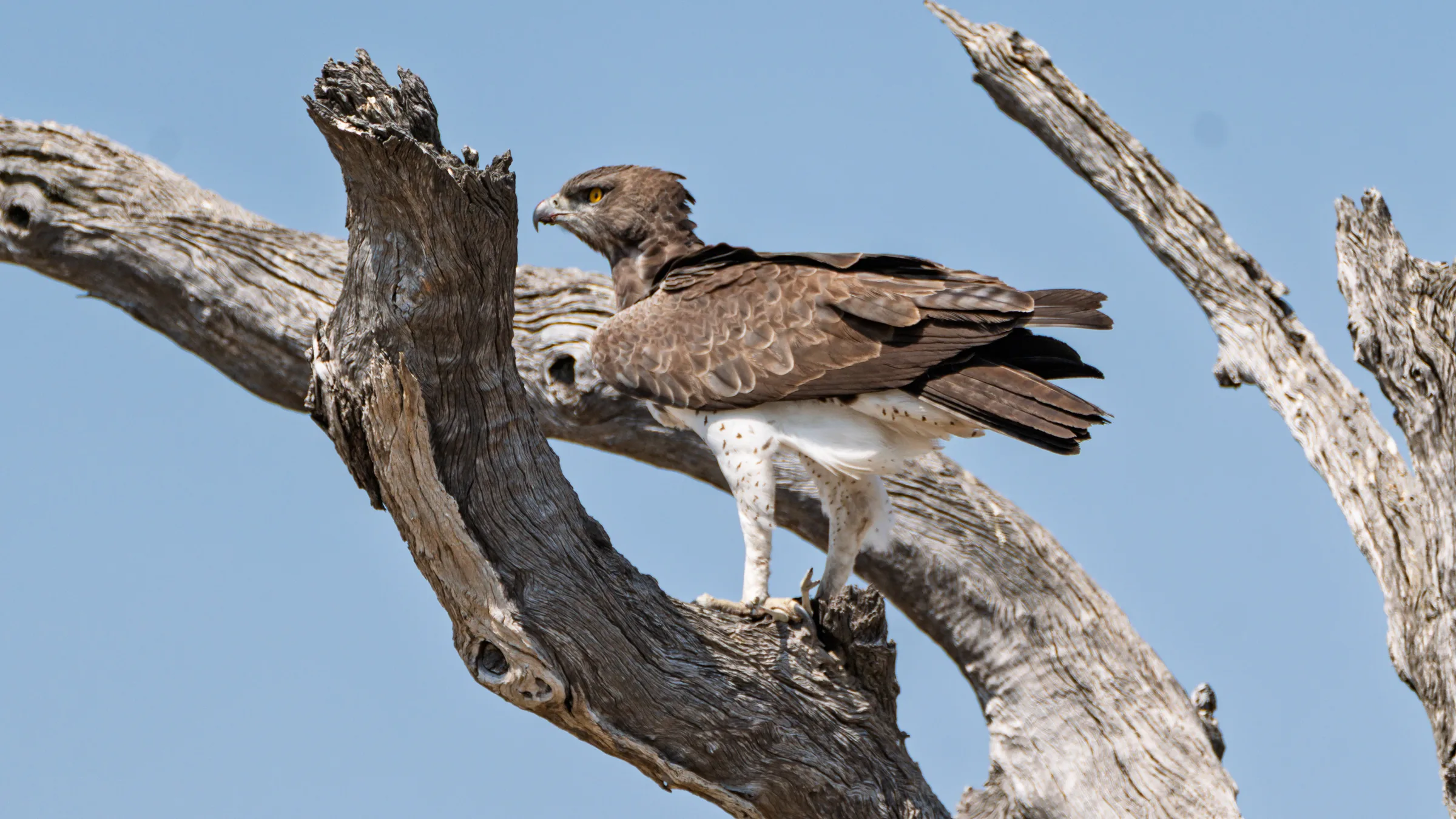
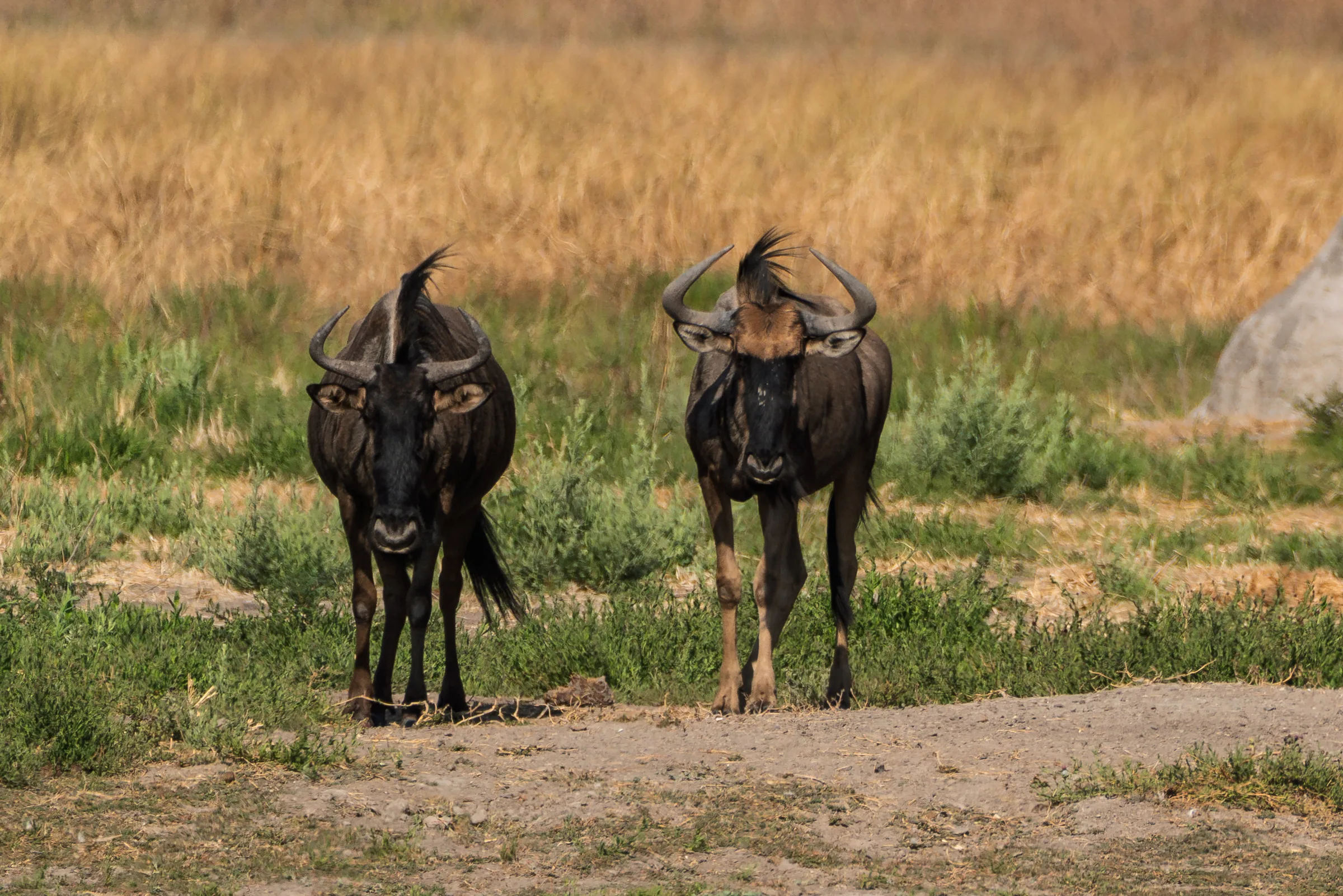
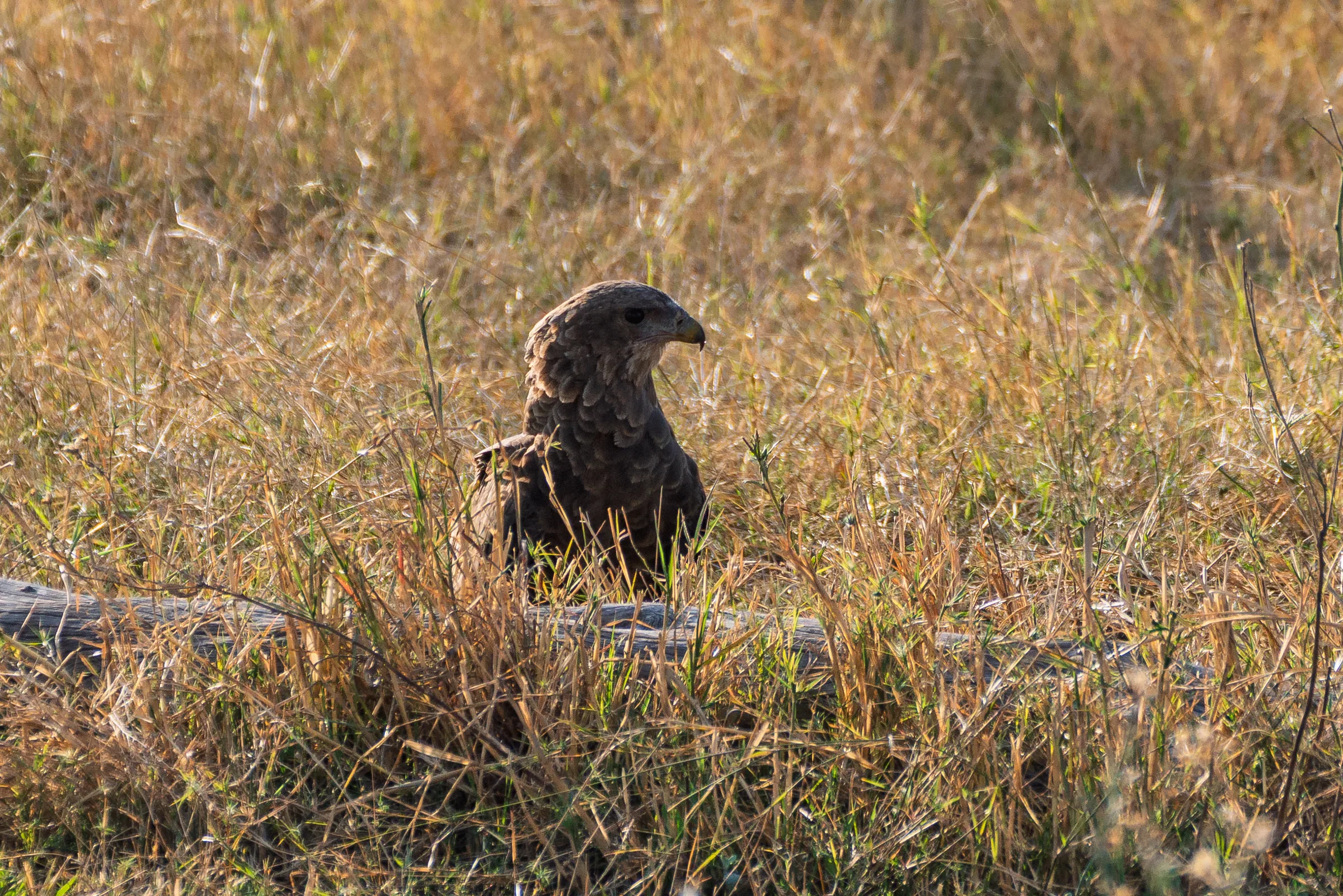
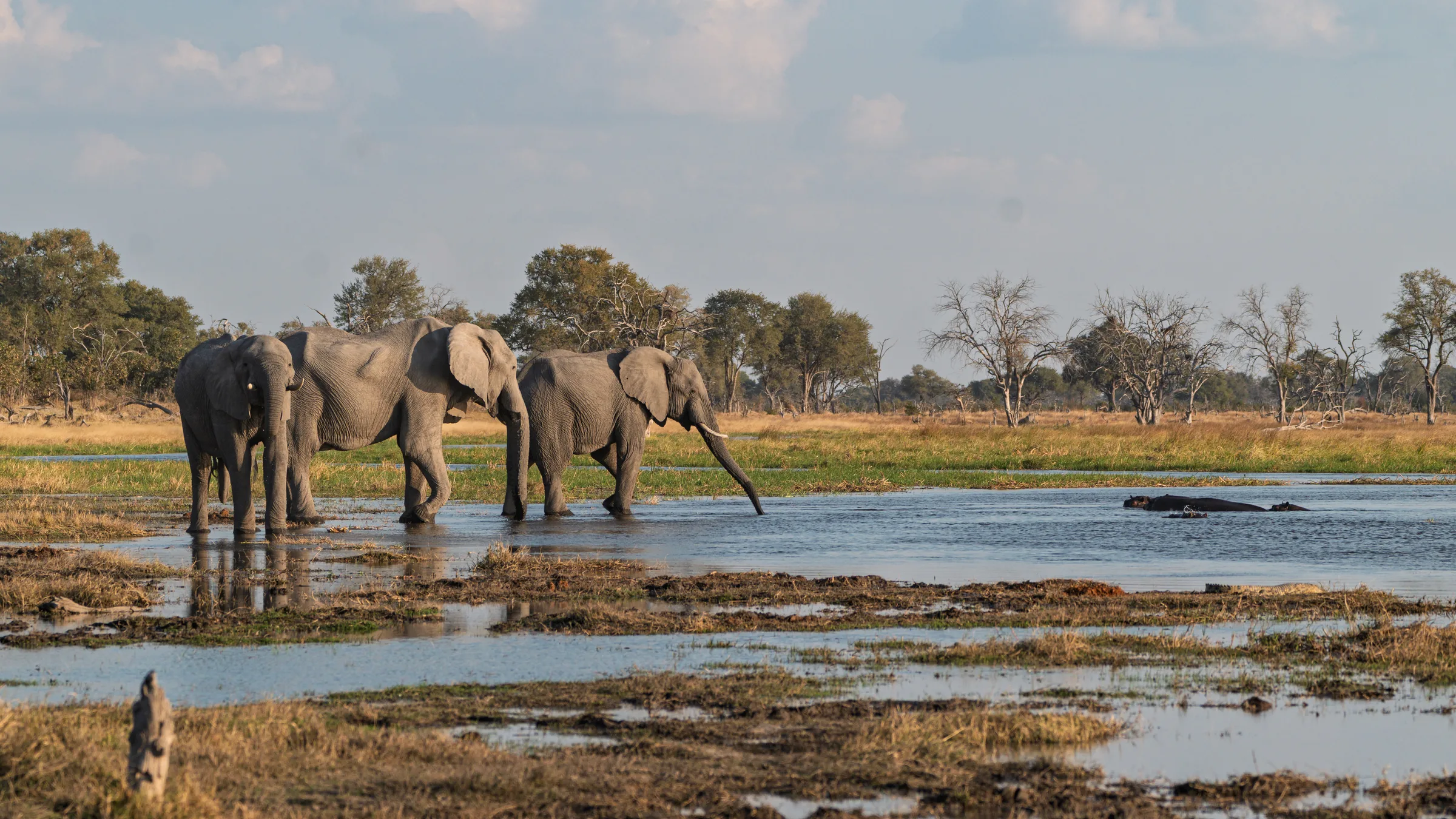
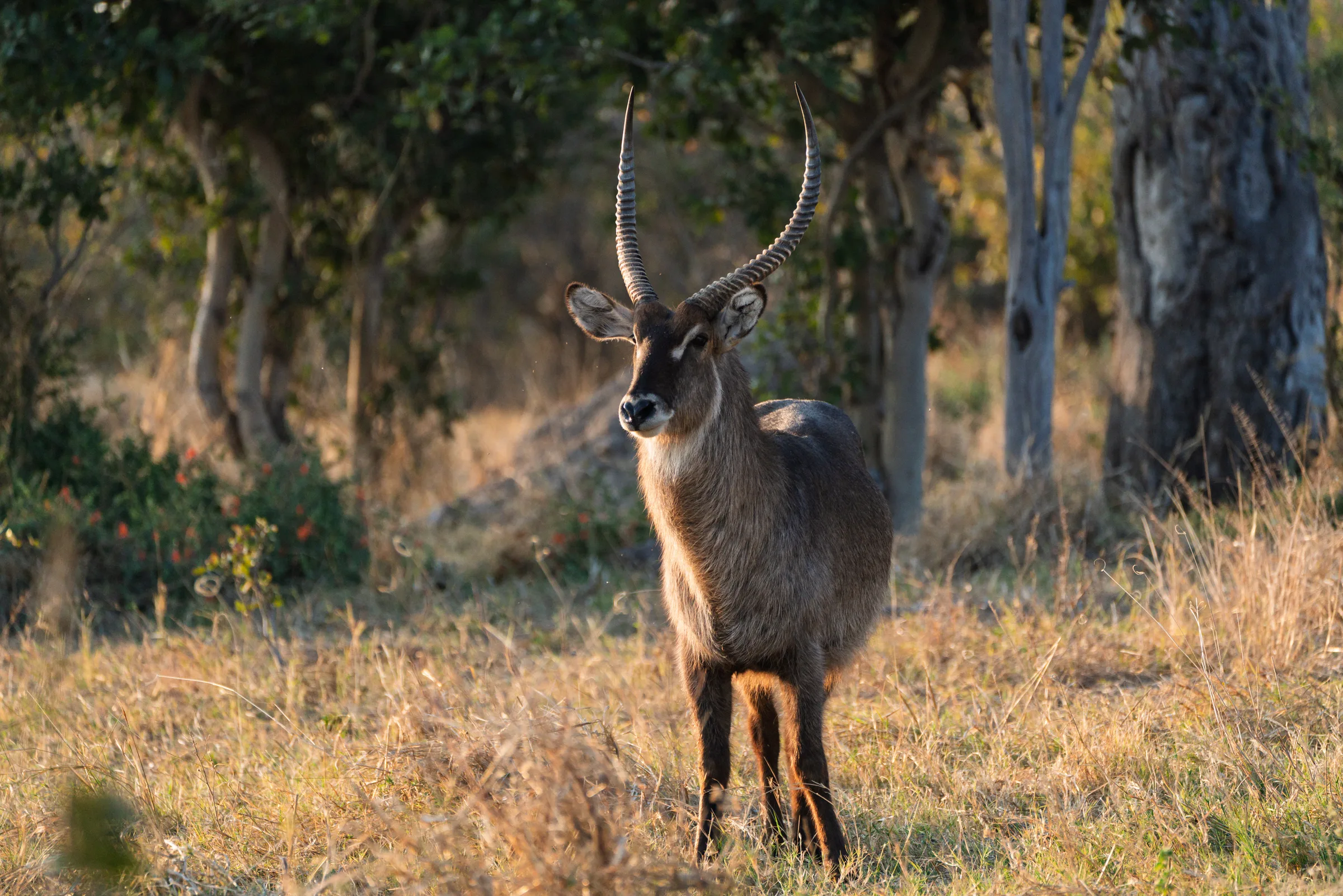
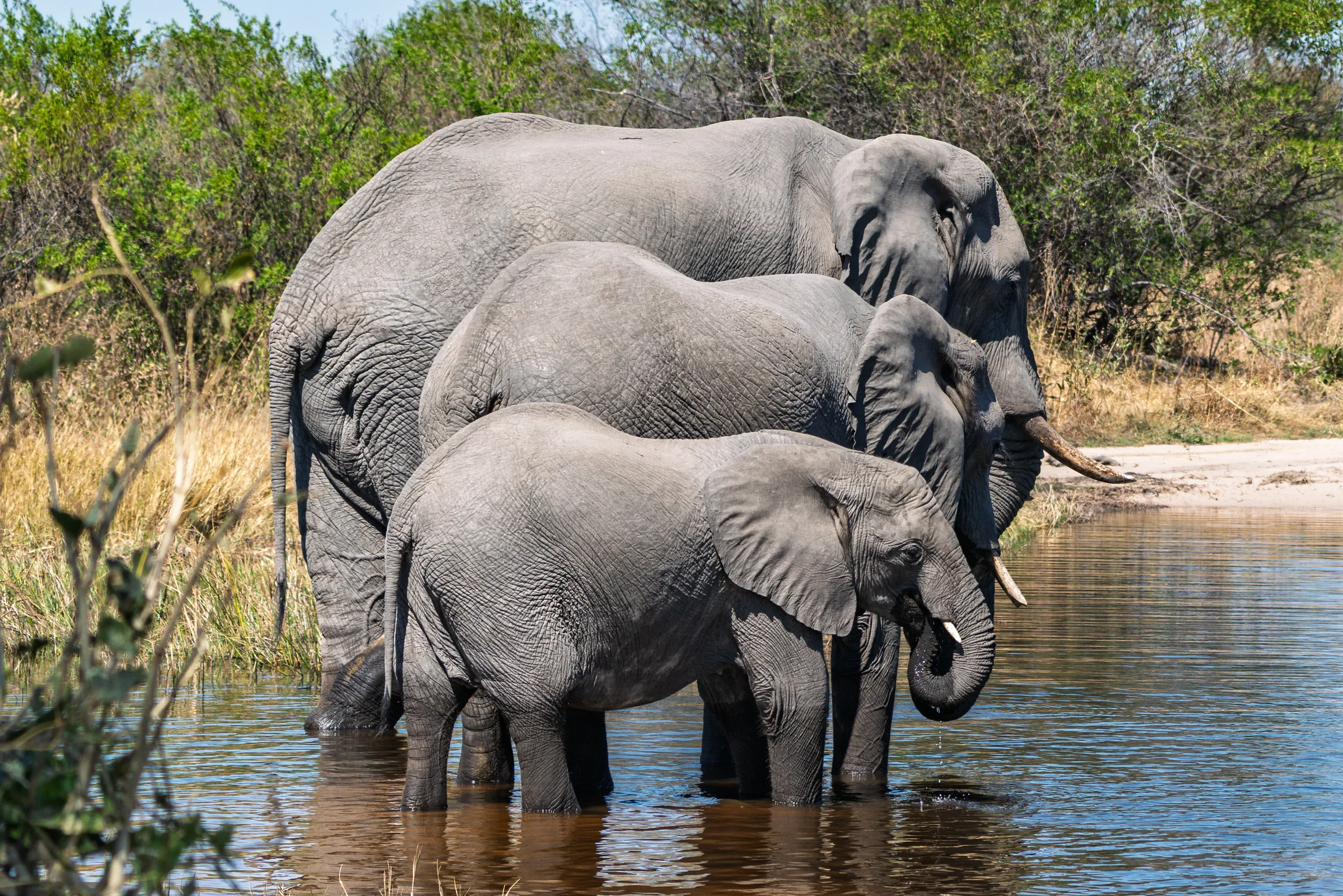
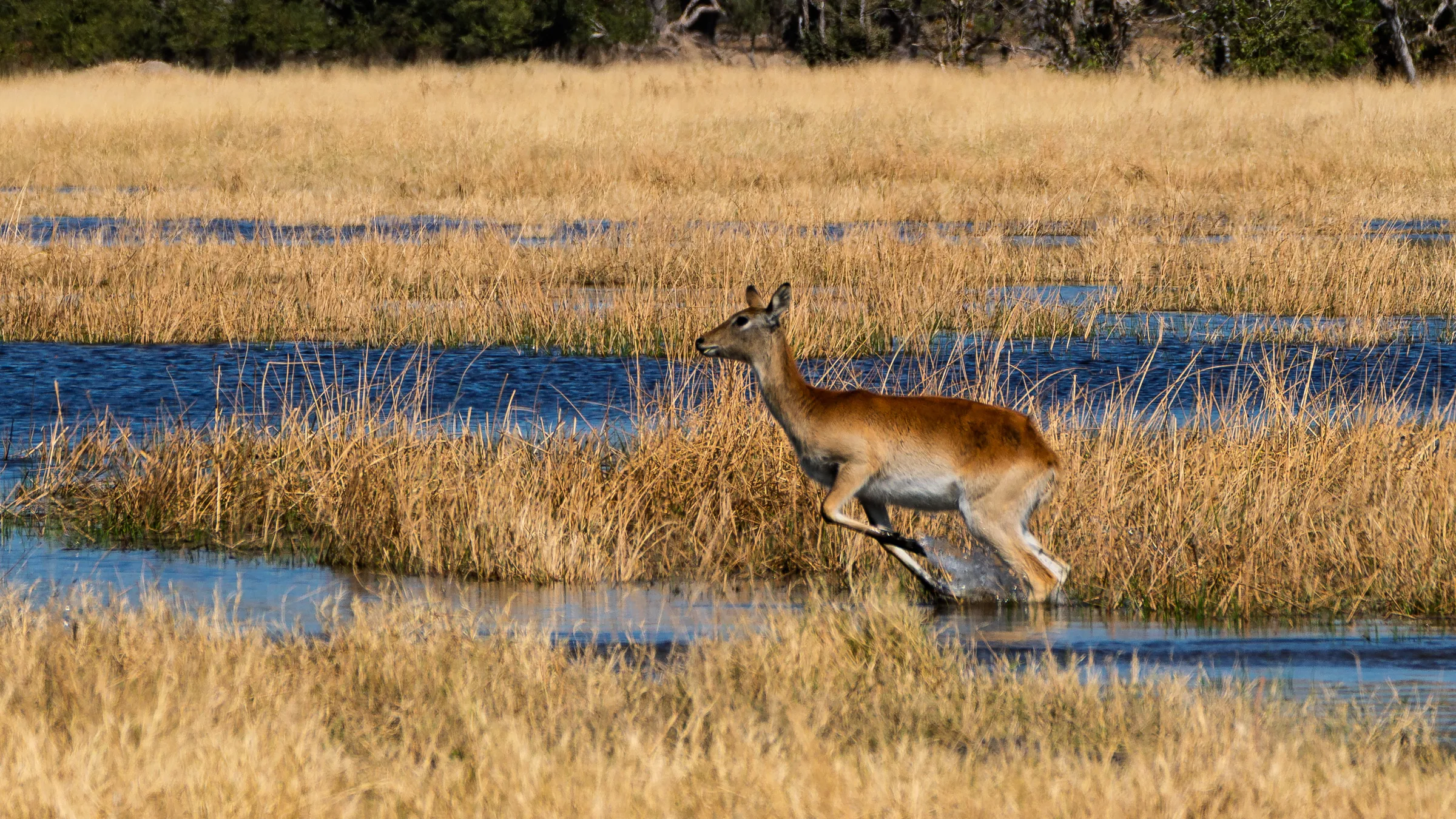
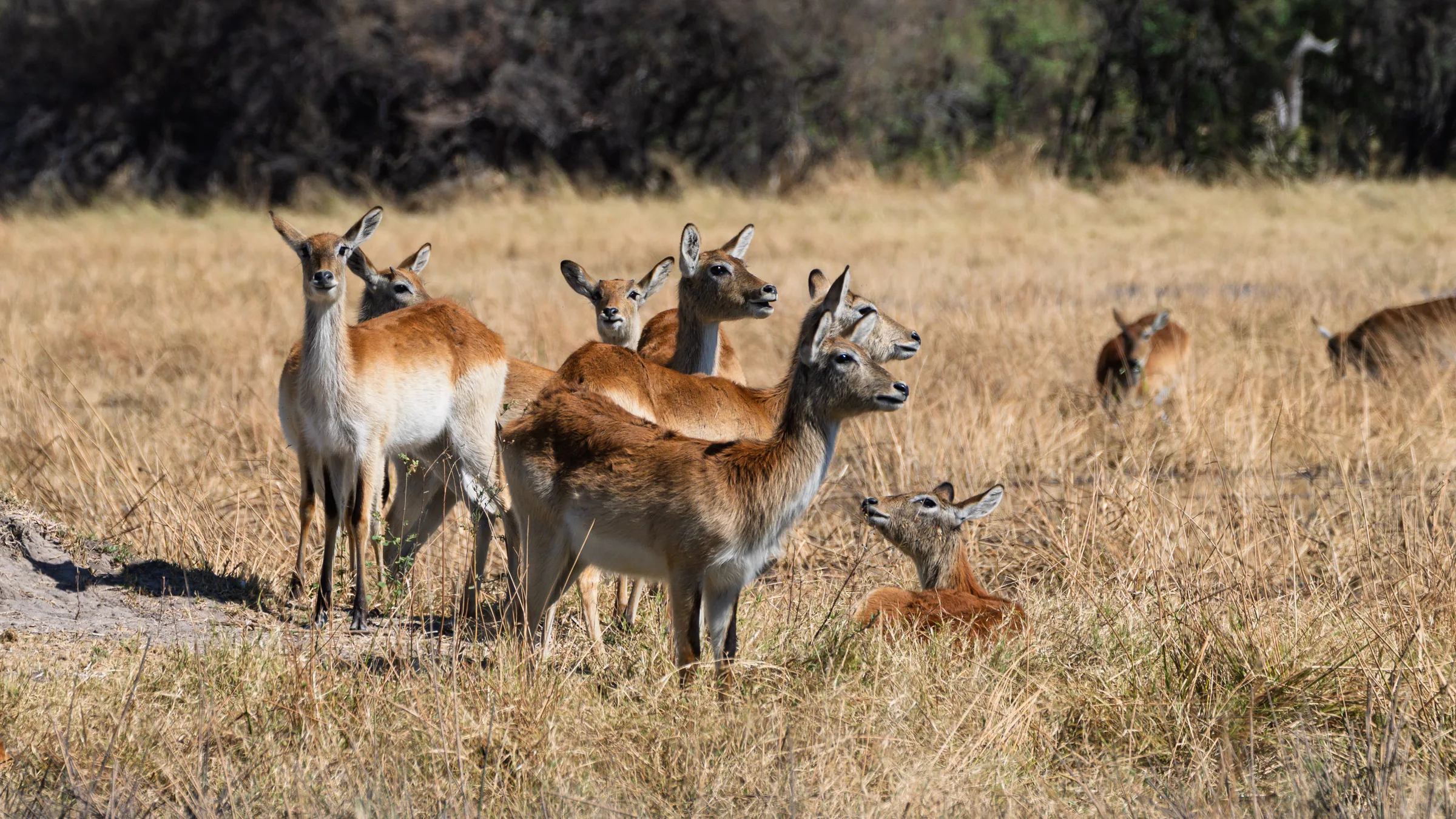
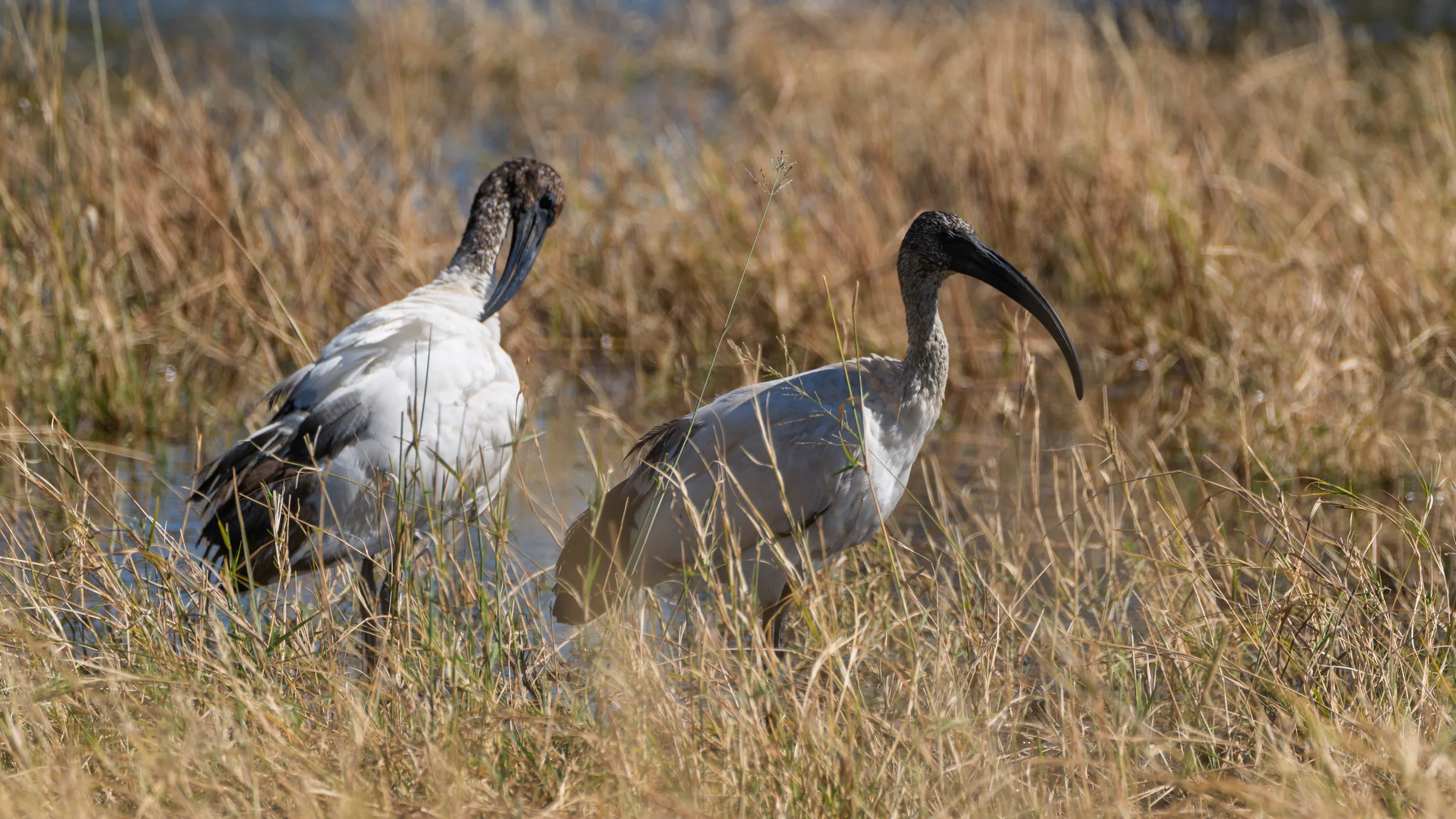
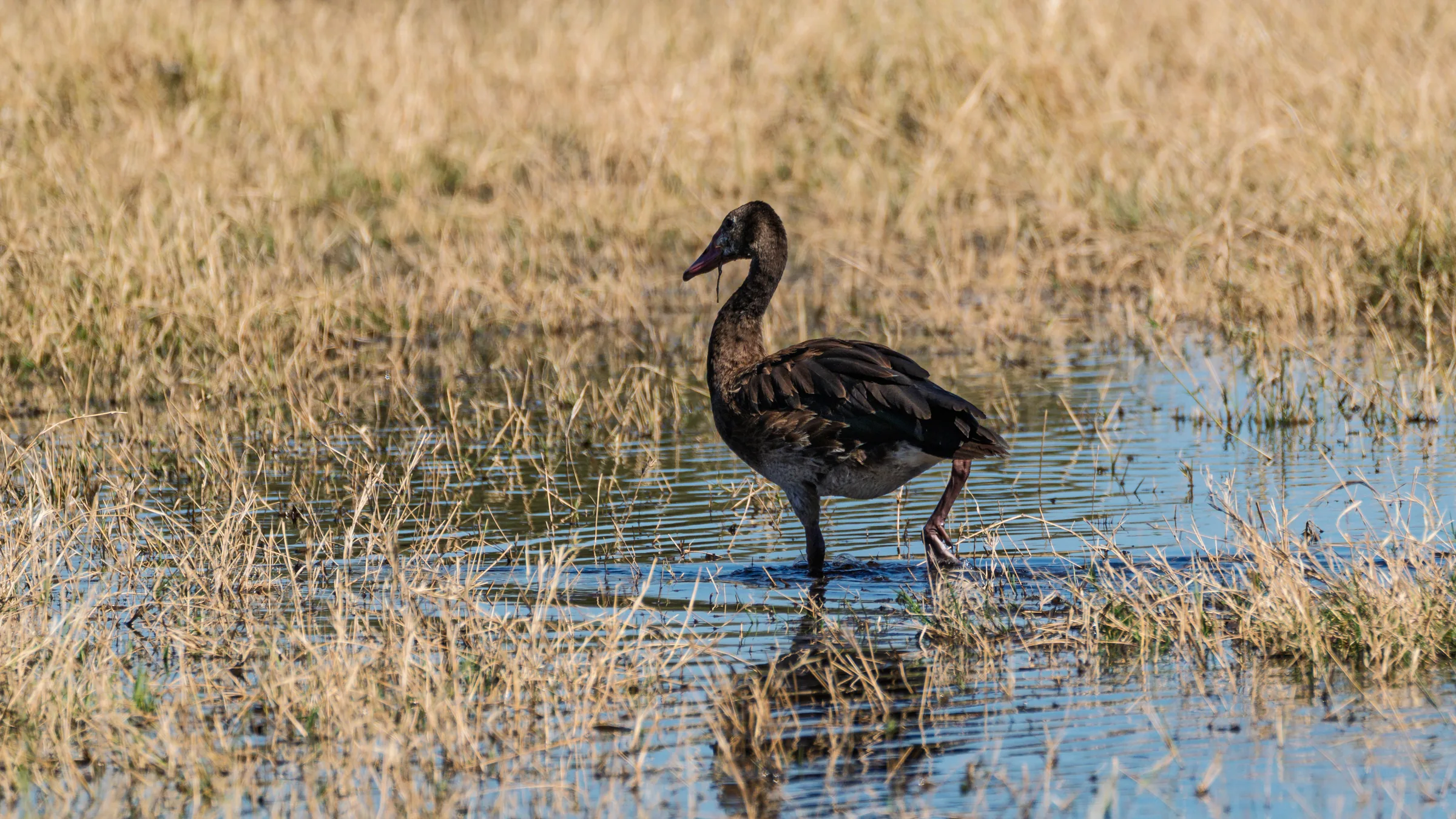
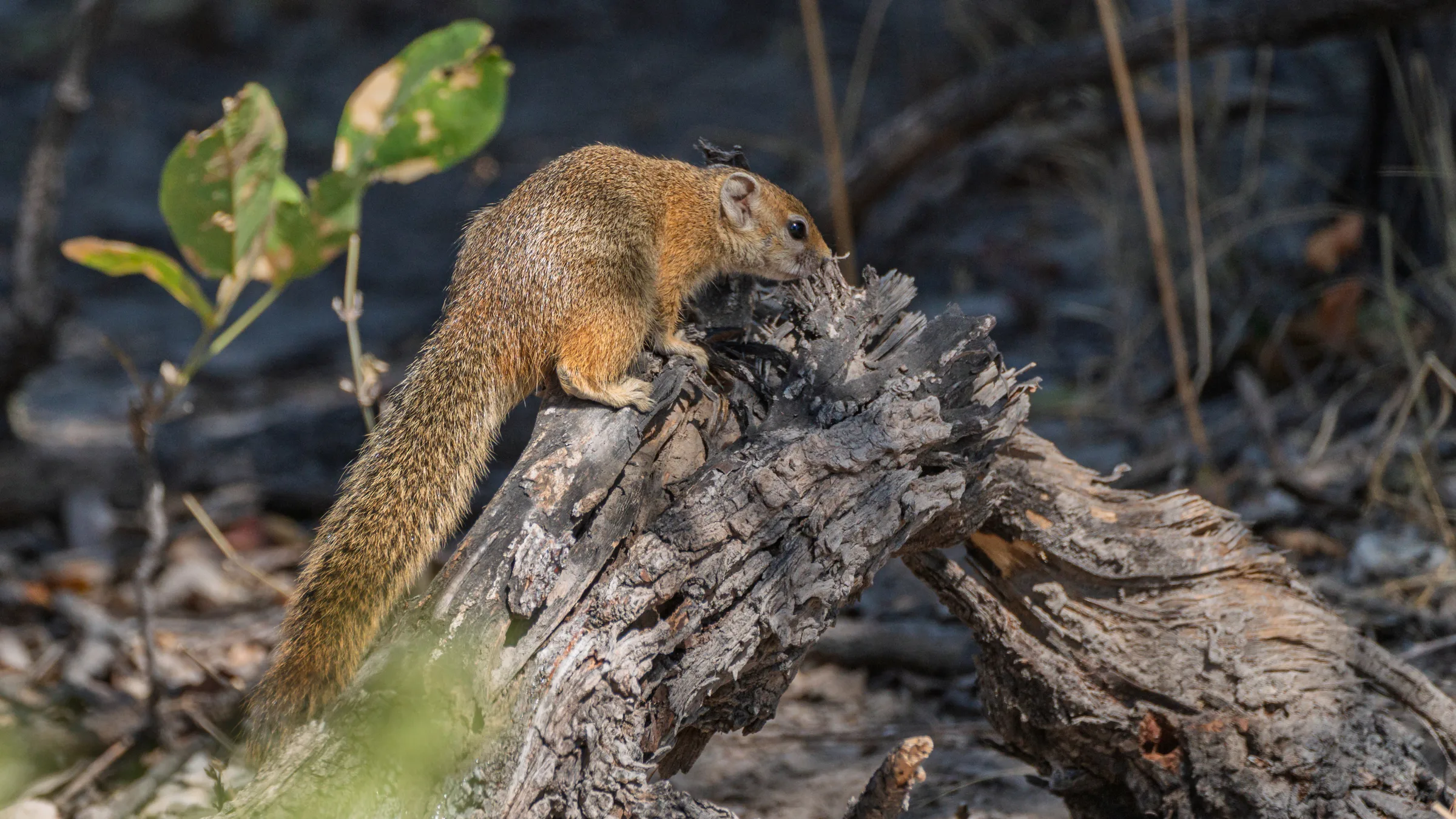
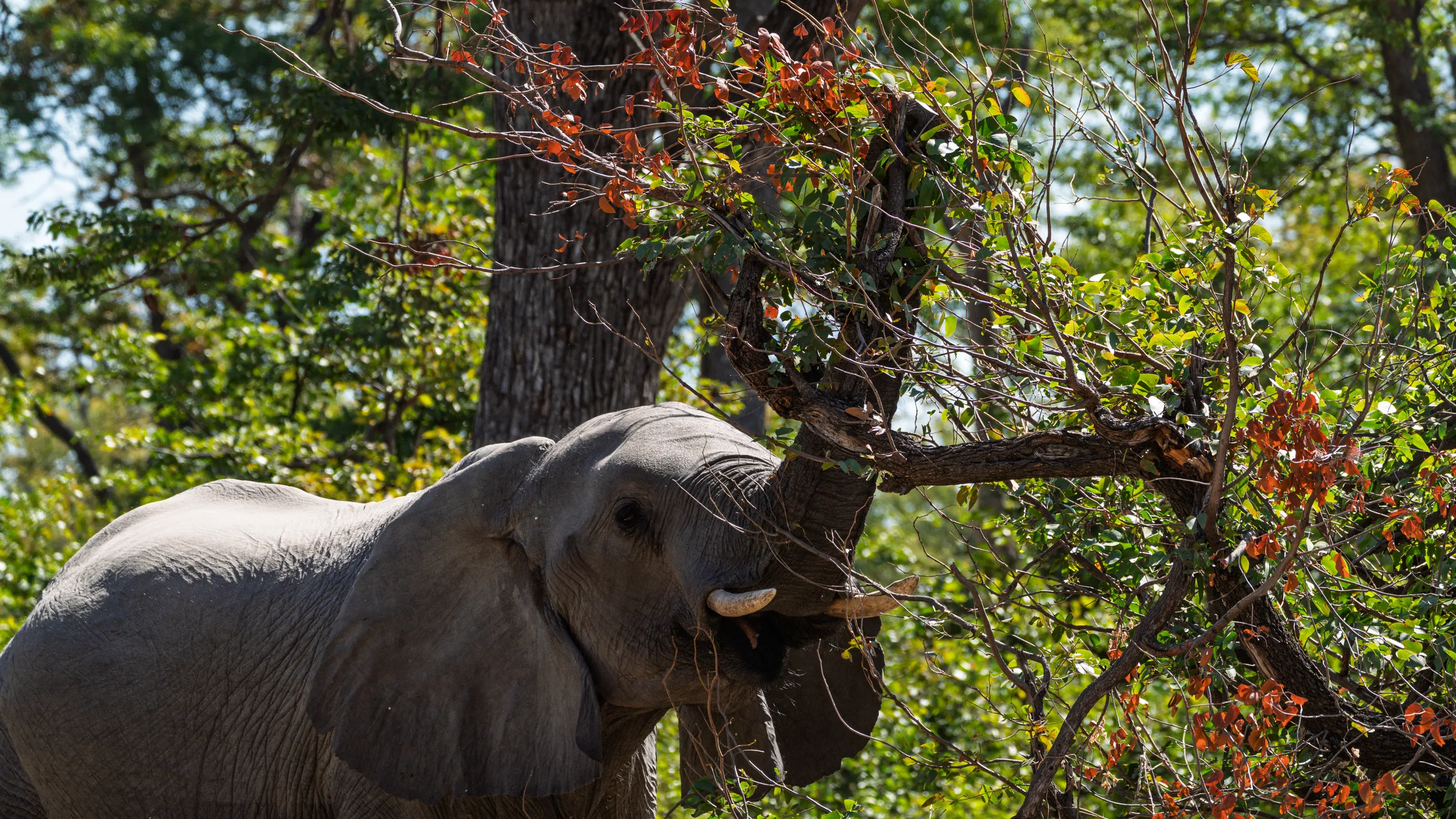
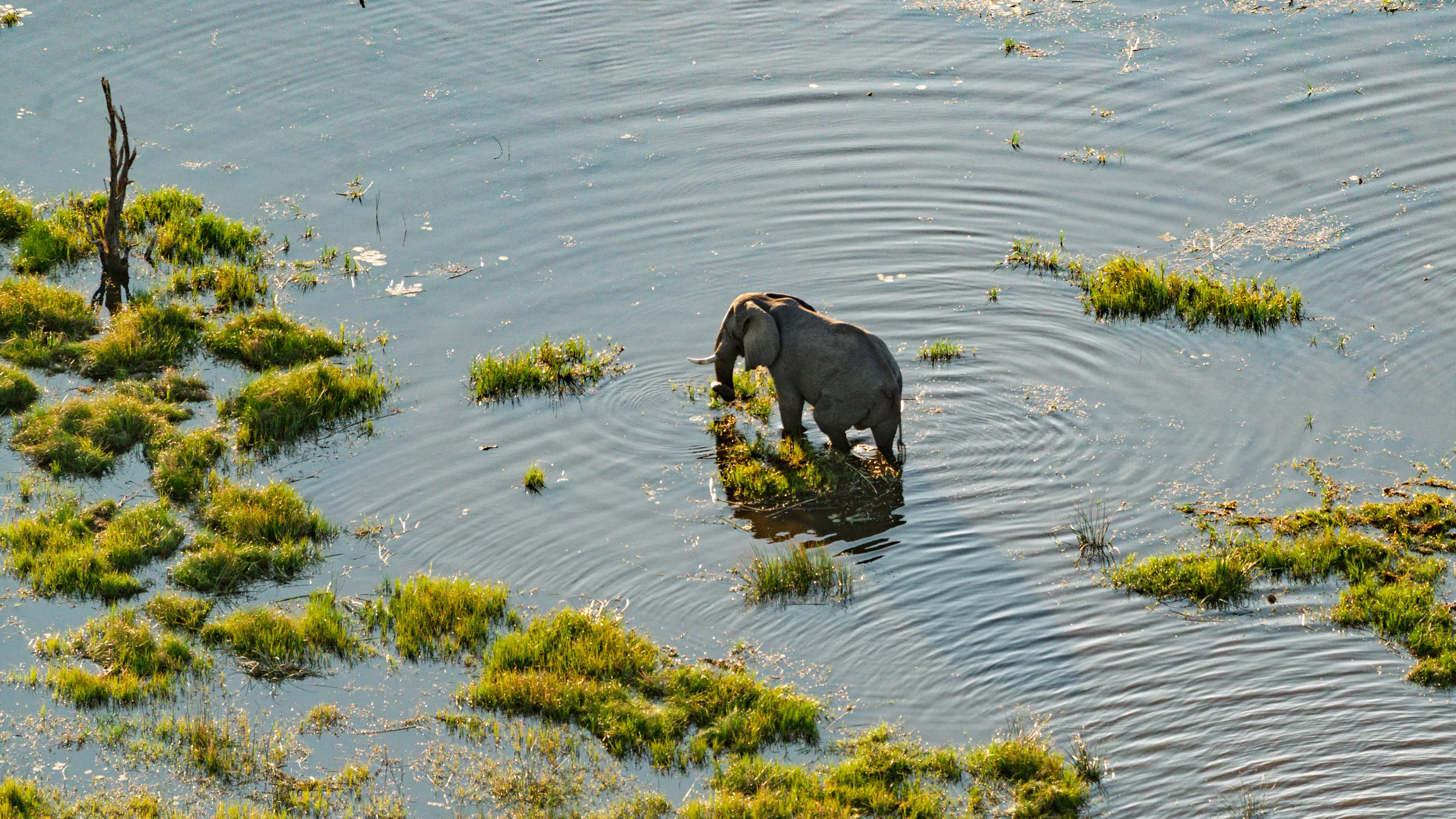
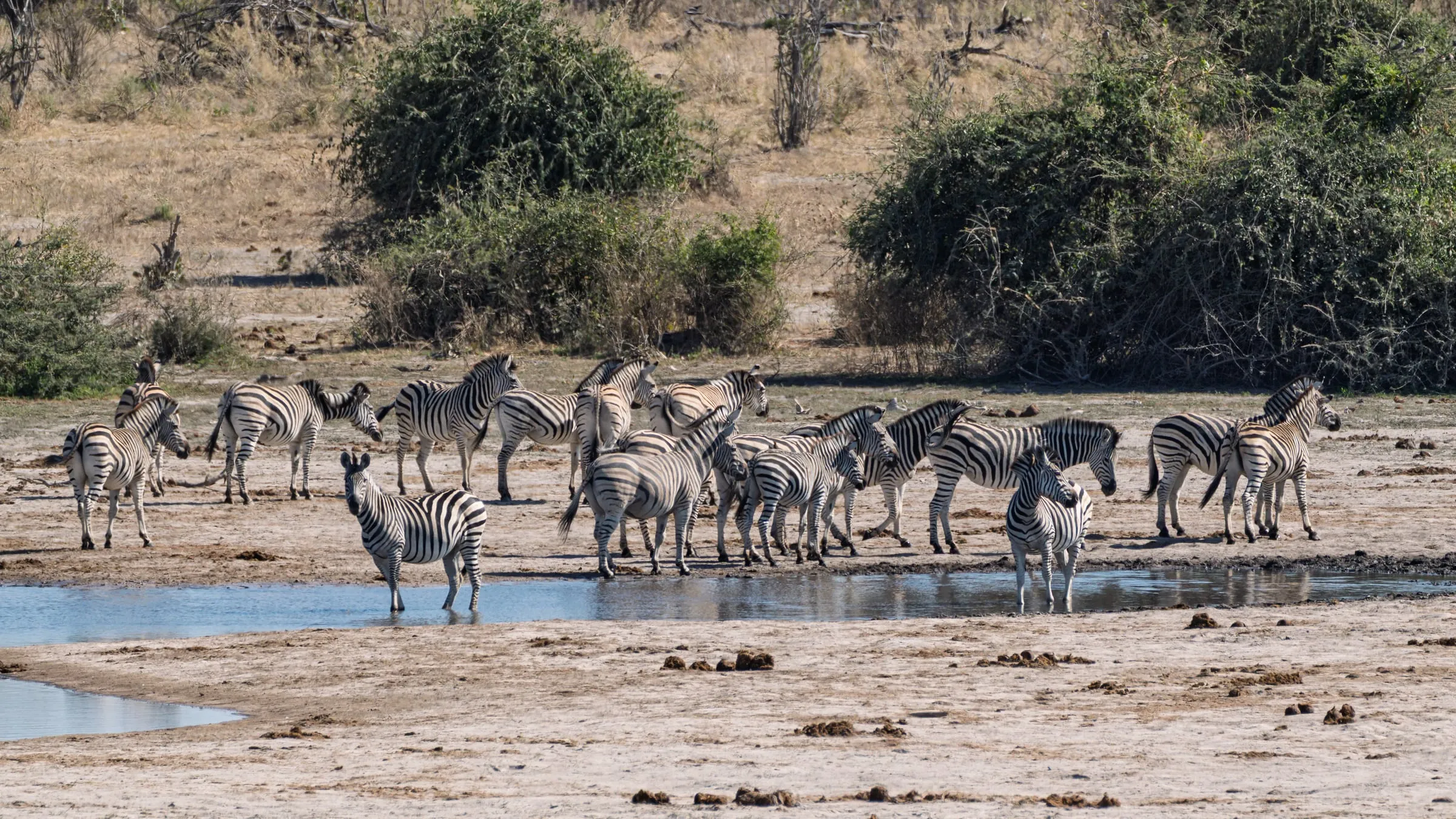
The mechanics are paradoxical. The rain falls over Angola in January and February, but the water only reaches the delta in May and June — five months down the Cubango, through the Caprivi Strip in Namibia, finally a pulse that floods Botswana precisely when the surrounding Kalahari is already deep into the dry season. It is an invitation to everything that lives here. Elephants pull in from the bush over hundreds of kilometres; lions, leopards, wild dogs, over six hundred bird species, more than two hundred thousand documented large mammals. UNESCO inscribed the delta in 2014 as the thousandth site on its World Heritage list.
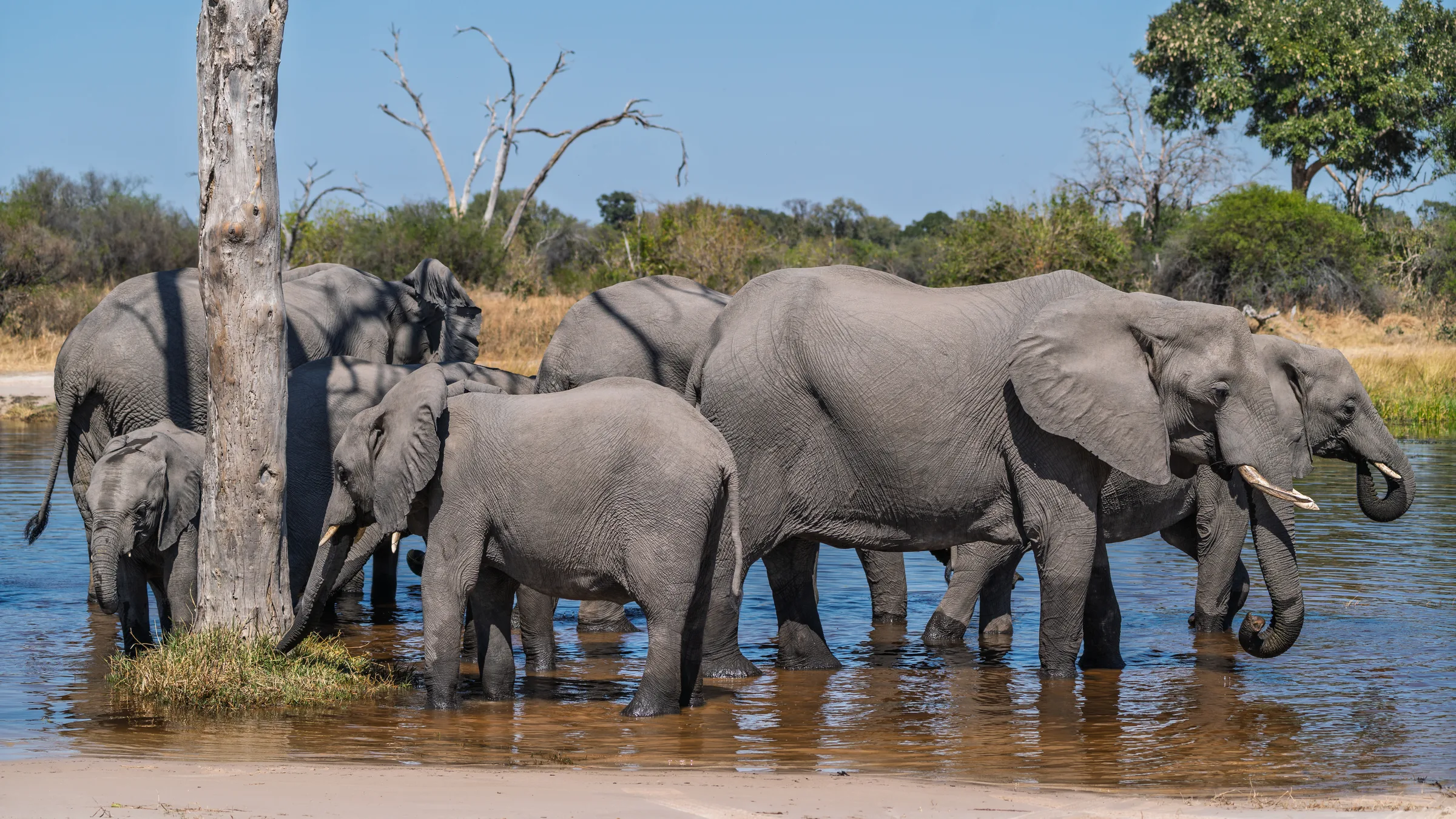
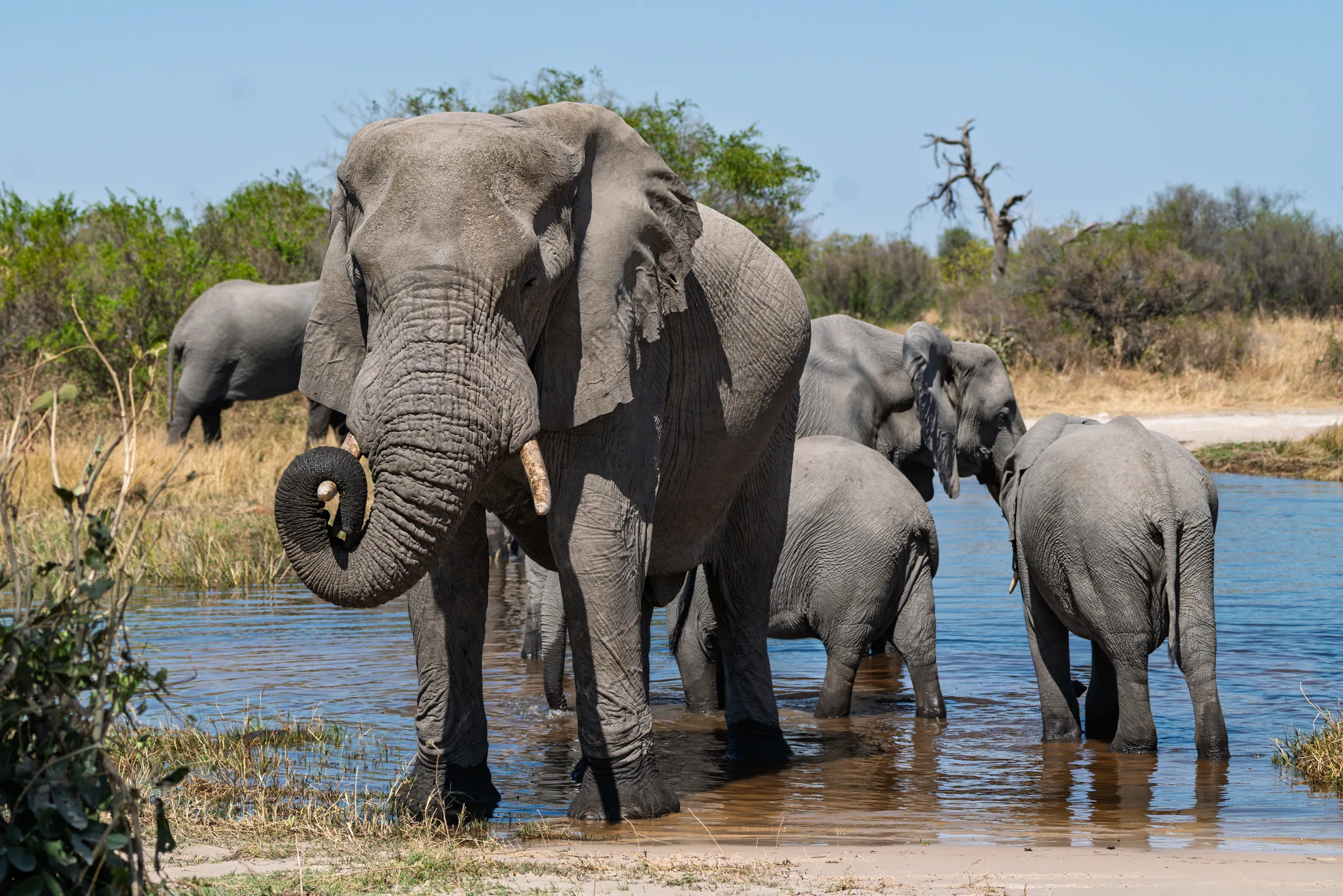
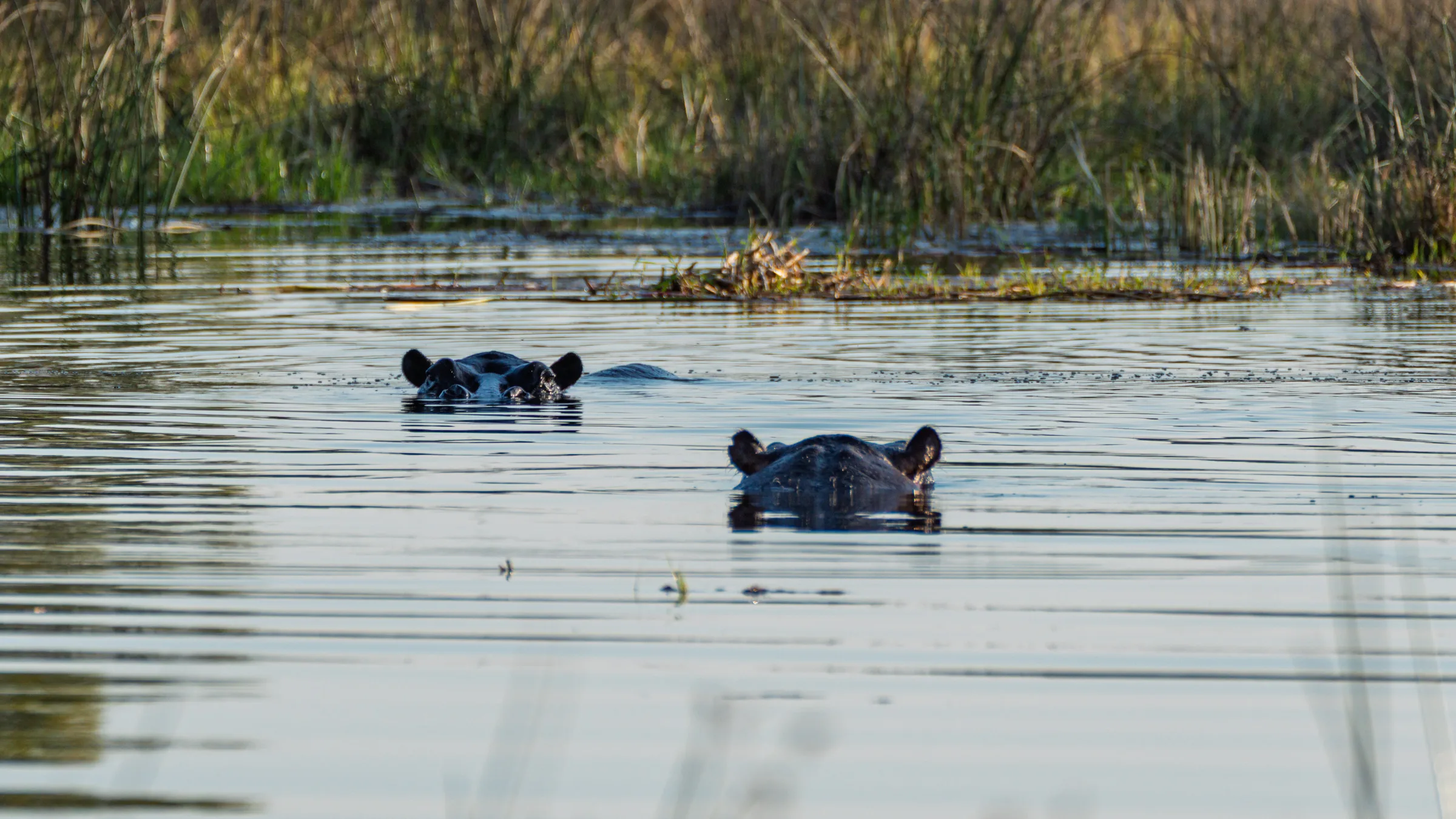
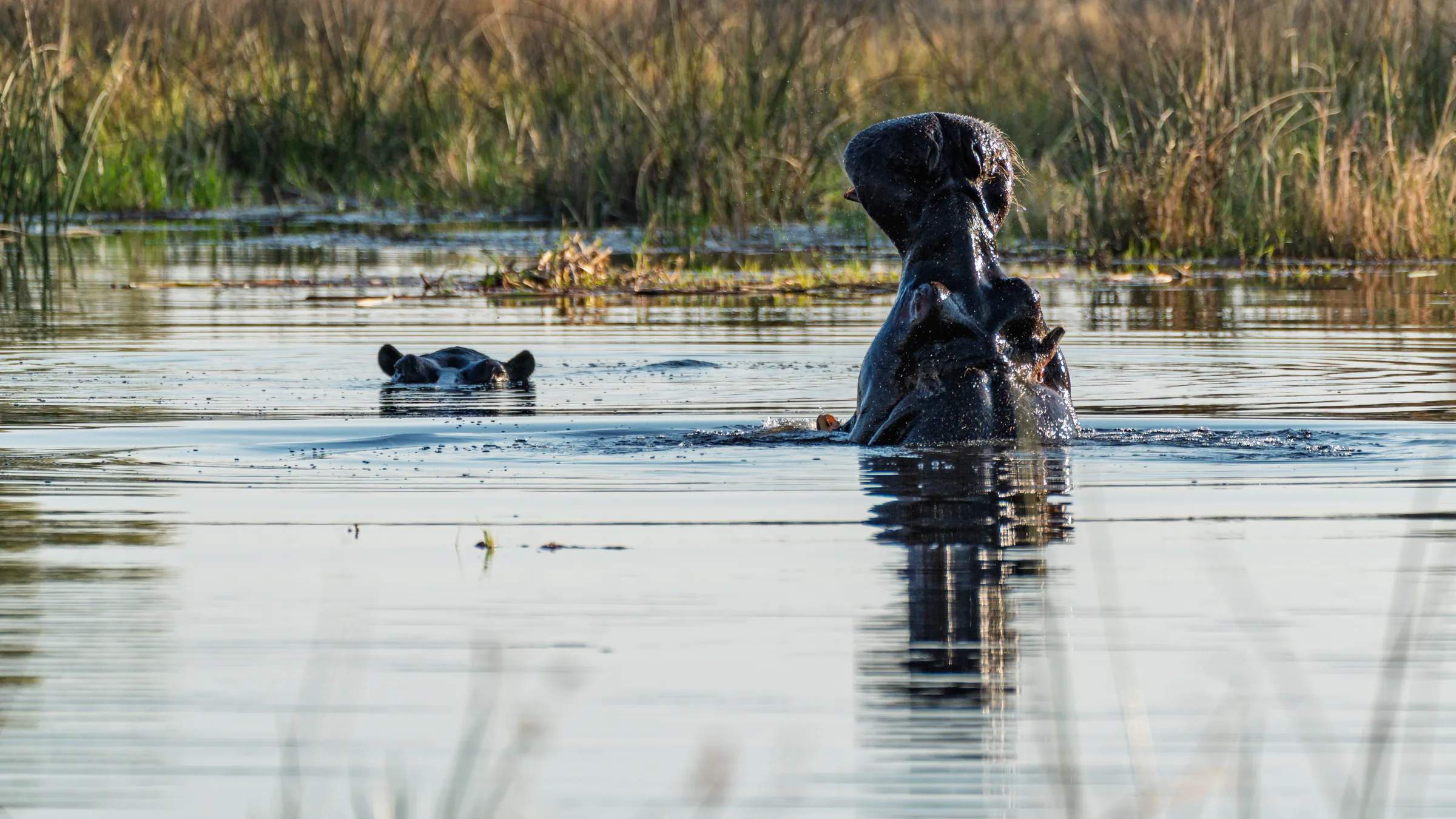
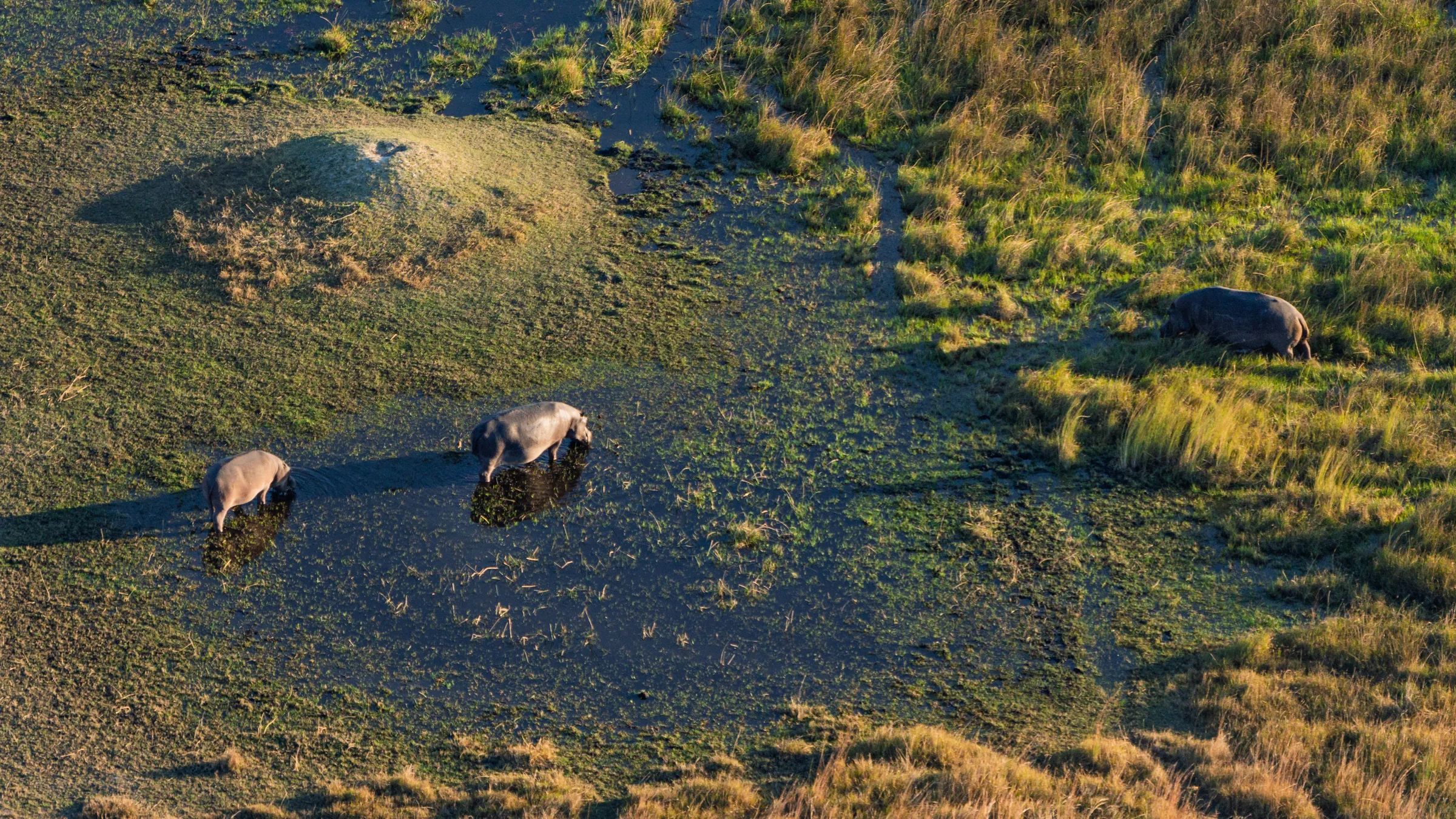
You step into a mokoro — a narrow dugout traditionally carved from the sausage tree (Kigelia). Most boats today are fibreglass — over recent decades the BaYei and HaMbukushu have switched to synthetics to protect the ageing sausage-tree population. The poler stands at the back with a long pole (ngashi) and guides you down an overgrown channel. The only sounds are the pole striking the bottom and sudden rustles in the papyrus. Hippos grunt two channels away. An elephant drinks under an acacia on the left, a family crosses a shallow on the right. No one notices the boat — which is precisely why the mokoro exists.
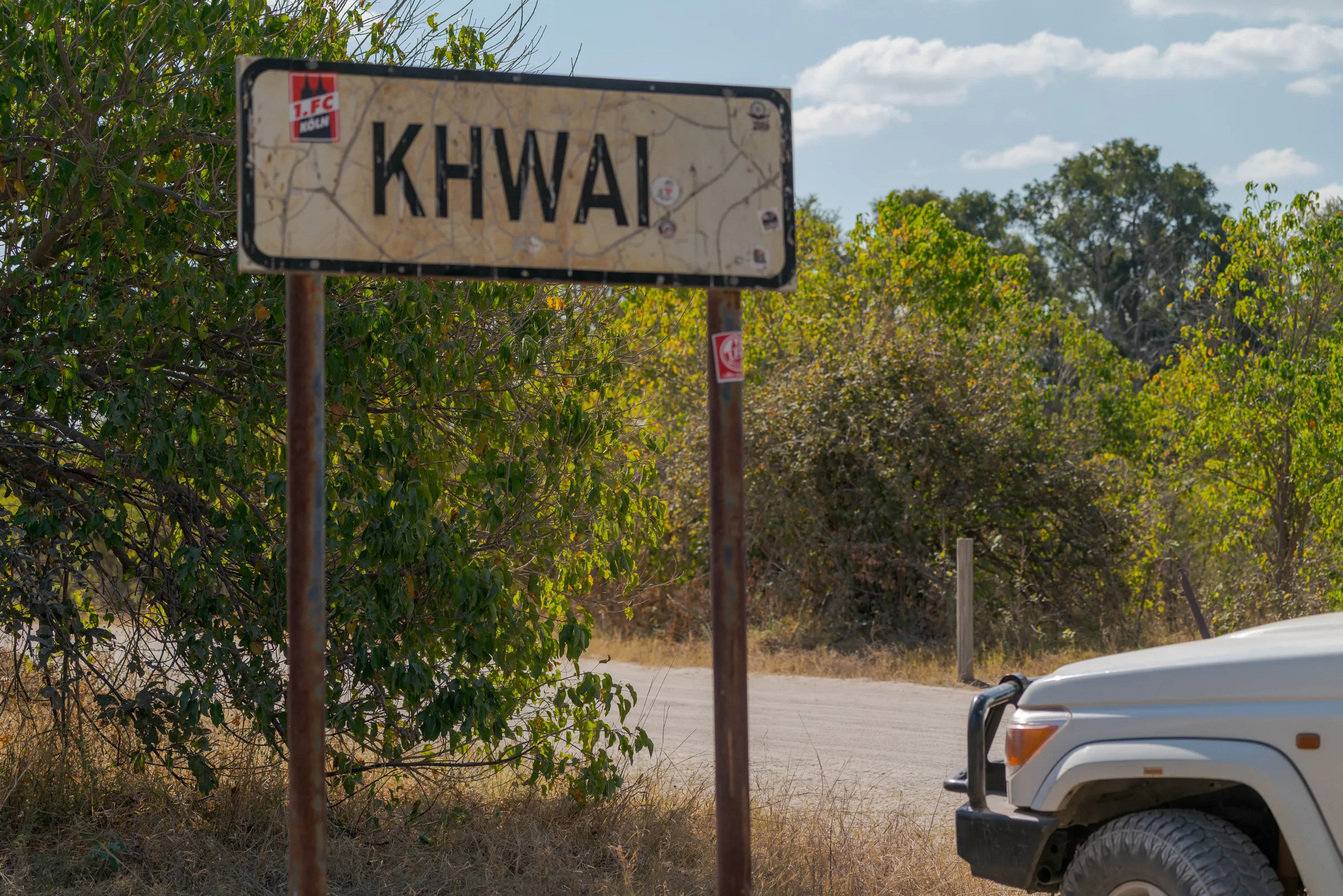
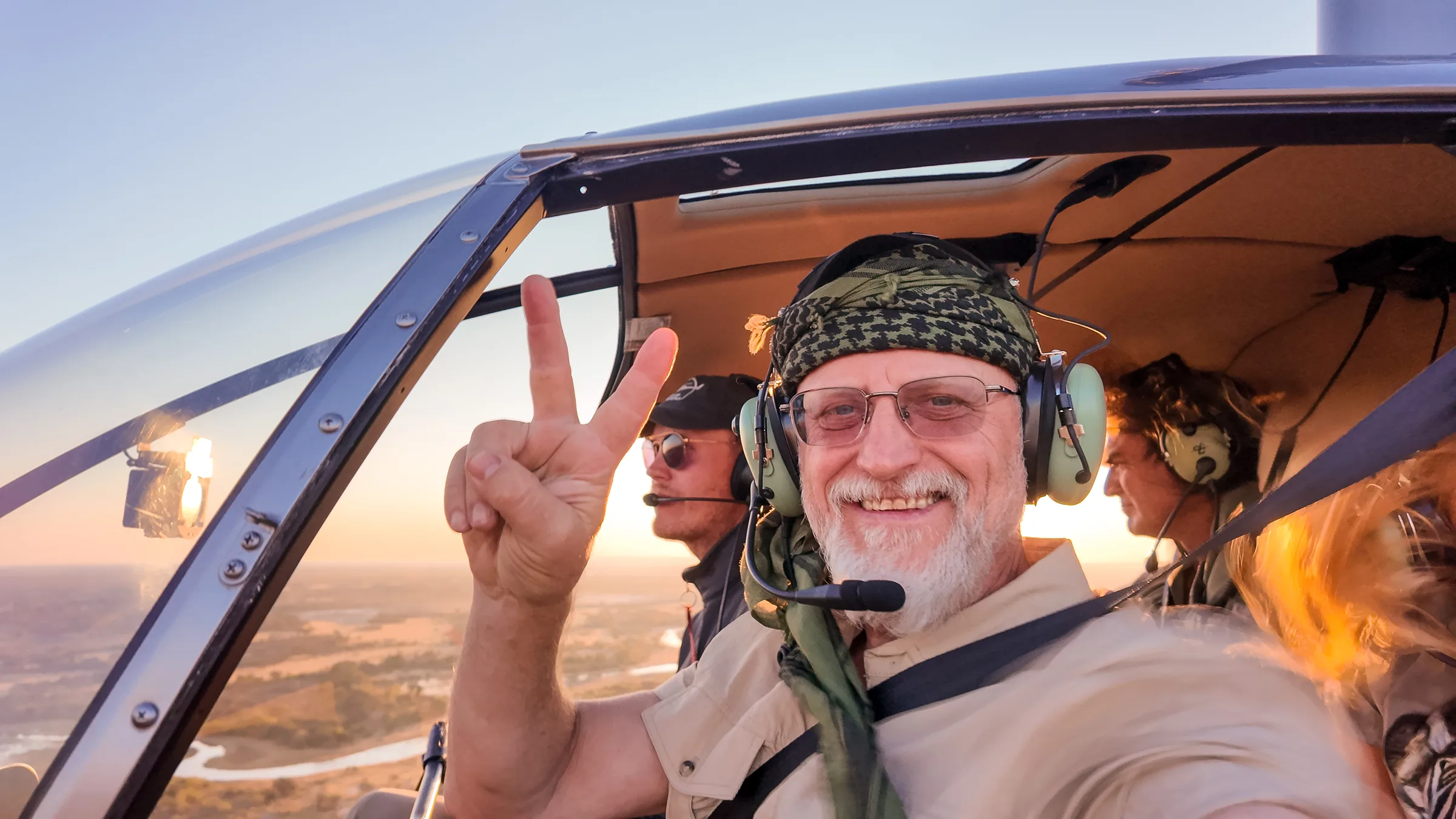
Moremi Game Reserve sits on the delta’s north-eastern point. Founded in 1963 — the first protected area in Africa established at the initiative of a local community (the BaTawana people) rather than a colonial administration. Self-drive reaches the edges: Khwai, Third Bridge, Mababe. To enter the deeper delta — Chief’s Island, seasonal fly-in camps — you fly in by Cessna or helicopter from Maun.
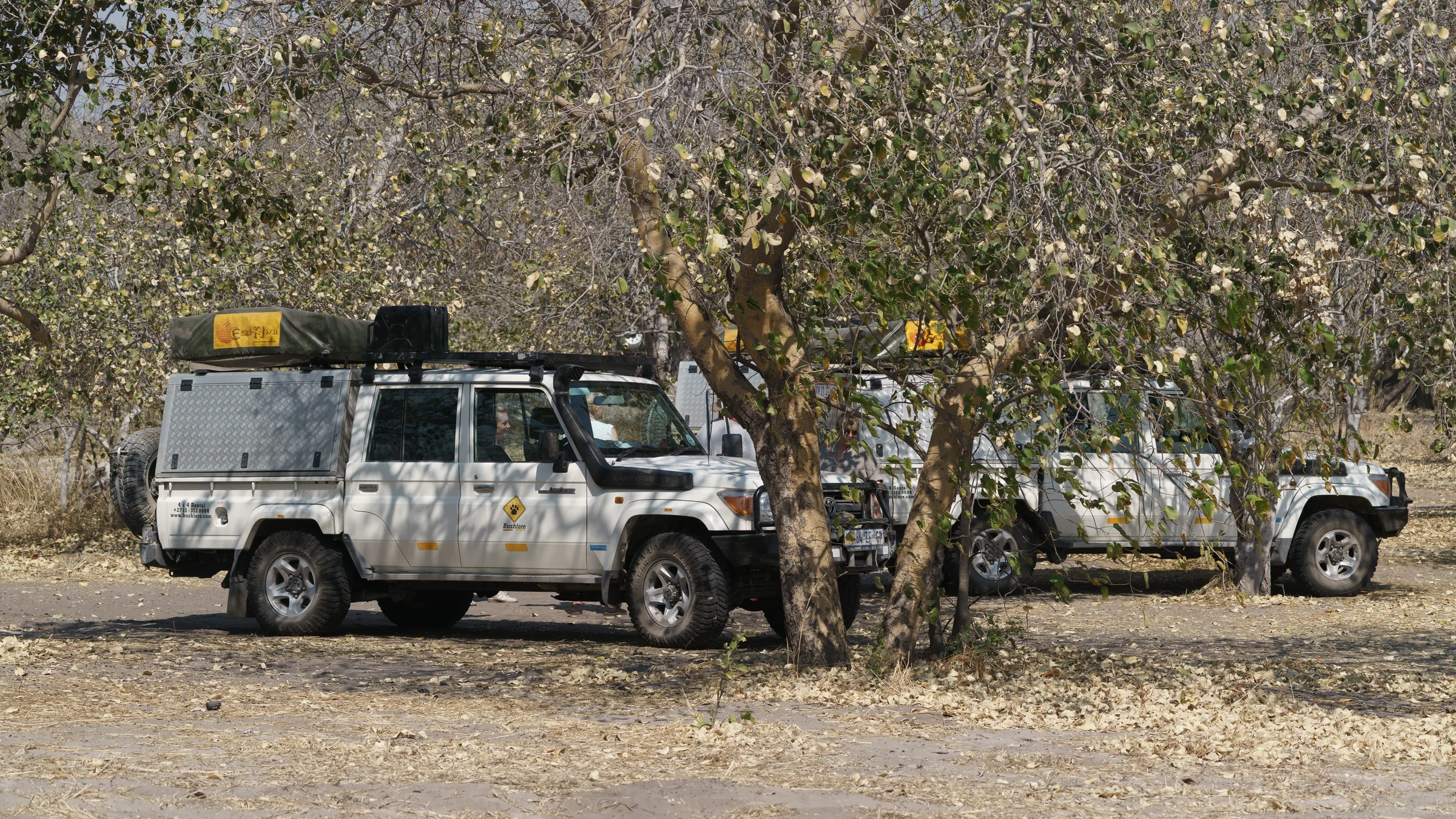
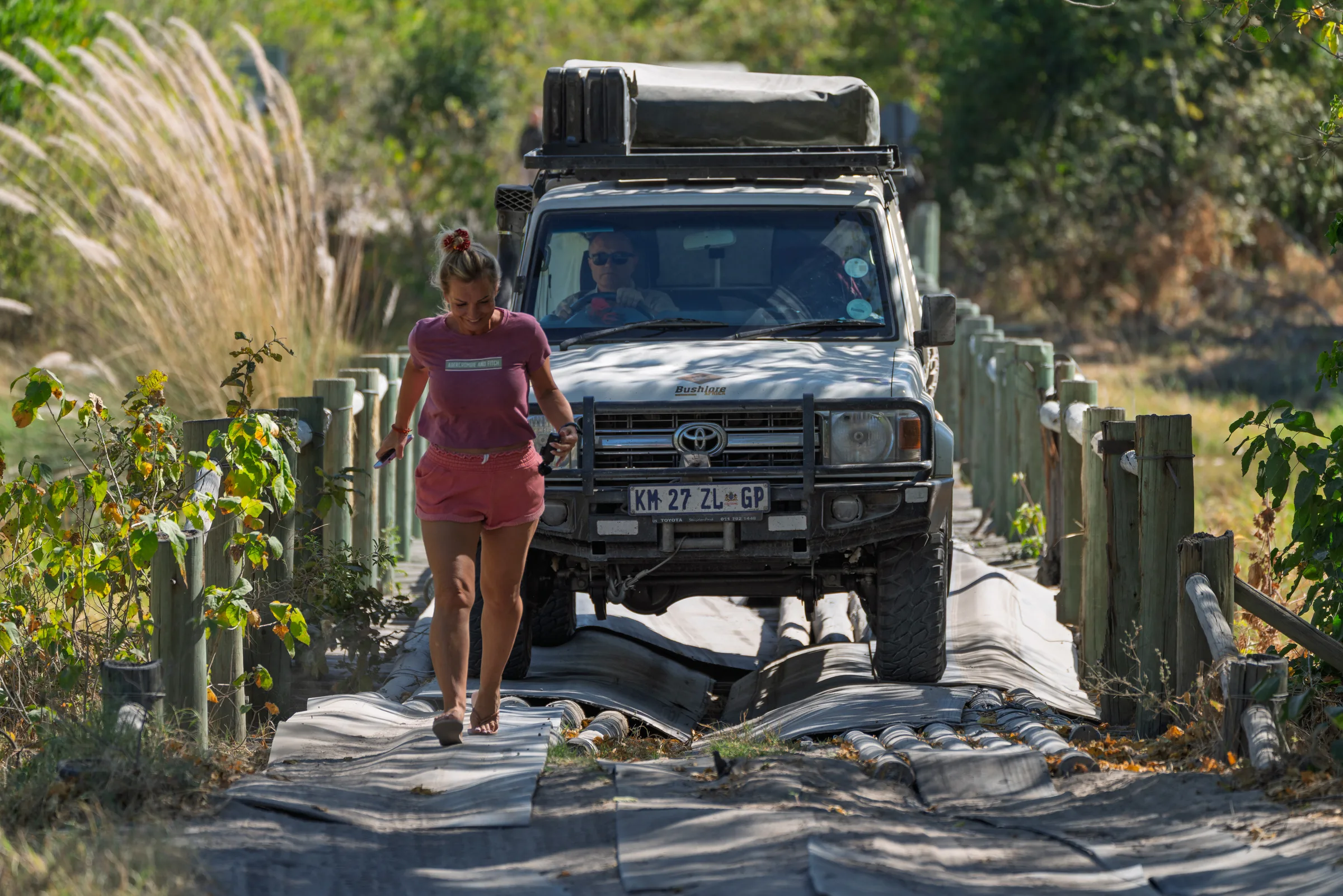
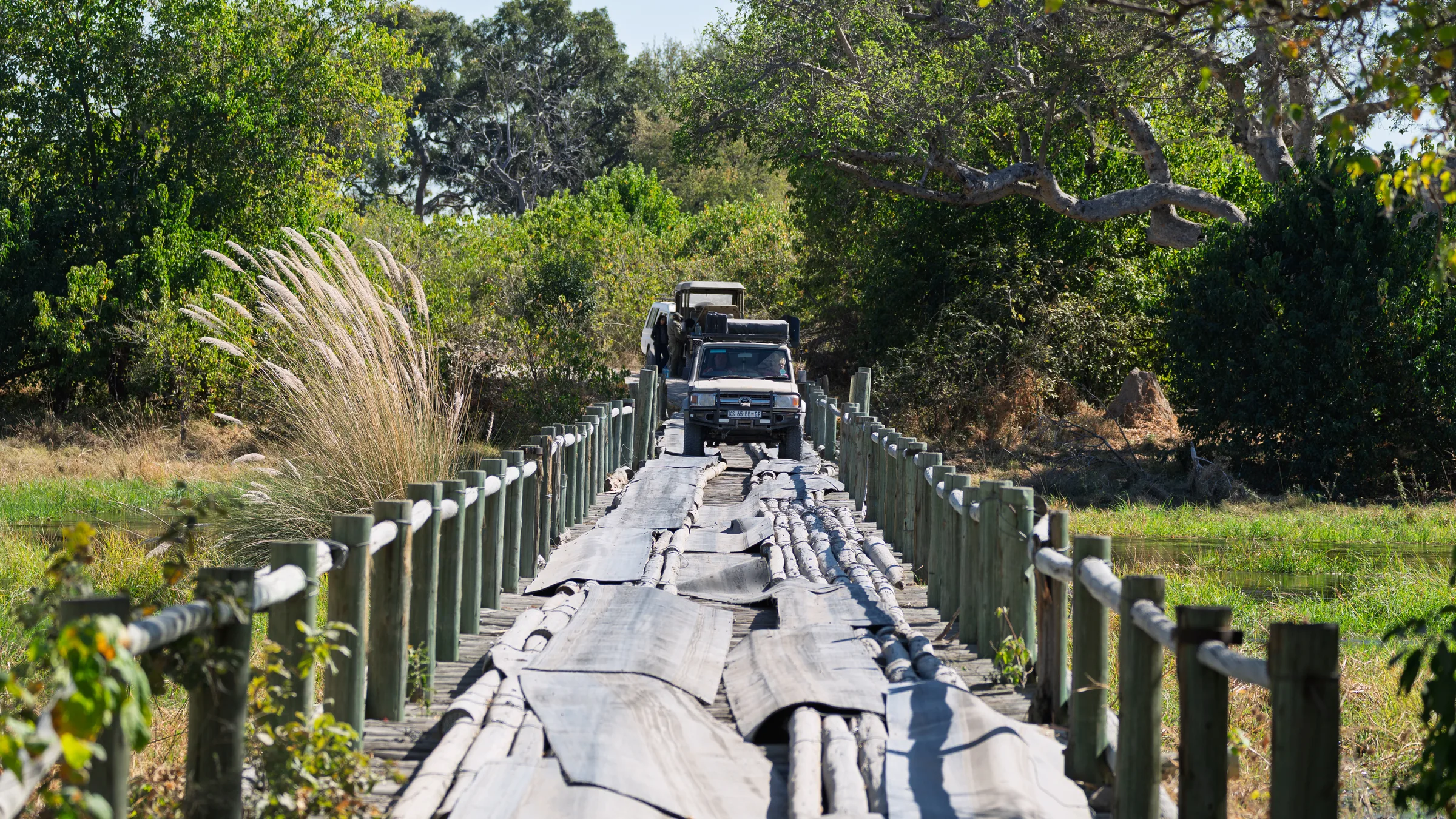
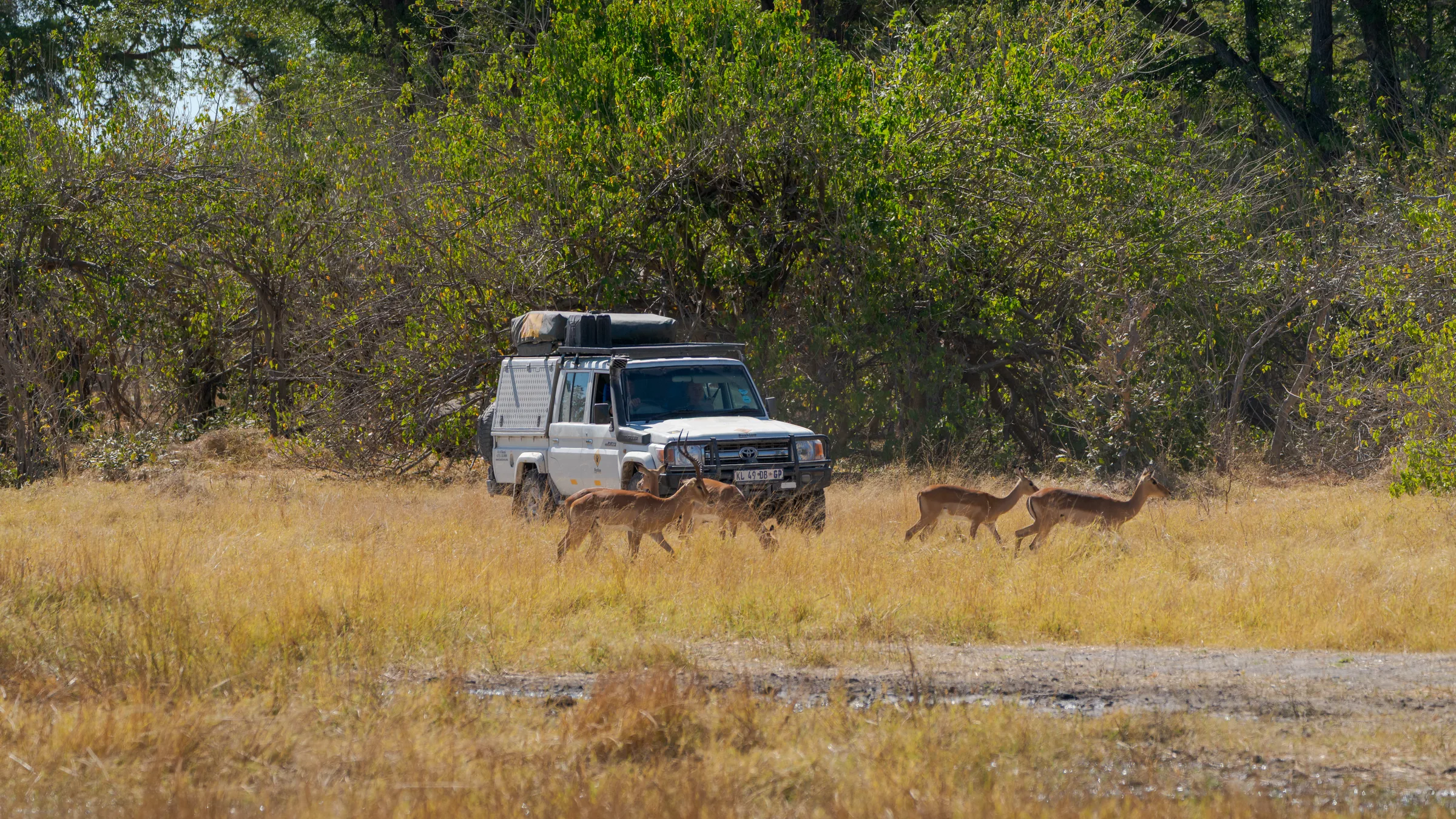
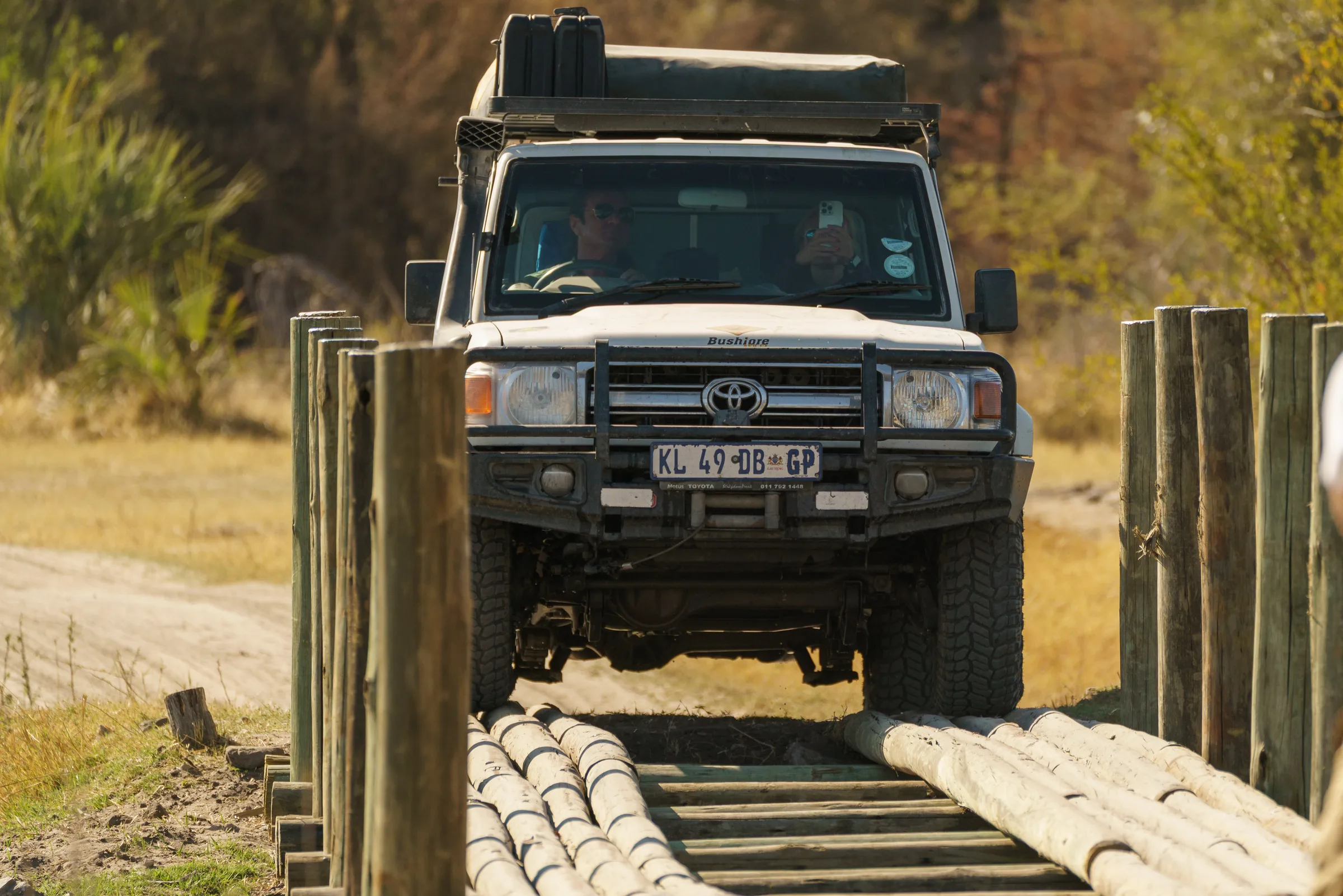
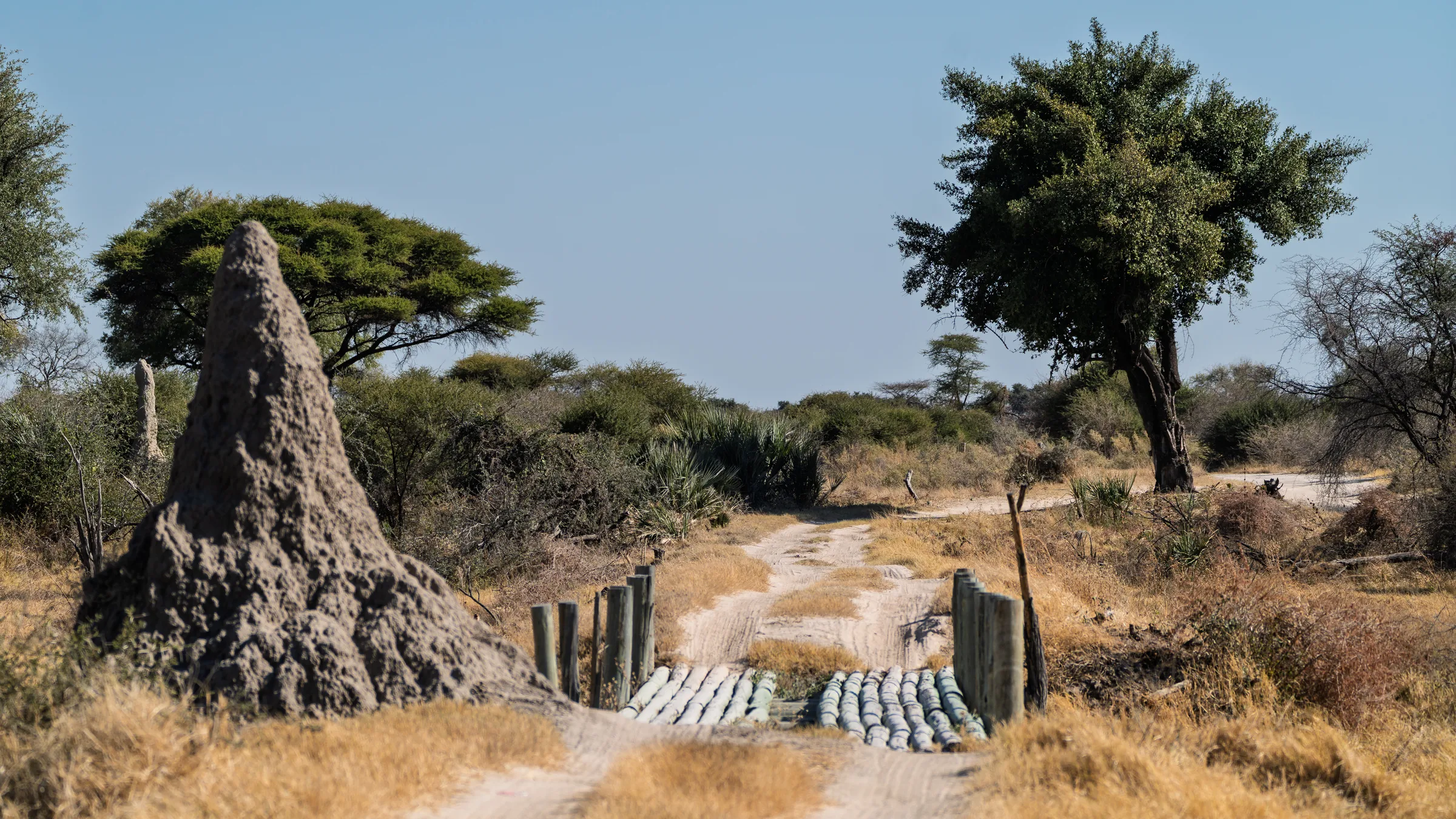
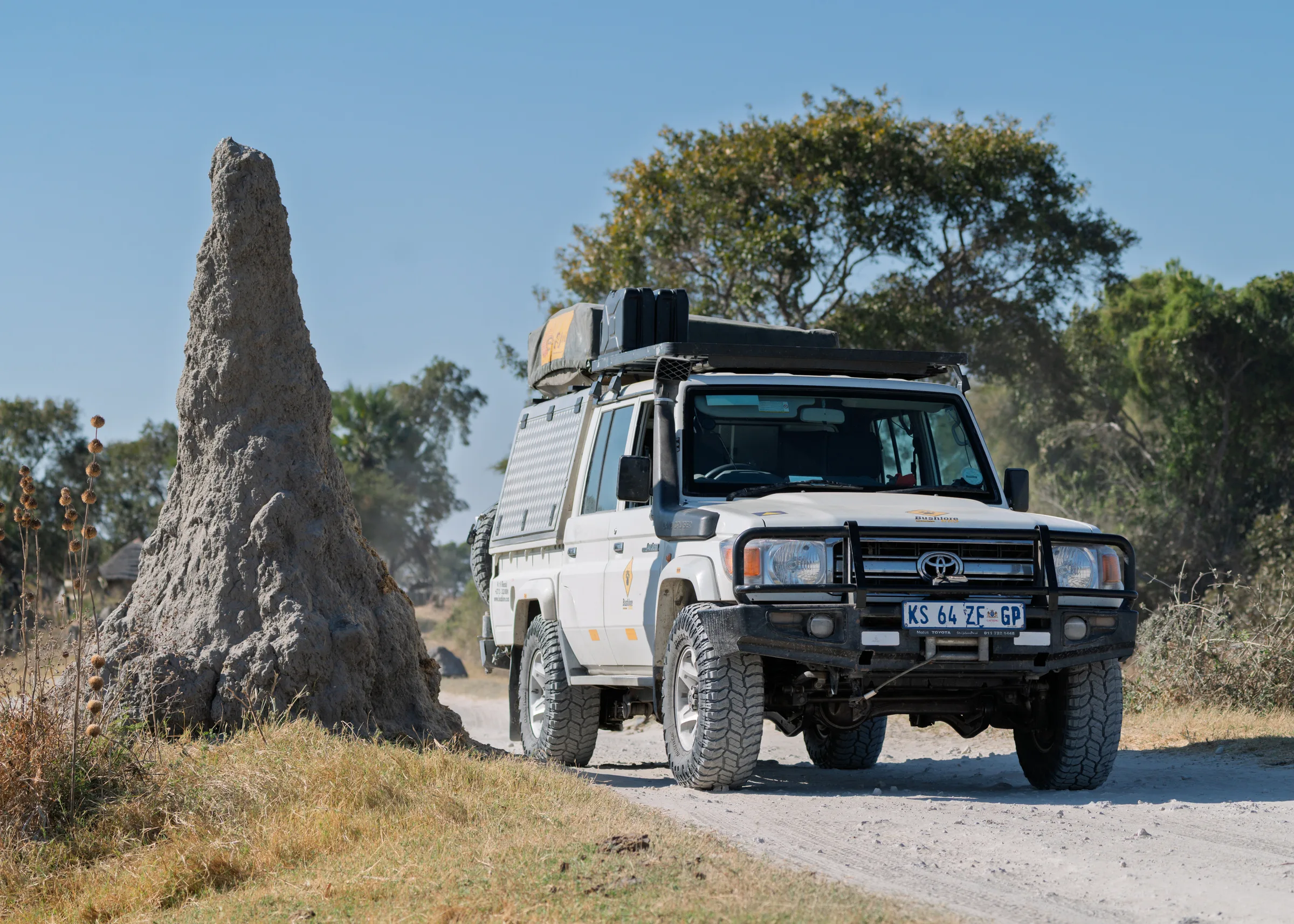
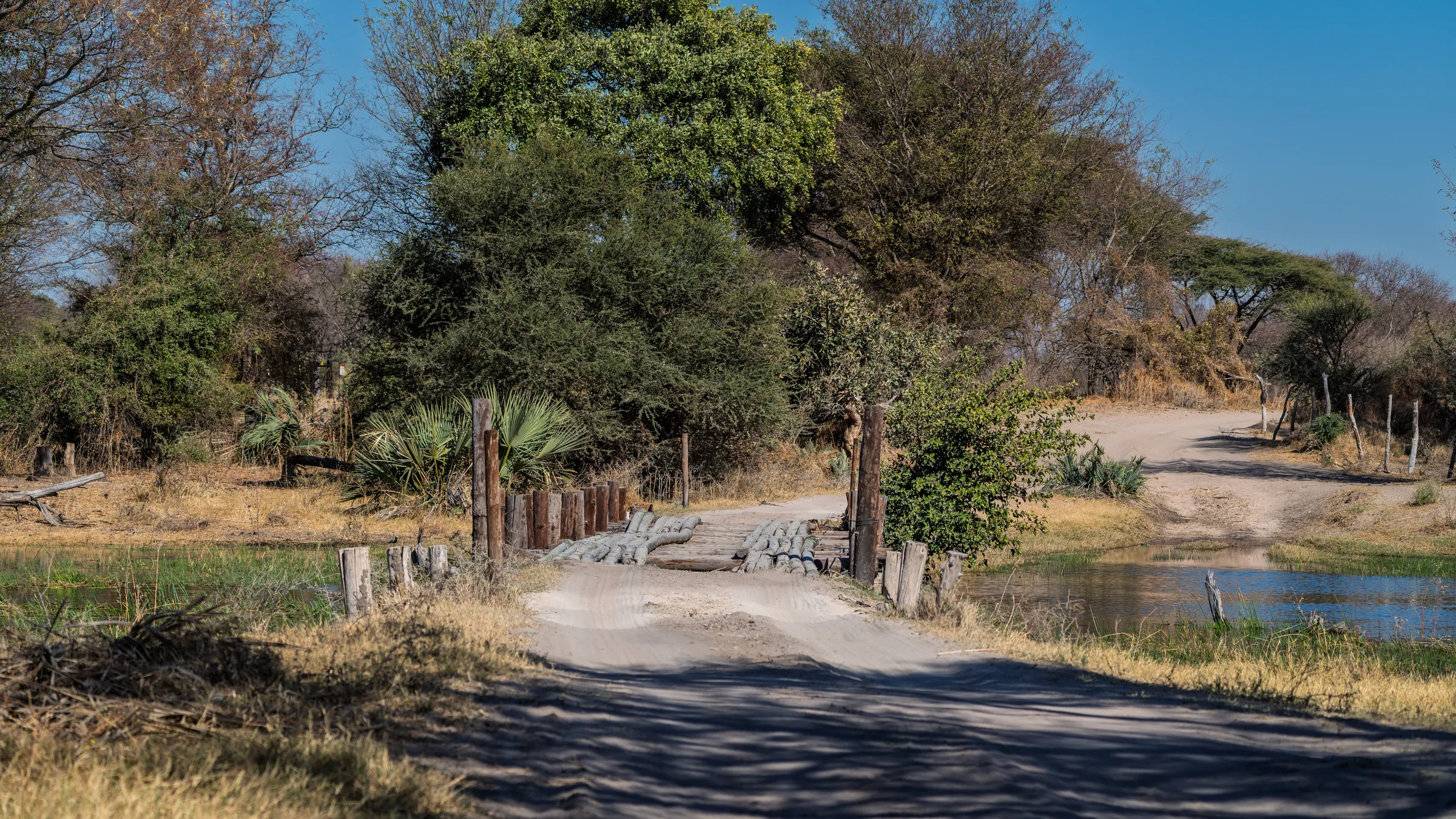
You enter the delta on sand. In its national parks, Botswana sorts the roads into three categories. Main — washboard you can’t drive slowly on, and above twenty-five kilometres an hour everything in the car comes loose. Category I — the same washboard, with sand on top: fifty good metres and then a hole in the loose patch. Category II — low range, first gear, foot to the floor, twenty max. From Kasane through Chobe and Moremi to Maun is four hundred kilometres of this medley — you see more wildlife than from the boats, but every day is half a day at the wheel.
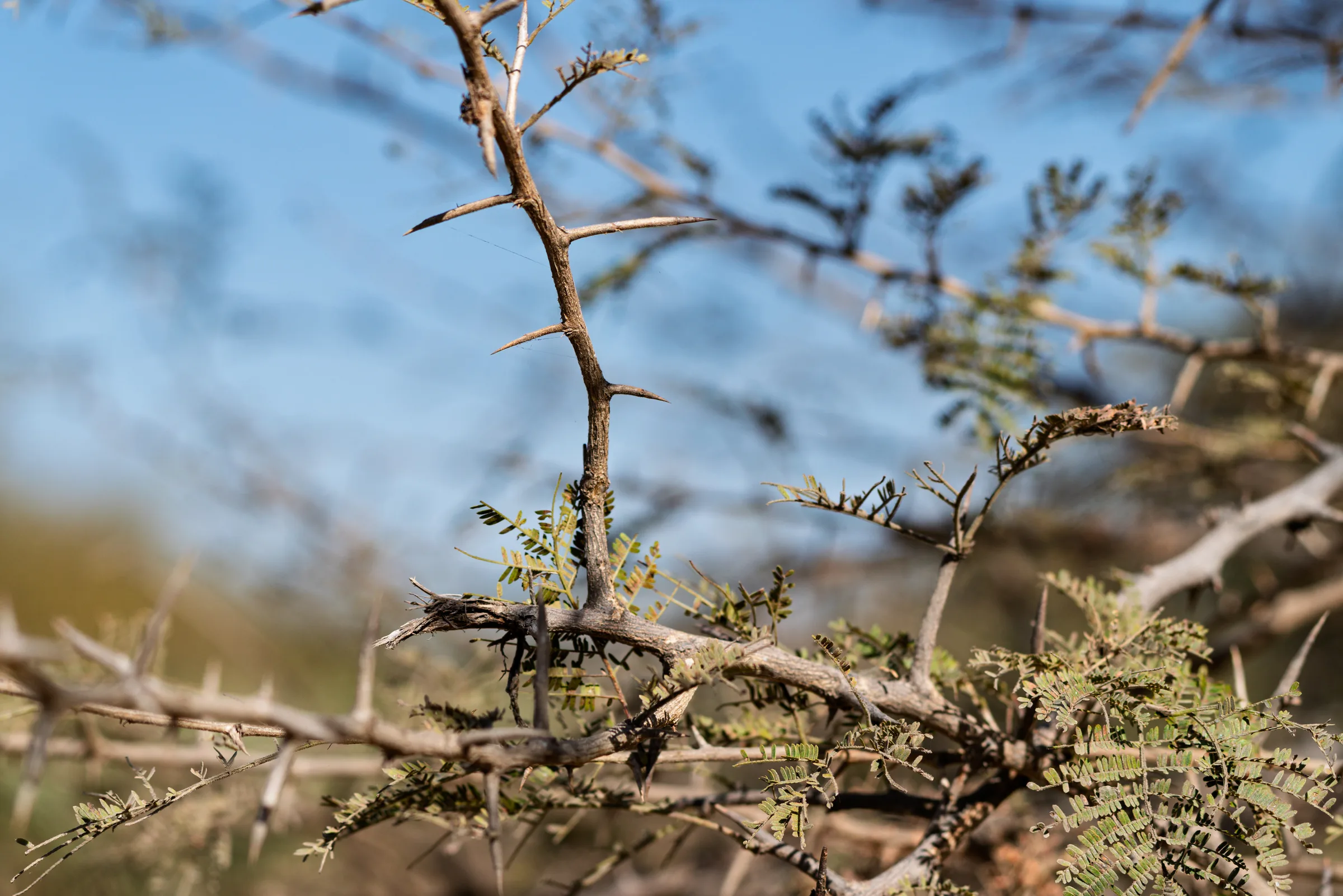
The Khwai community camp is unfenced. Six to eight pitches in thorn-bush enclosures, far enough apart that you can’t see your neighbours. Hyenas come at night — they took our dinner leftovers and one flip-flop, which probably never came back. The day here runs from six to six, and by seven it is fully dark. After sunset the temperature drops to seven, sometimes three degrees; the wood-fired shower in a wooden shed between the pitches becomes an institution.
Best months: July, August and September — the water sits highest and the Kalahari dry season pulls animals to the delta’s edges. Self-drive 4x4 with full camping outfit; last fuel station in Kasane at the border — nothing inland, fill your jerry cans there. Park entry six hundred pula per vehicle per day. Take maximum insurance, but know that rollover without collision and night animal strikes usually fall out of the policy. Rent a mokoro in a village on the park boundary — three hours of poling costs about the same as one gate fee.
Gallery