№ 02 · February–March 2022 · Chile
Las Vicuñas.
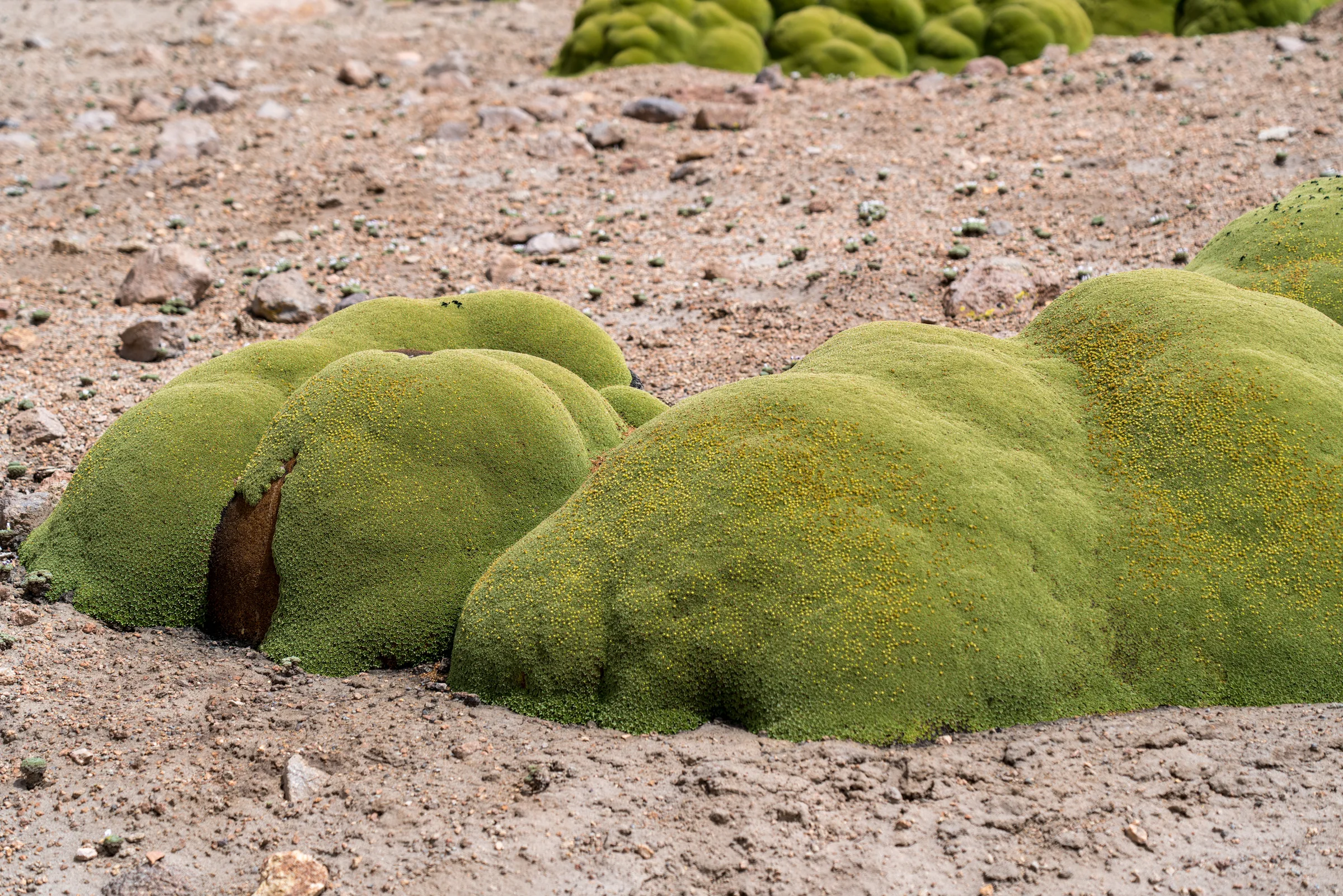
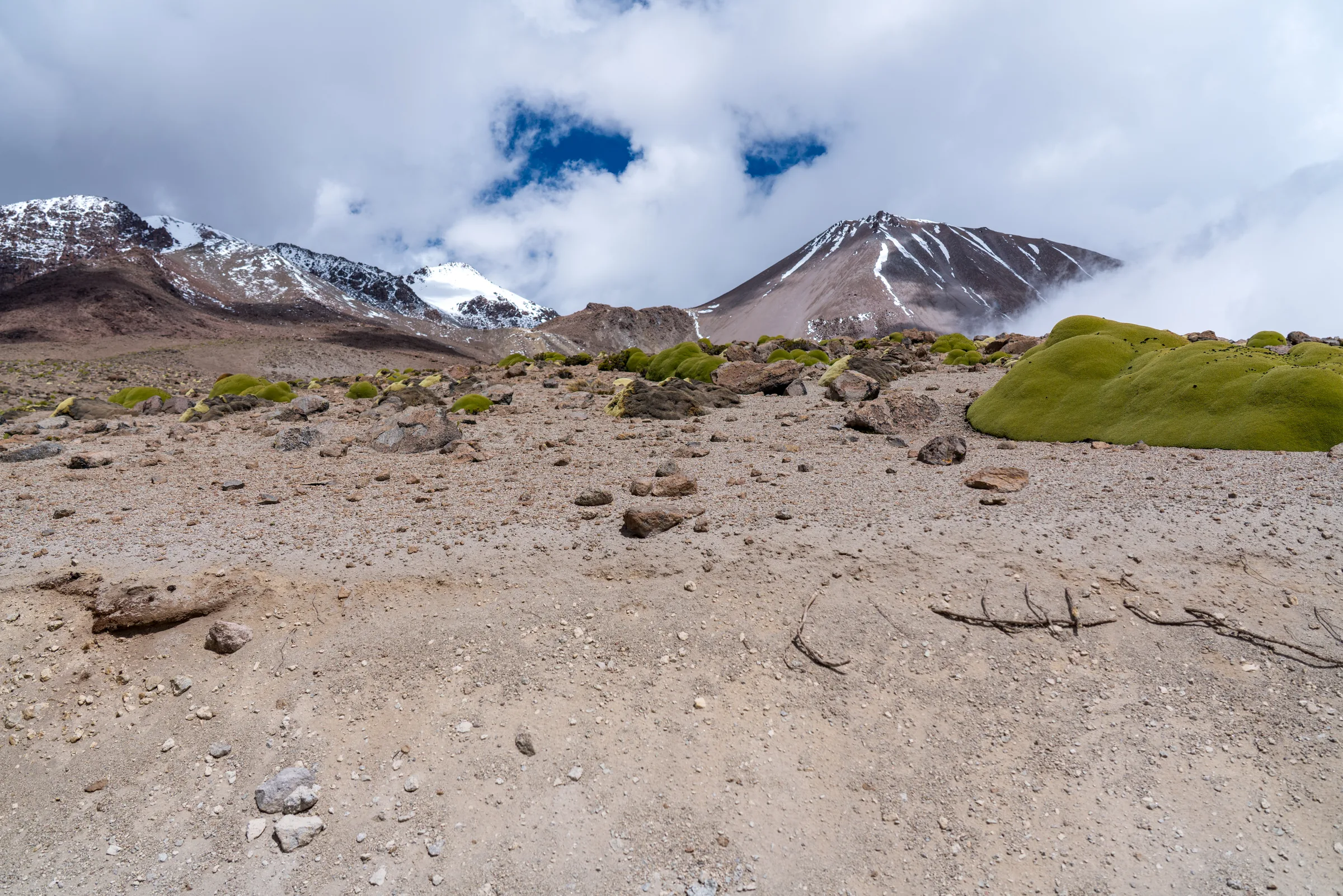
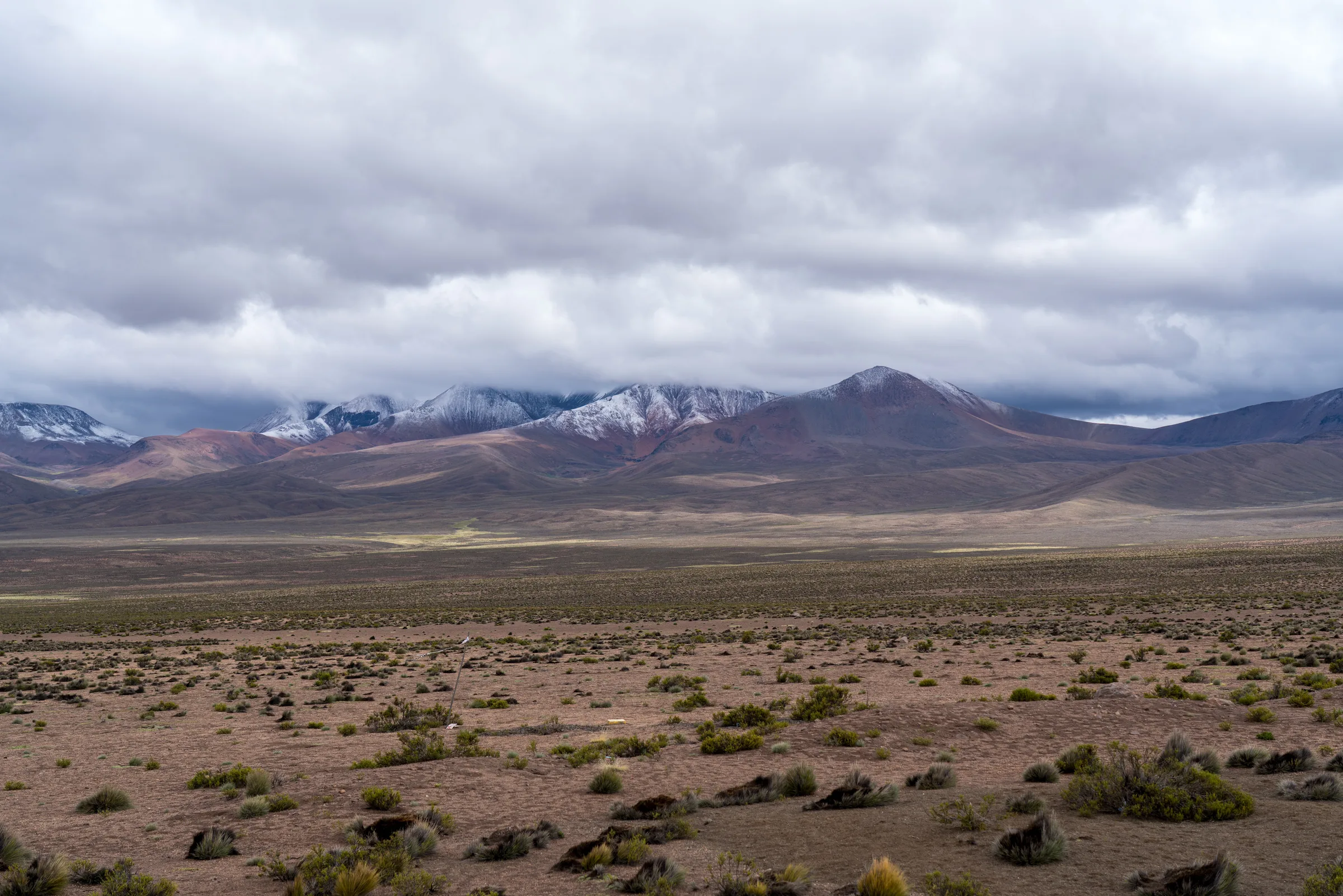
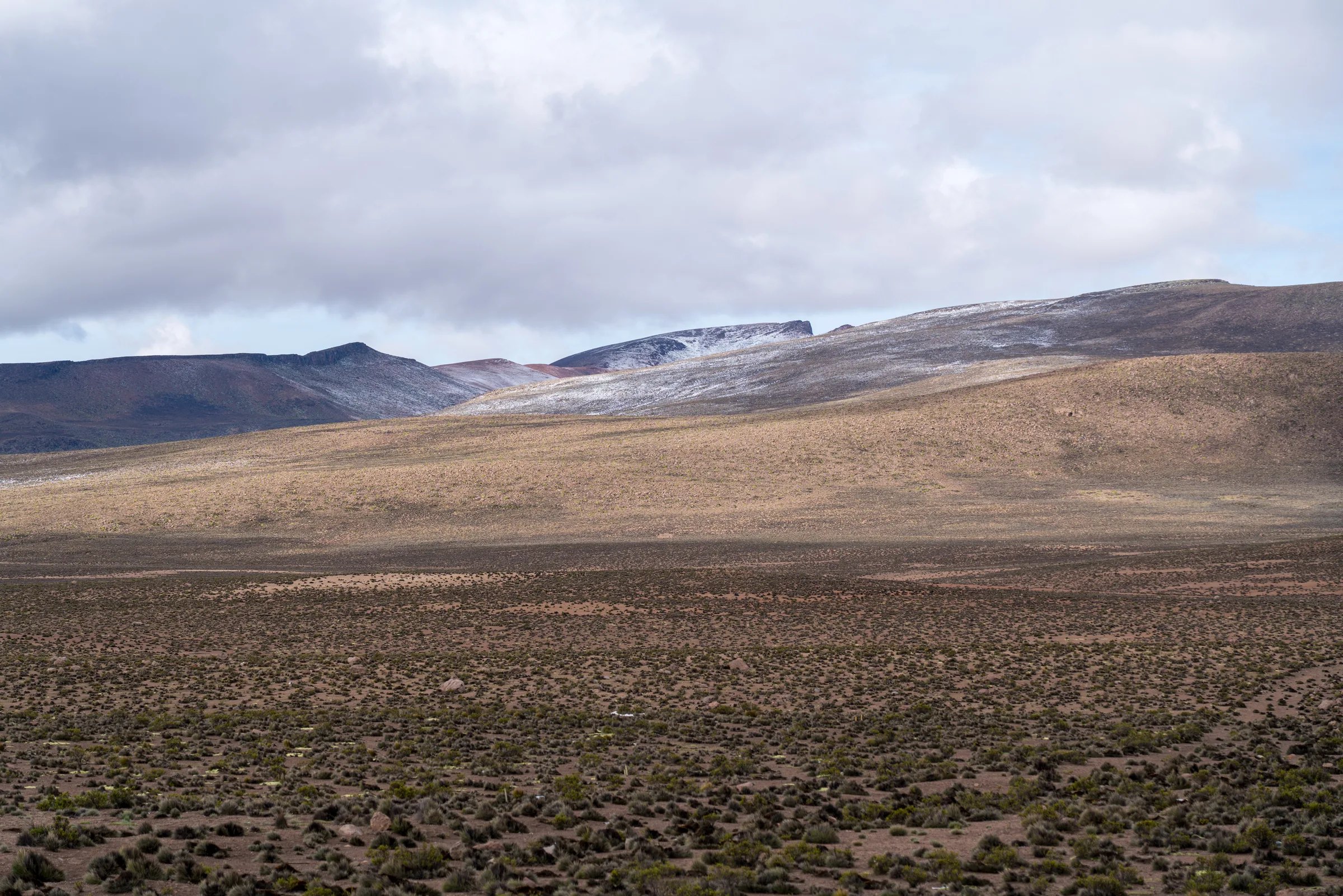
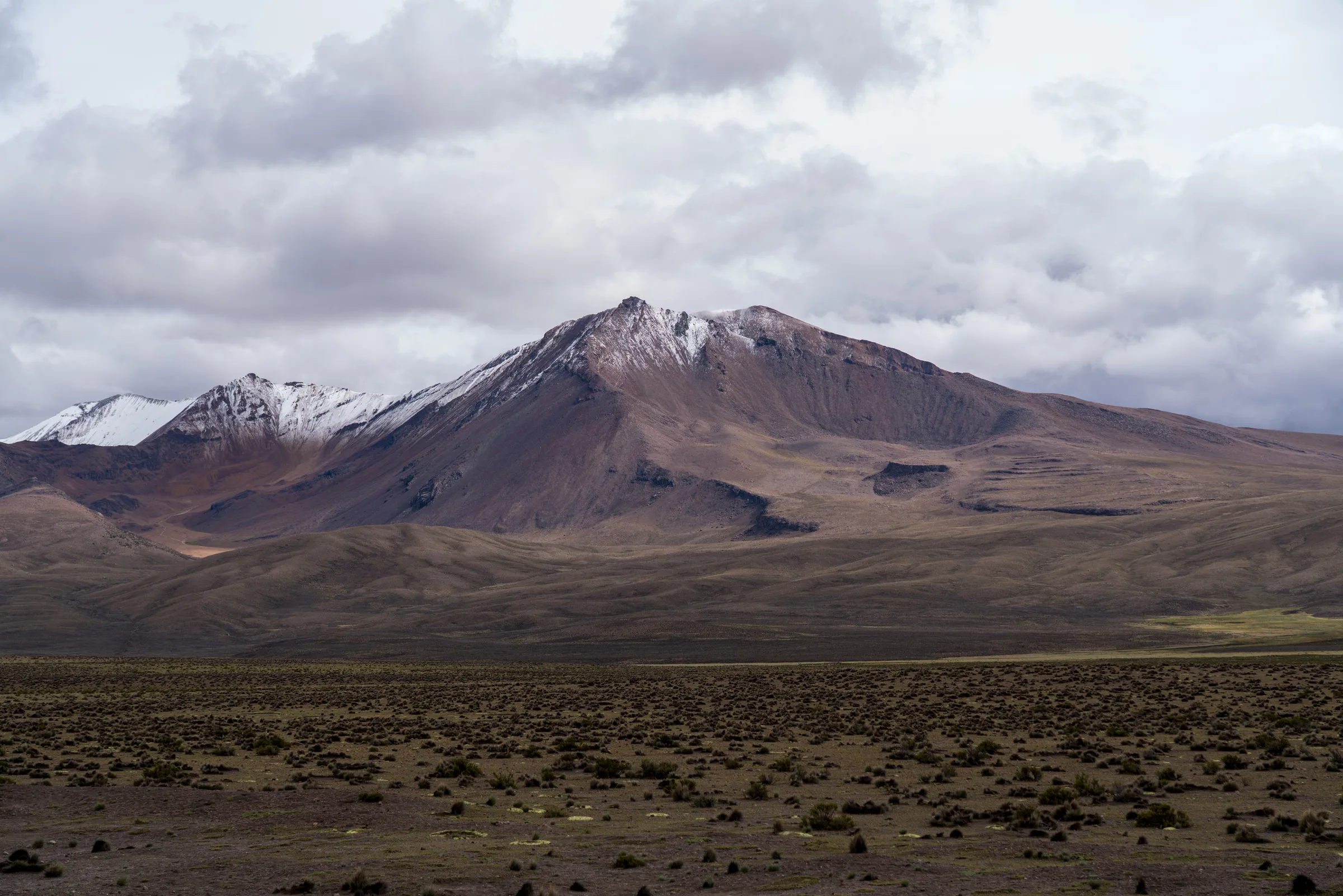
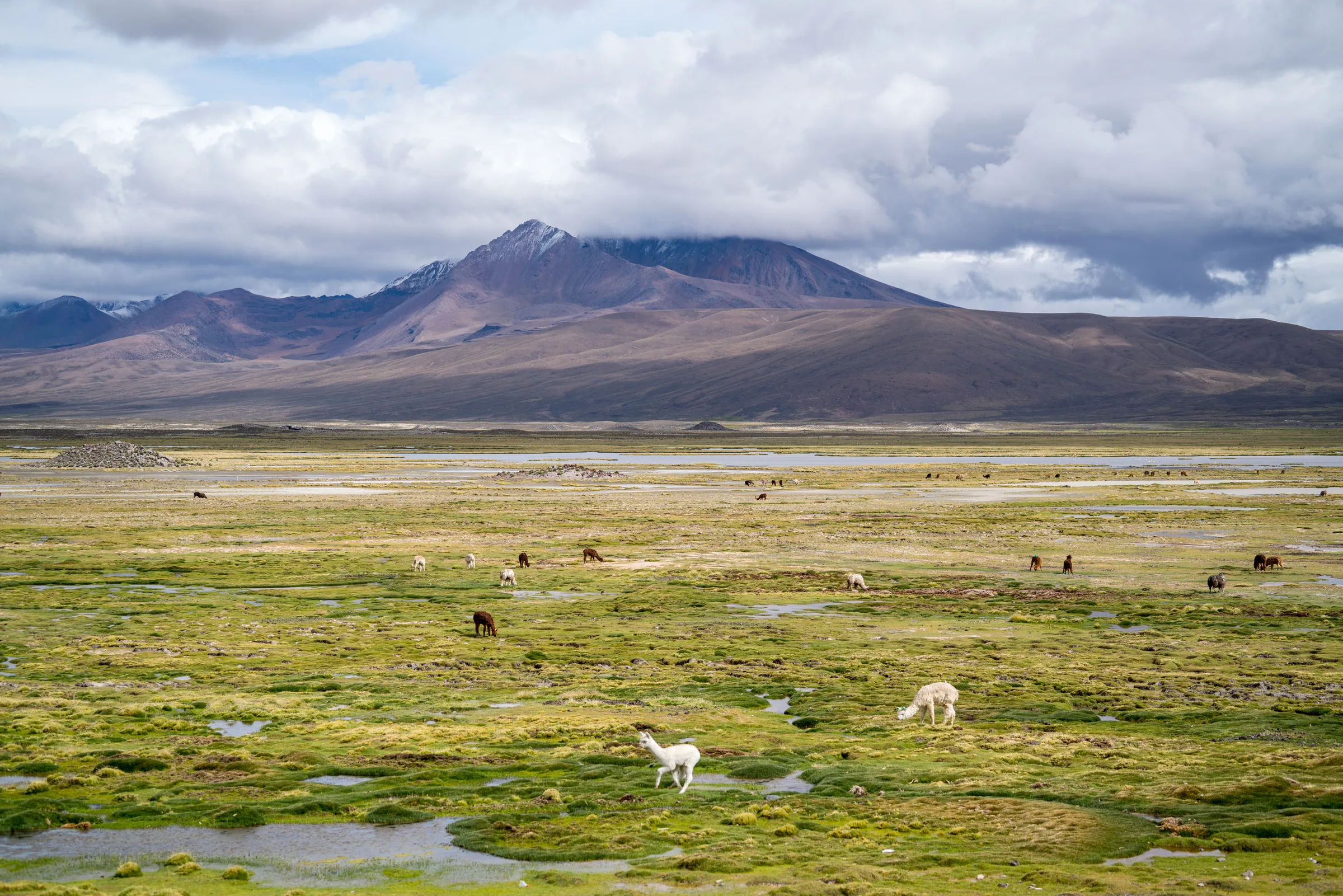
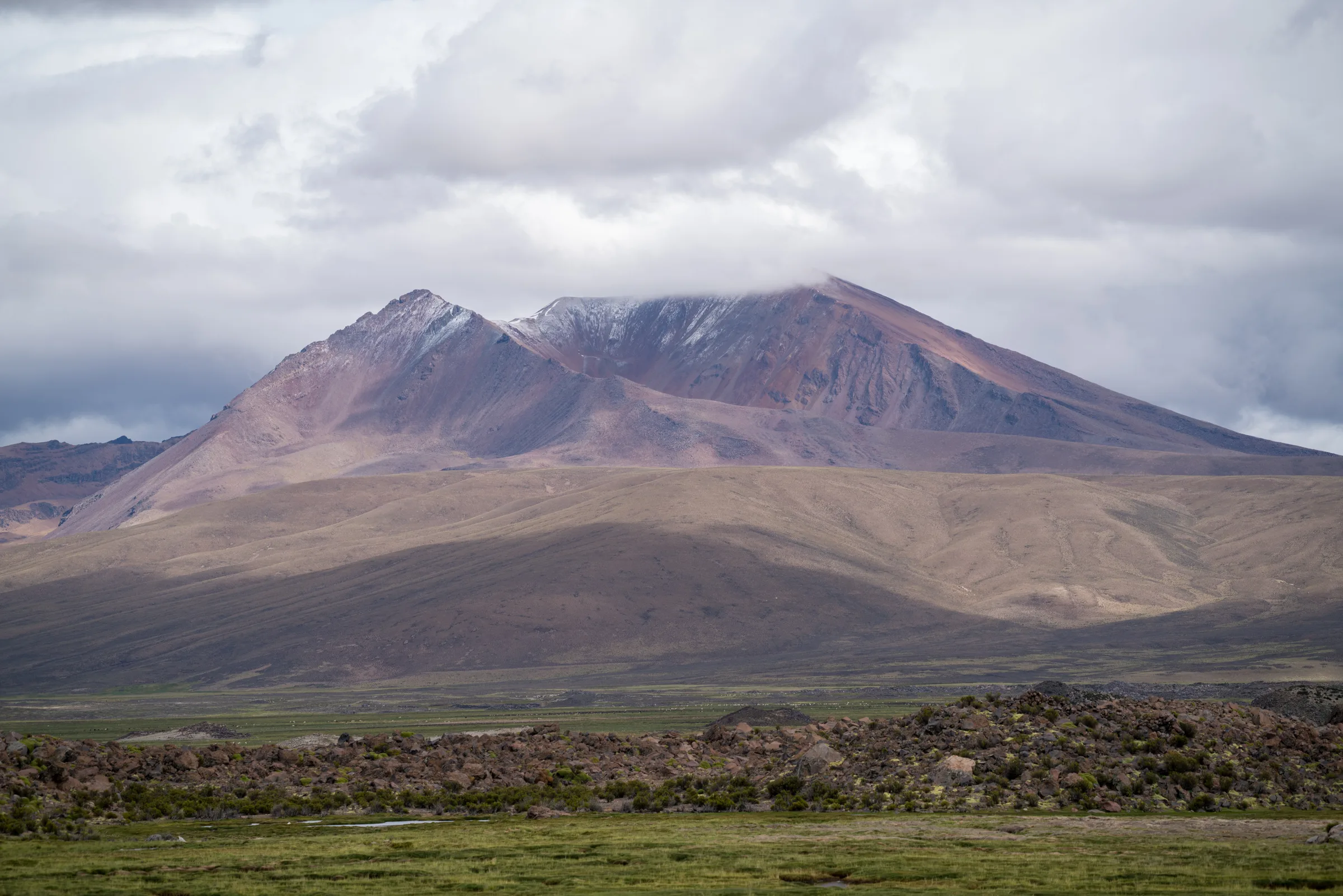
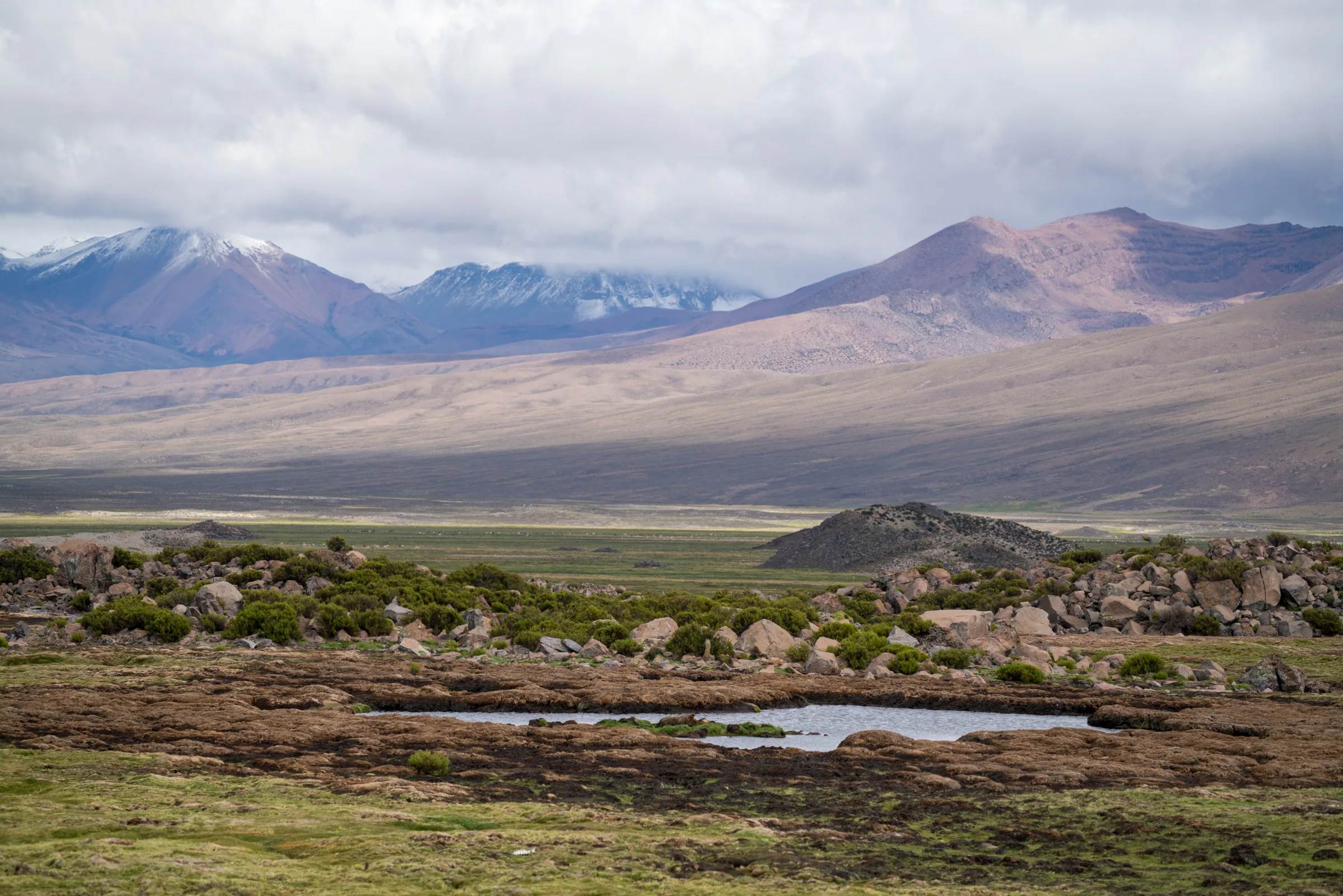
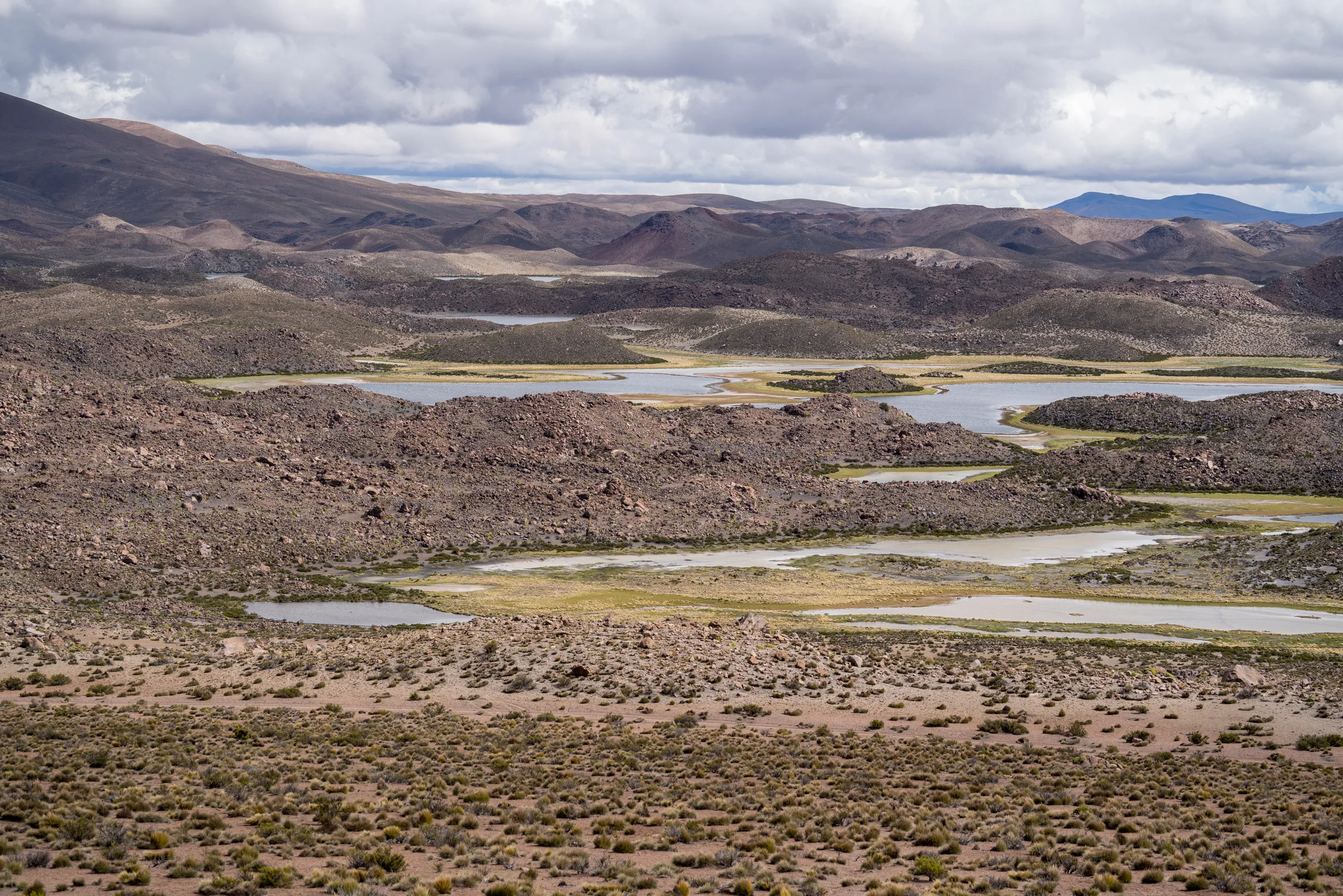
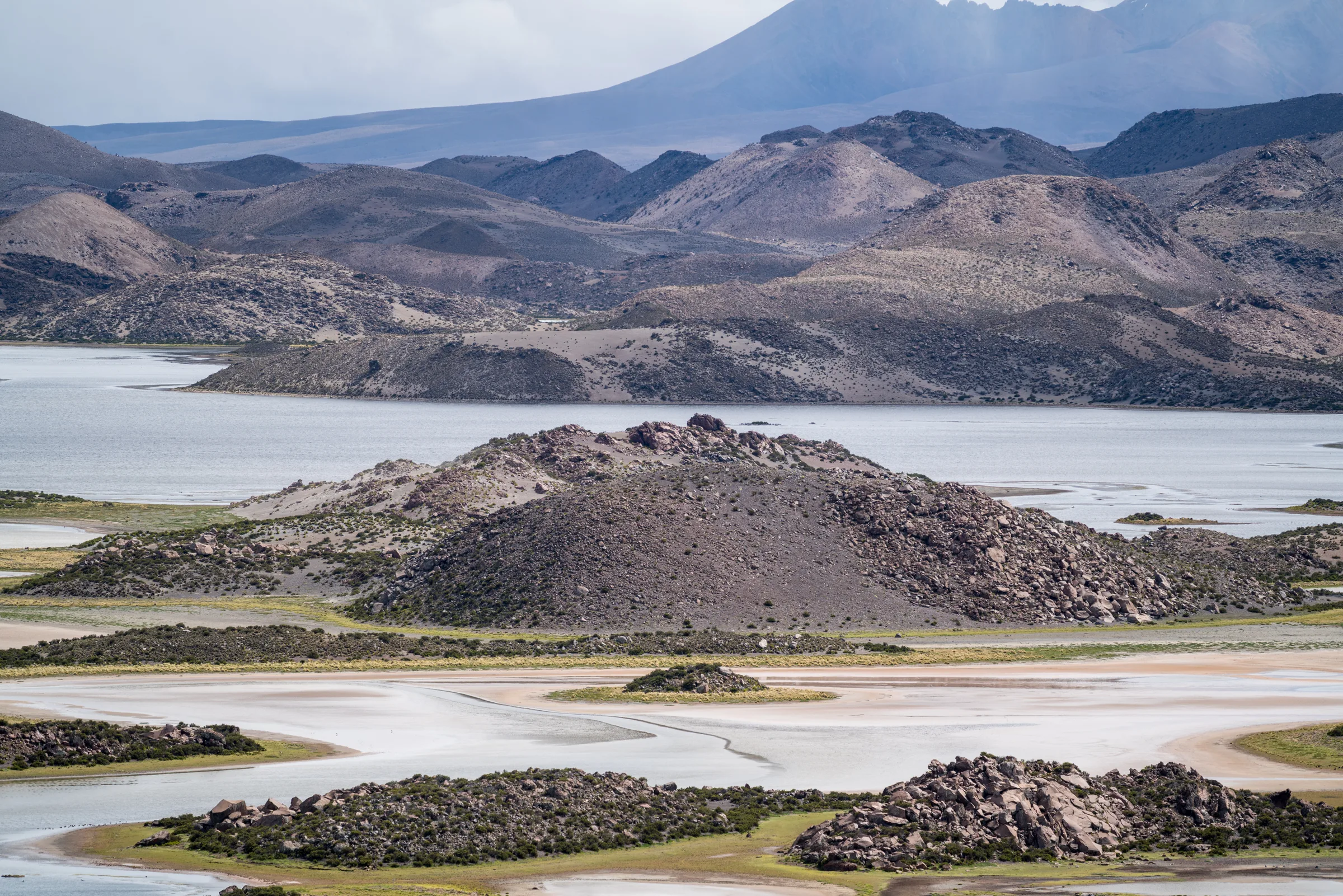
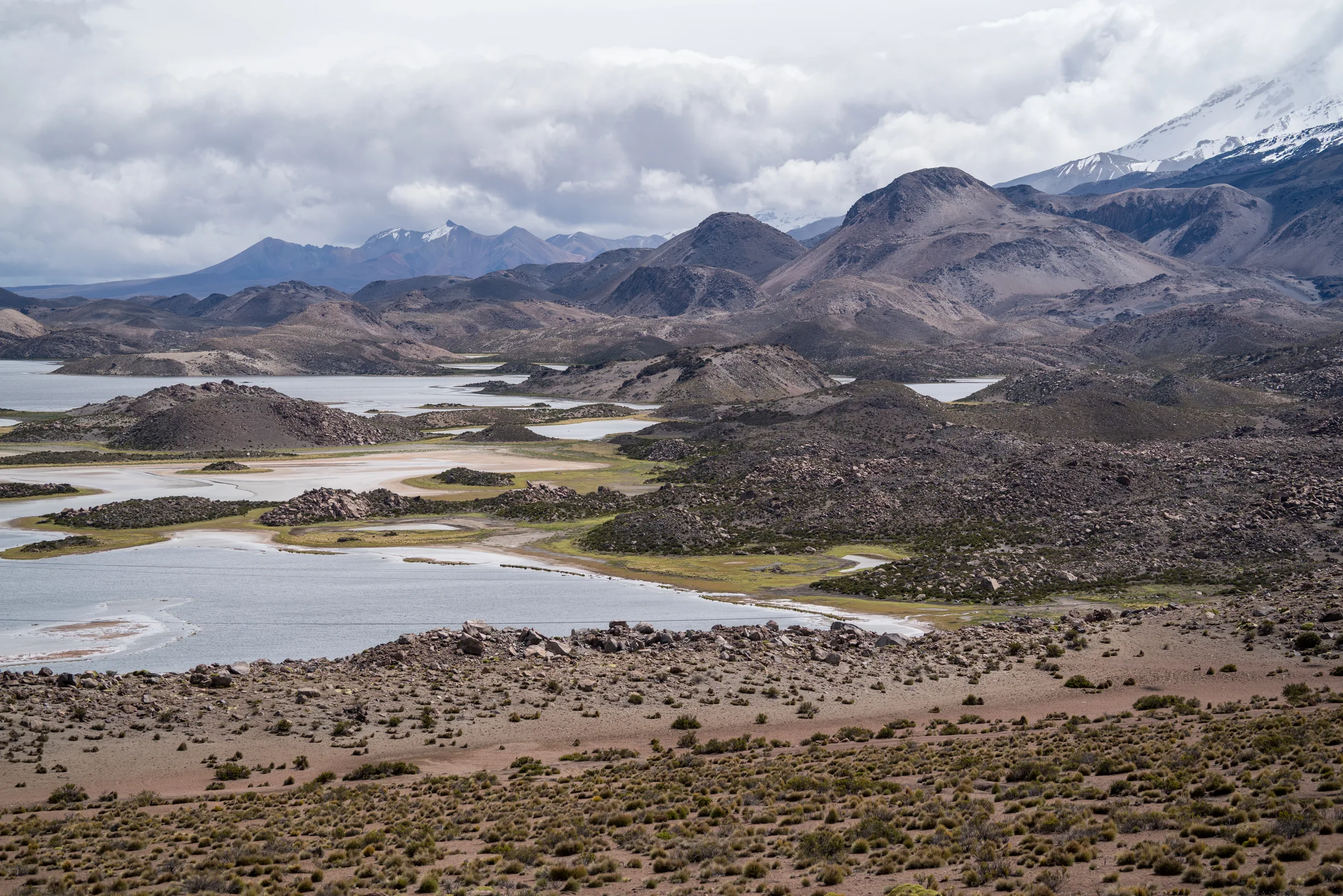
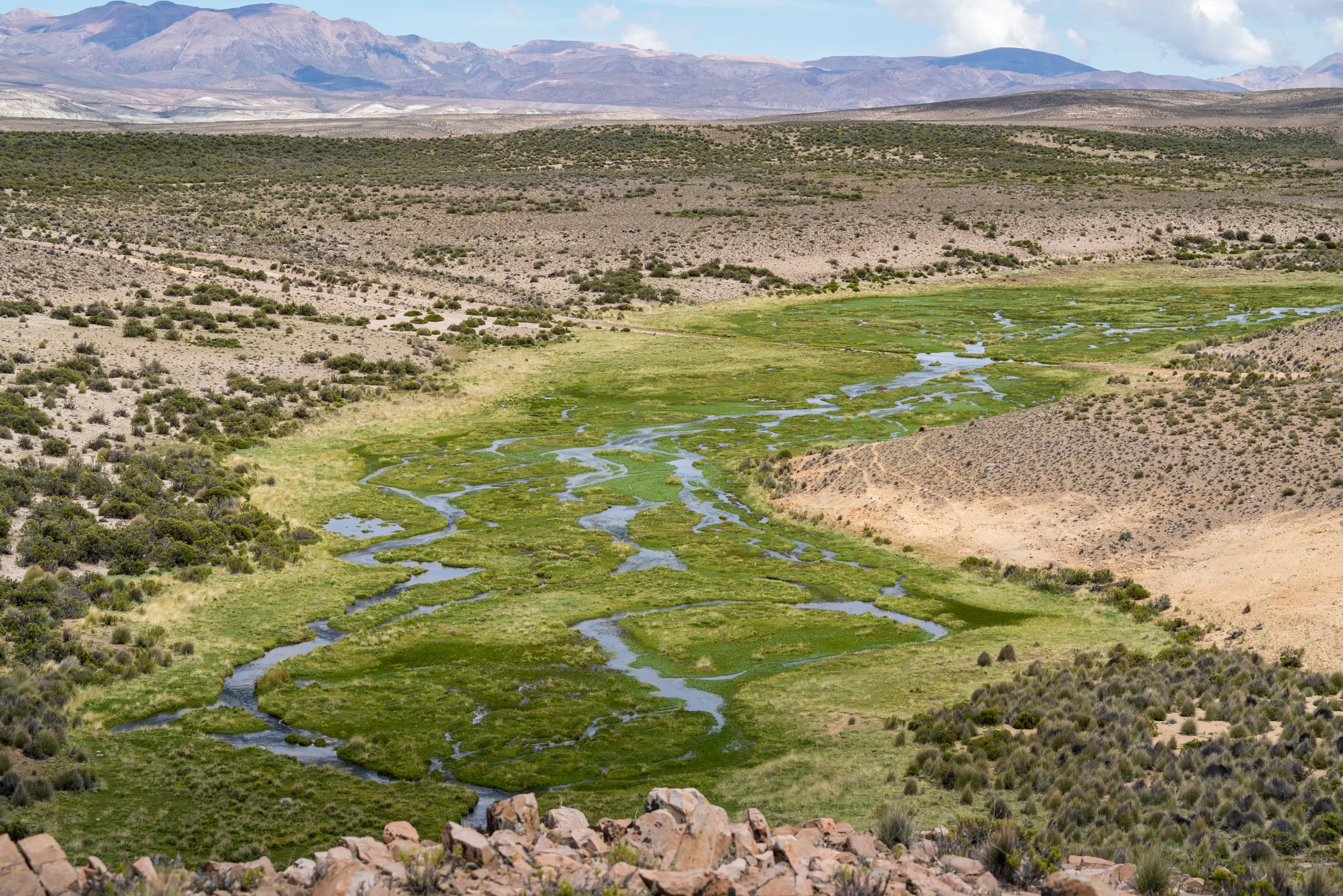
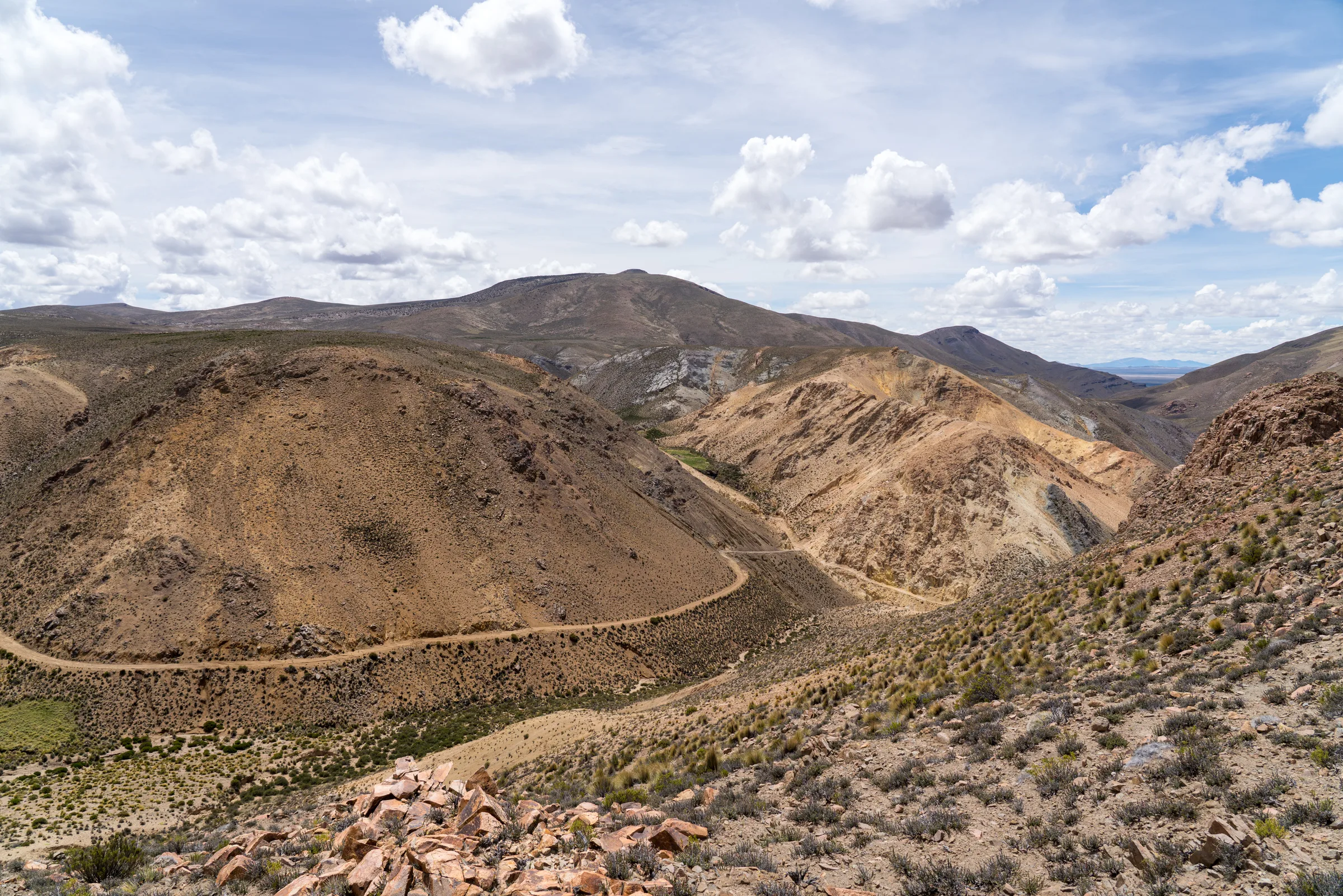
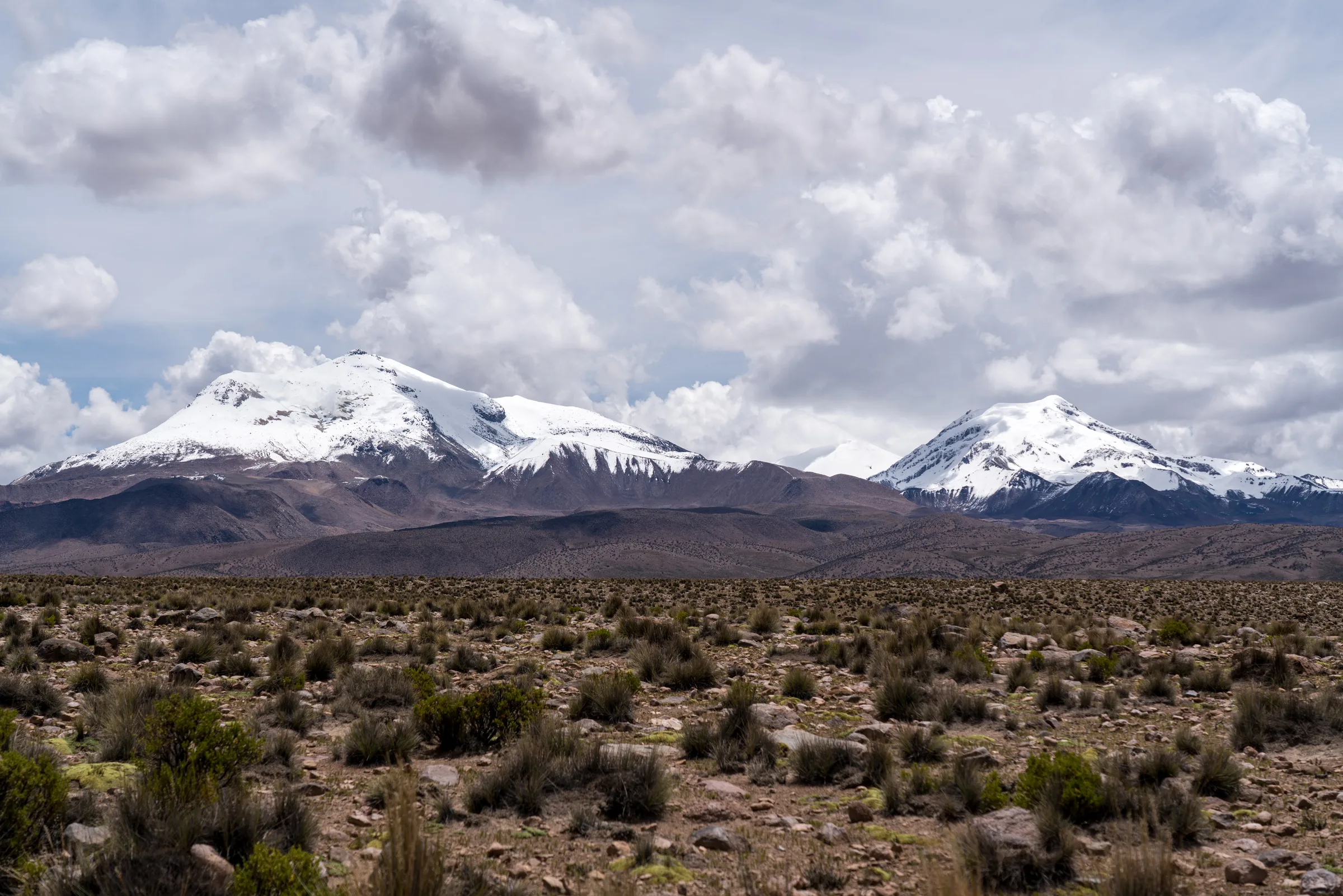
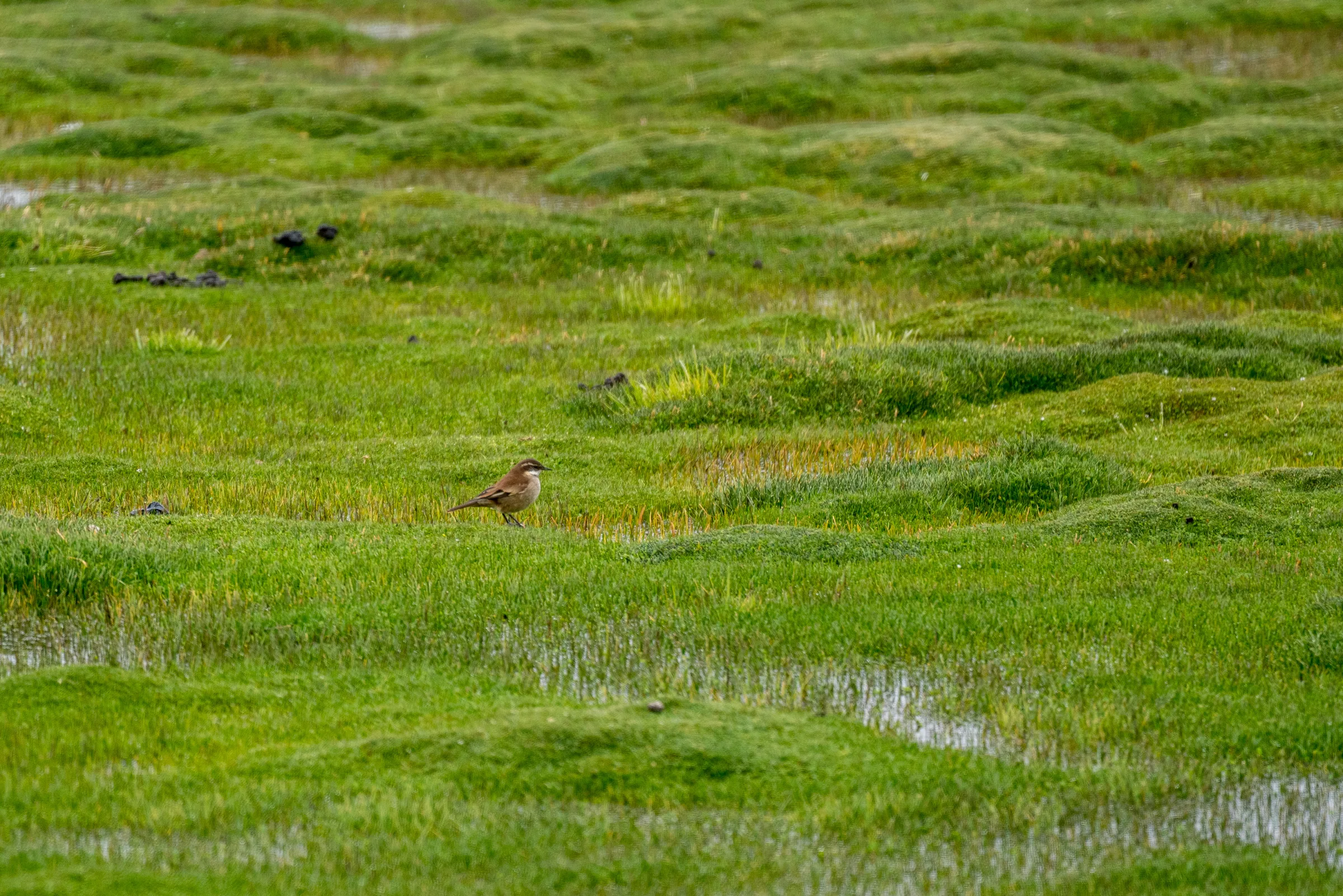
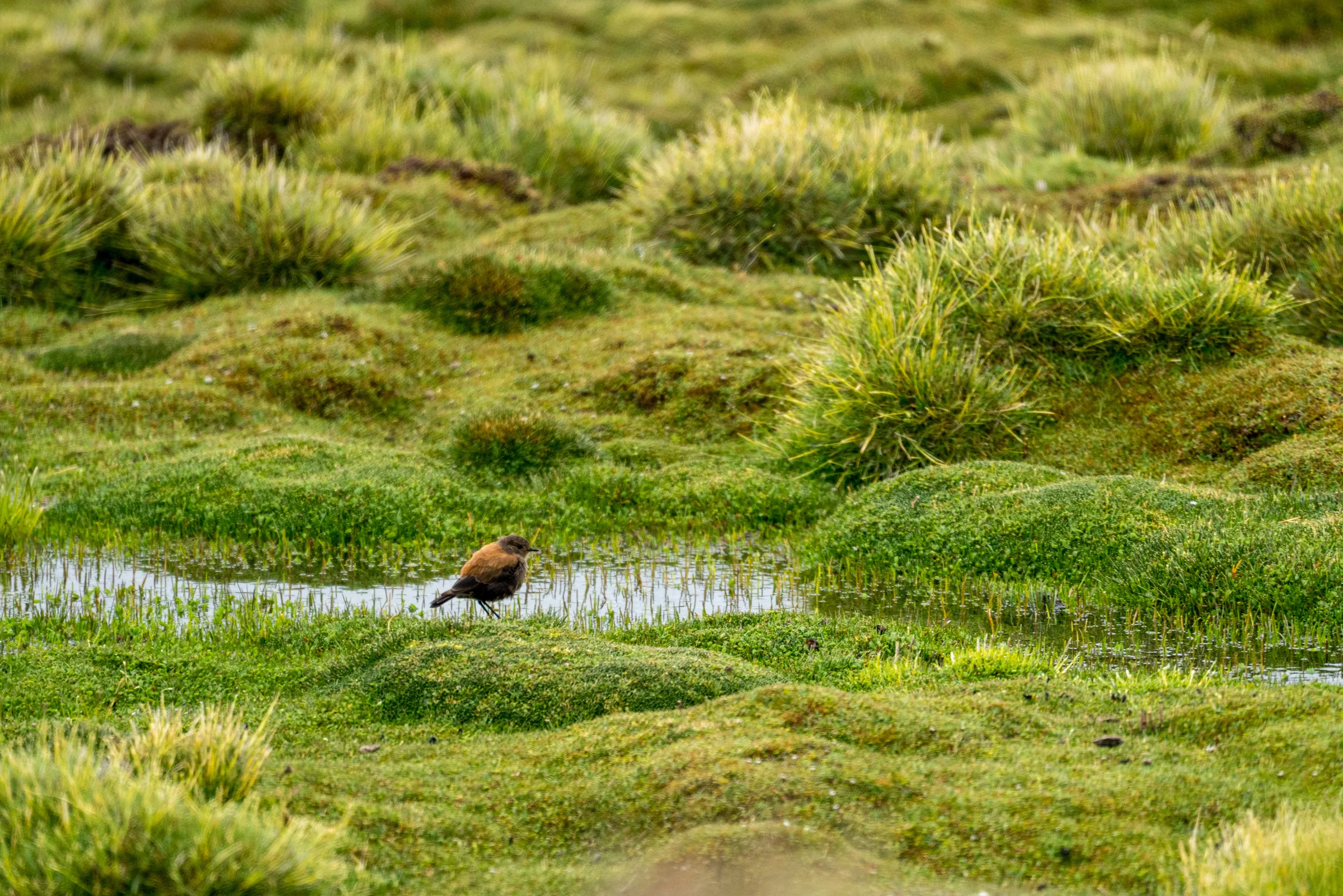
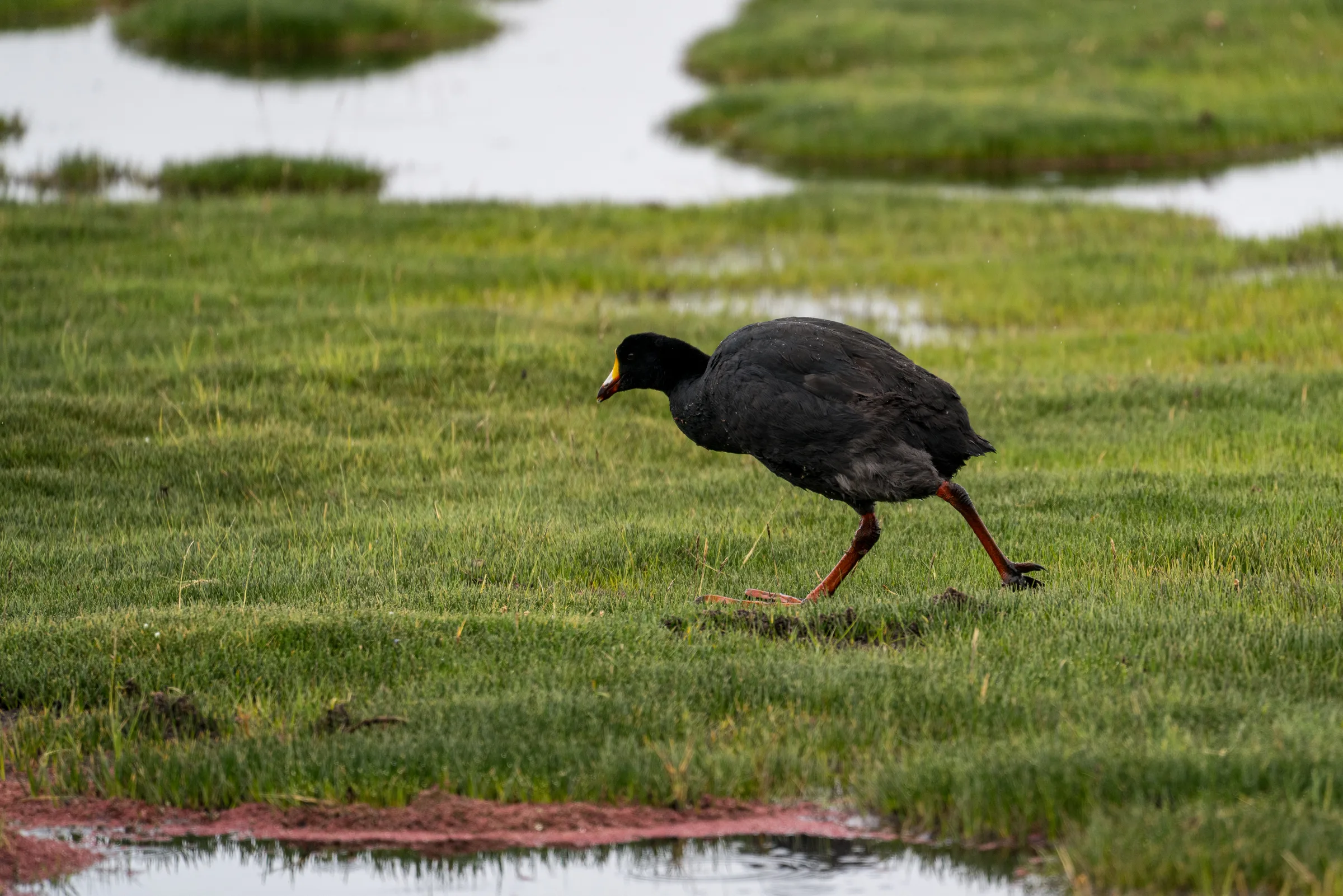
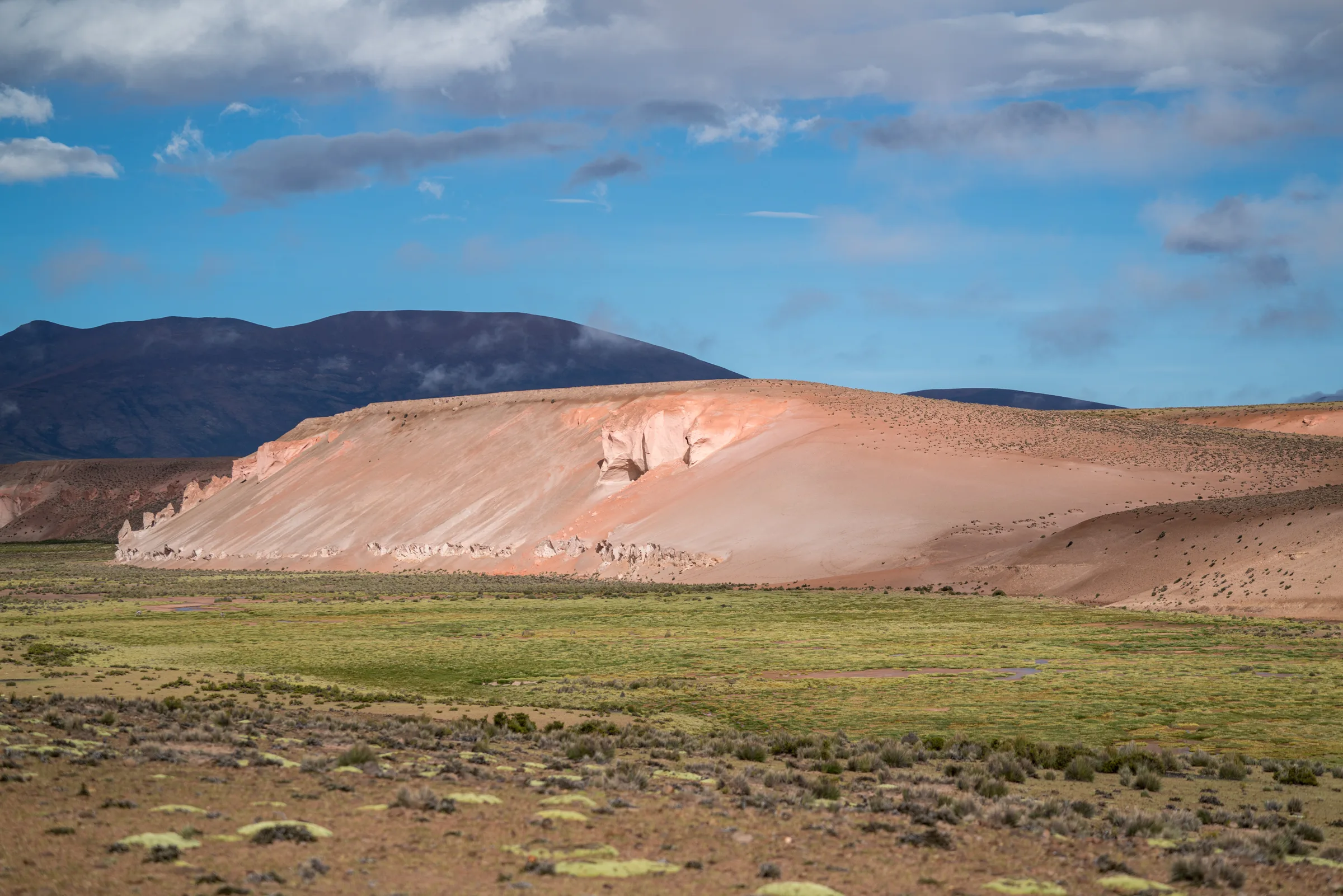
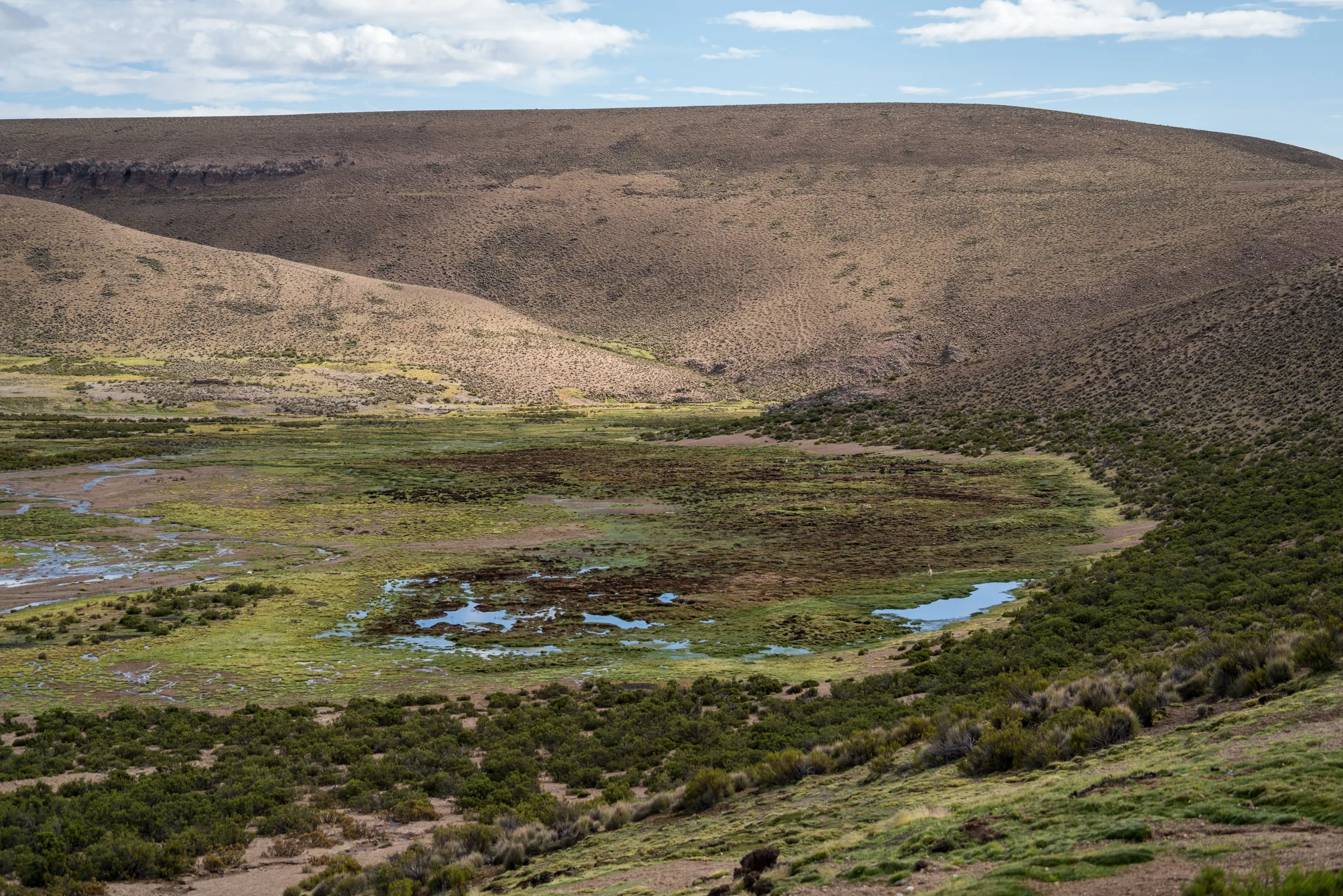
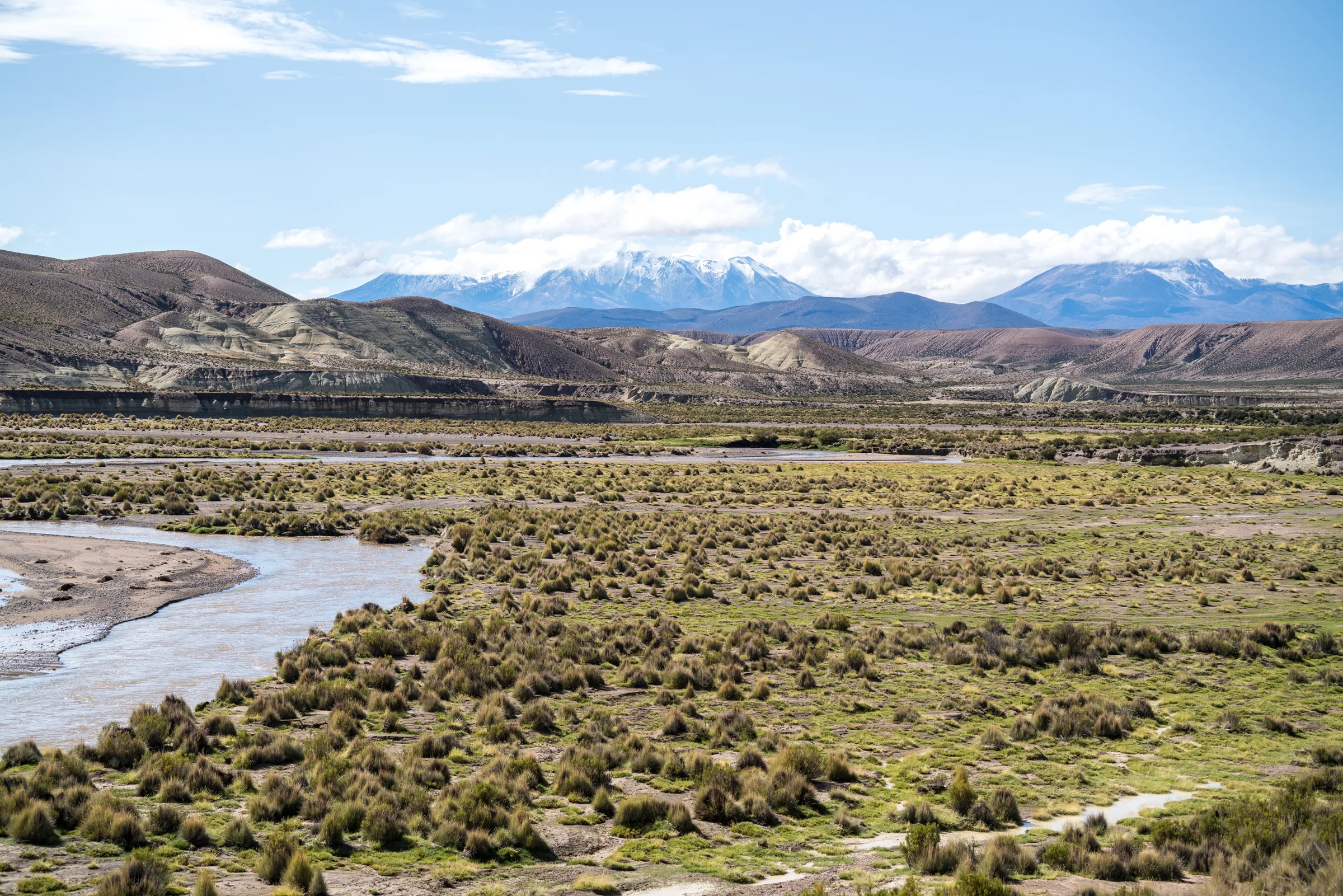
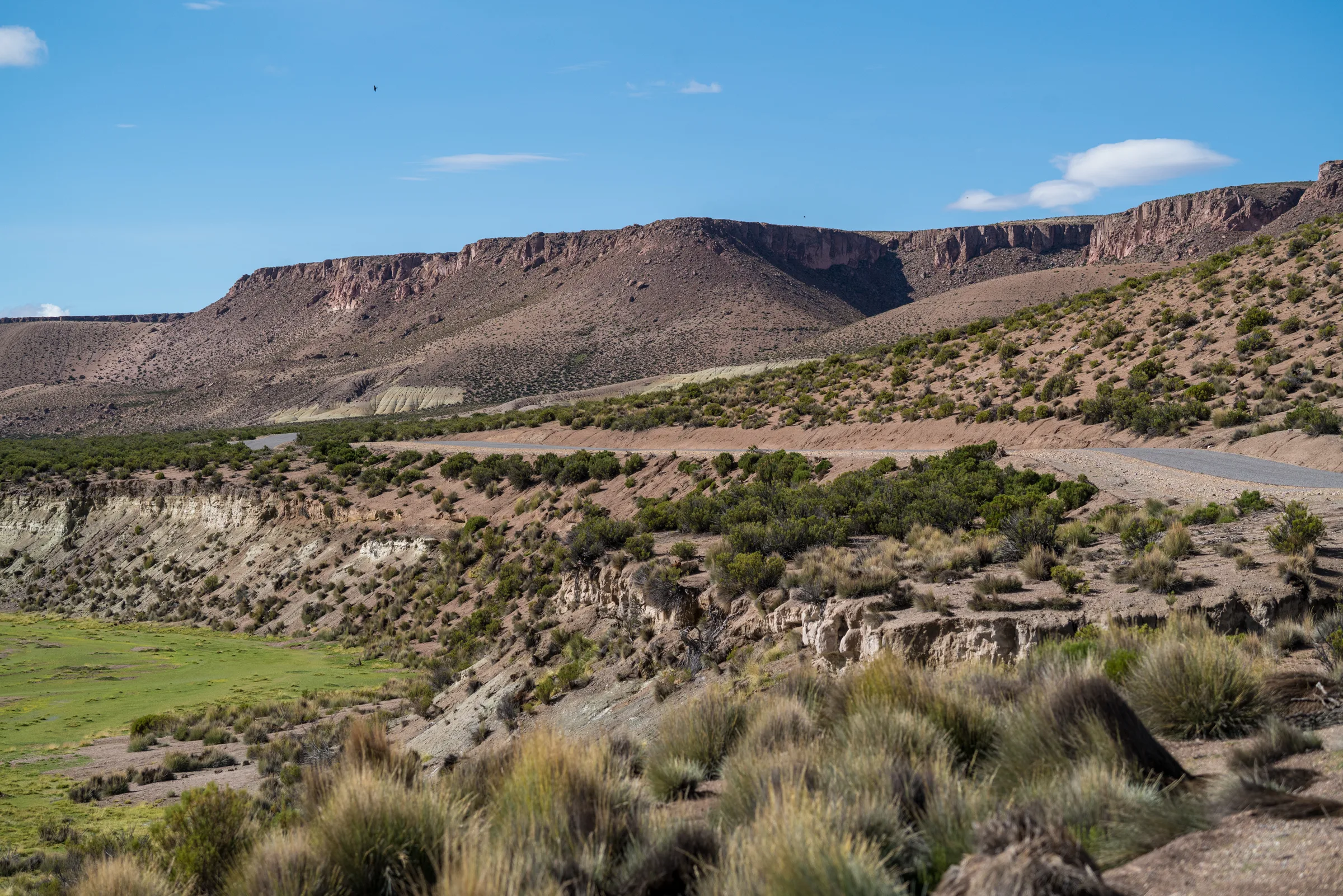
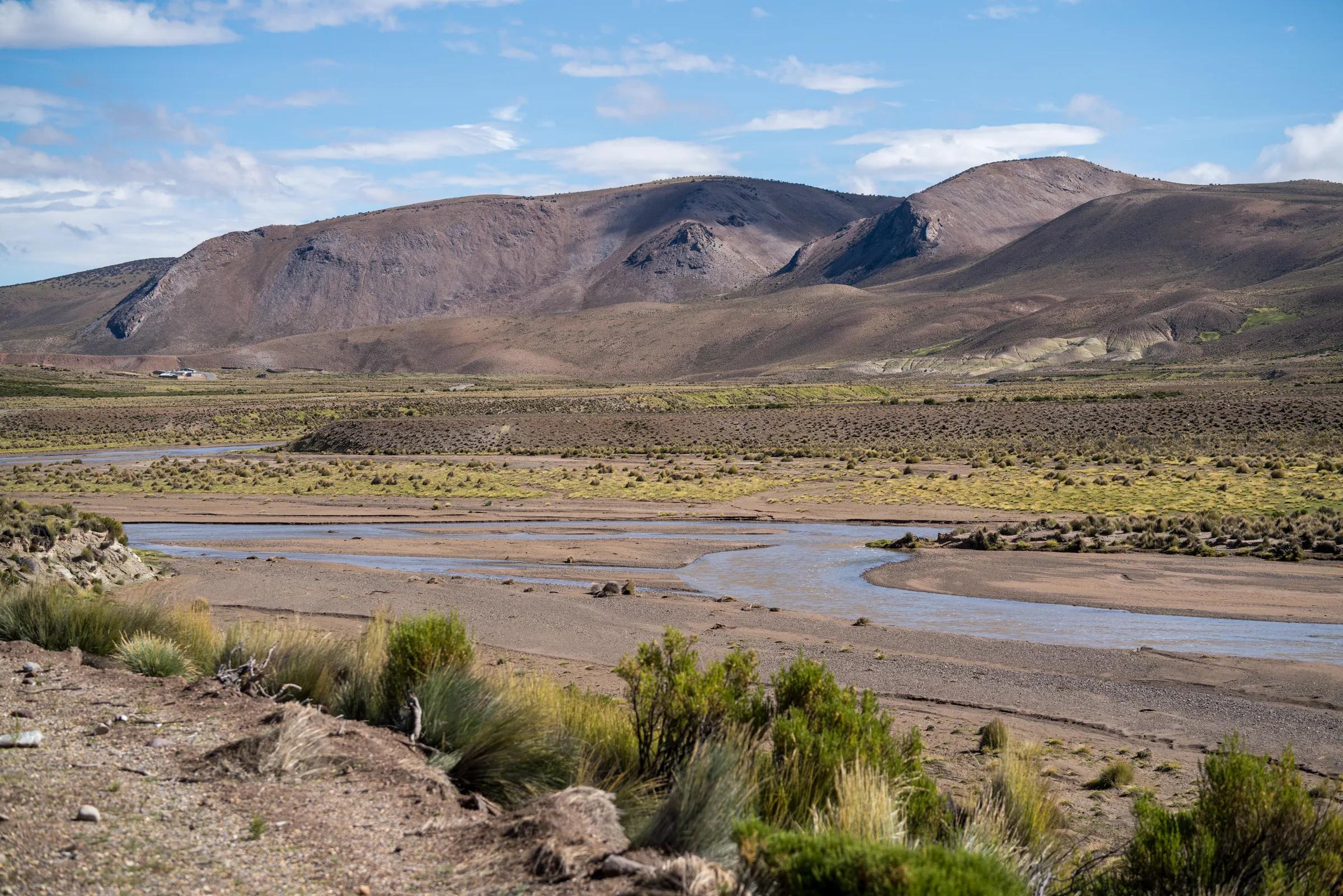
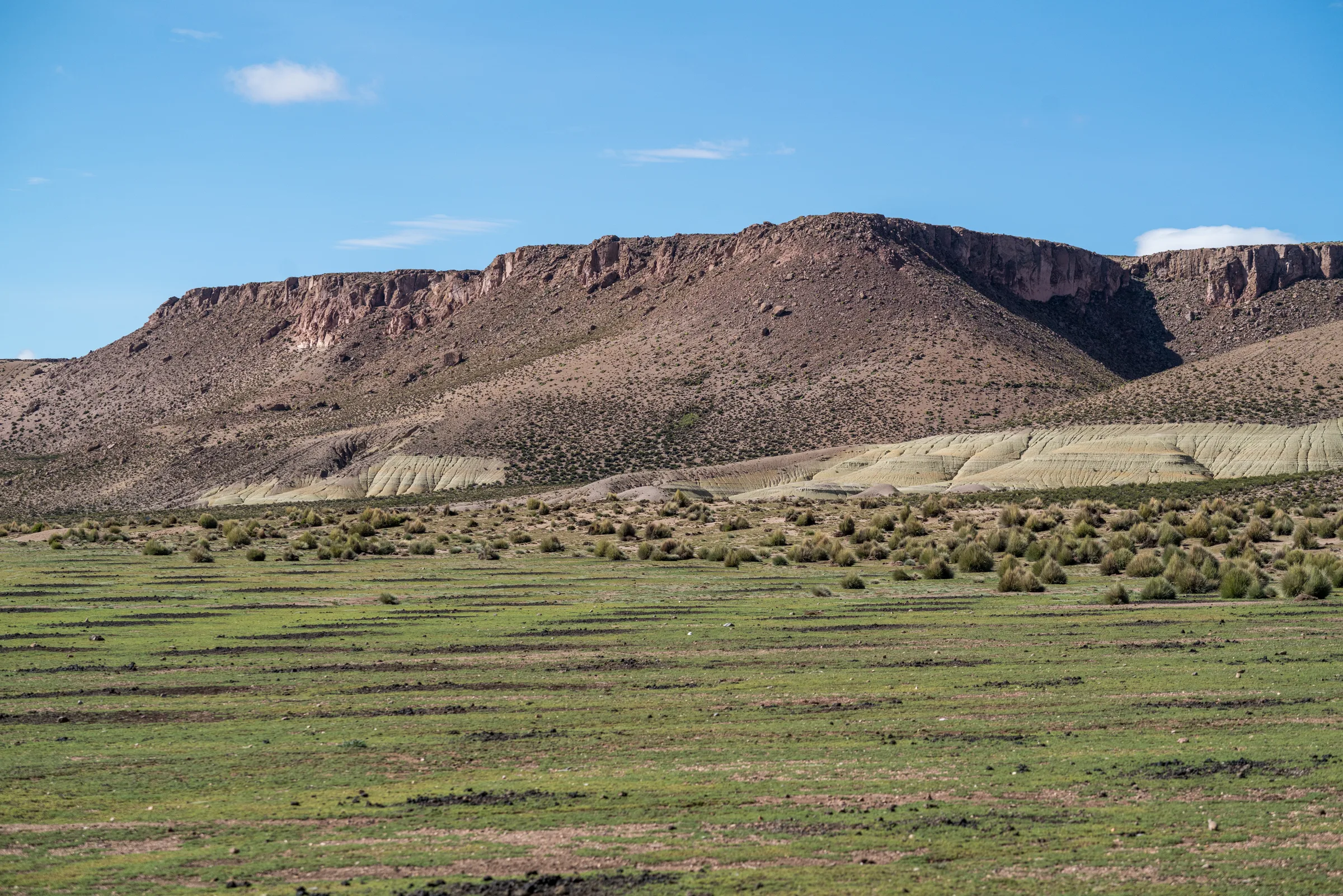
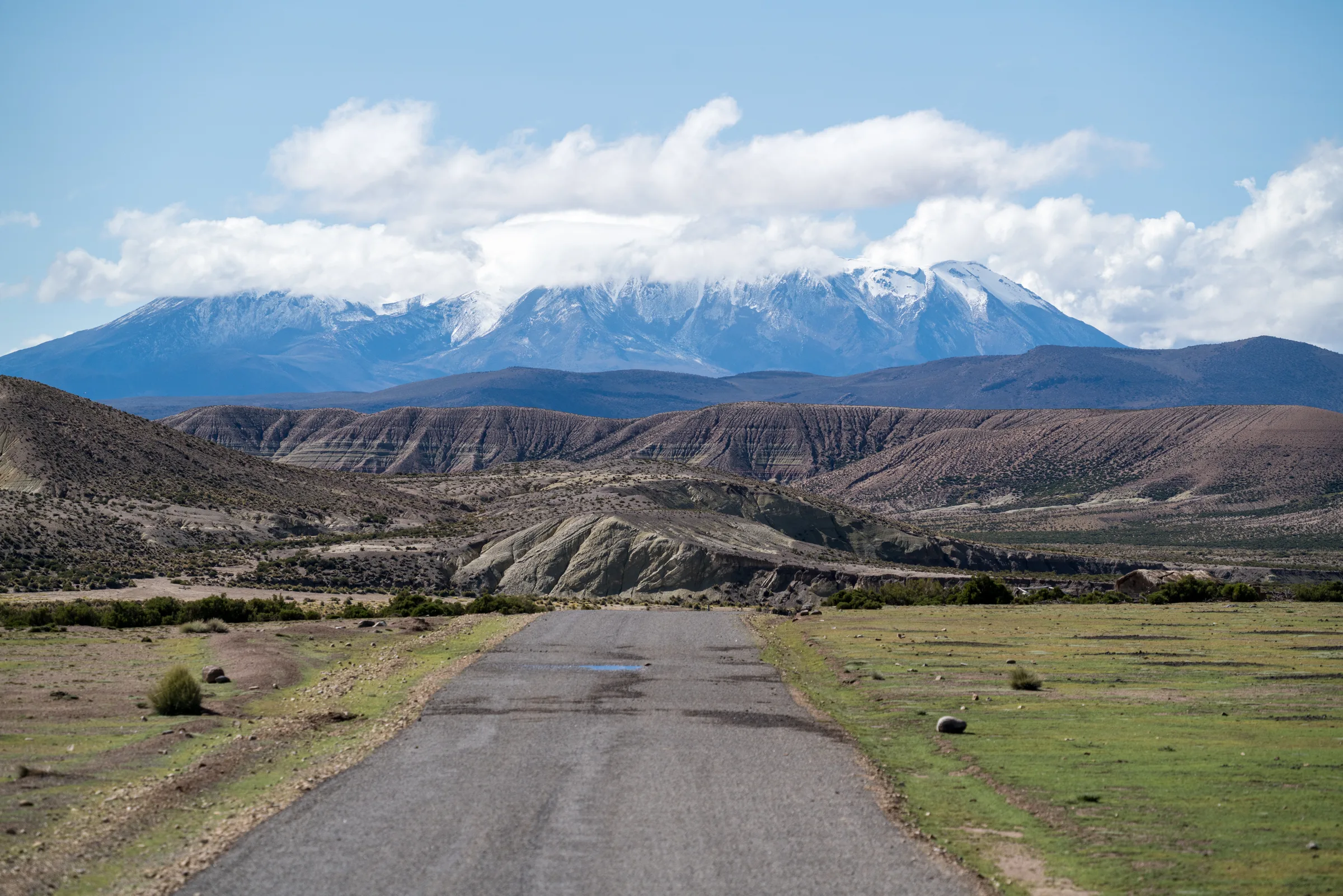
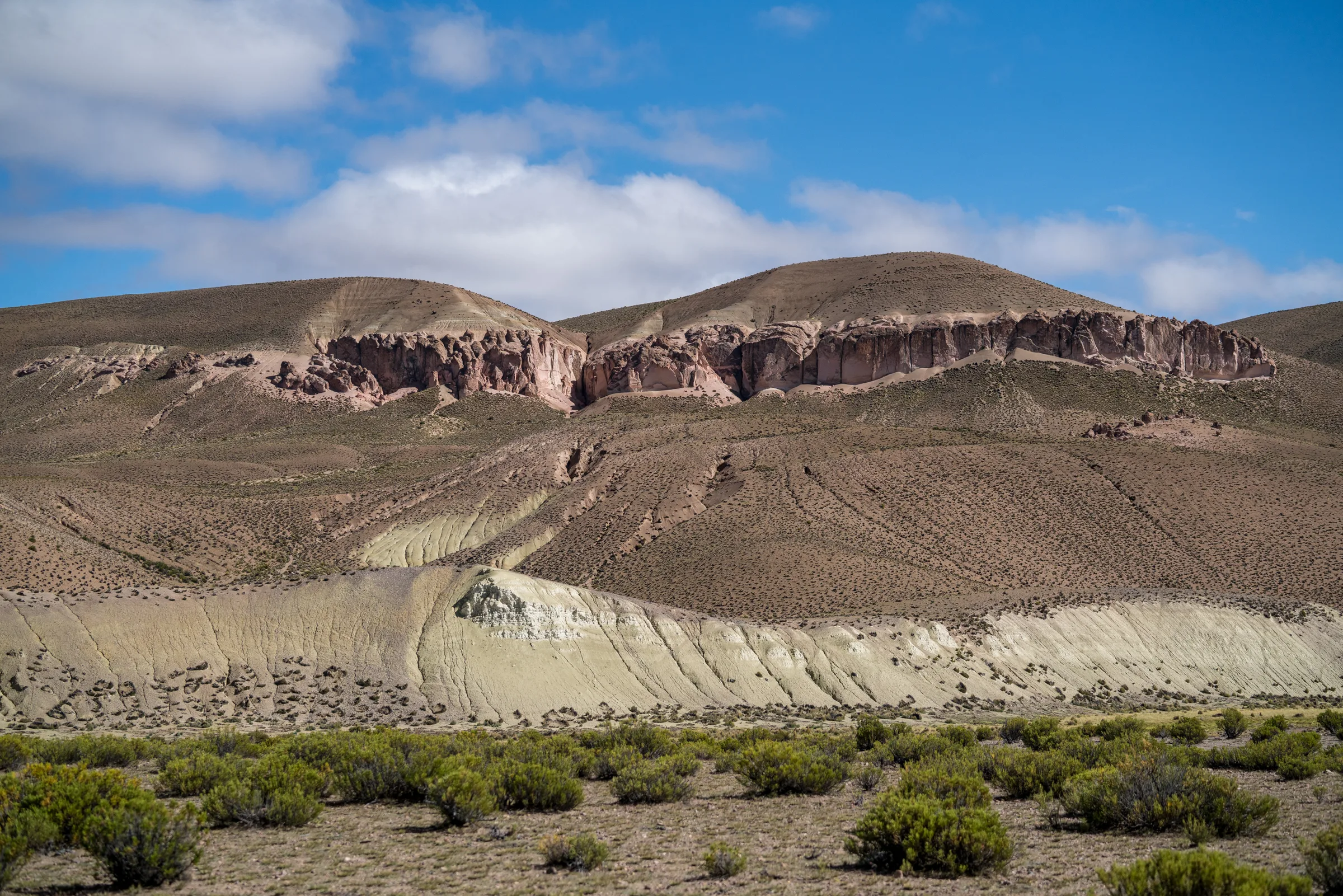
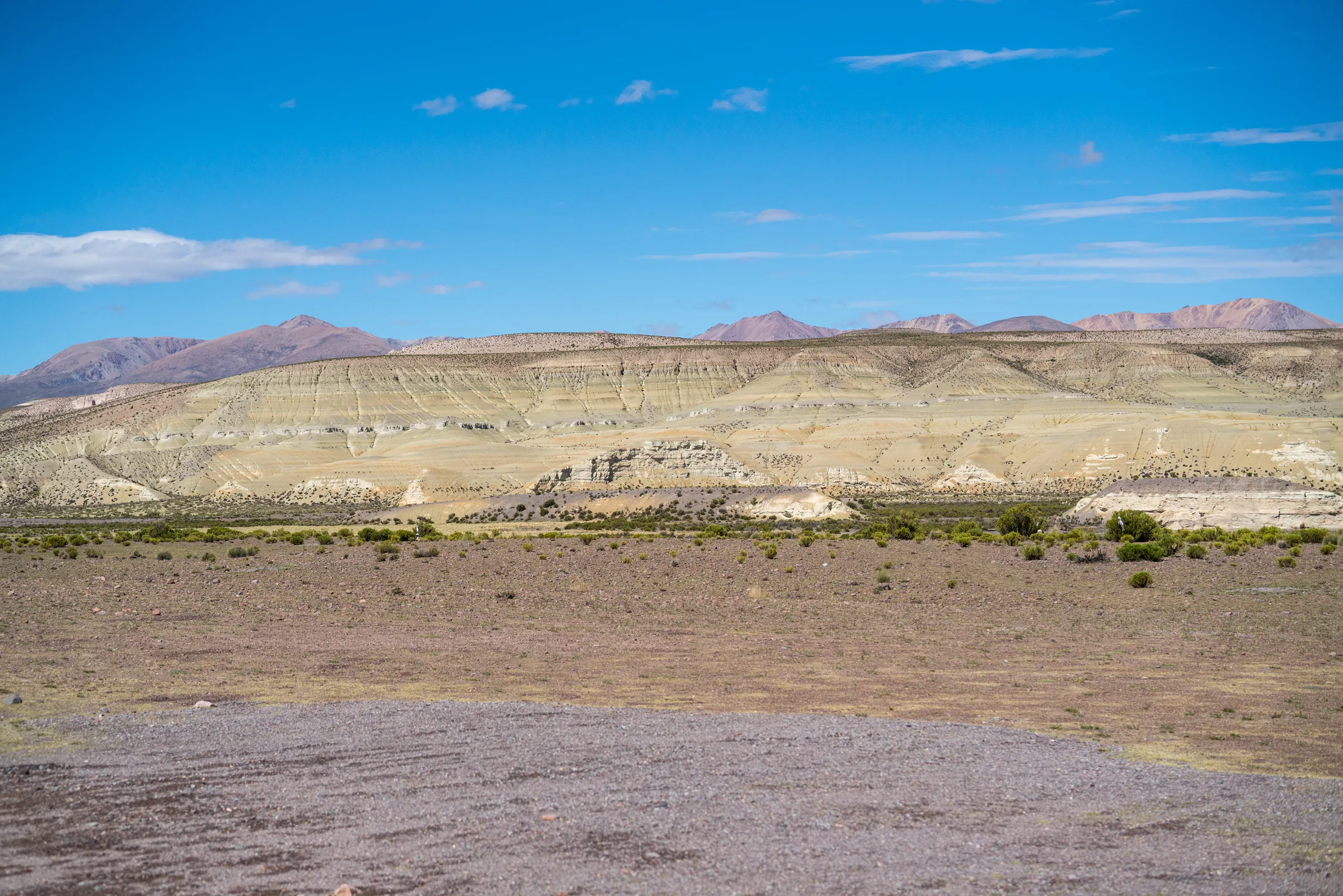
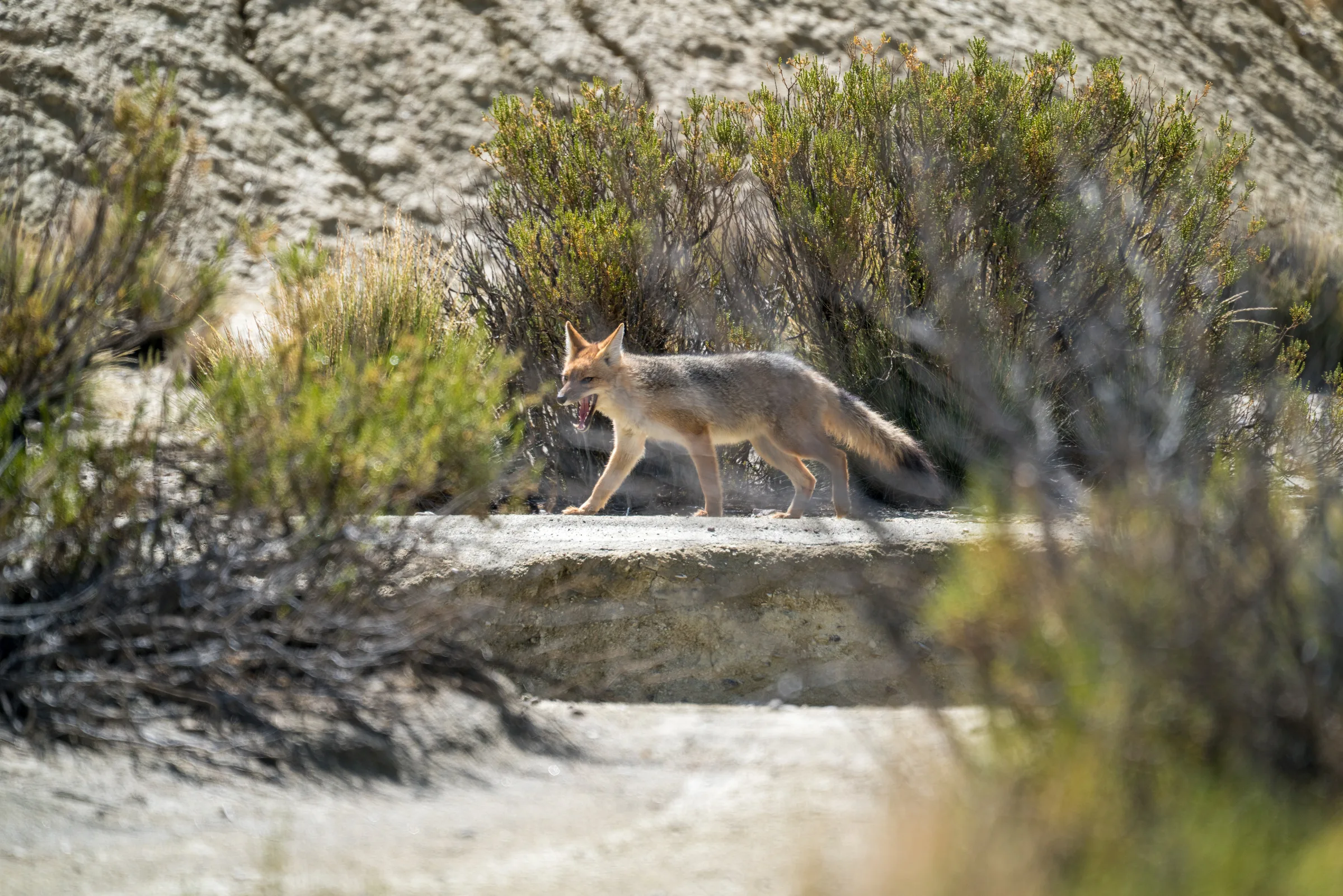
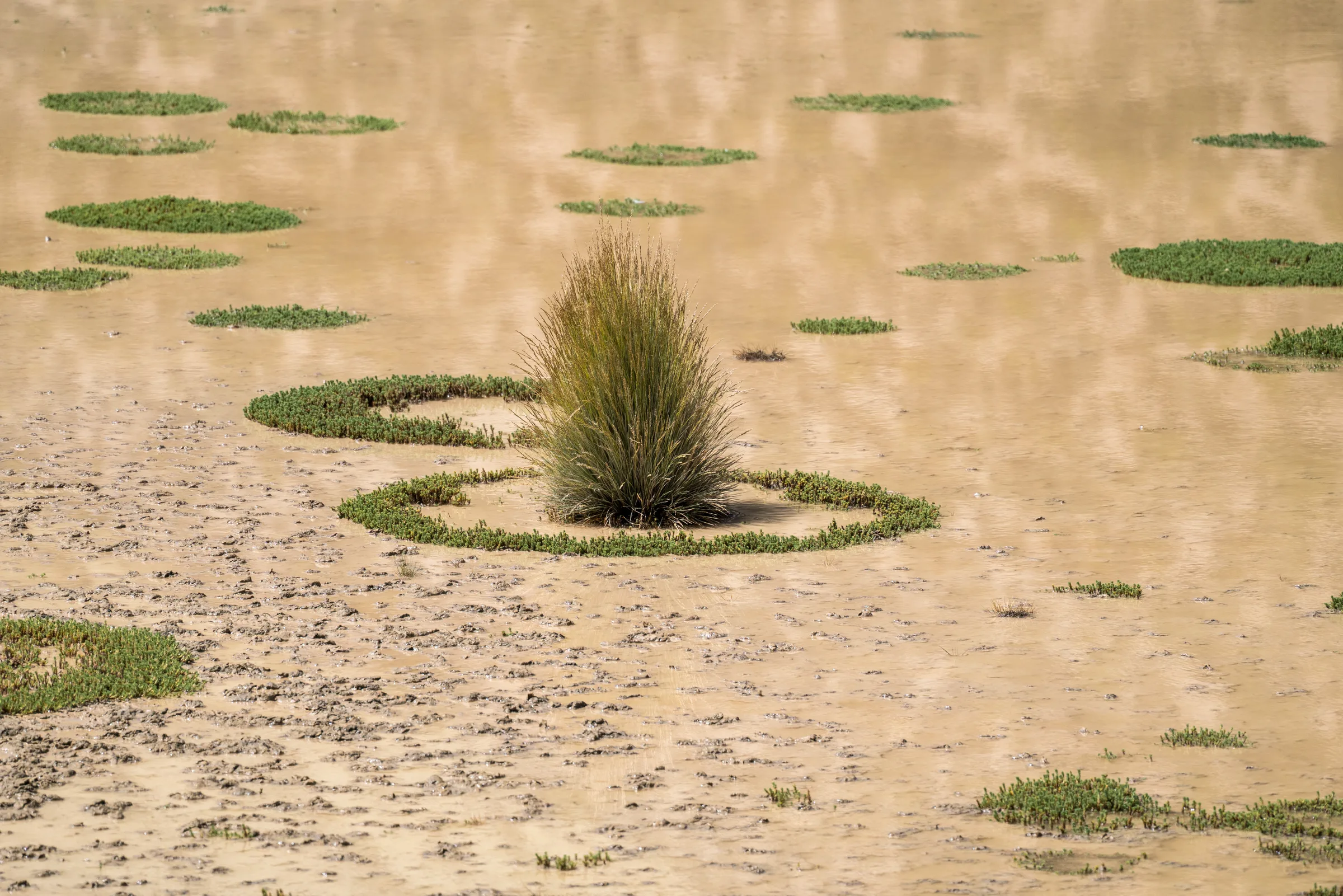
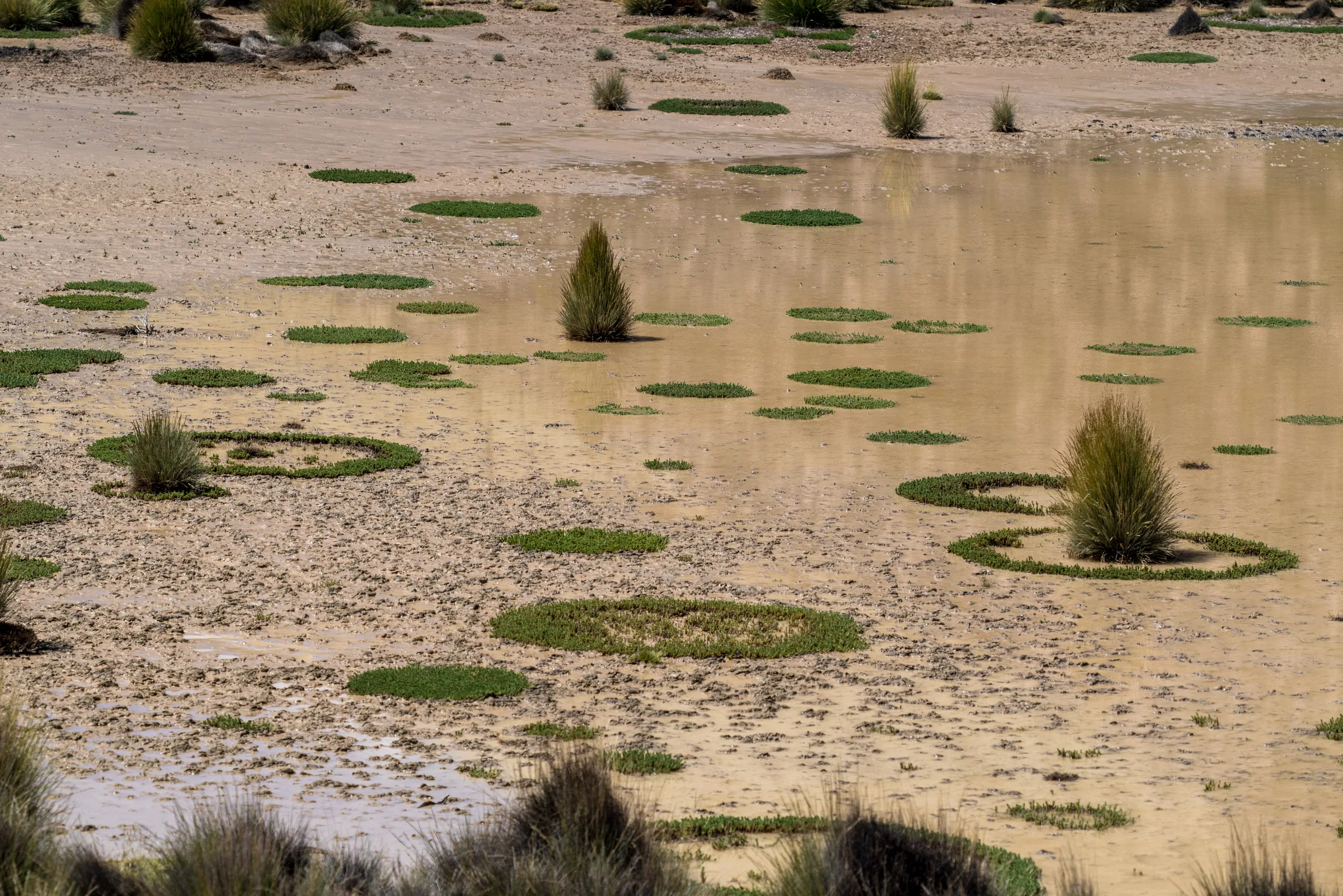
A high-altitude reserve on the altiplano near the Bolivian border — vicuñas, llamas, flamingos on the salt lagoons, and the Parinacota and Pomerape volcanoes above Lake Chungará.
Four thousand metres above breathing level
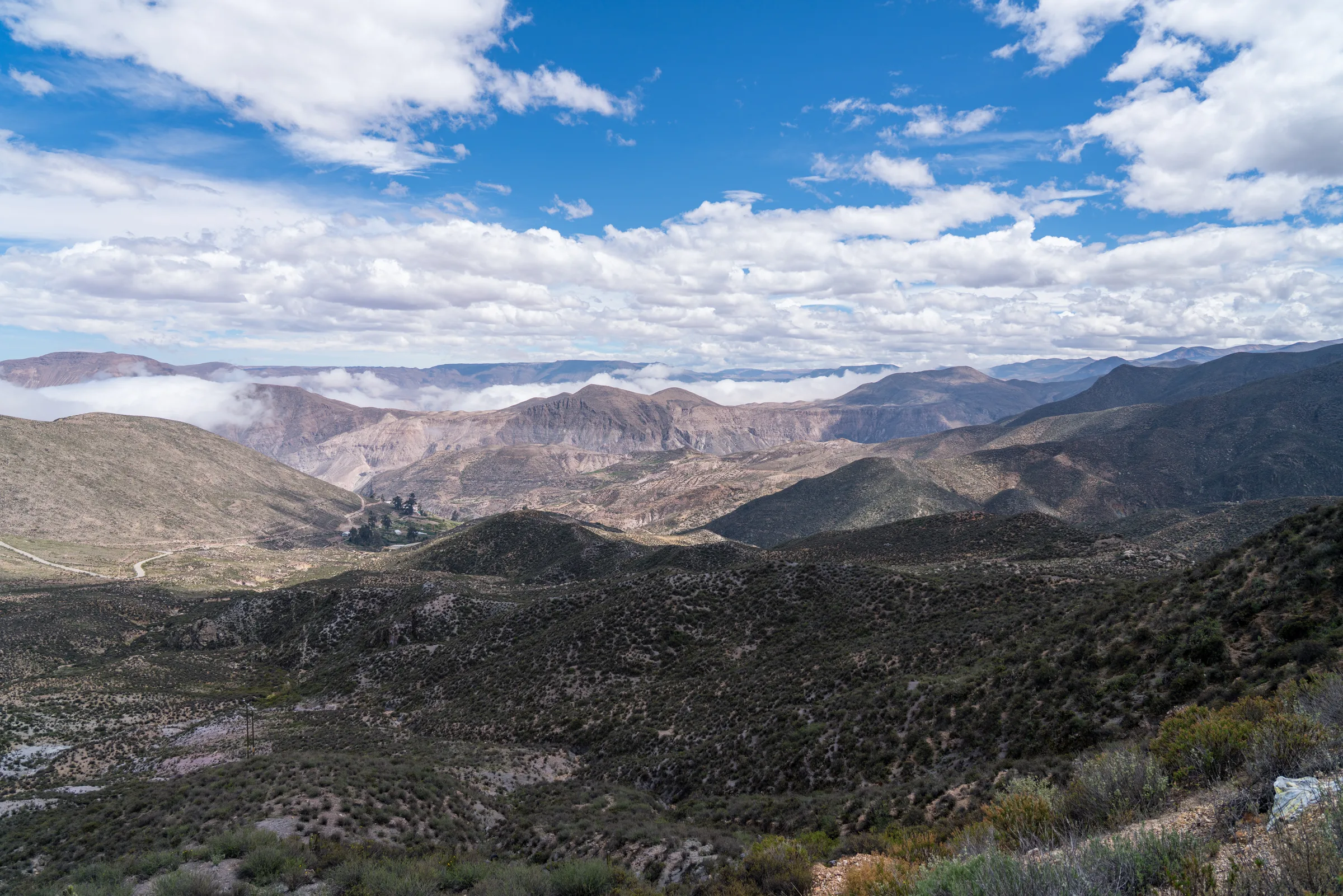
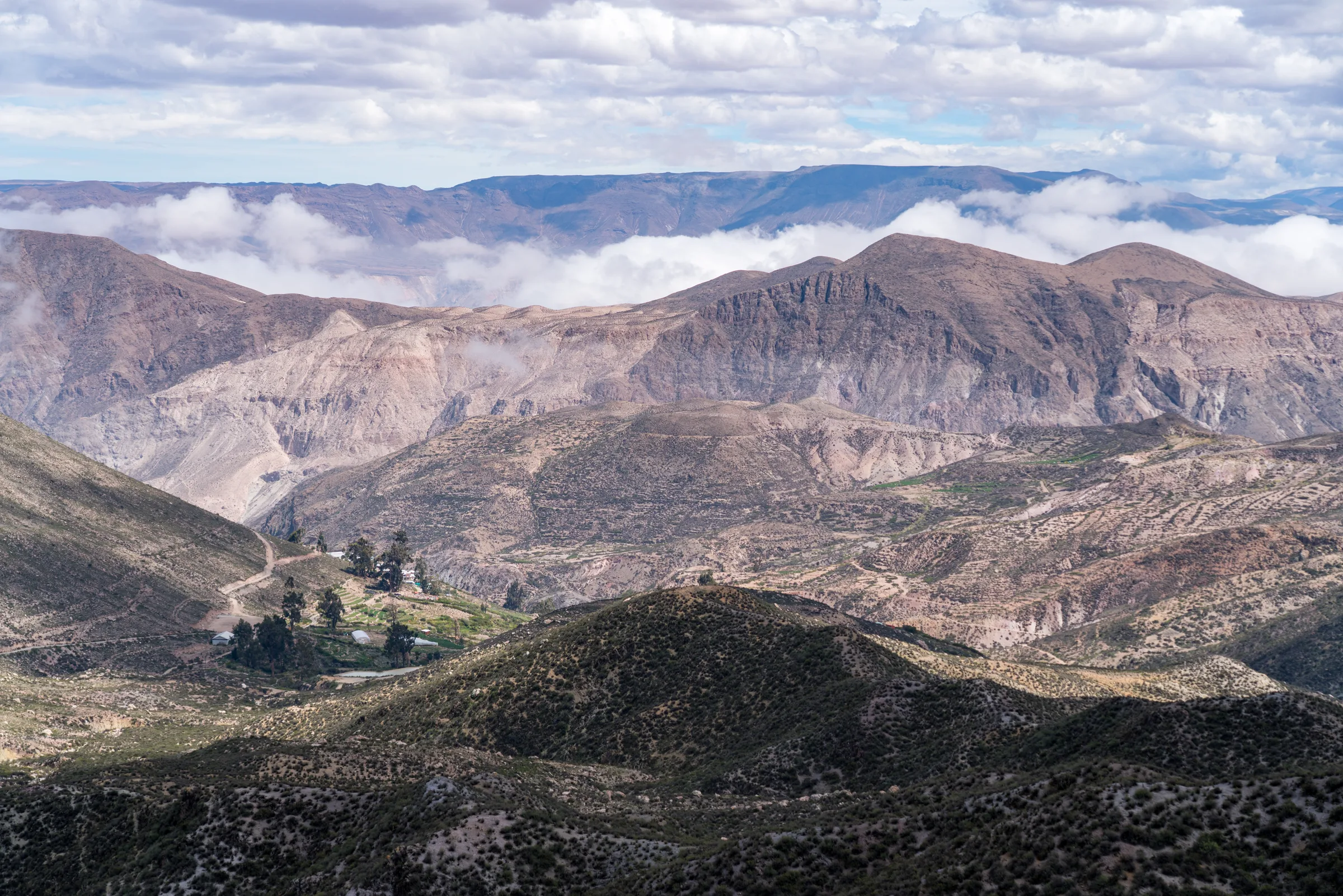
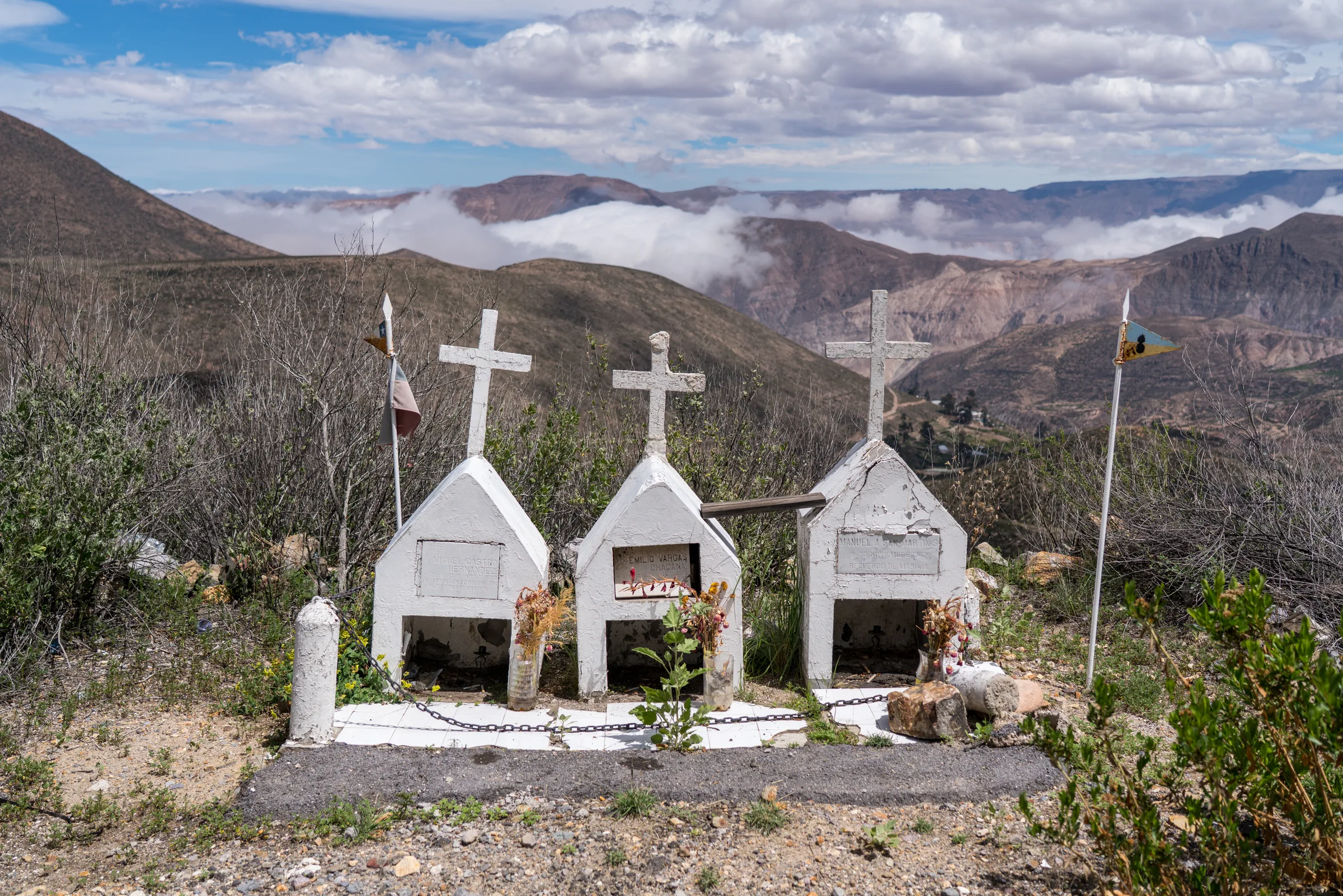
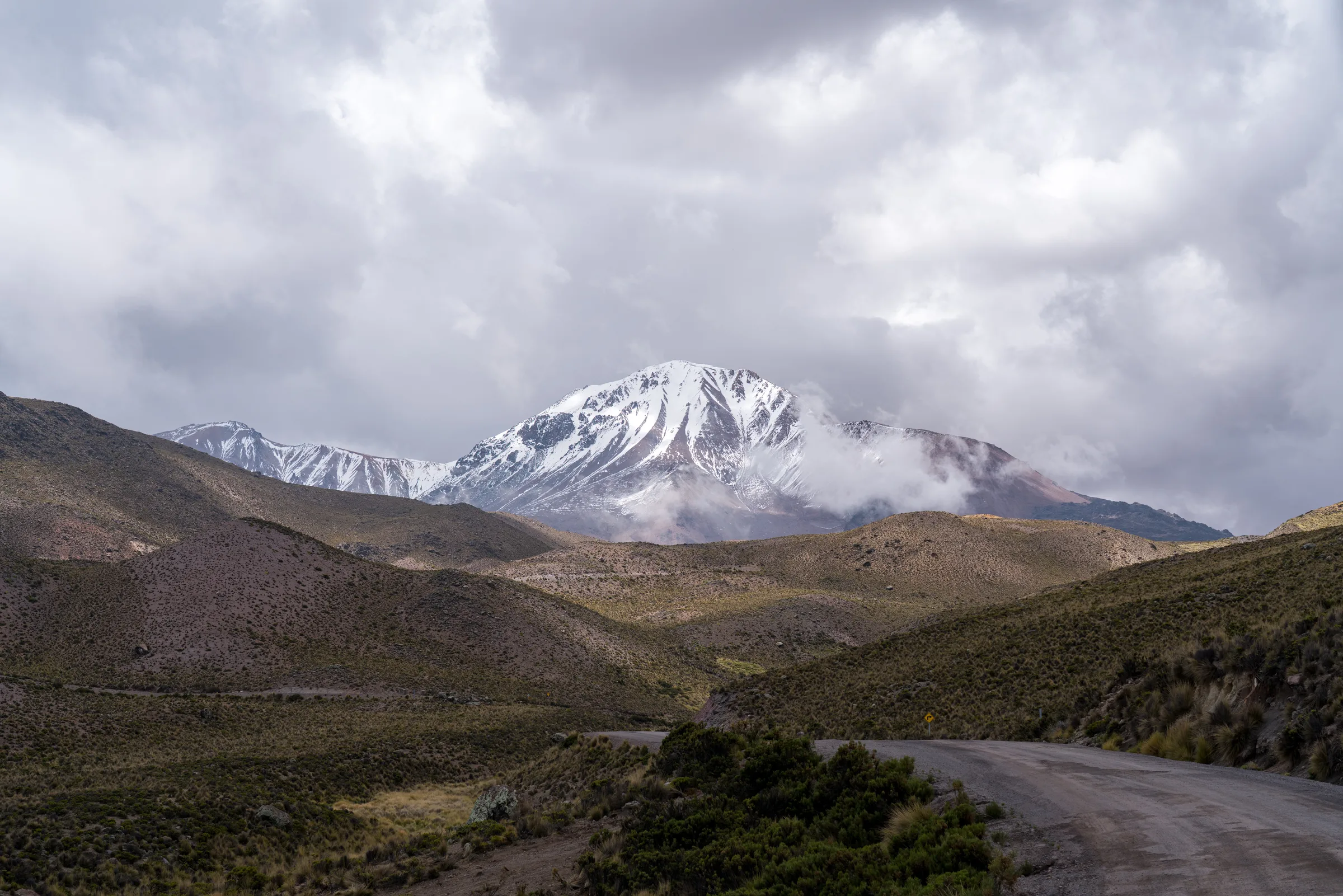
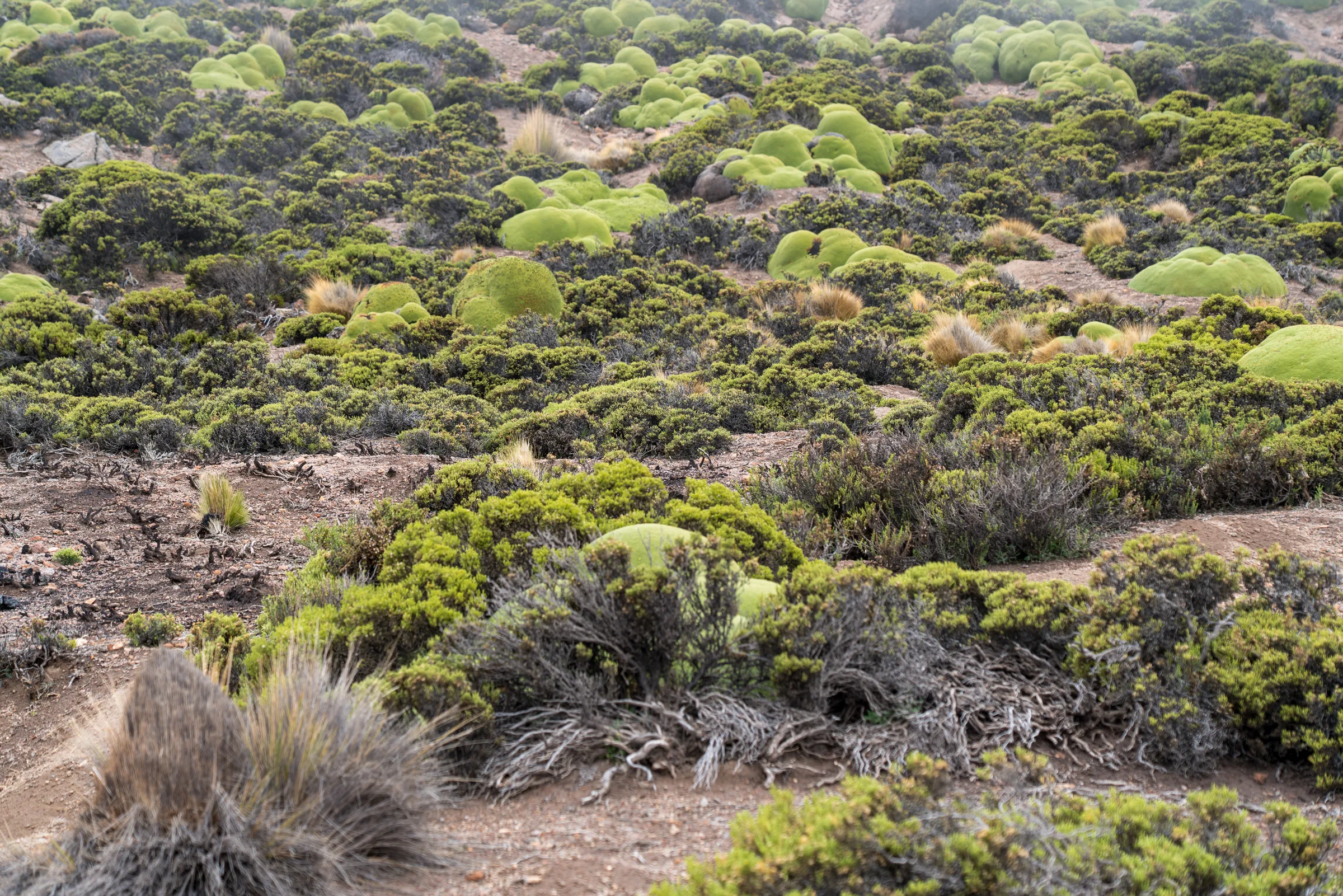
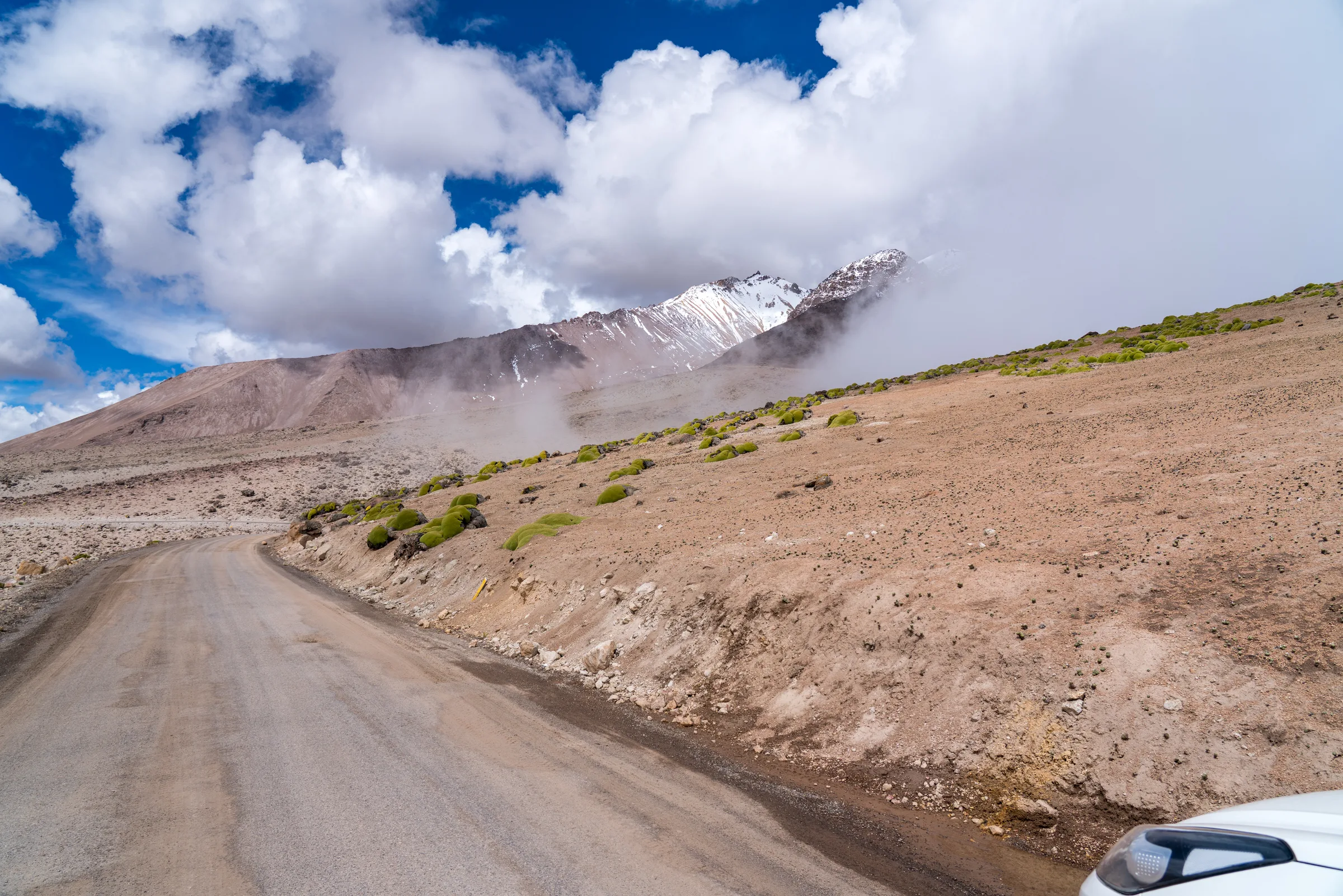
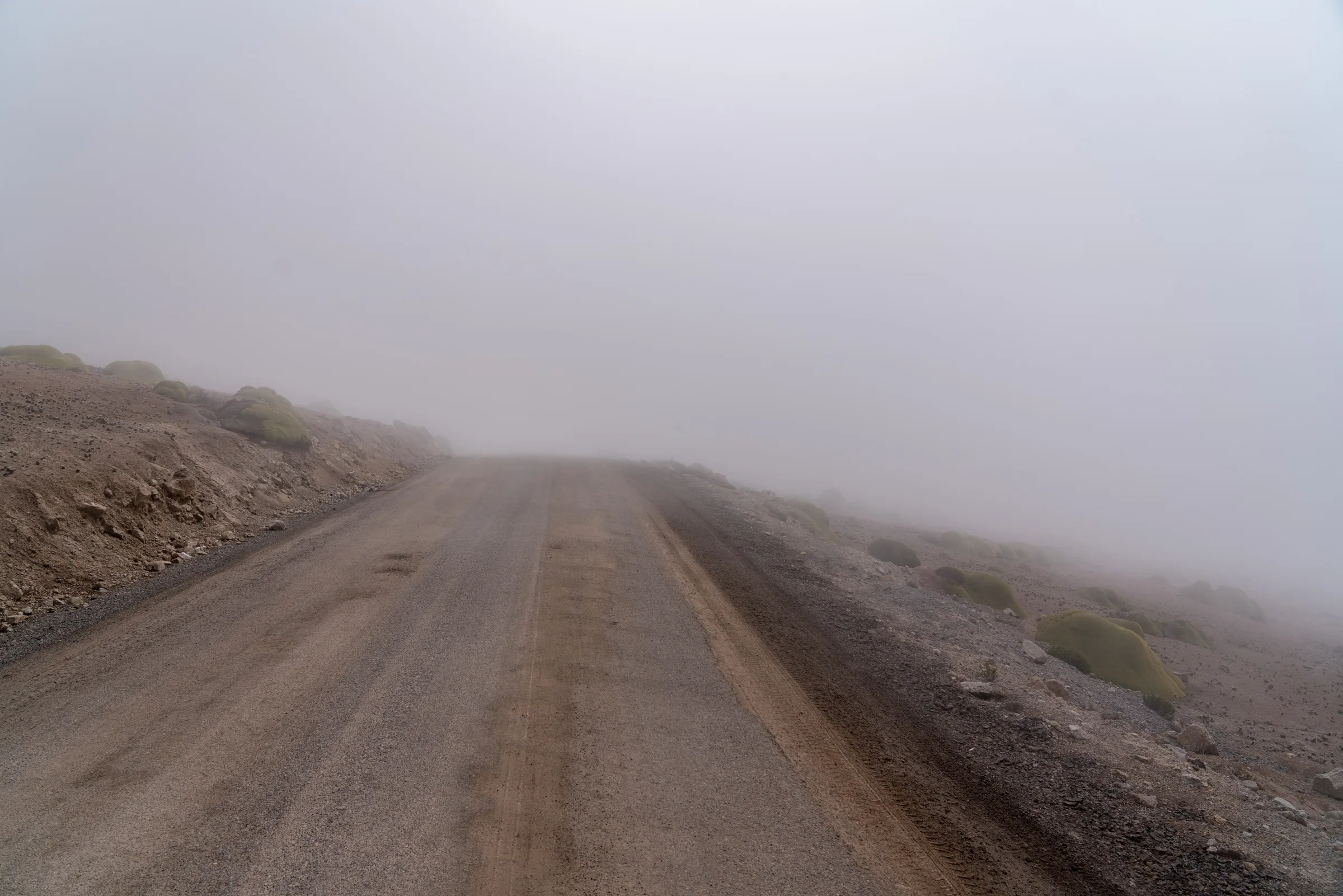
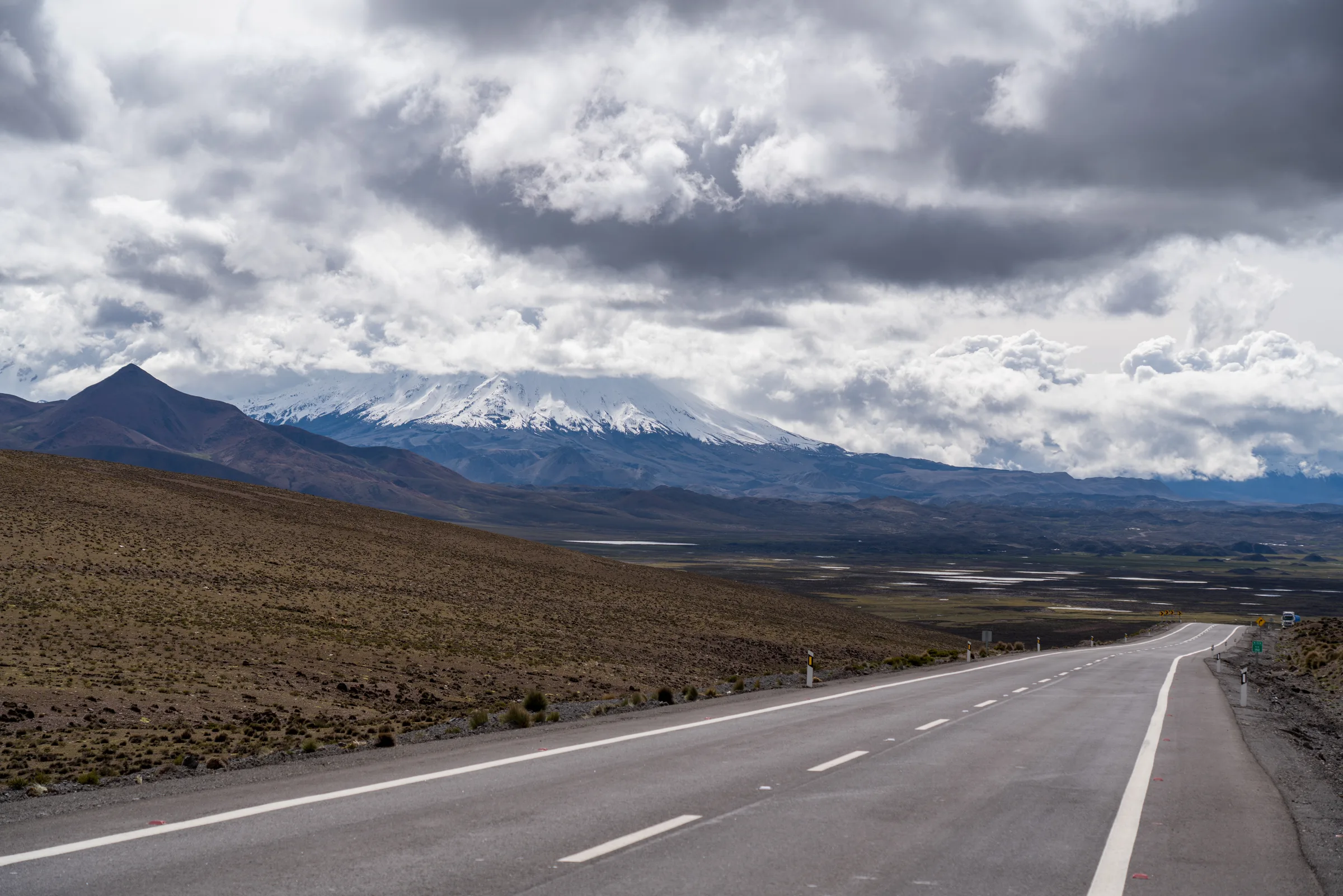
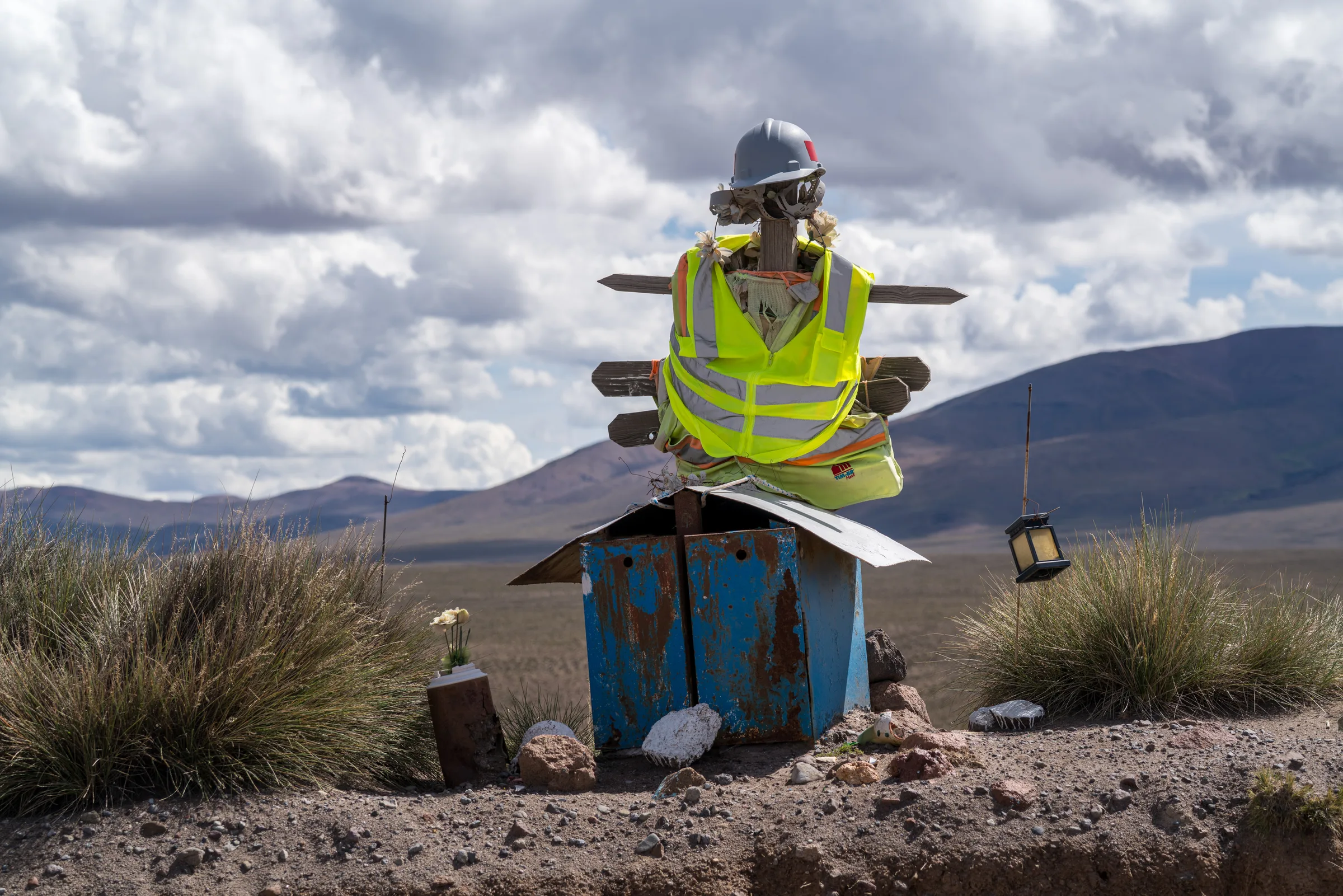
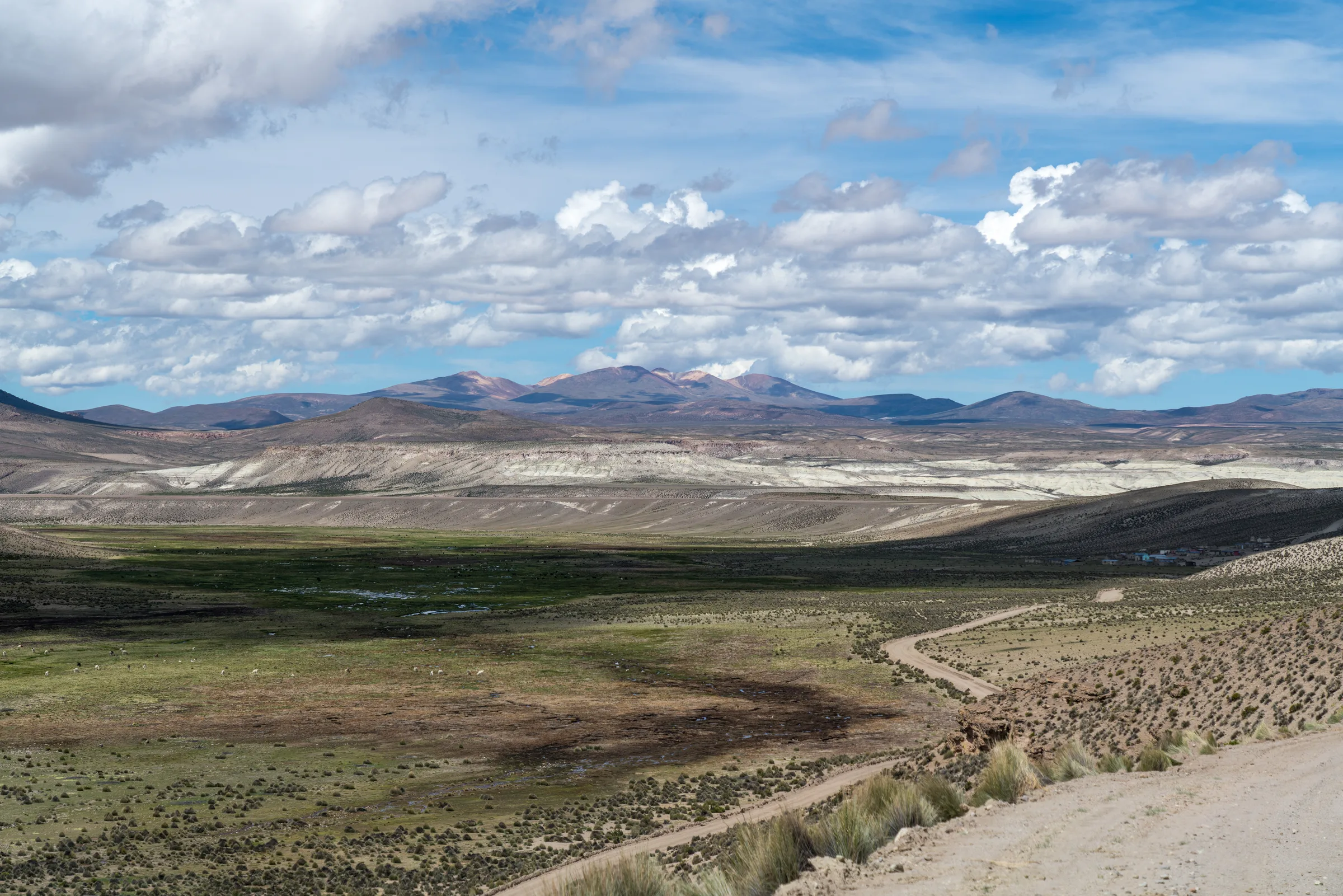
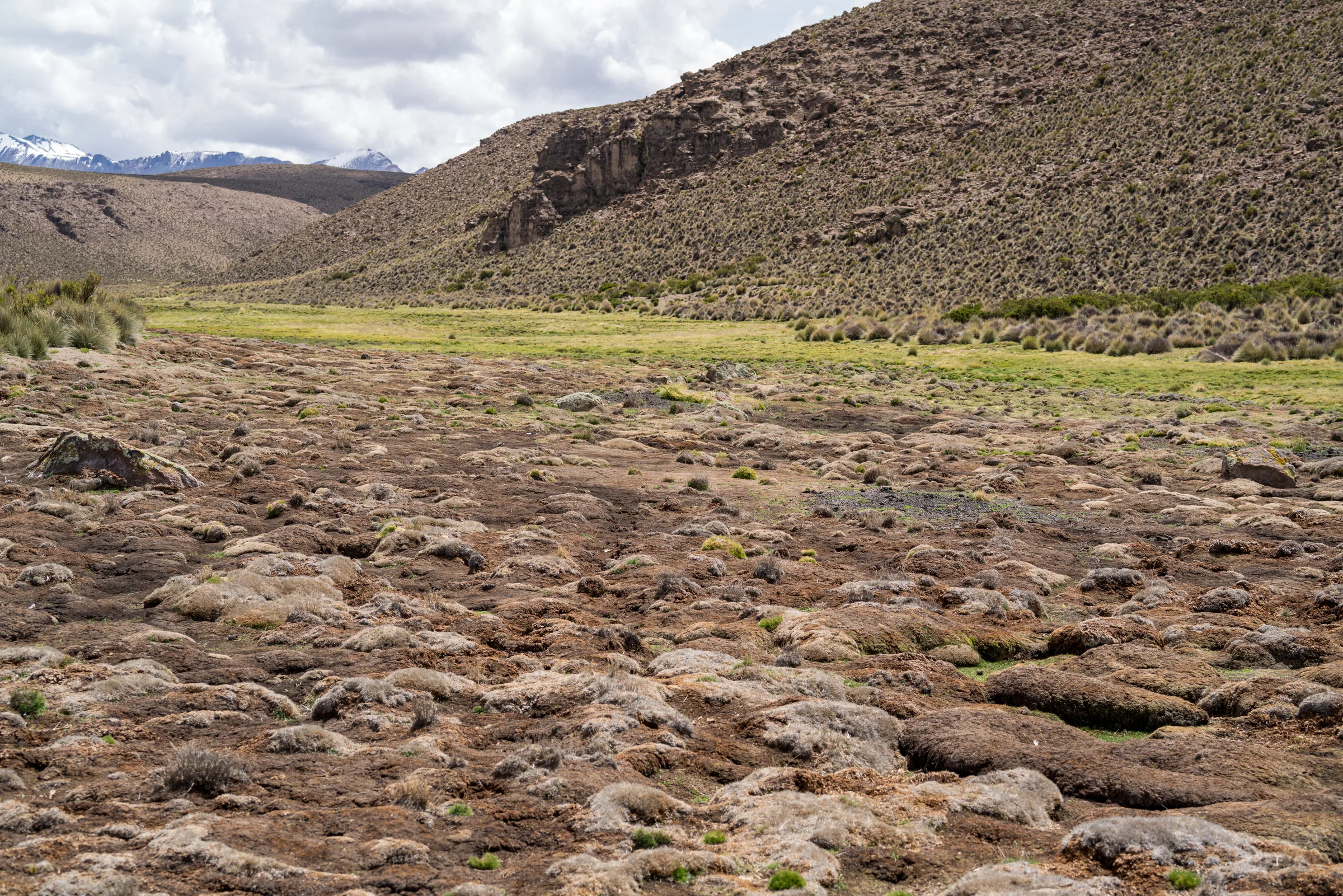
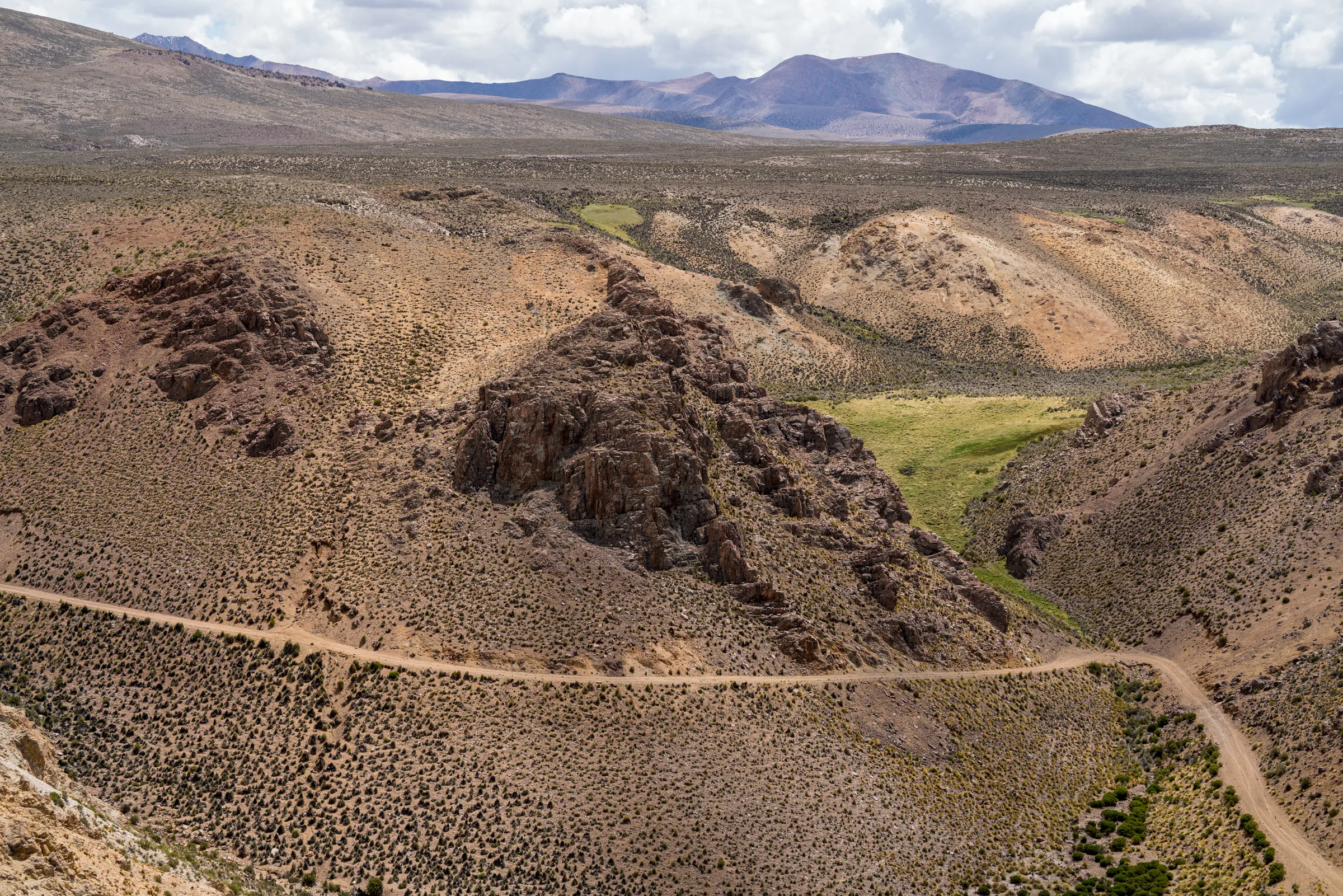
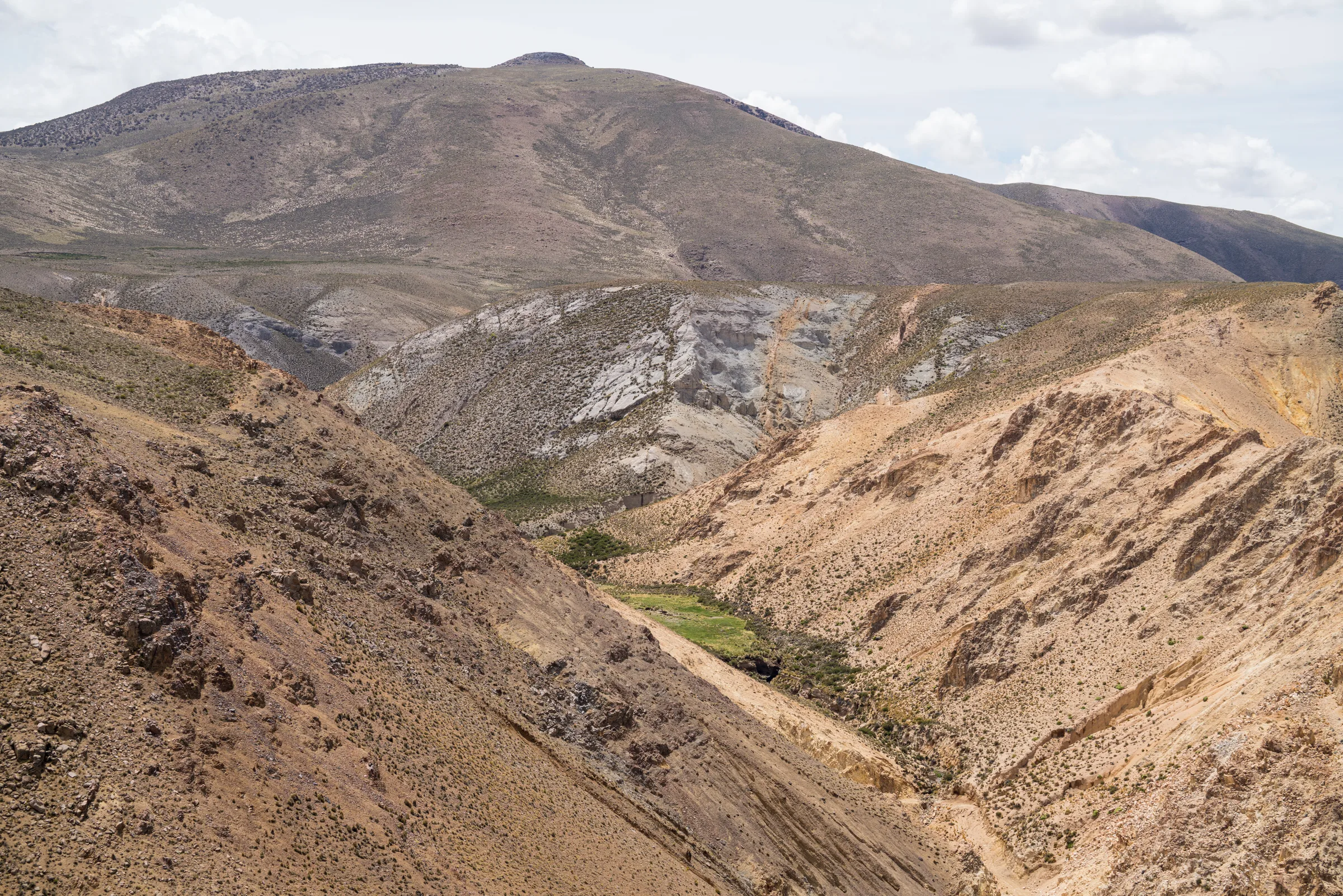
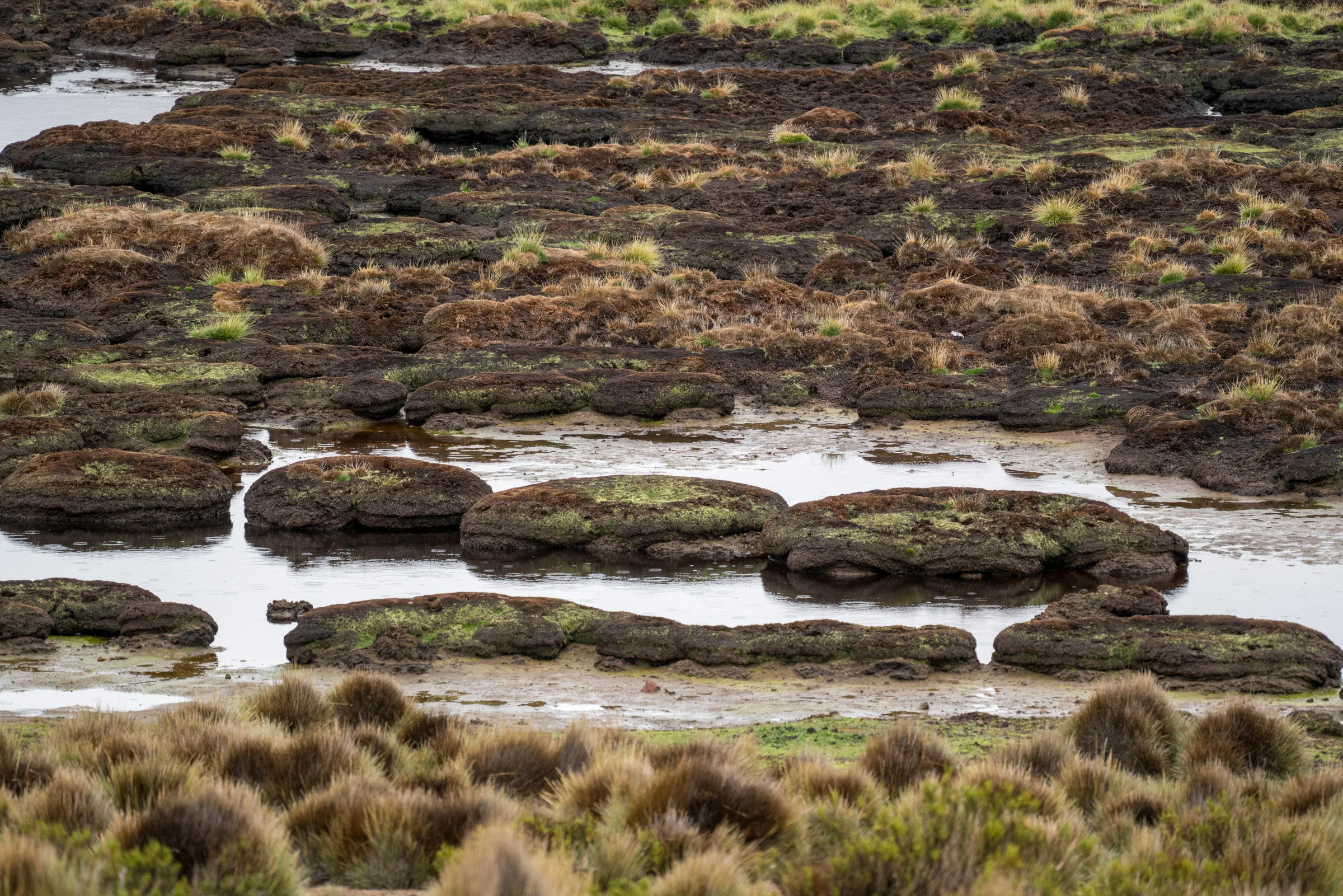
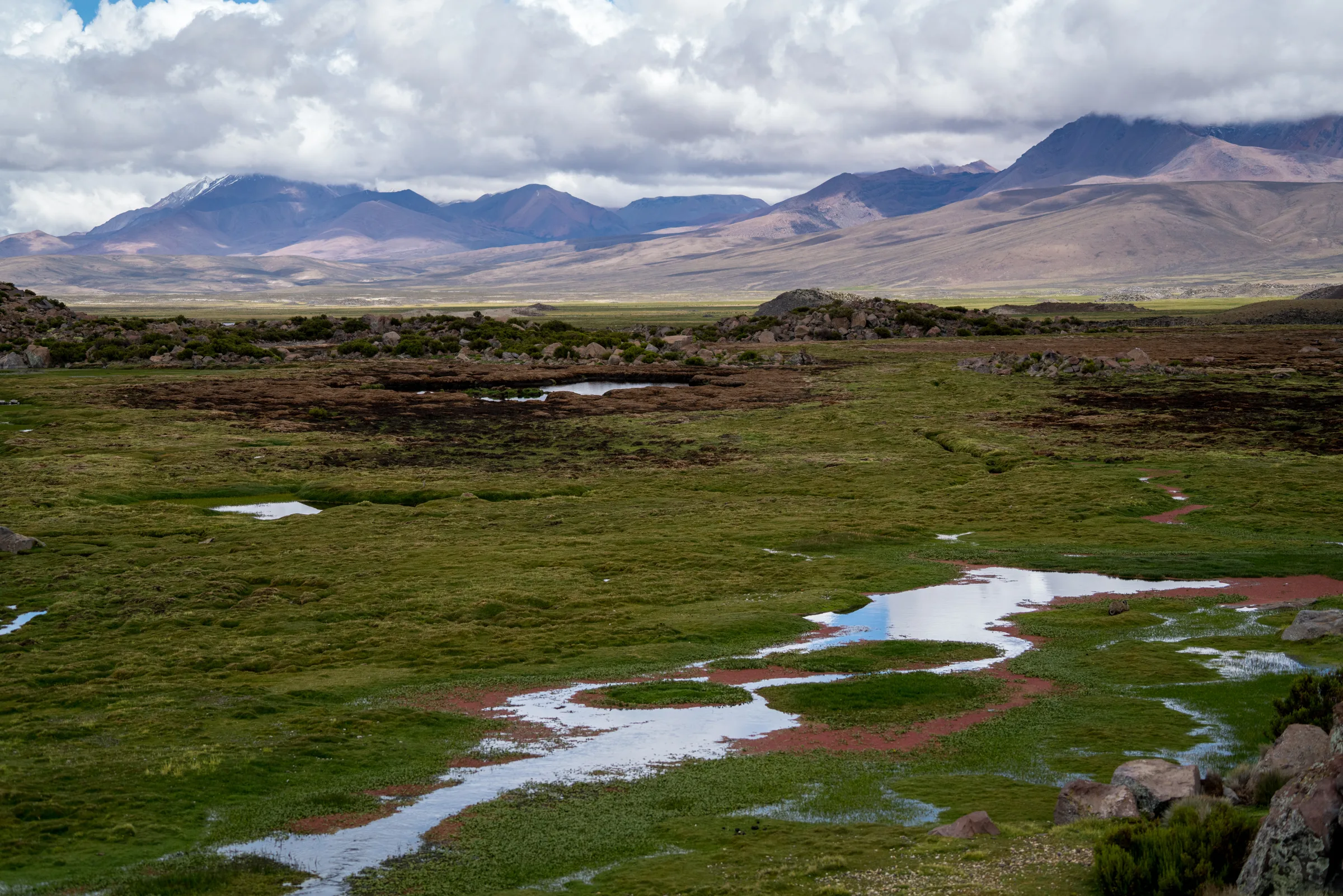
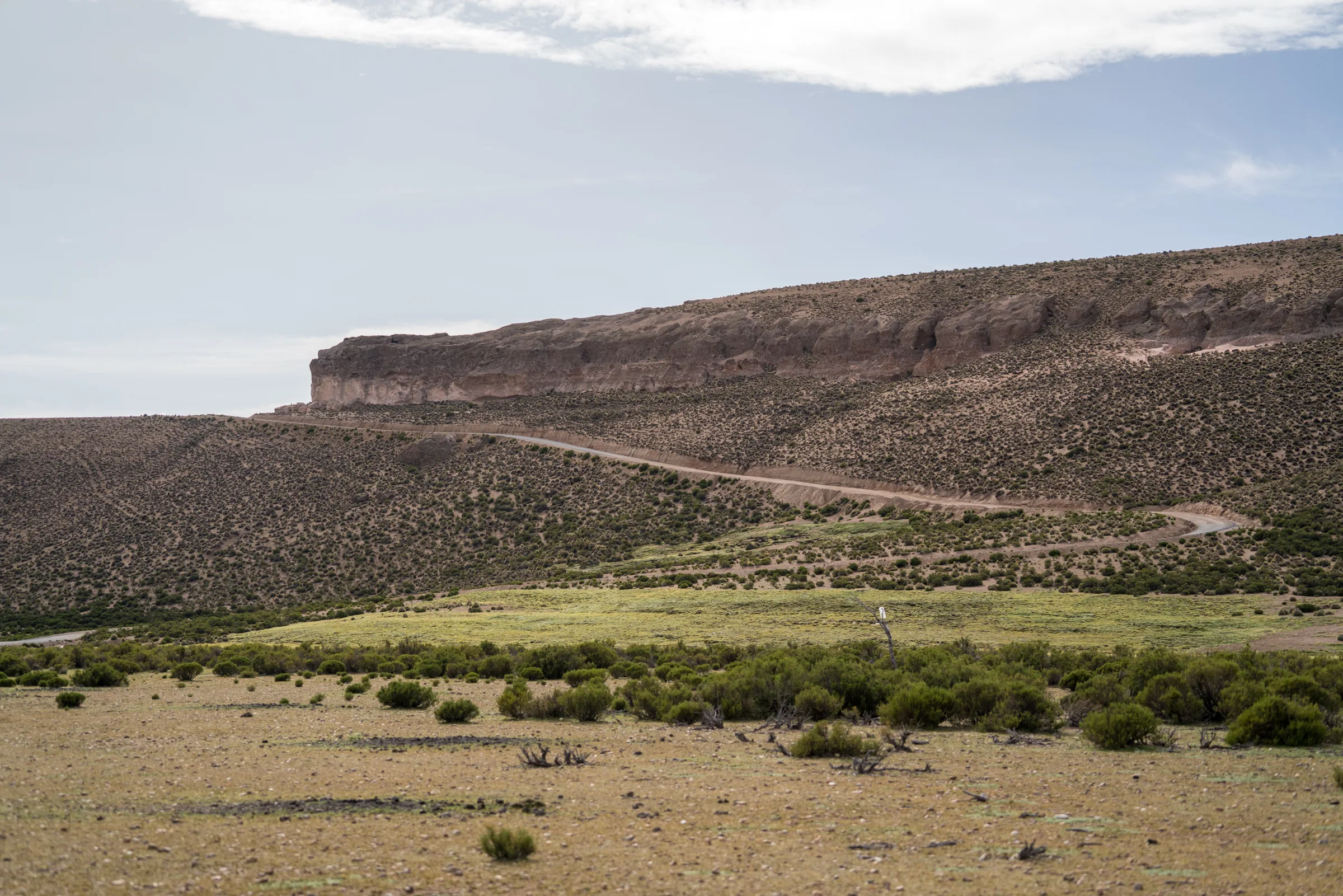
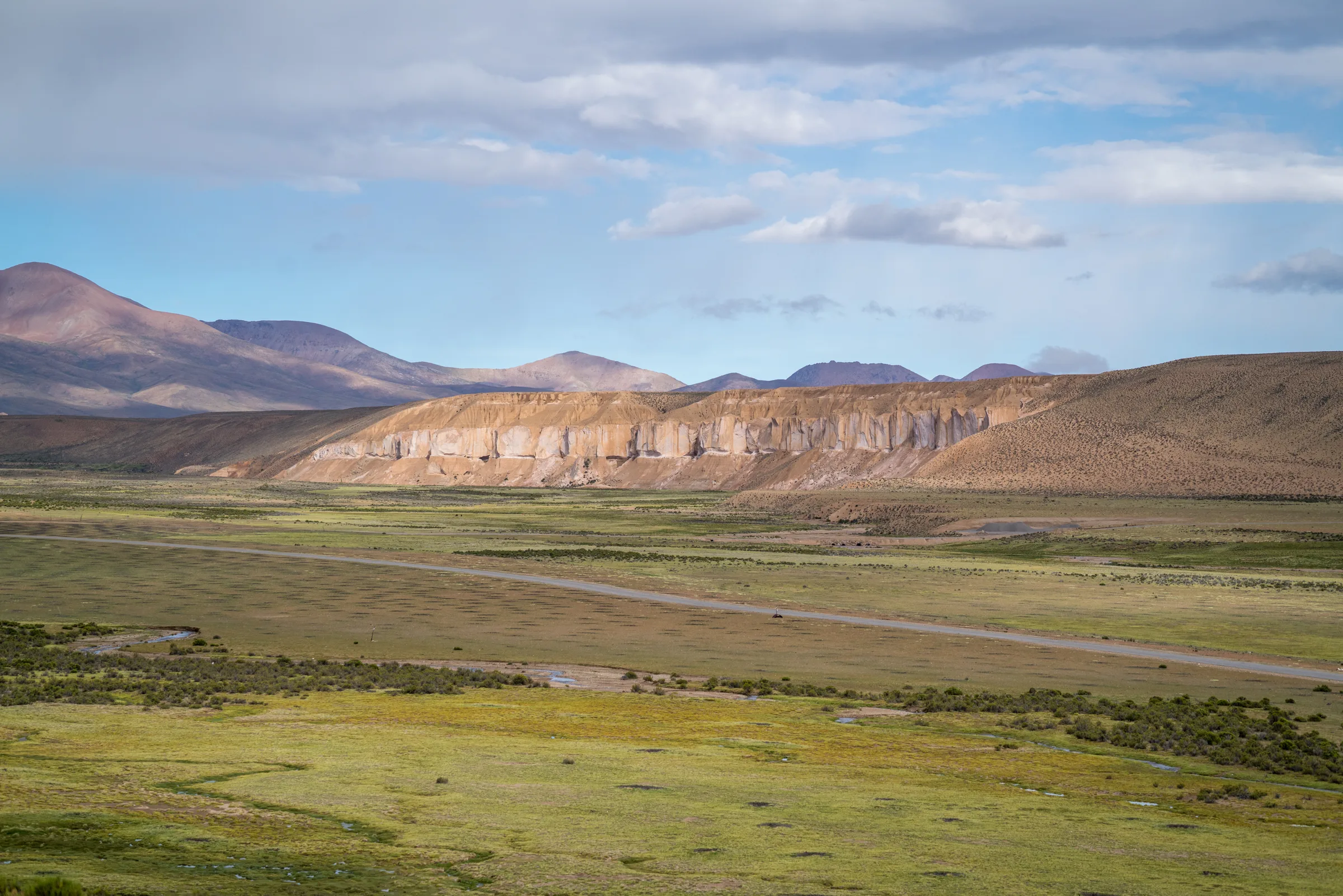
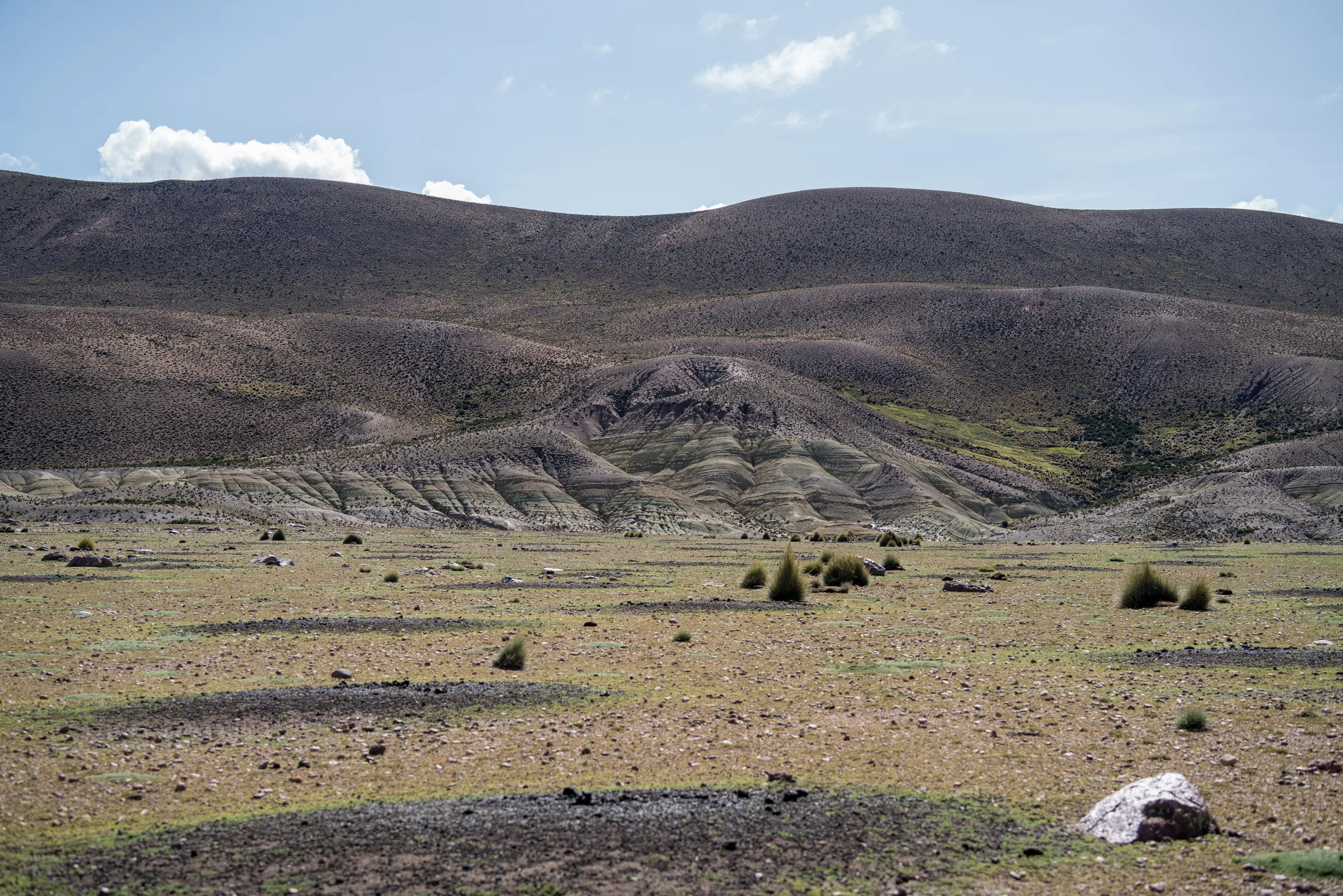
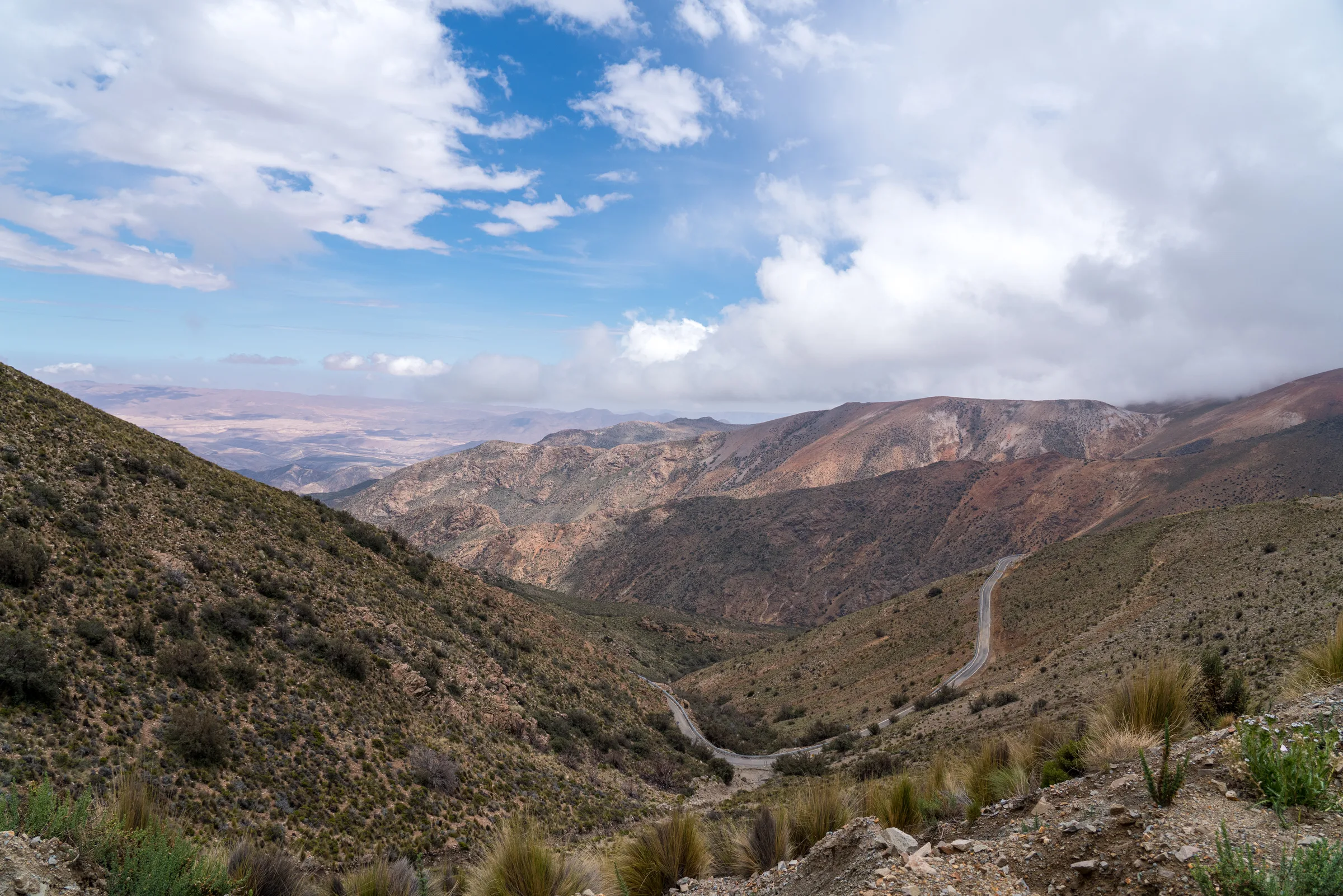
Lauca National Park and the adjoining Las Vicuñas Reserve together cover over three hundred and forty thousand hectares on the Bolivian border — Lauca has been on UNESCO’s list since 1981, Las Vicuñas was established two years later to protect its principal inhabitant. It is a different climate zone from Atacama: closer to the equator, higher, constant cloud cover, cold wind off the peaks. We climbed in from the north — the road that lifts you from Arica past four thousand metres in a single day; along the asphalt animitas, small shrines for the road dead, dozens to the kilometre. Blue lips, short steps, fast pulse. The local Aymara say: don’t run, drink coca water, listen to your head. You don’t really come back down here: 4800 m on the road all day, several passes over 5250 m.
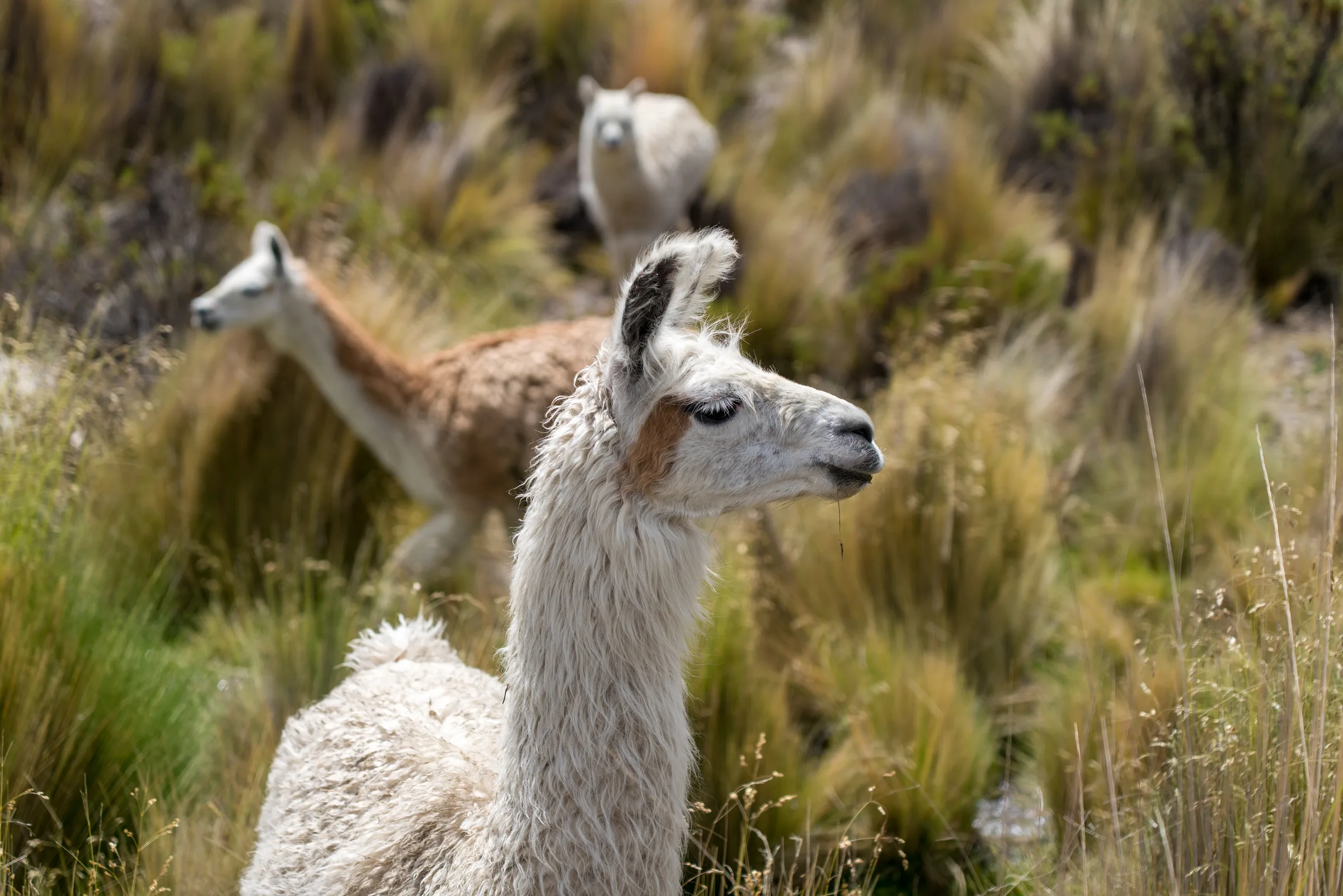
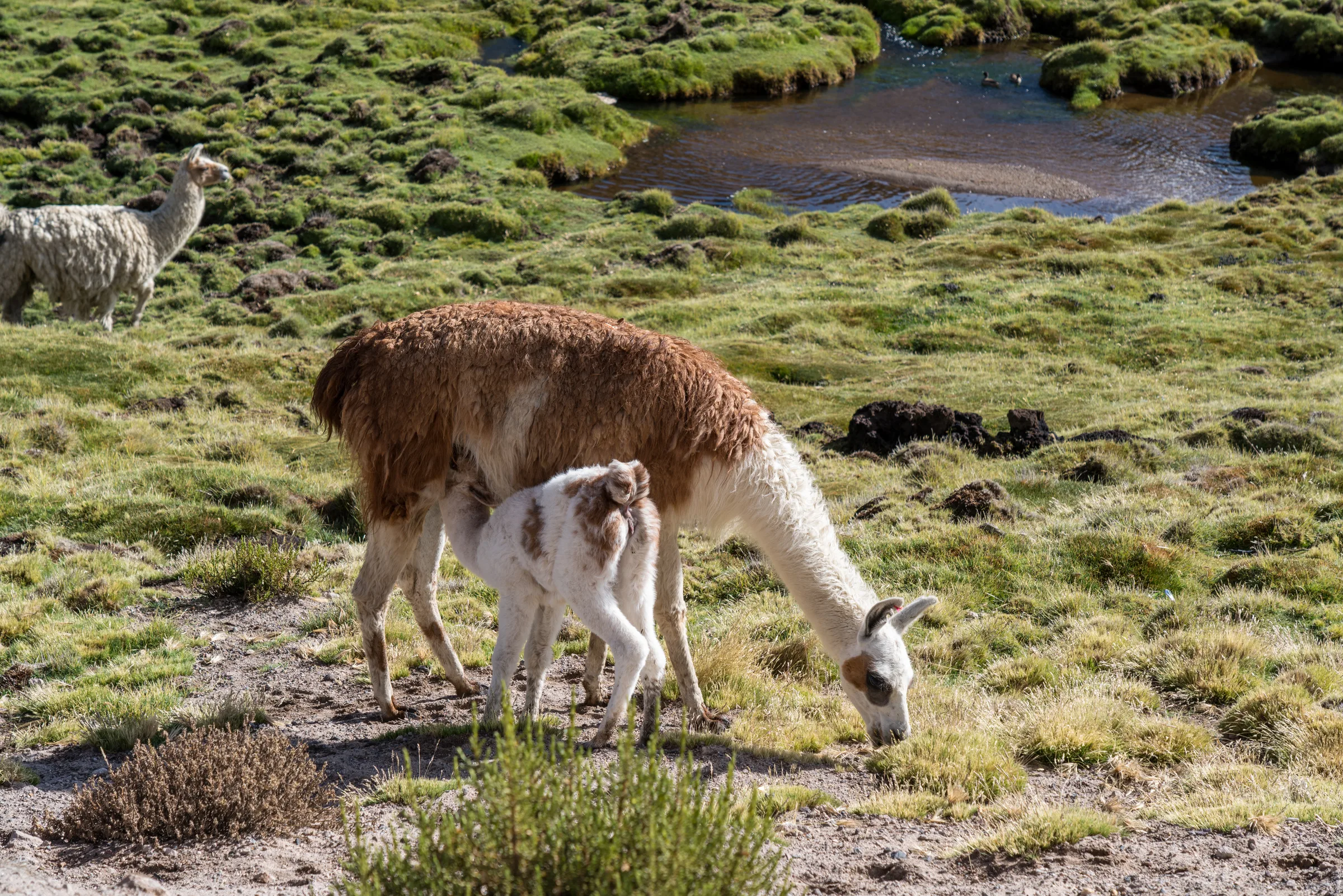
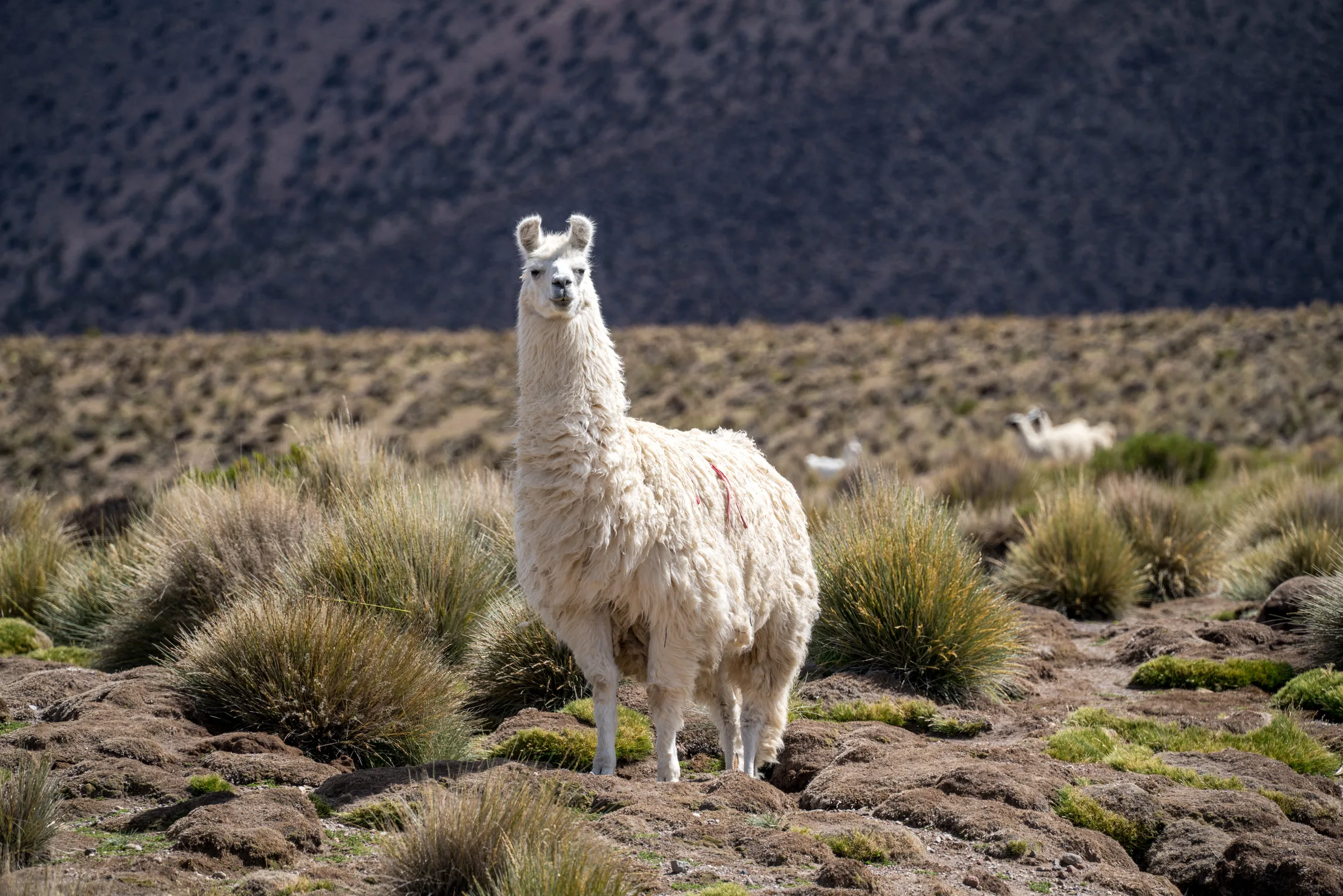
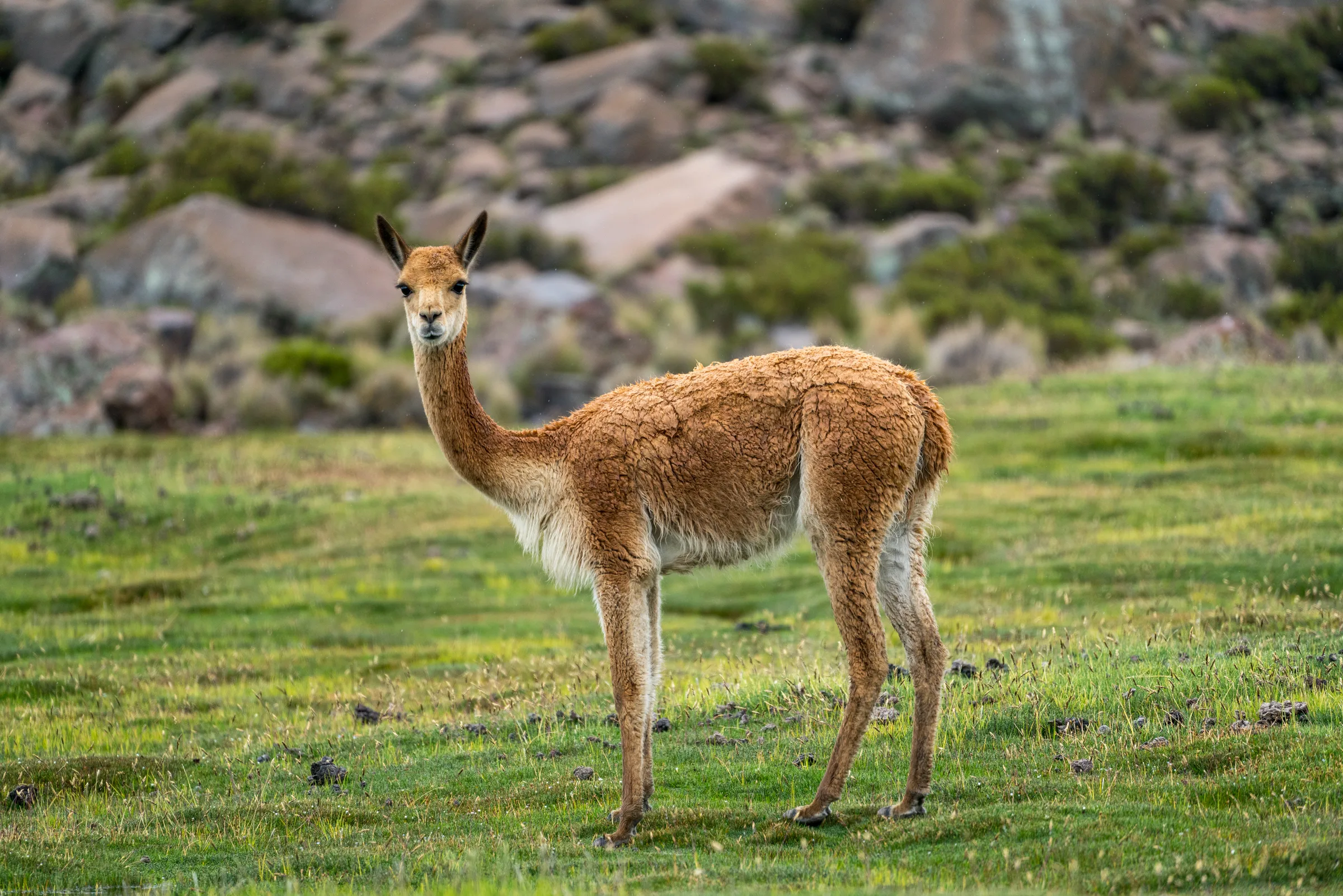
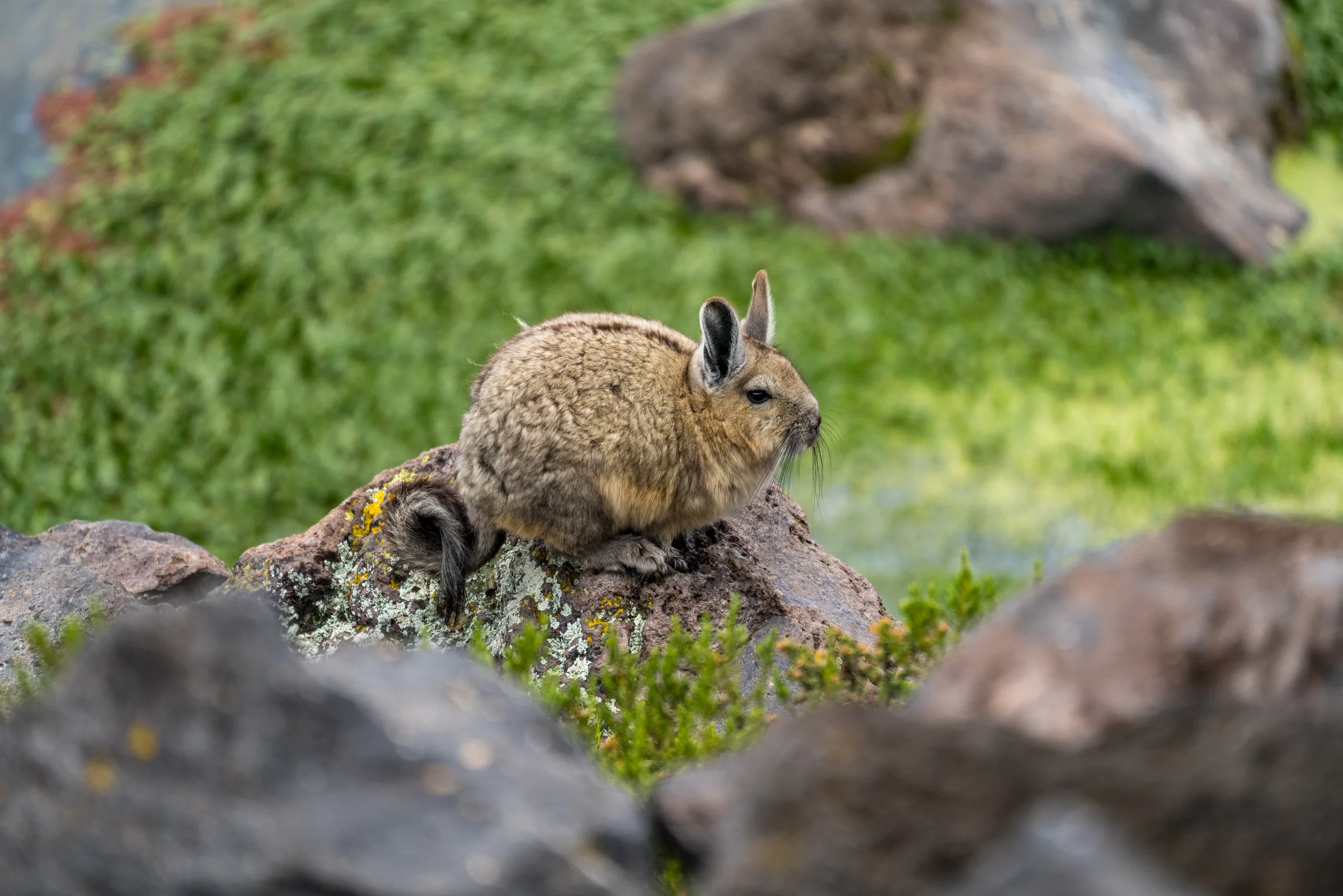
The vicuña (Vicugna vicugna) was hunted nearly to extinction in the 19th century — the population fell to about six thousand. The 1969 Vicuña Convention — signed by Peru and Bolivia, later extended to Chile, Argentina and Ecuador — introduced strict protection. Today there are over three hundred thousand of them. Vicuña wool is the most expensive wool in the world — a kilogram fetches up to four hundred dollars, and in pre-Hispanic times the Inca reserved it exclusively for the emperor and the royal class. The animals are shorn once every two years during the traditional chaccu — a wild round-up whose roots reach into the Inca empire.
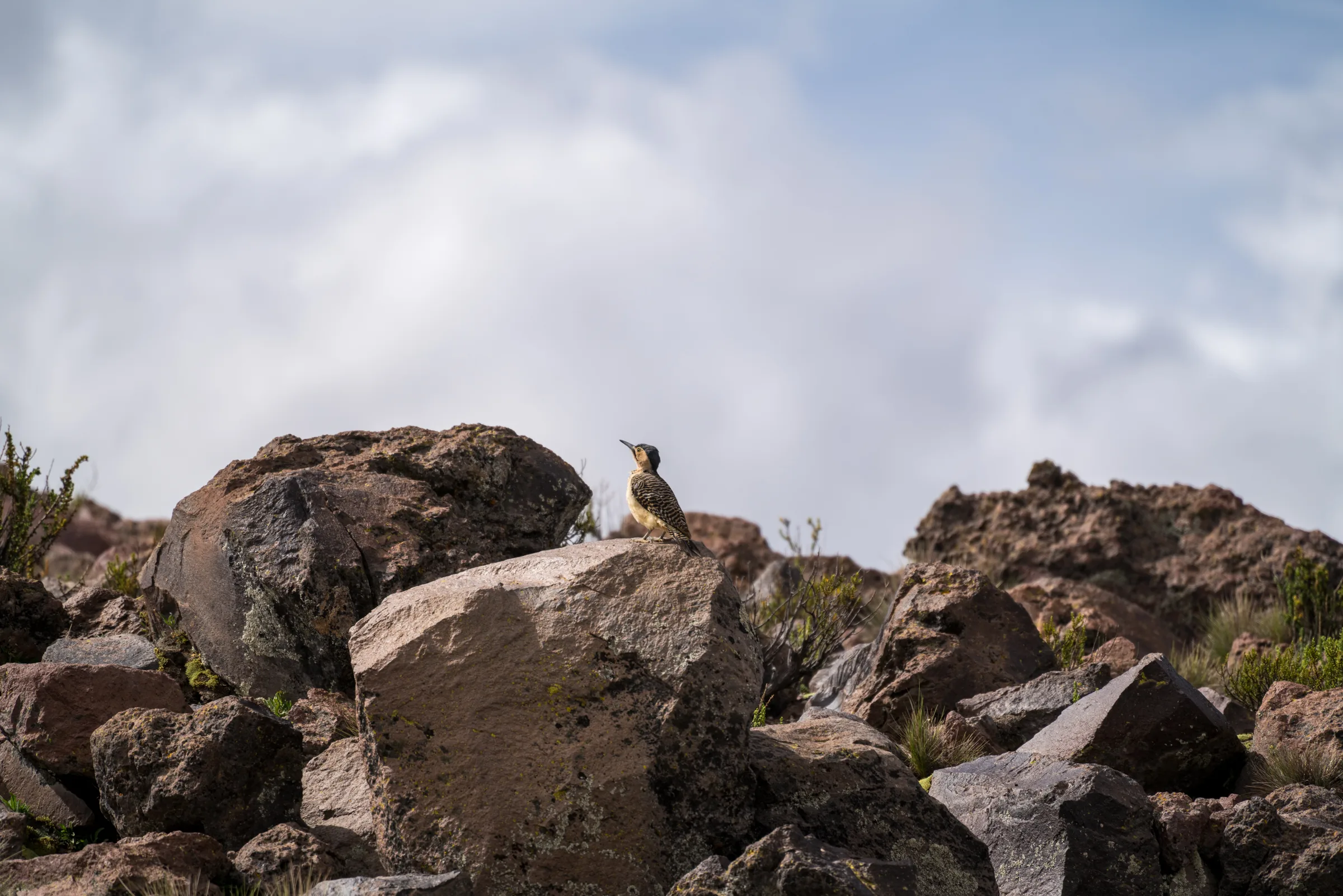
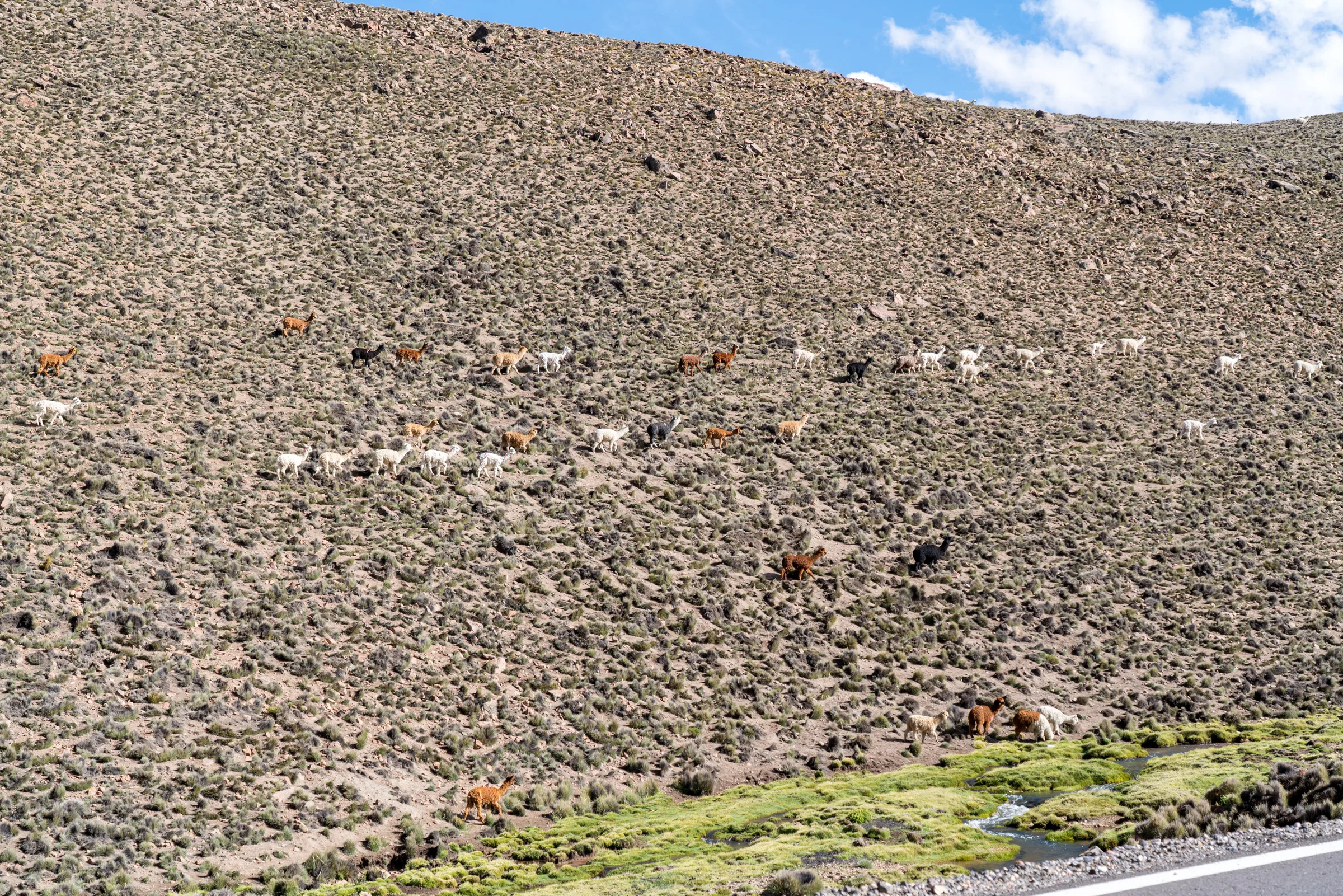
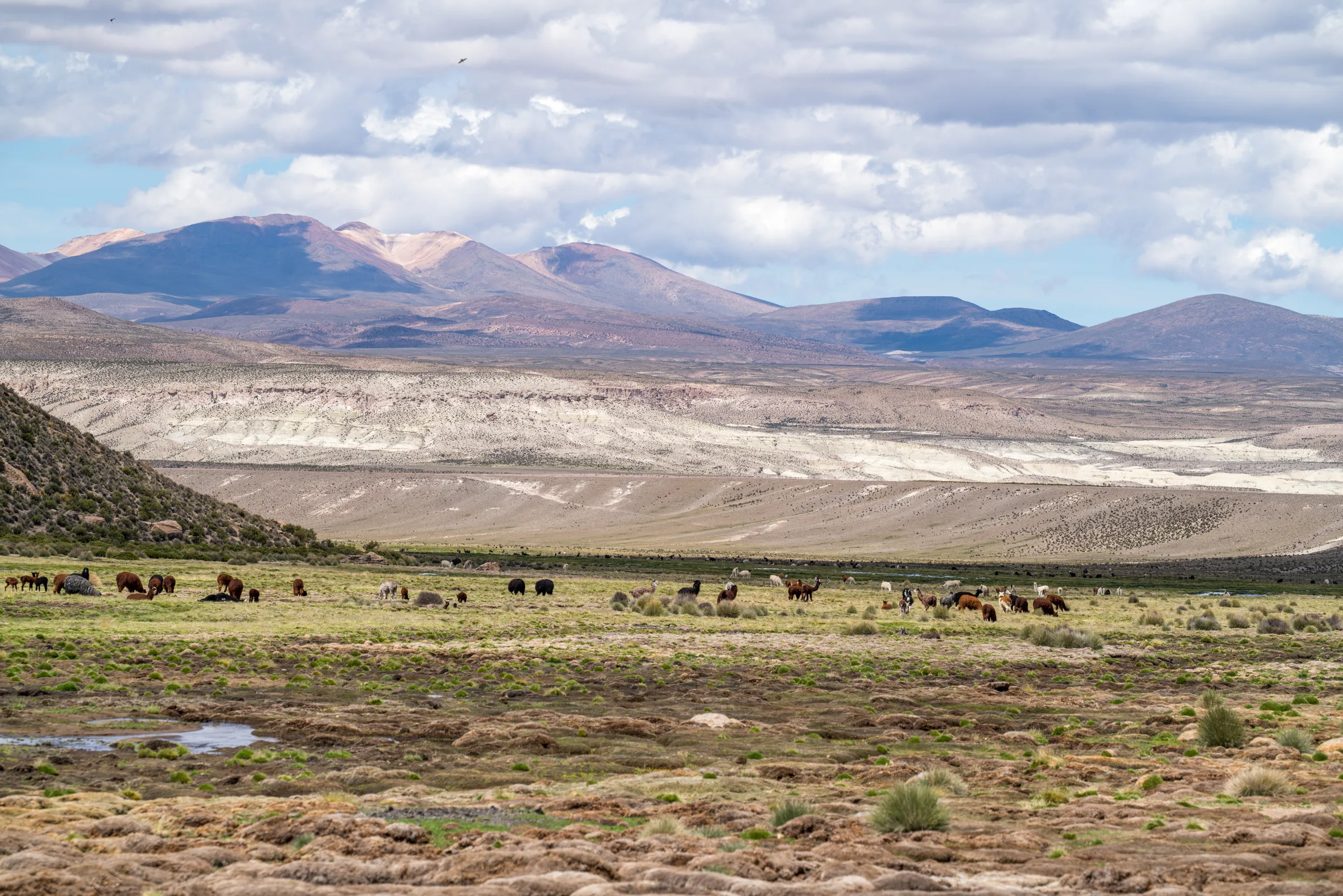
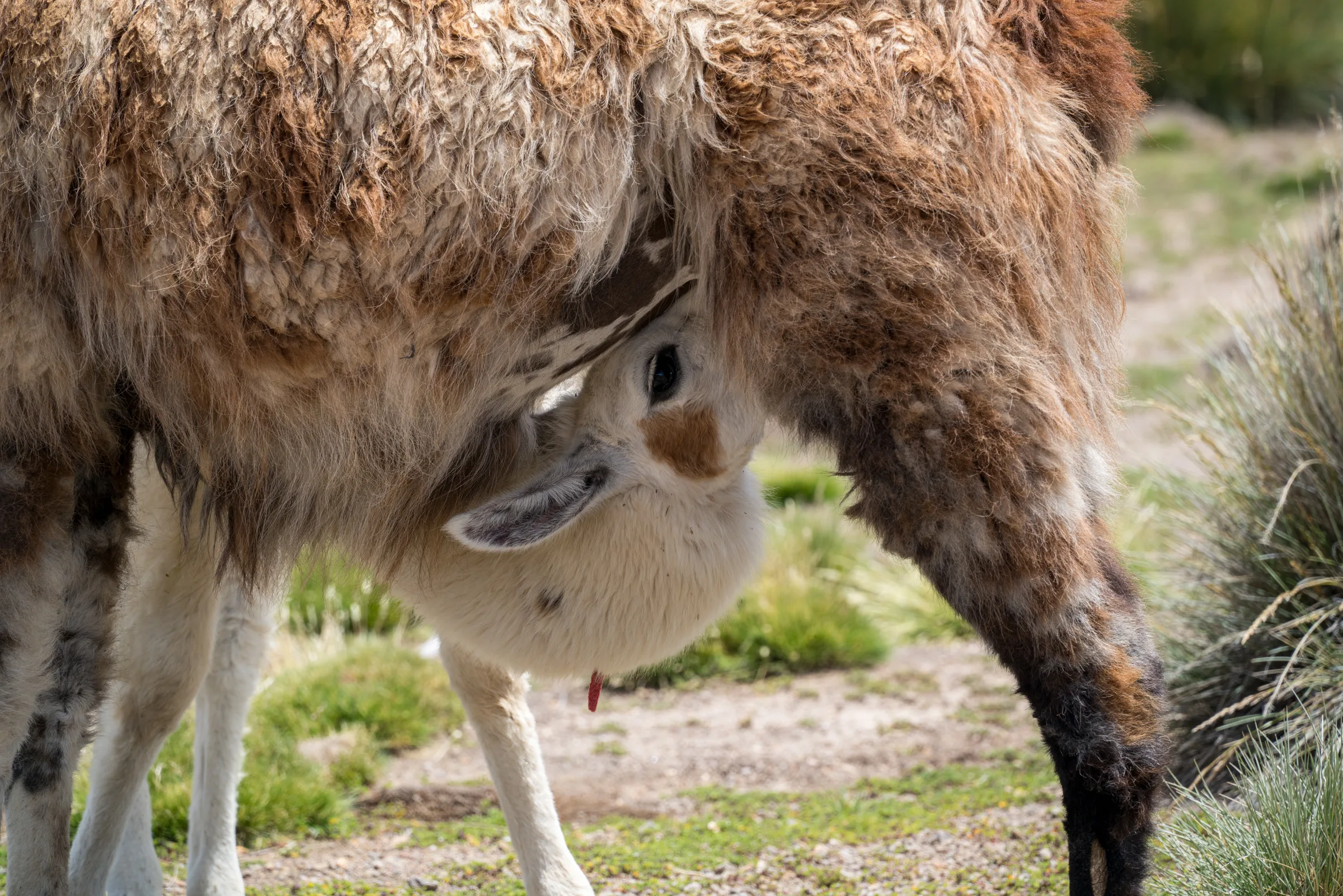
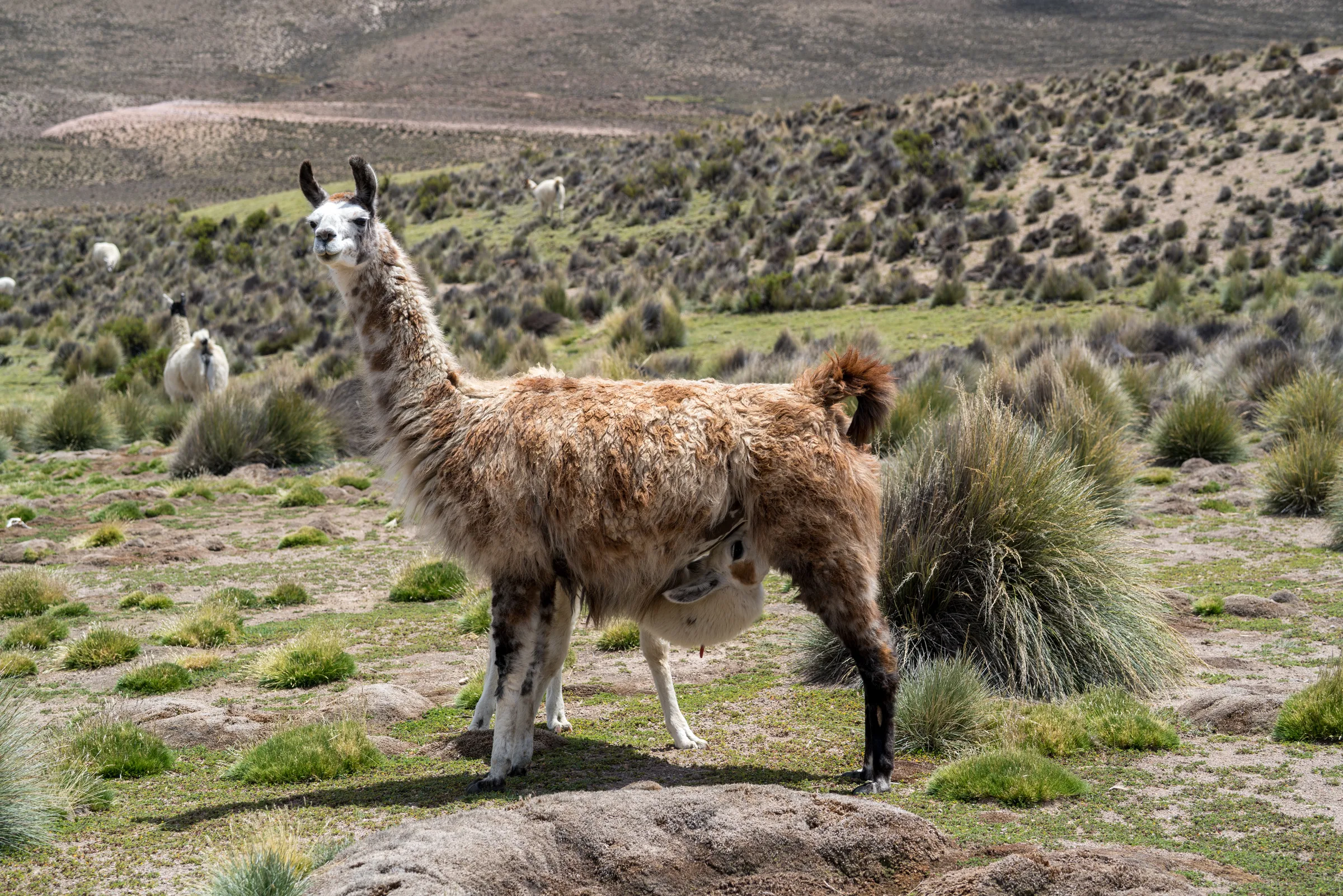
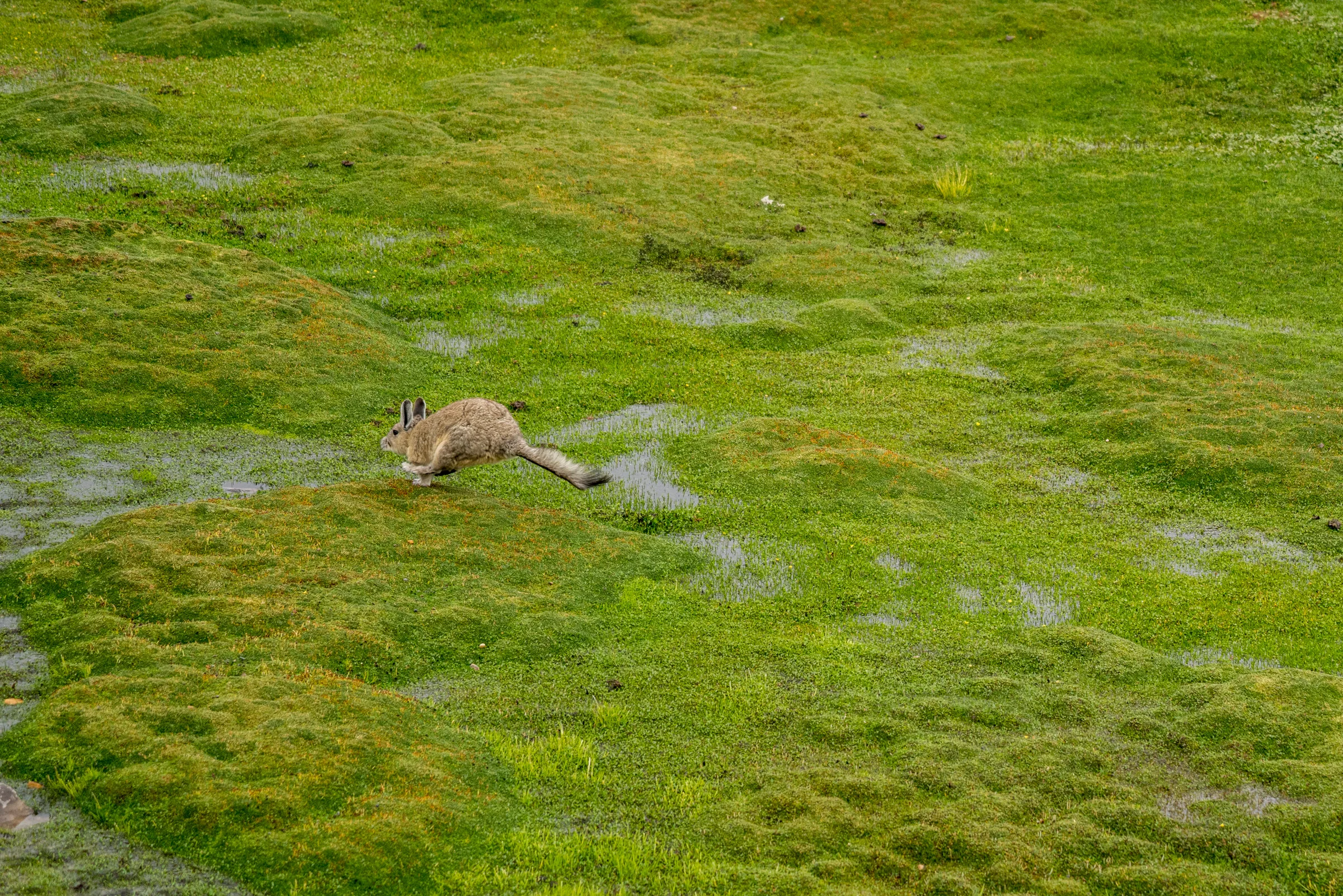
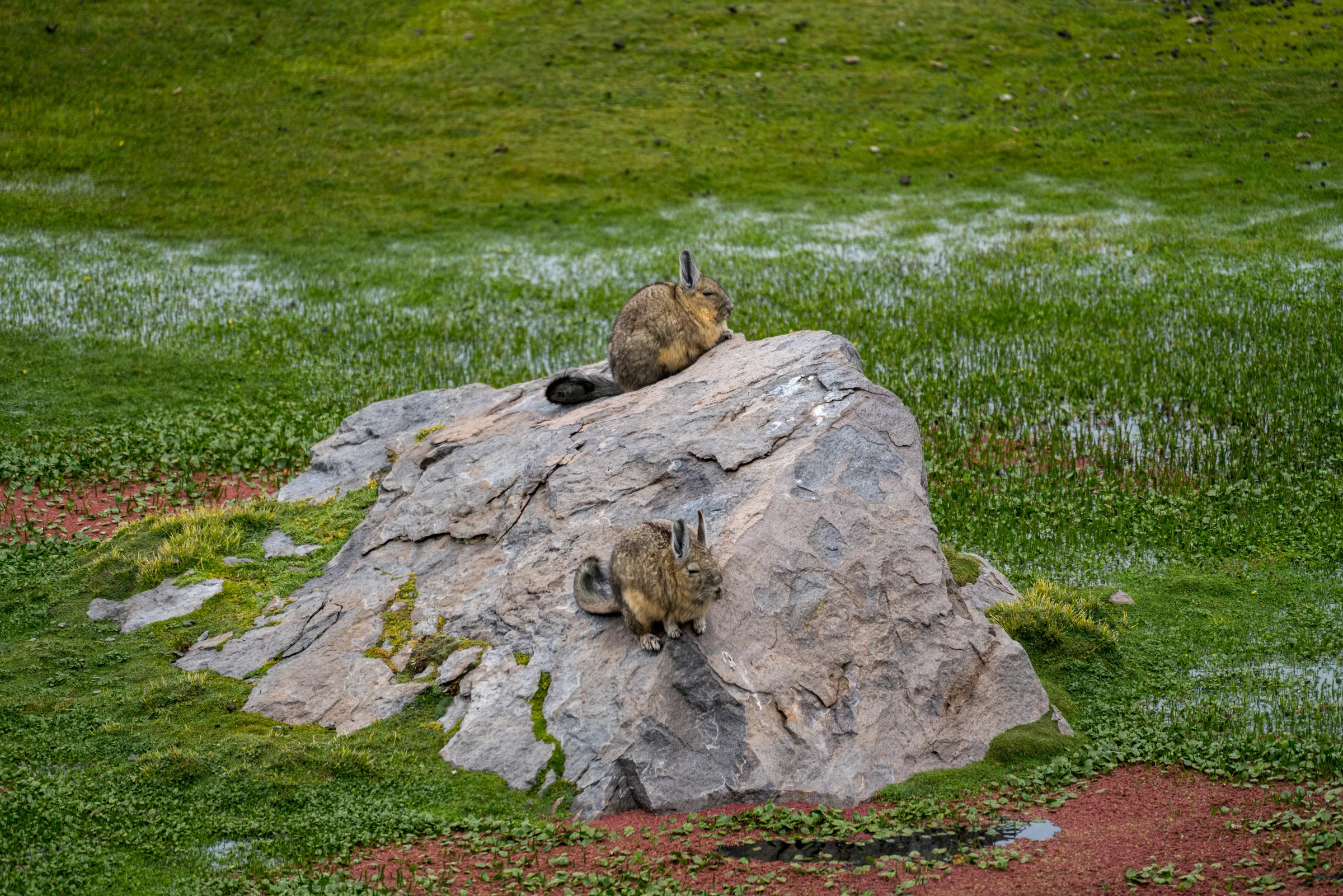
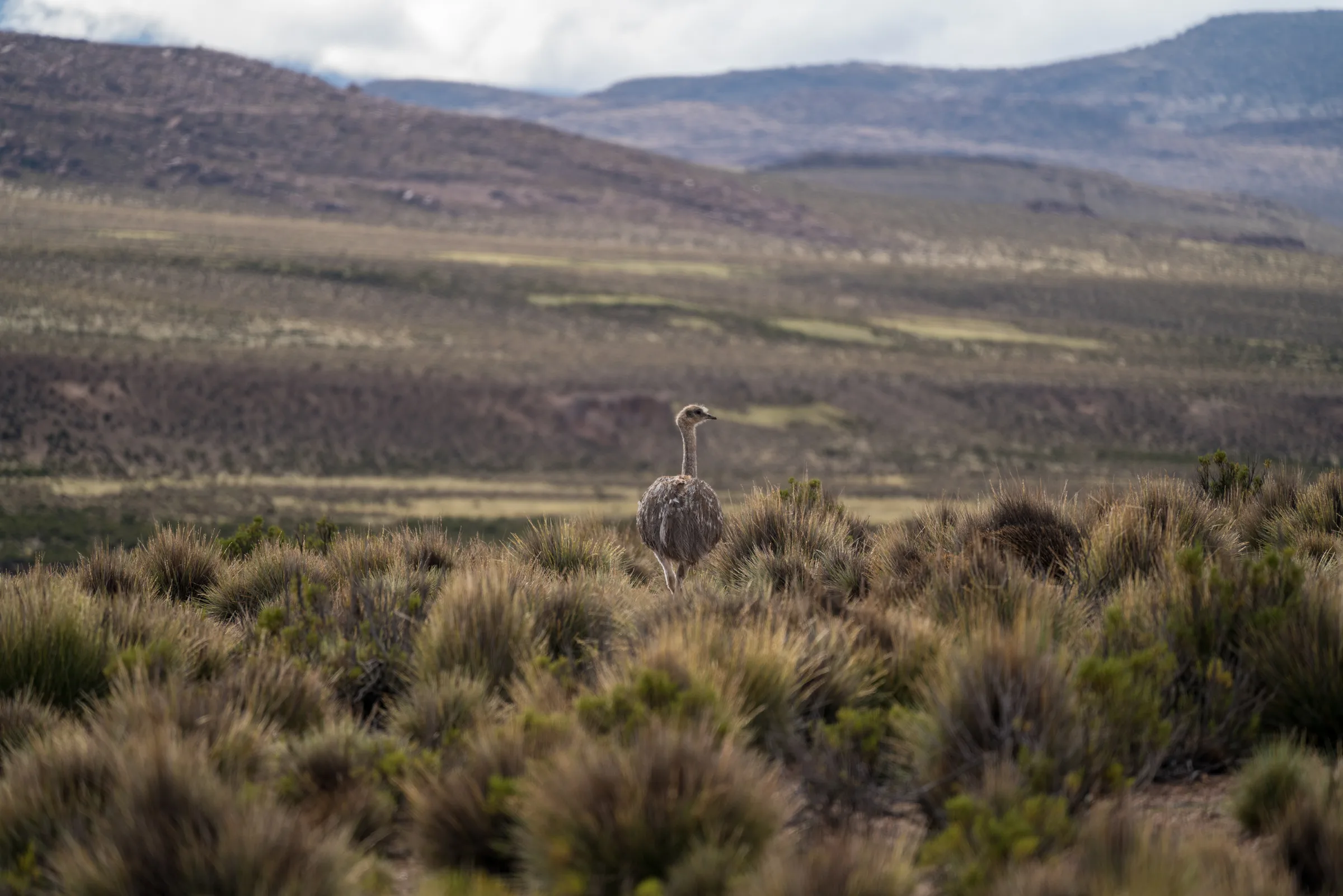
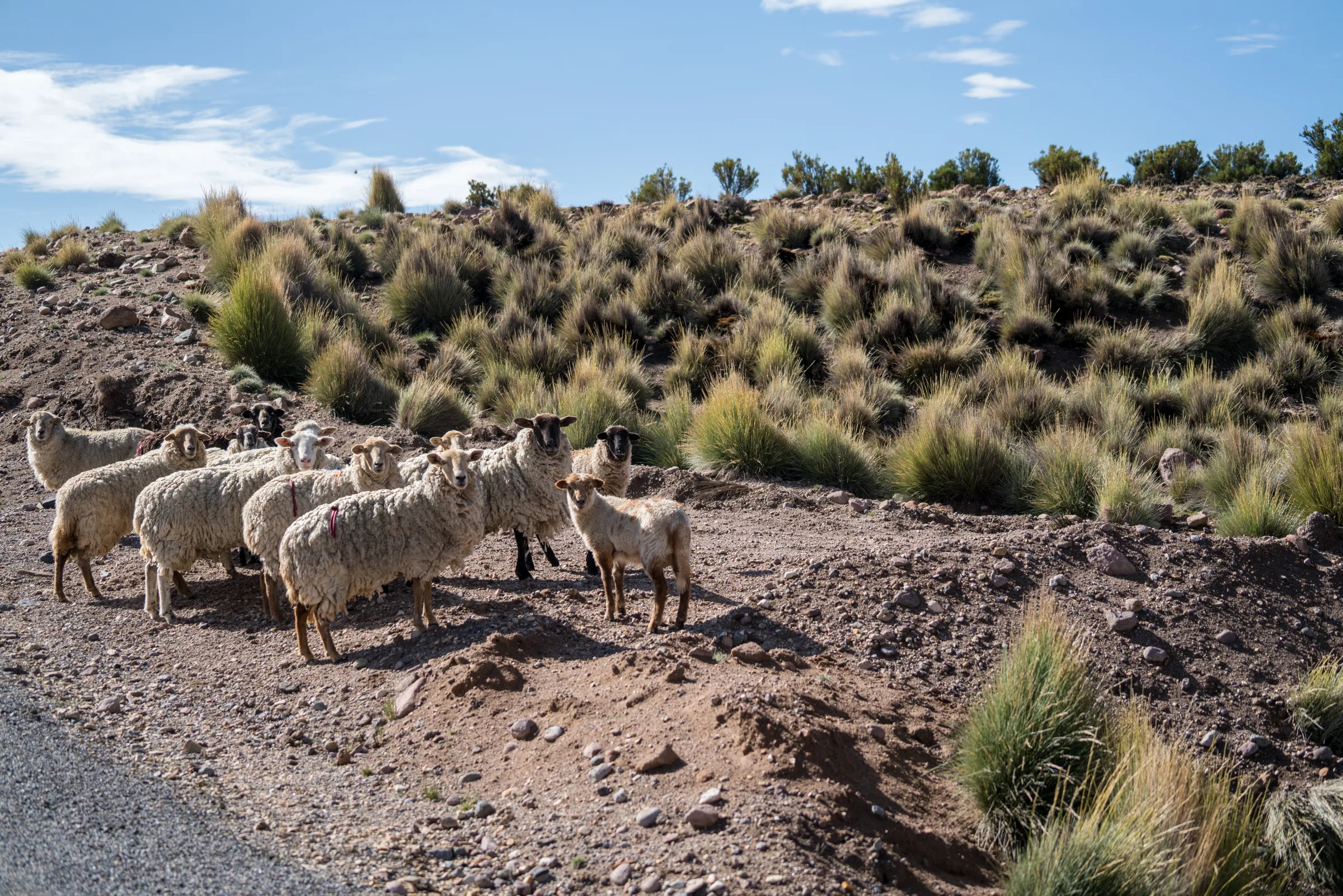
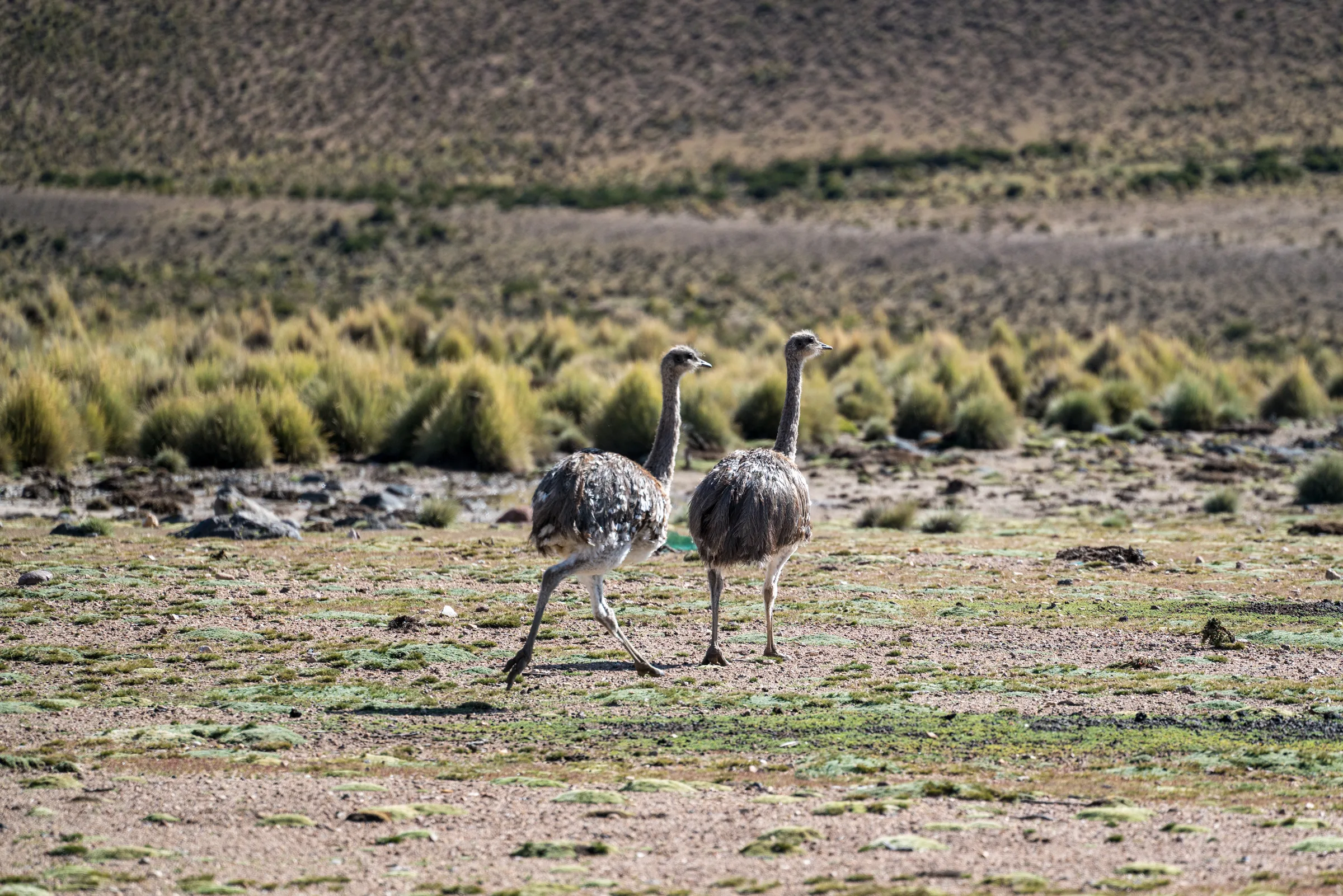
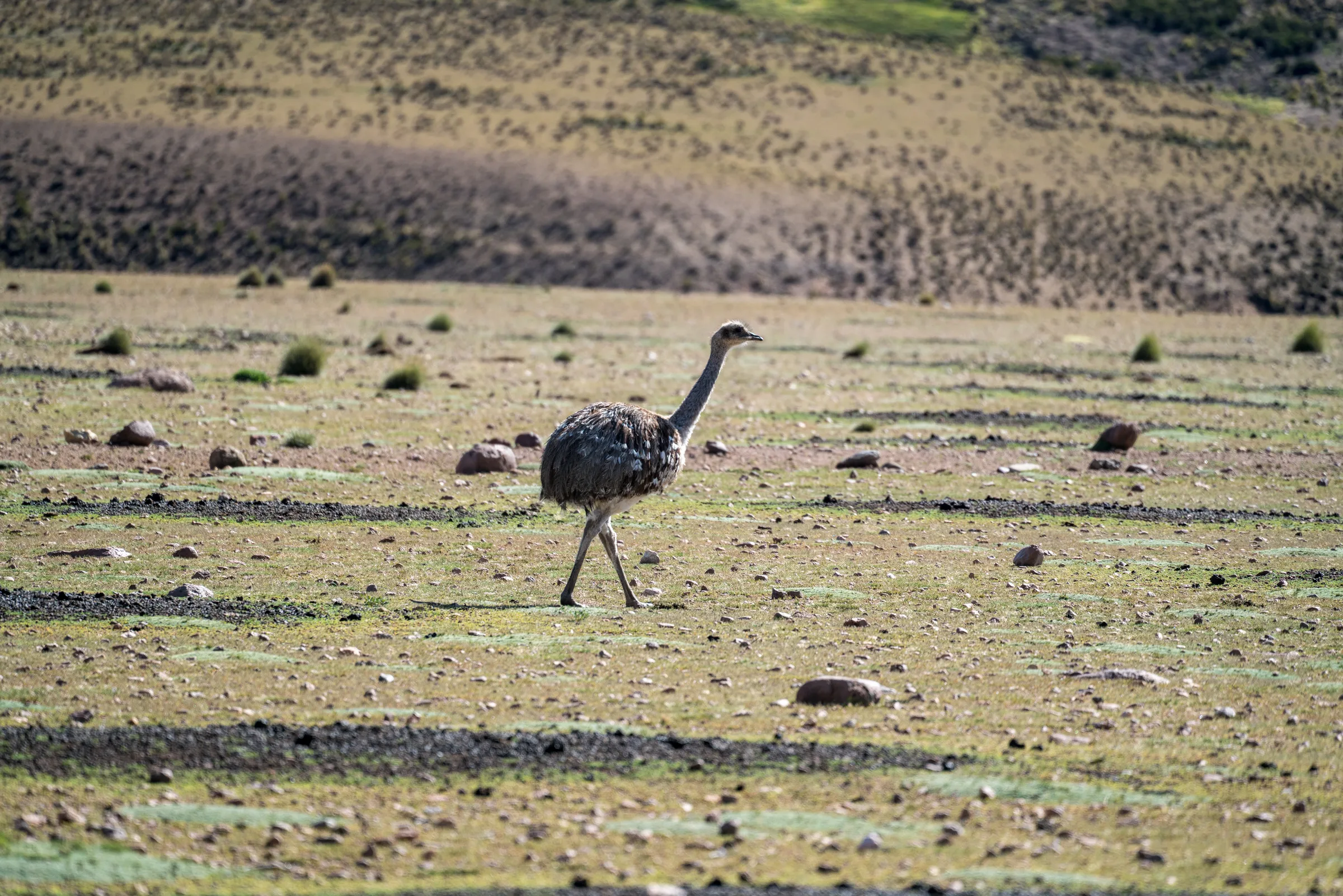
Vicuñas graze in herds beside the road. Shyer than llamas, slimmer, wilder. Single silhouettes on the slopes against Pomerape — composition ready, just press the shutter. The same valleys hold wild guanaco and domesticated alpacas and llamas in Aymara homesteads.
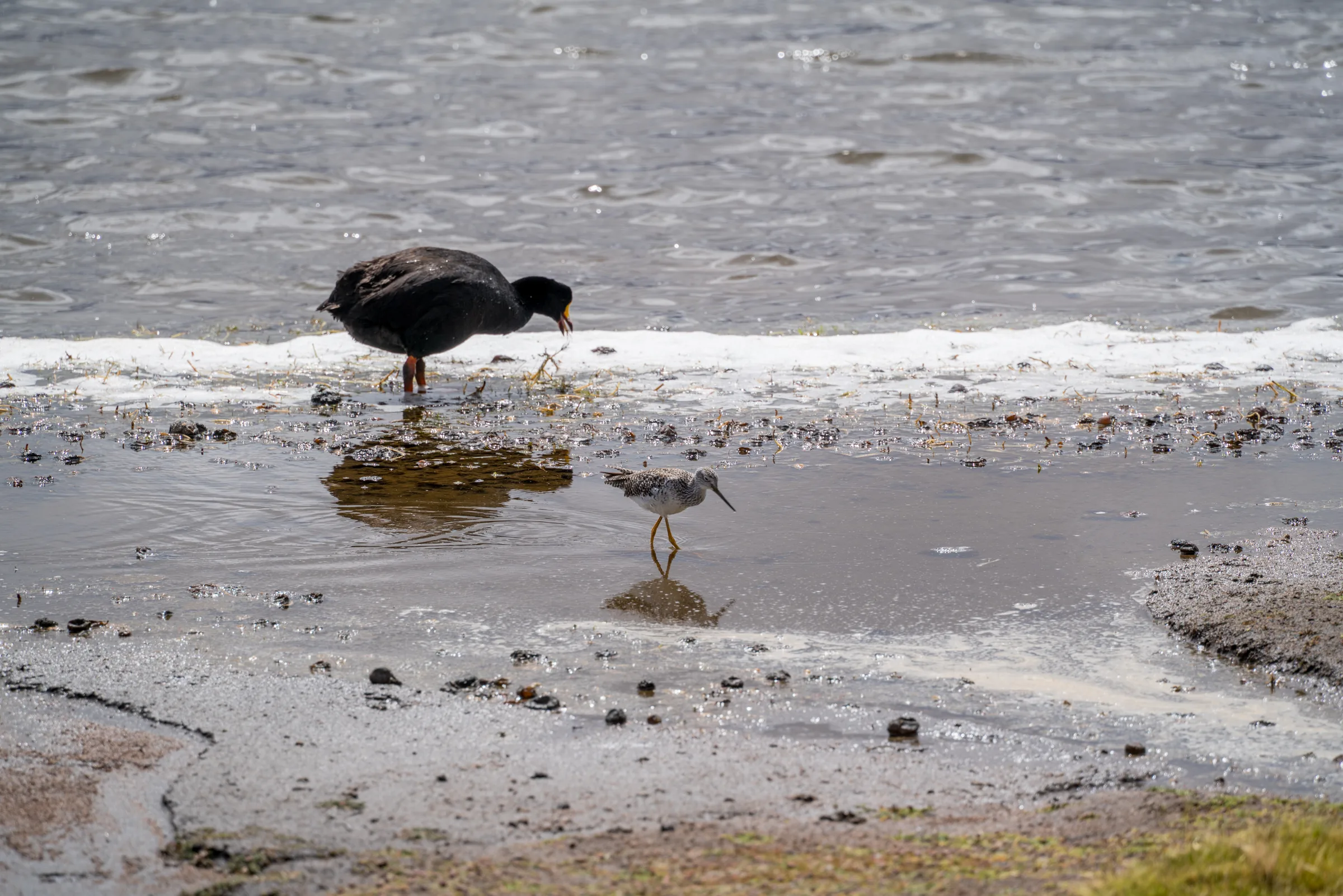
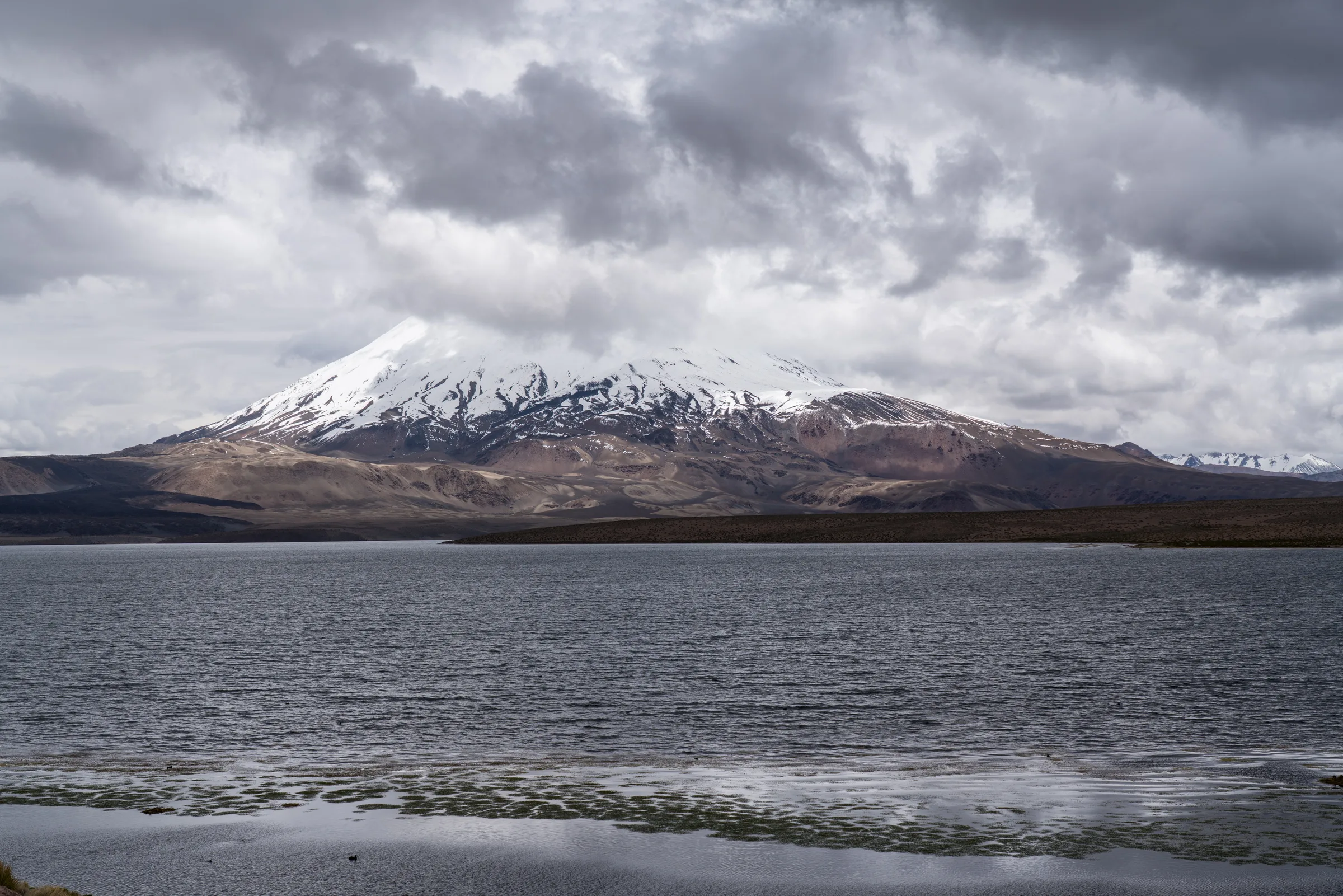
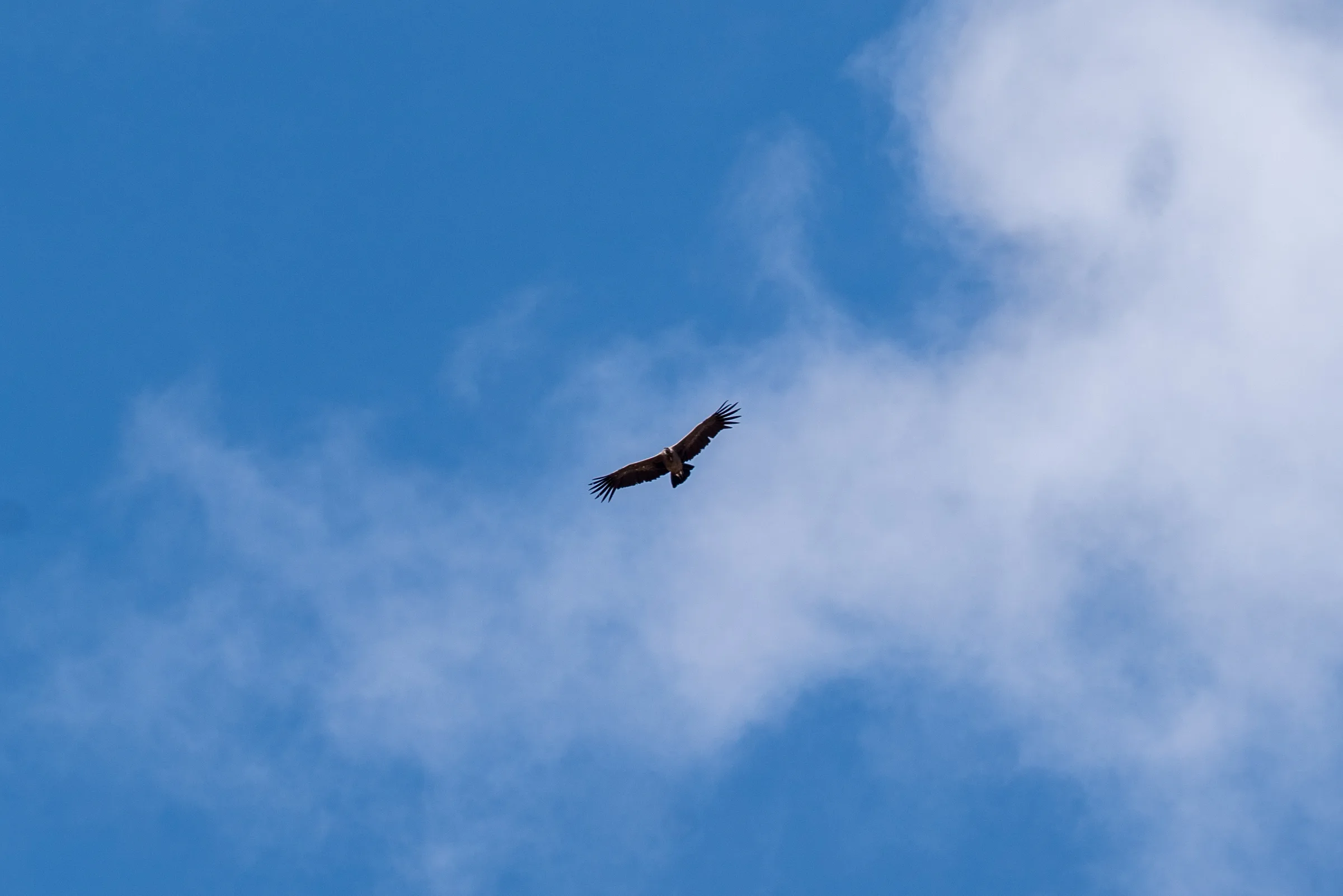
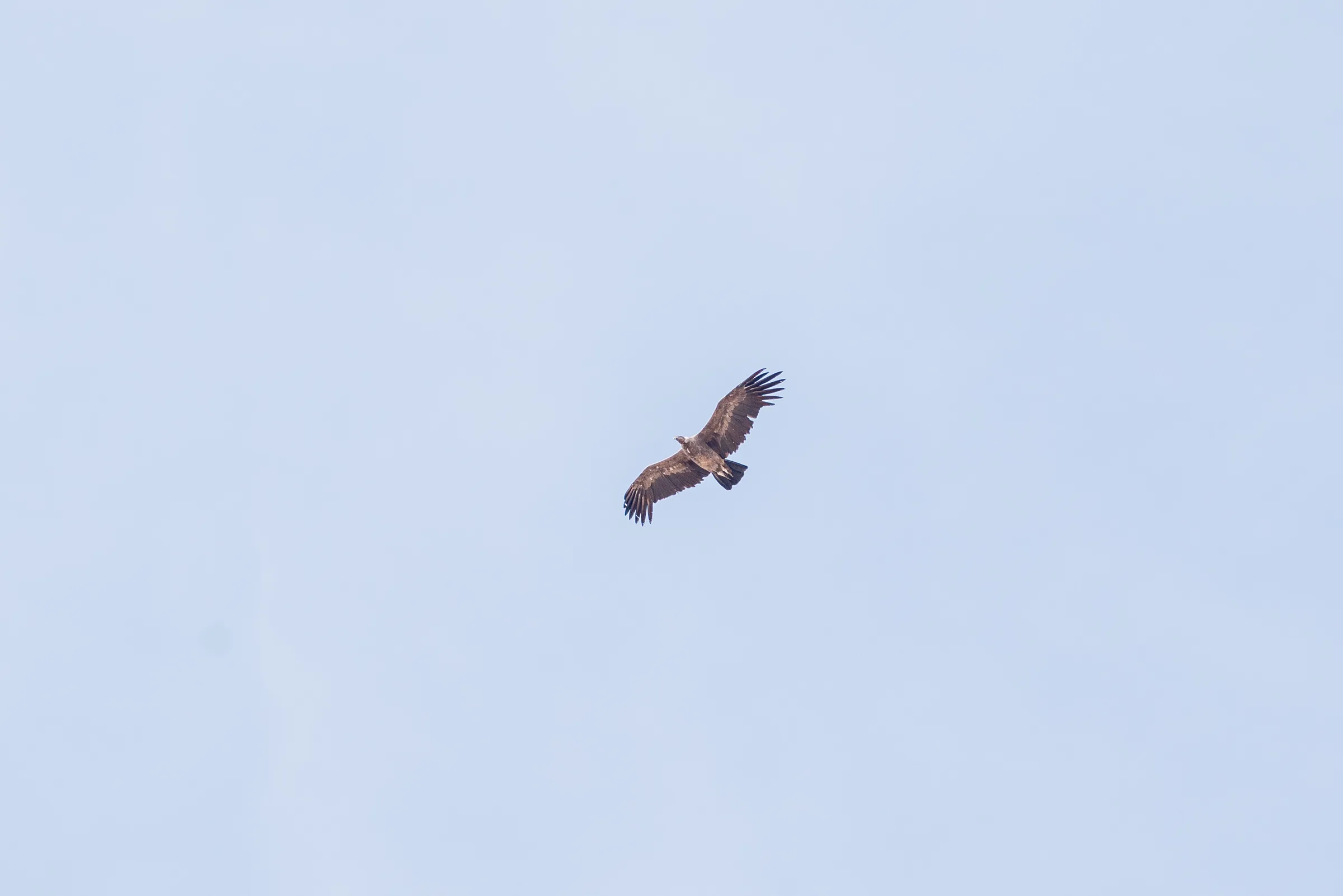
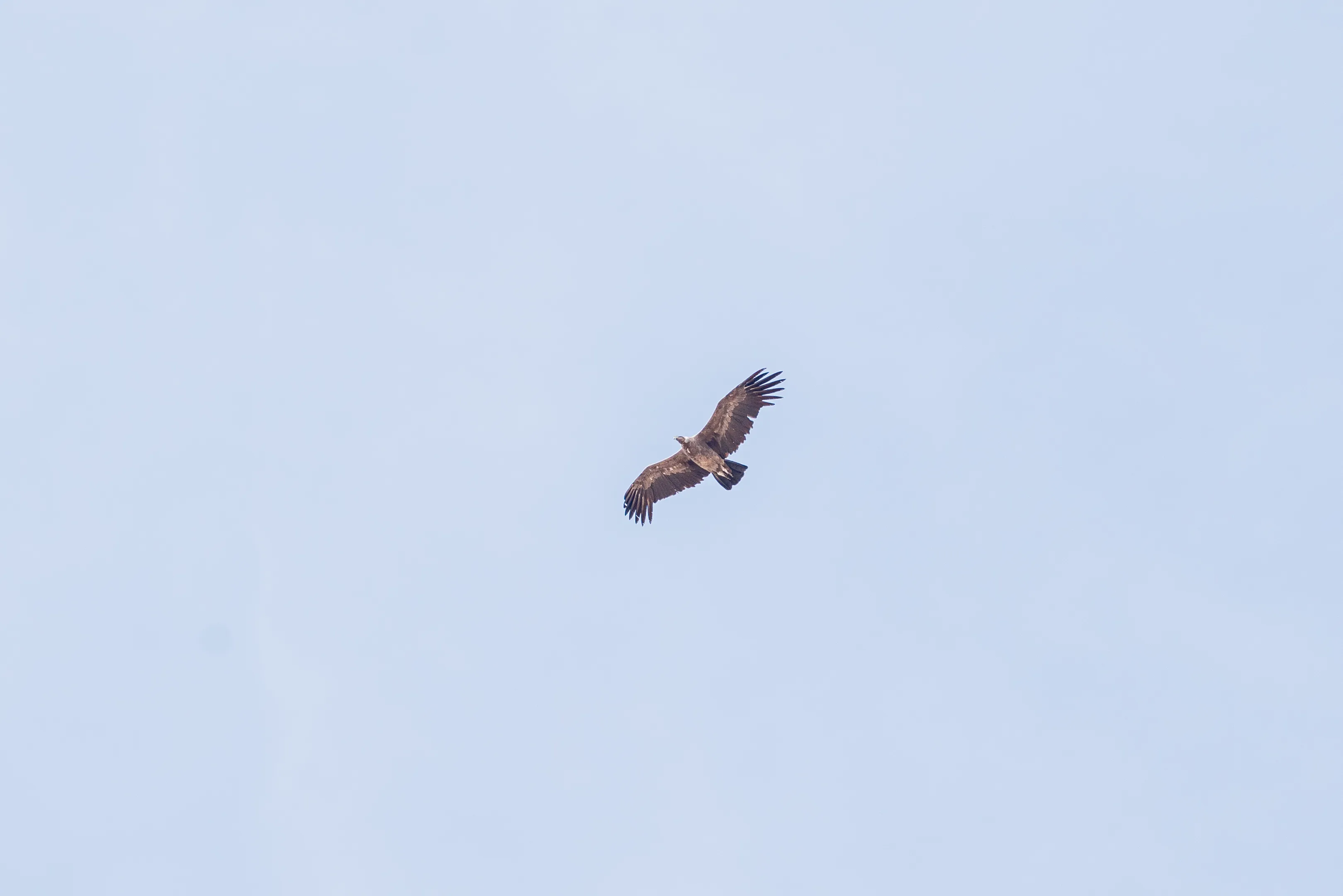
Lake Chungará sits at 4517 m and is one of the highest large lakes in the world. It formed roughly fourteen thousand years ago when the eruption of Parinacota blocked the valley. A mirror beneath the volcanic cones. Three flamingo species (the same as in Atacama), altiplano herons, occasionally a condor sliding overhead.
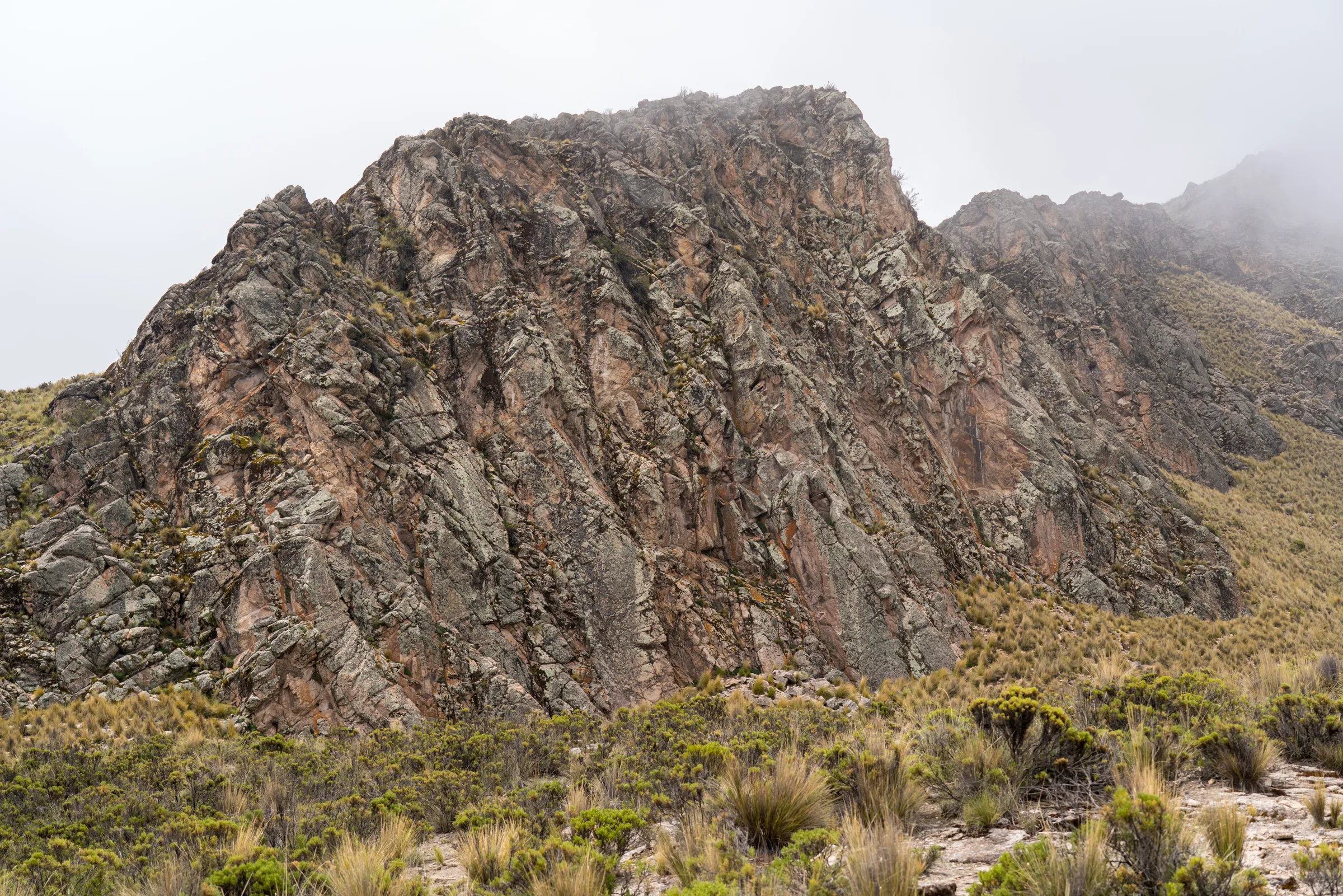
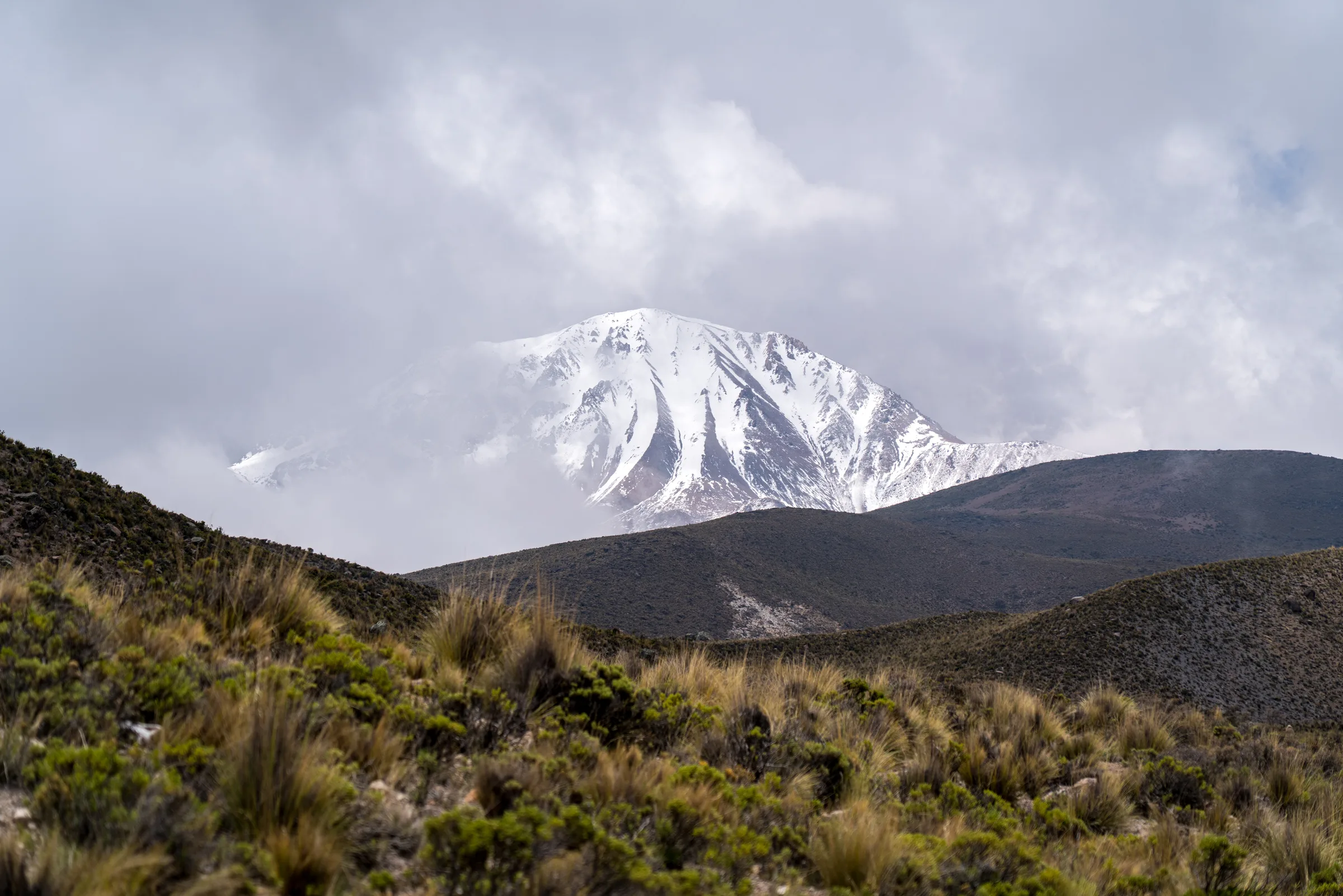
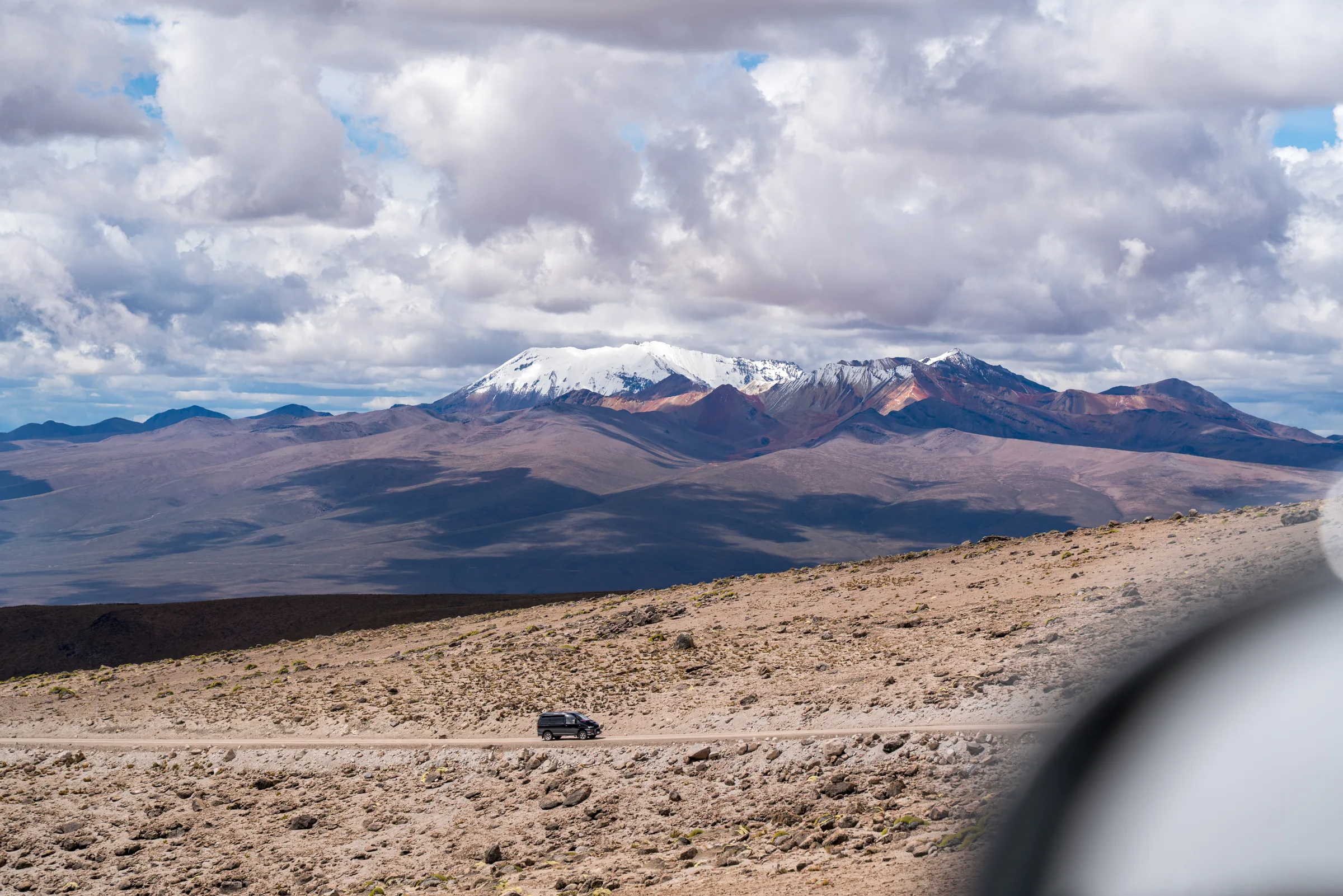
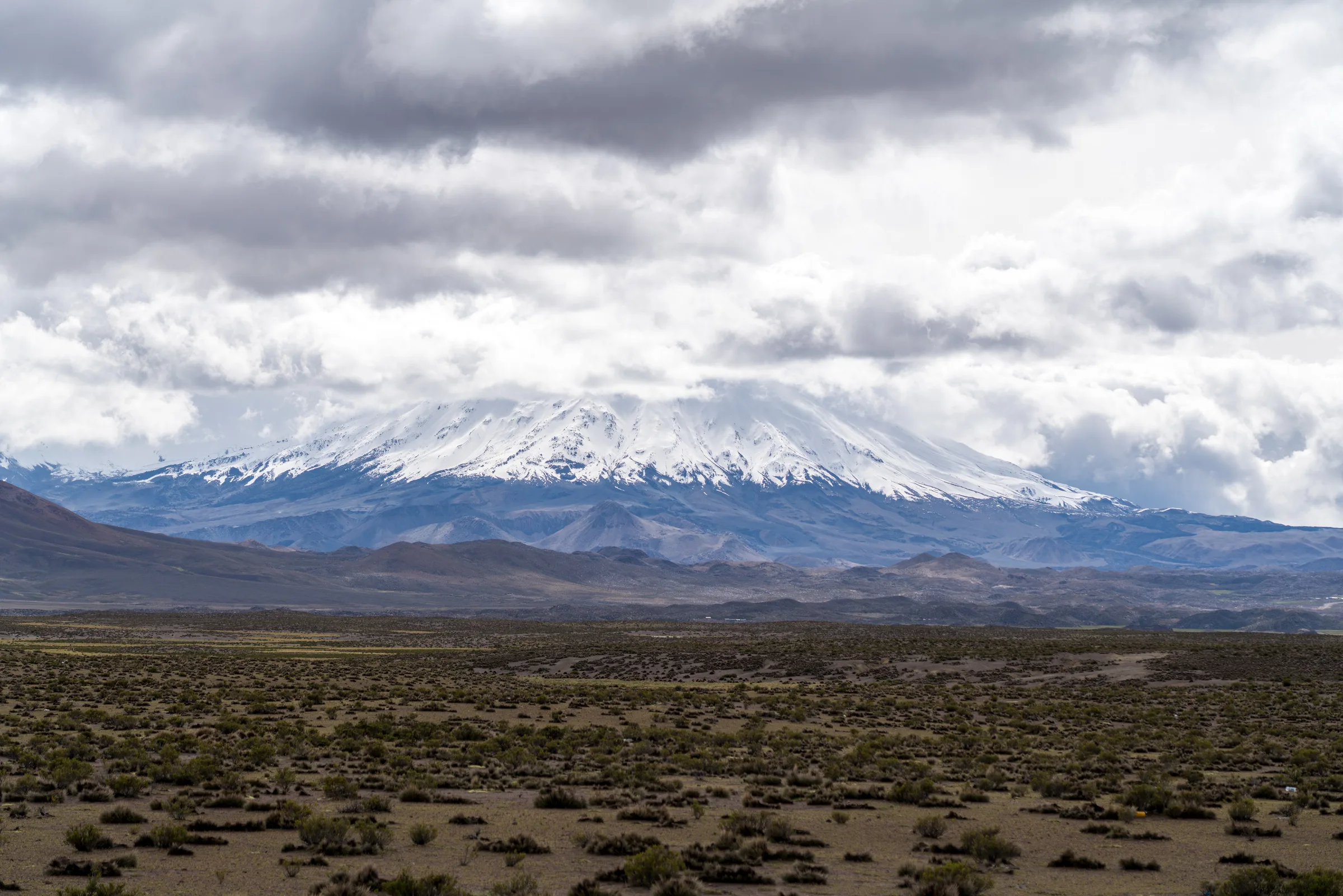
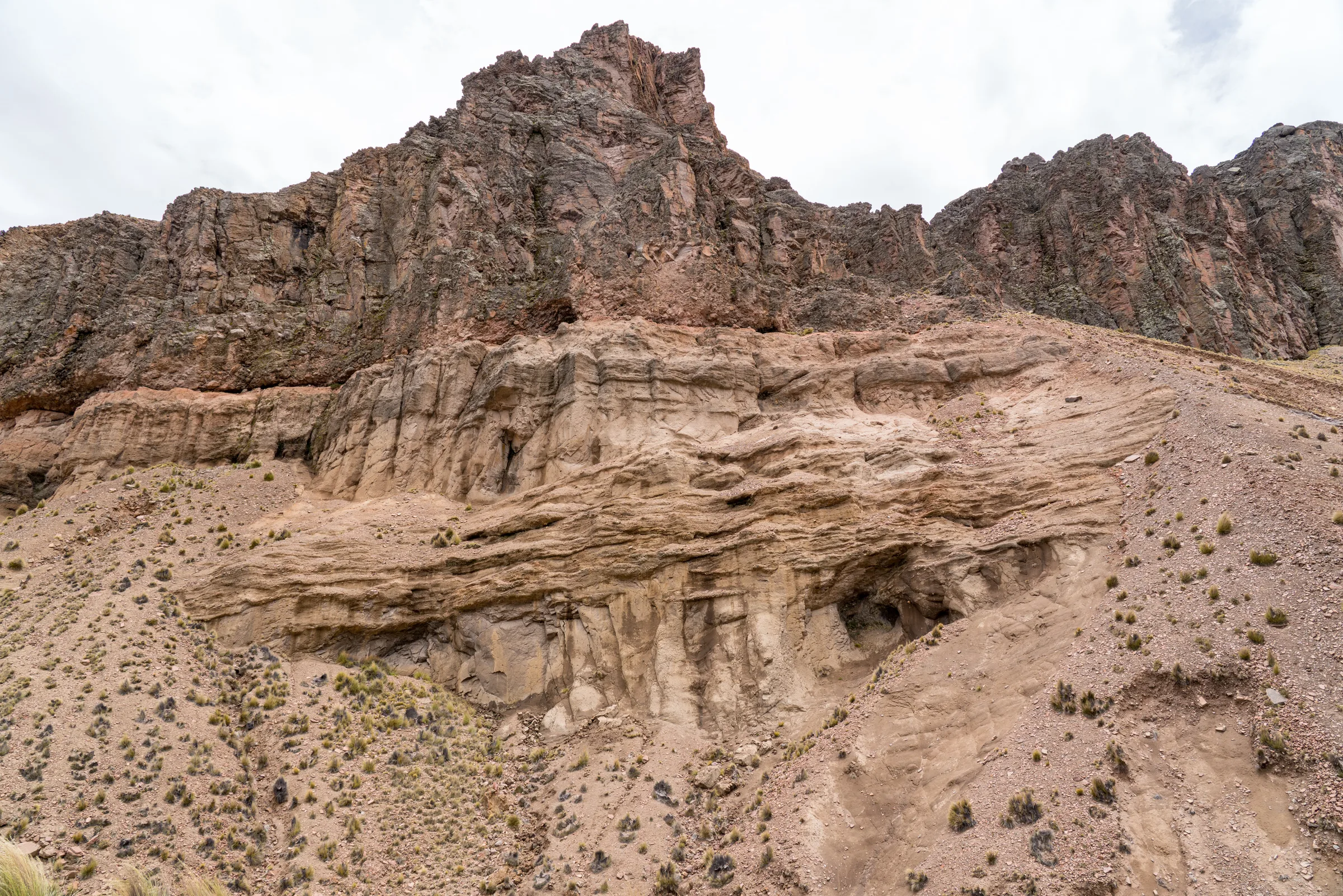
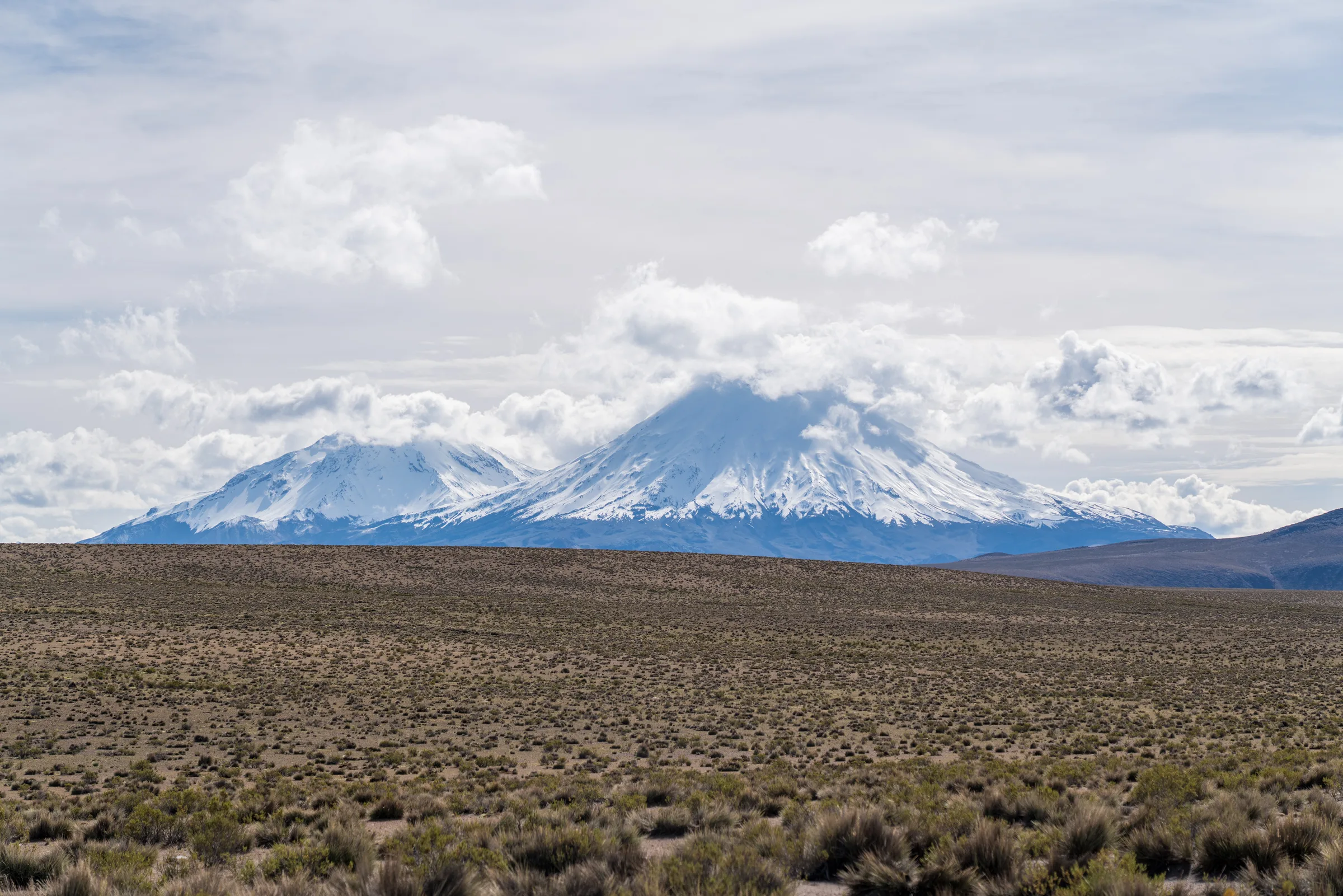
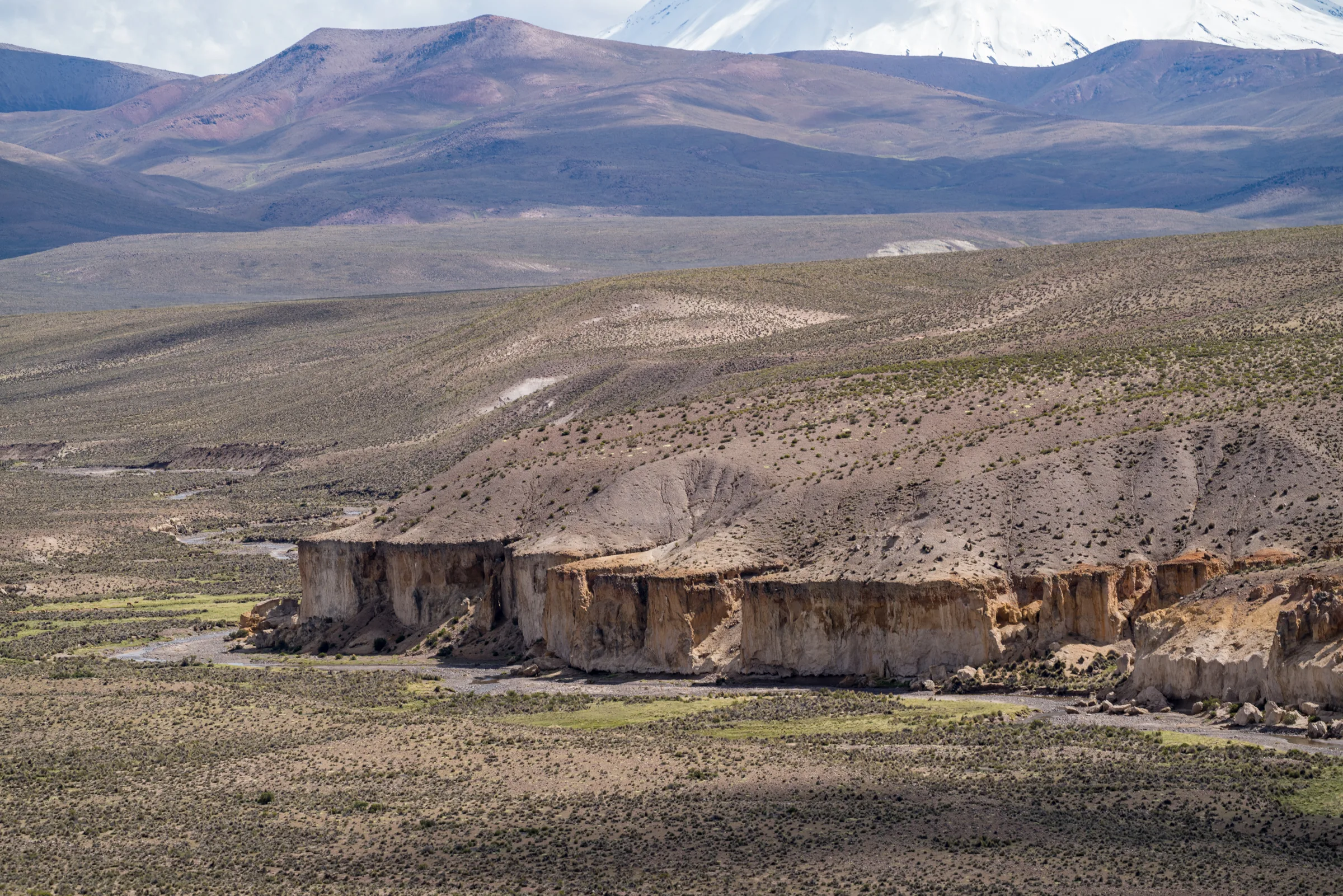
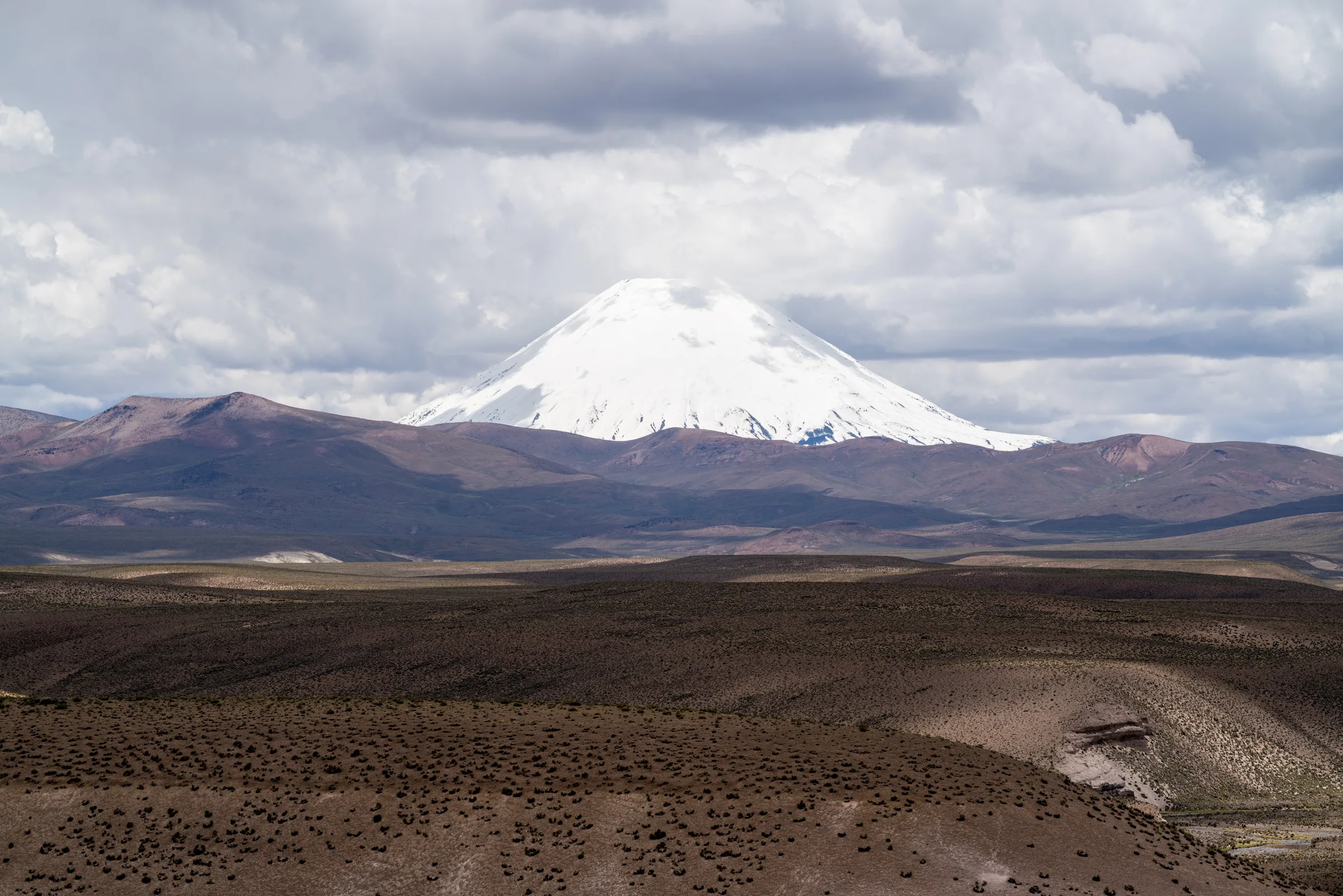
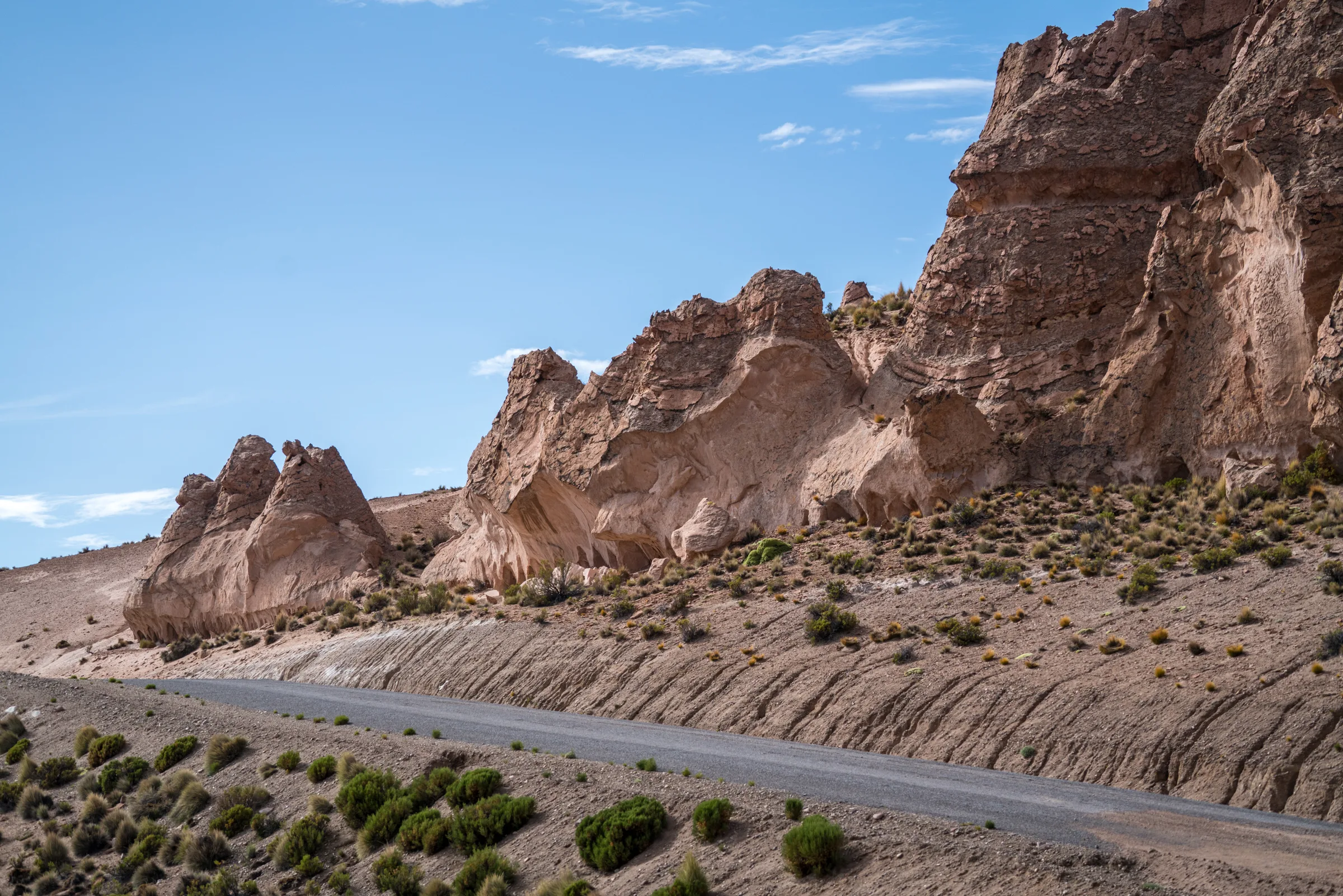
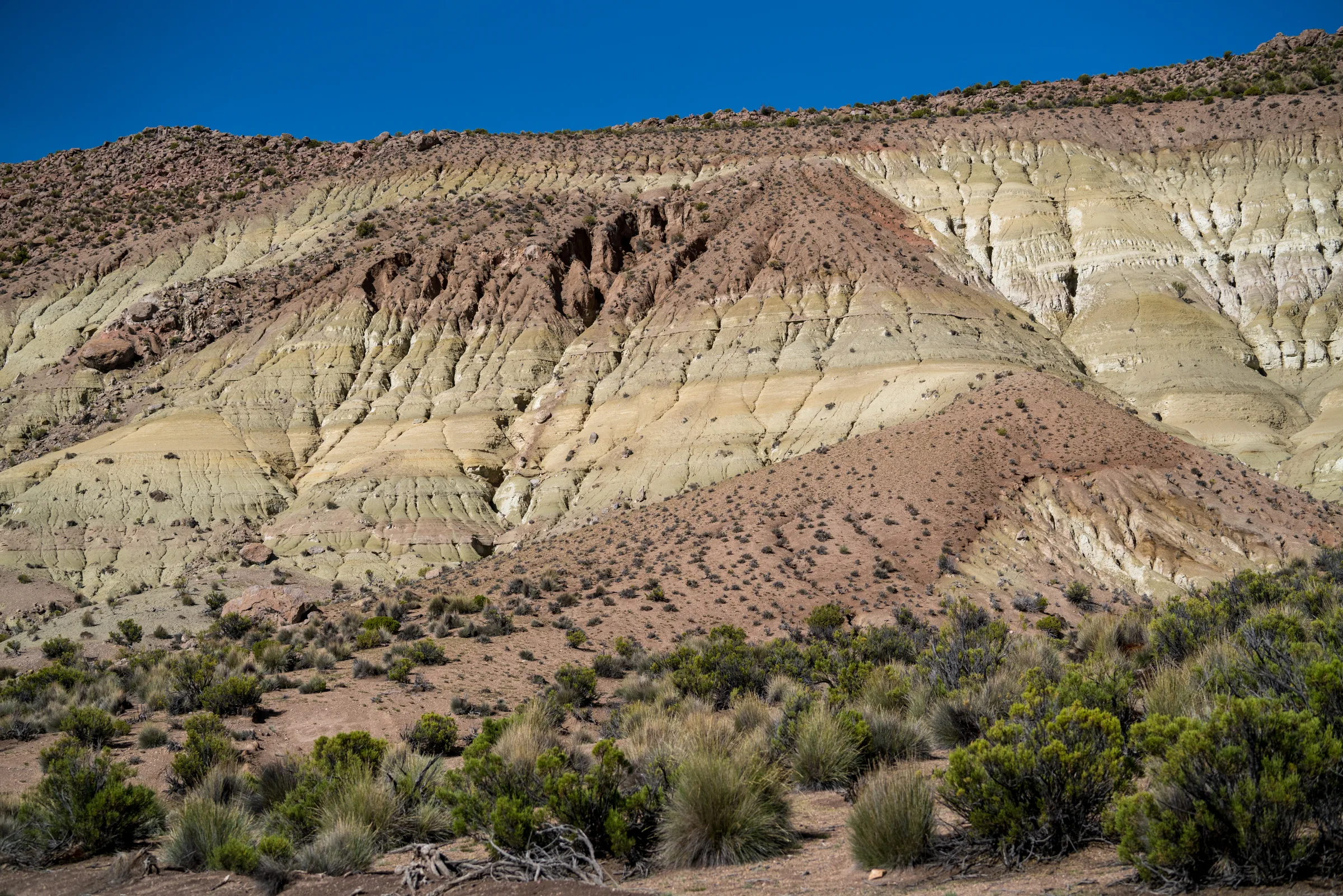
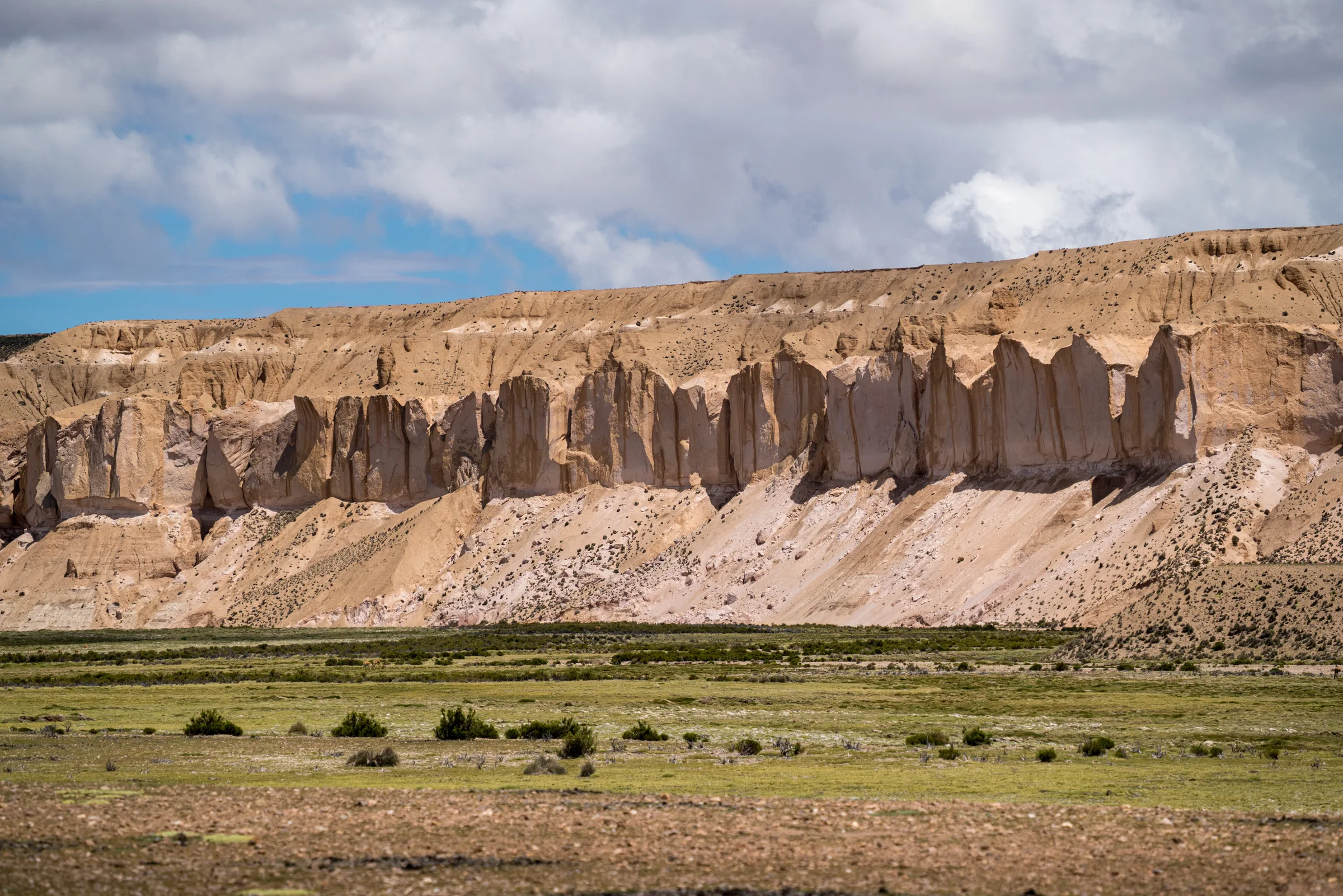
The cones above the lake are Payachata — “twins” in Aymara. Parinacota (6342 m) — a stratovolcano, last erupted about two thousand years ago. Pomerape (6282 m), the twin, probably extinct. Between them runs an old tribal boundary, today an international border. The scale turns surreal: the cliff above the road is taller than a high-rise, and the volcano next to it still doesn’t fit the frame — we drive two kilometres back to see the cone whole.
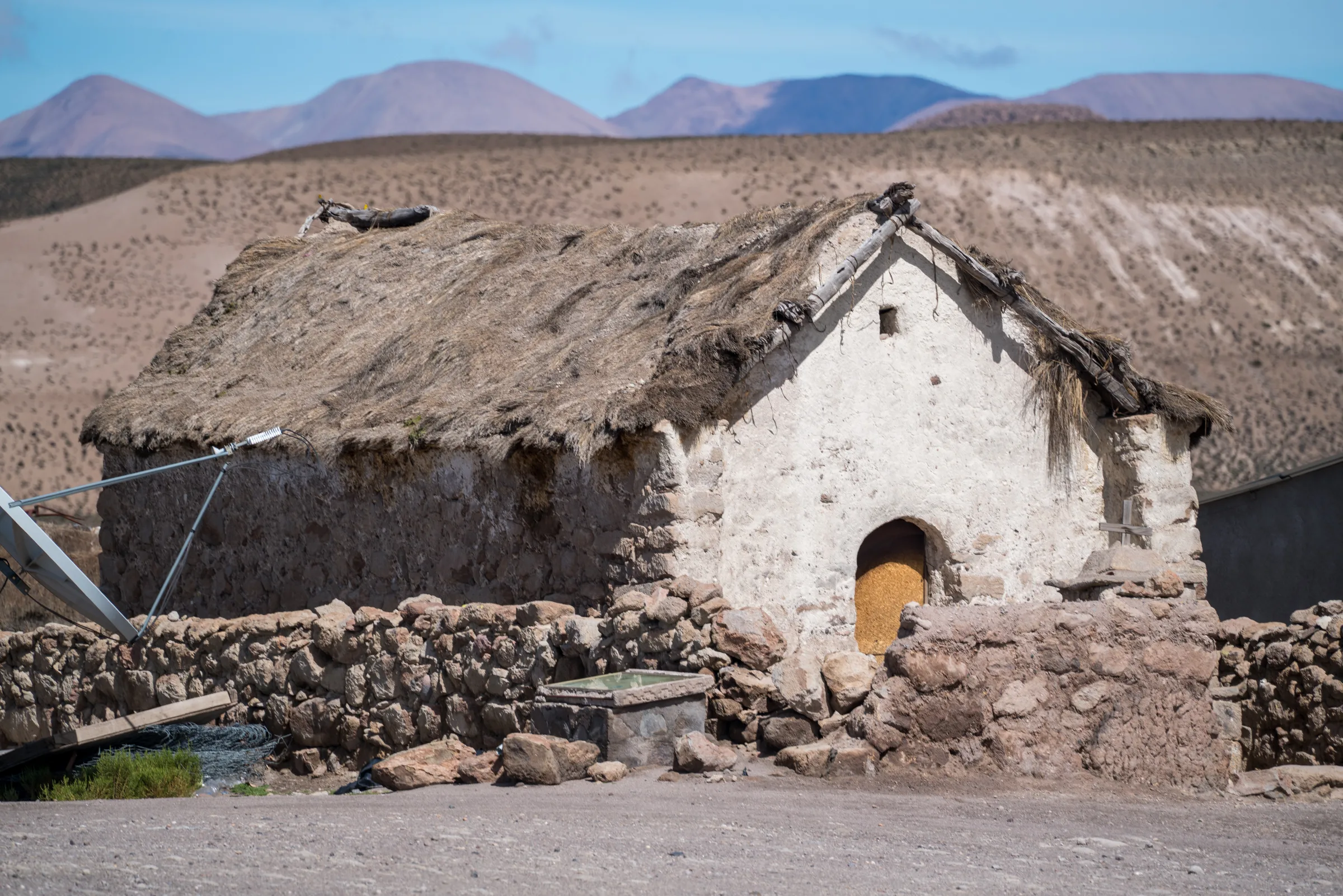
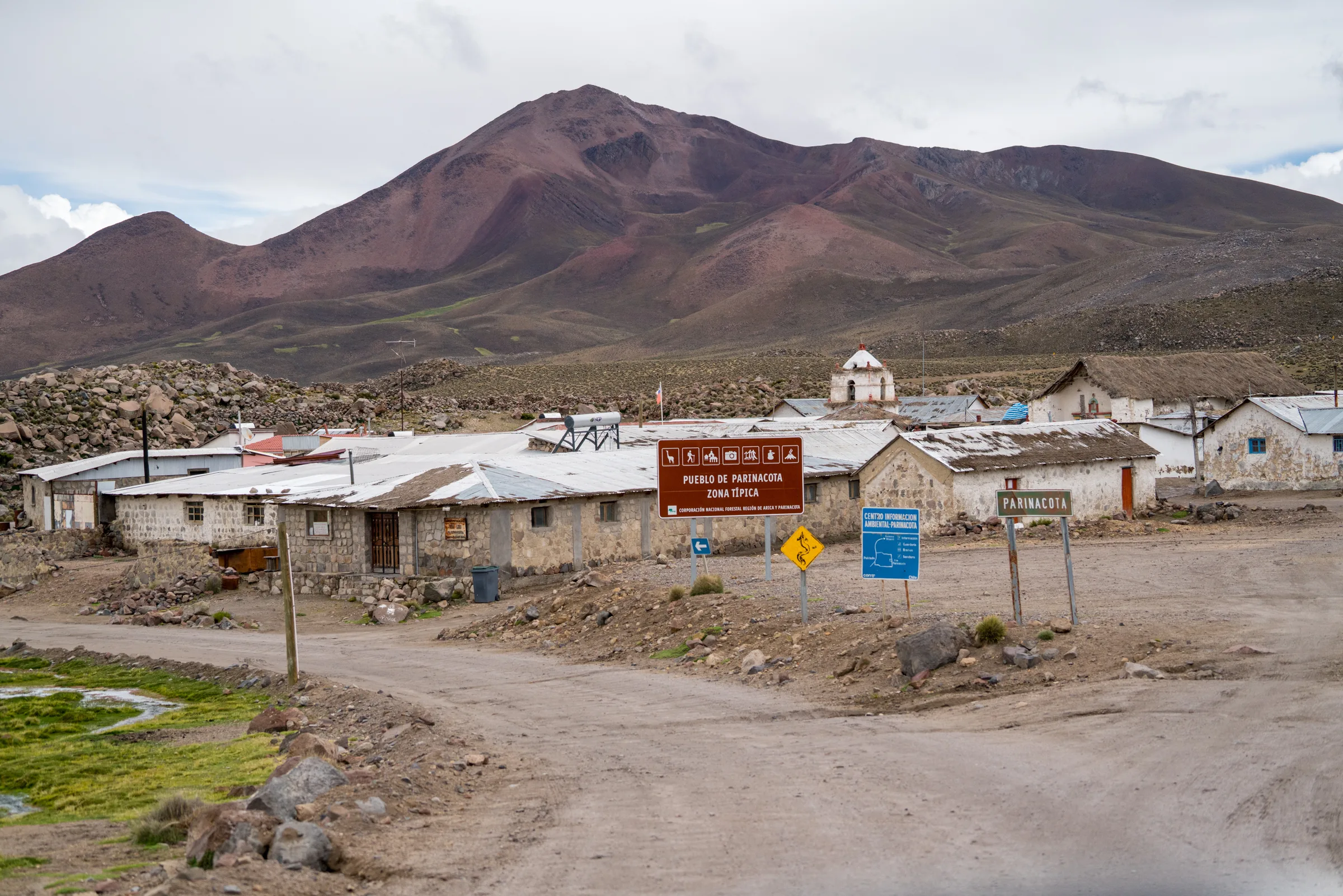
The village of Parinacota at the foot of the volcano has a church built in the 17th century and rebuilt in 1789, in the middle of an Aymara square of white stone houses. Inside, frescoes with local saints and gently incorrect proportions — mestizo Baroque, where Europe and the Andes don’t entirely agree. Absolute silence; the nearest town, Putre (3500 m), where we stay, is twenty minutes’ drive downhill.
In the evening above Putre the sky tightens. The Milky Way begins somewhere between Parinacota and Pomerape and hangs there all night. The camera stays on the tripod until three in the morning.
Season: June–September (dry, the best chance of a clear window at sunrise). Base in Putre (3500 m), not in Arica at sea level — acclimatize in three steps: San Pedro 2440 m, Putre 3500 m, day-trips up to 4500+ m. Fuel up in Arica before heading into the mountains. Park entry through CONAF in cash, in pesos — not much, but cash only. Coca leaves from a local shop (not the supplement); they work better than you’d think.
Gallery