№ 07 · February 2026 · Vietnam
Huế.
The imperial capital on the Perfume River — Thien Mu Pagoda, the Citadel, the Nguyễn-dynasty royal tombs, and the local cuisine you won't forget.
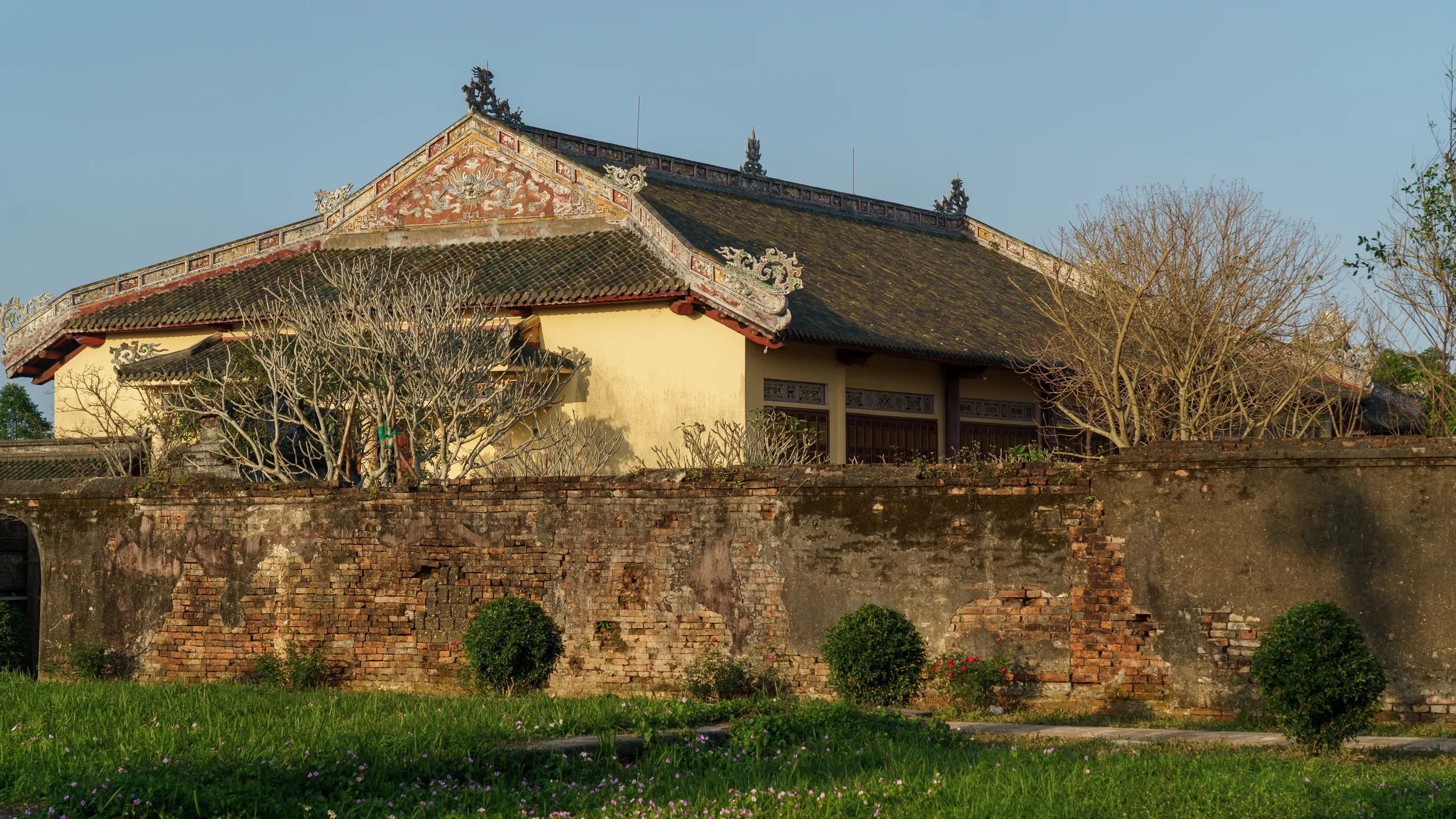
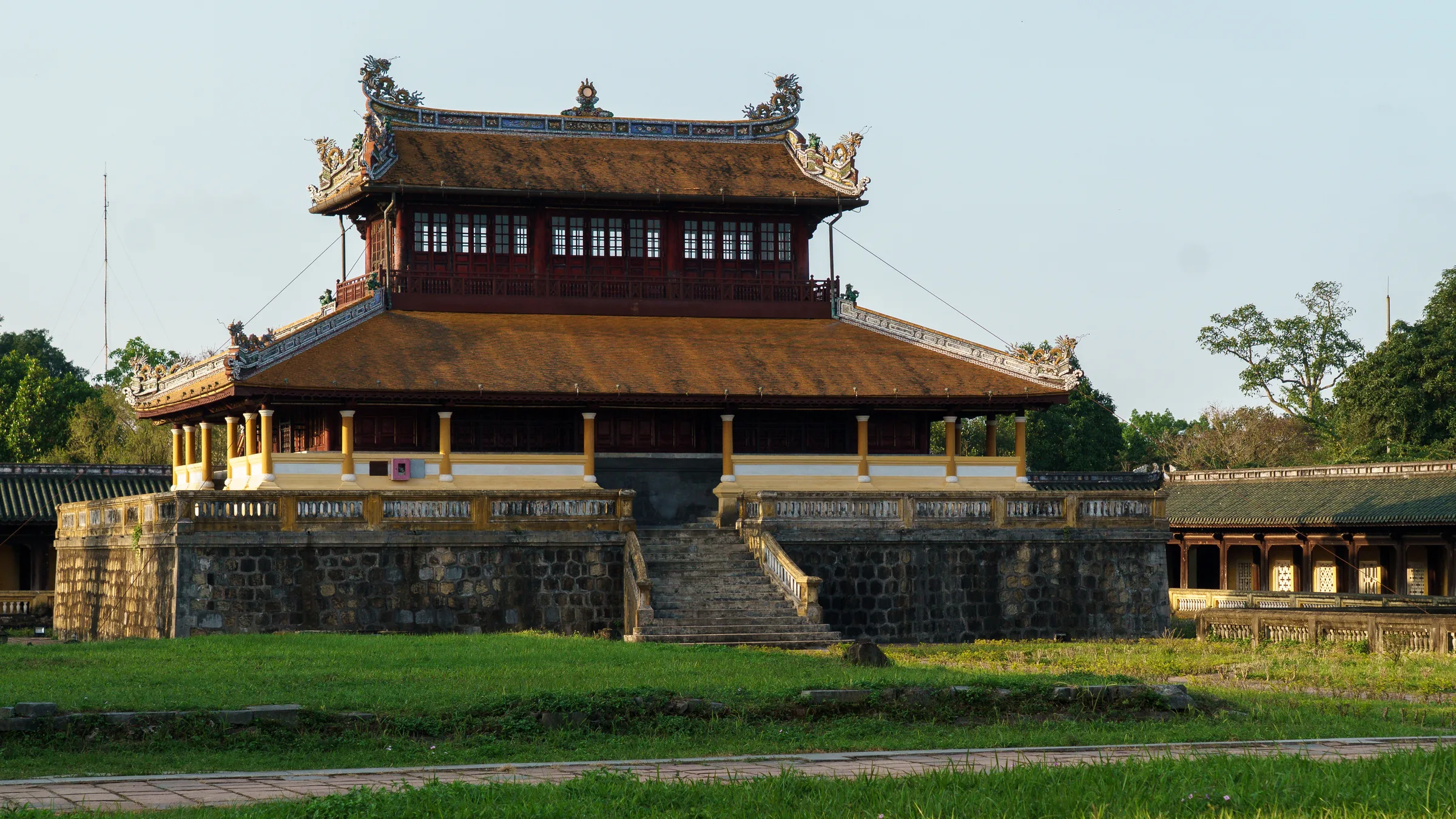
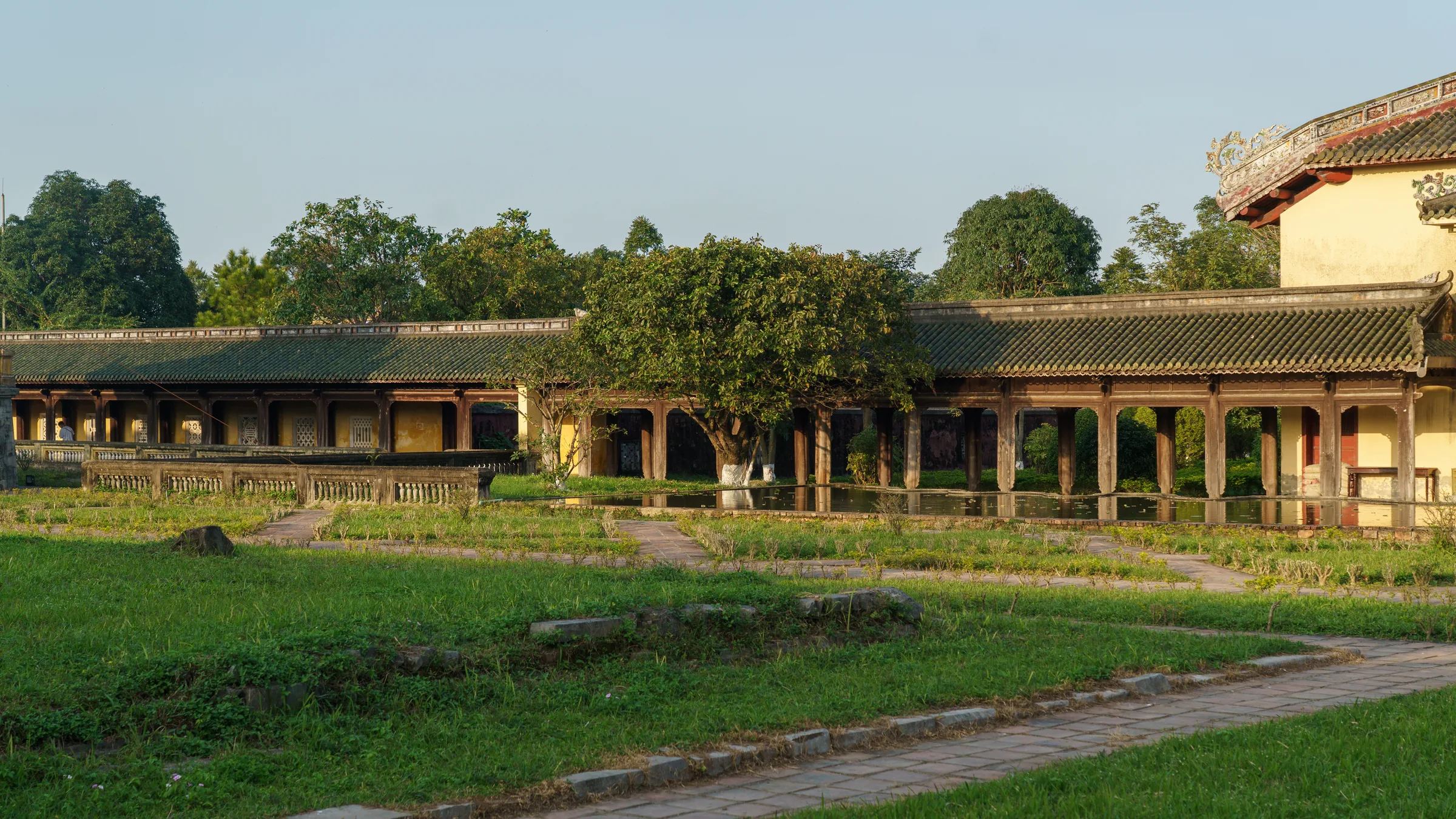
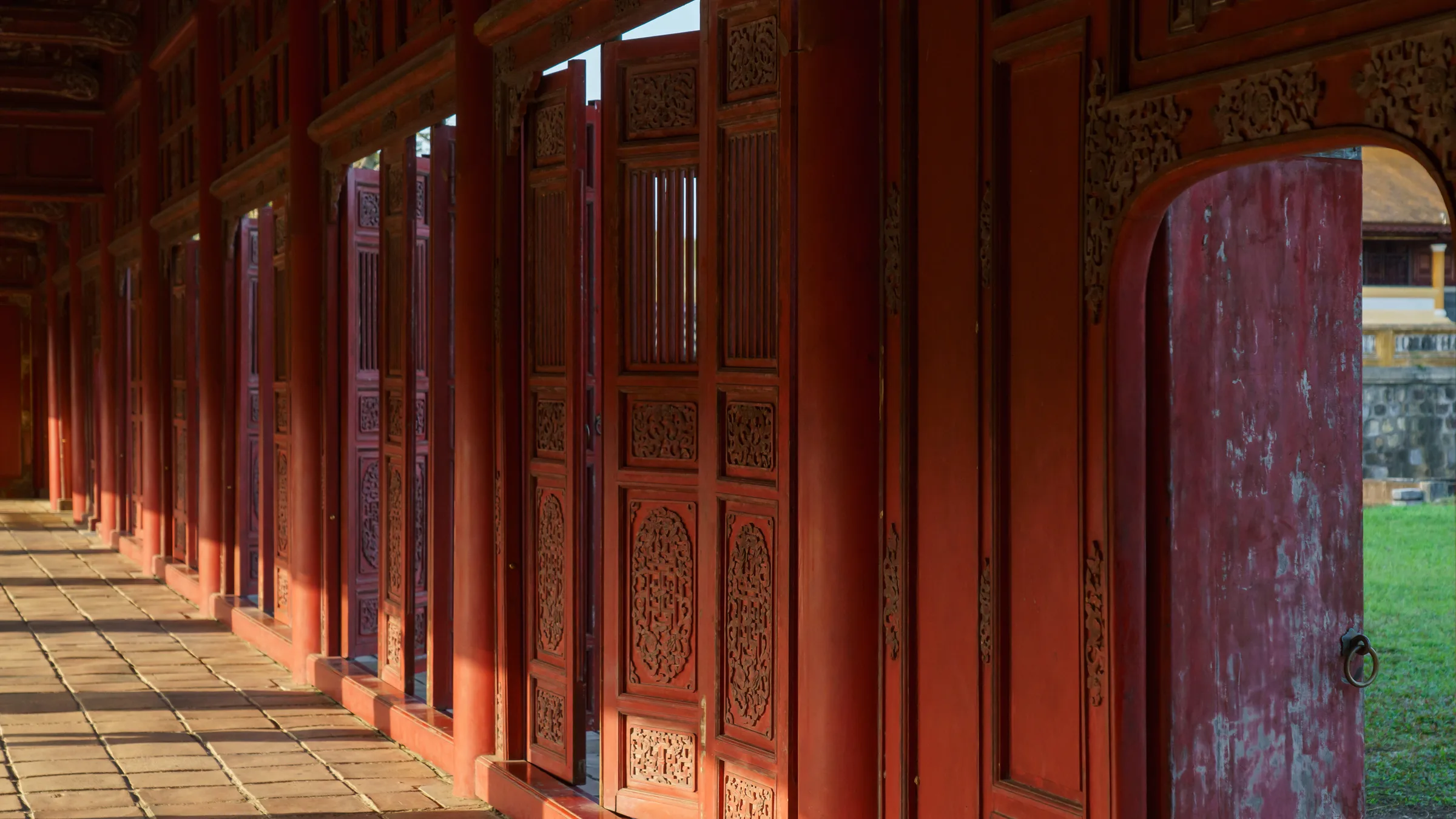
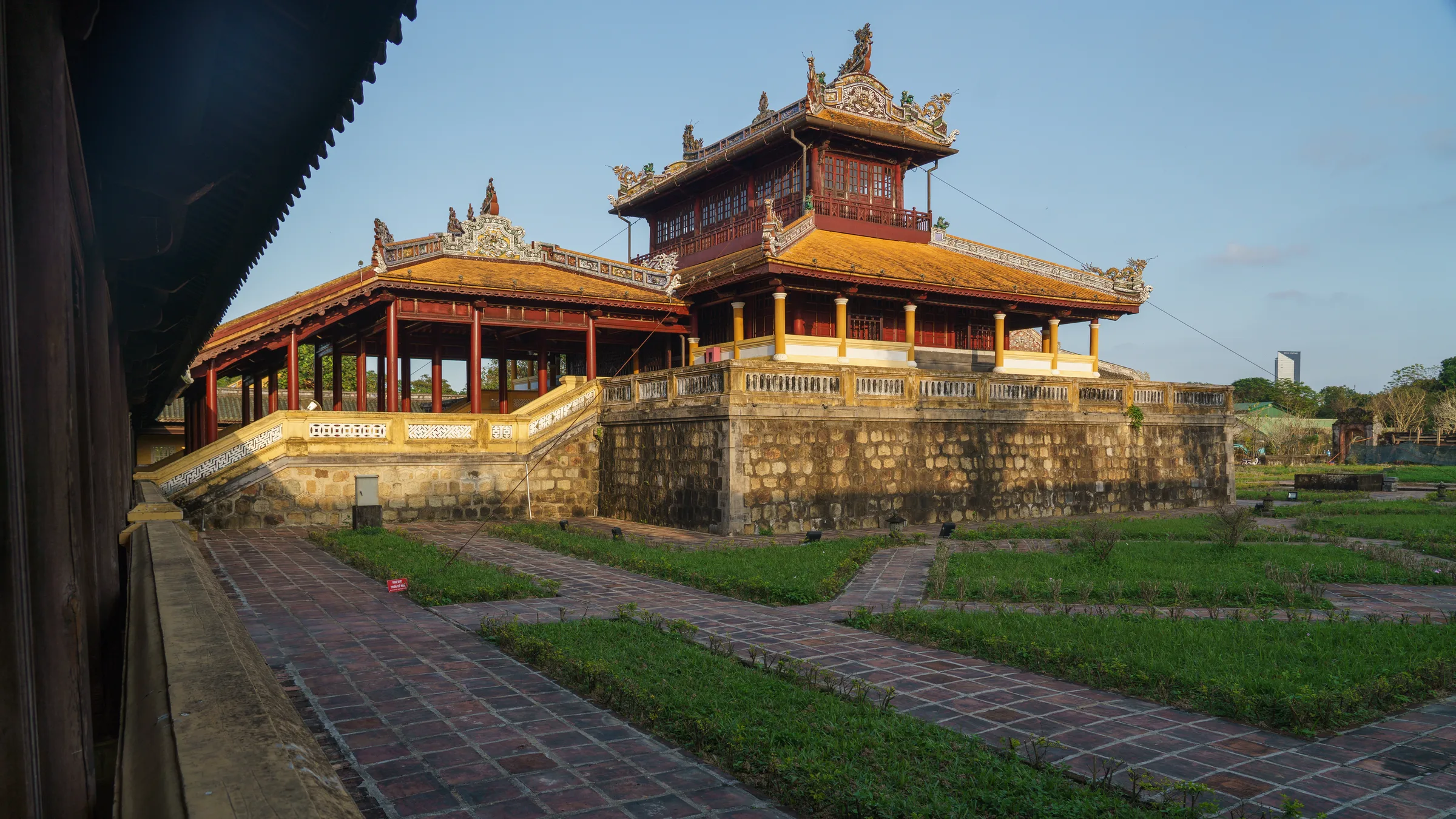
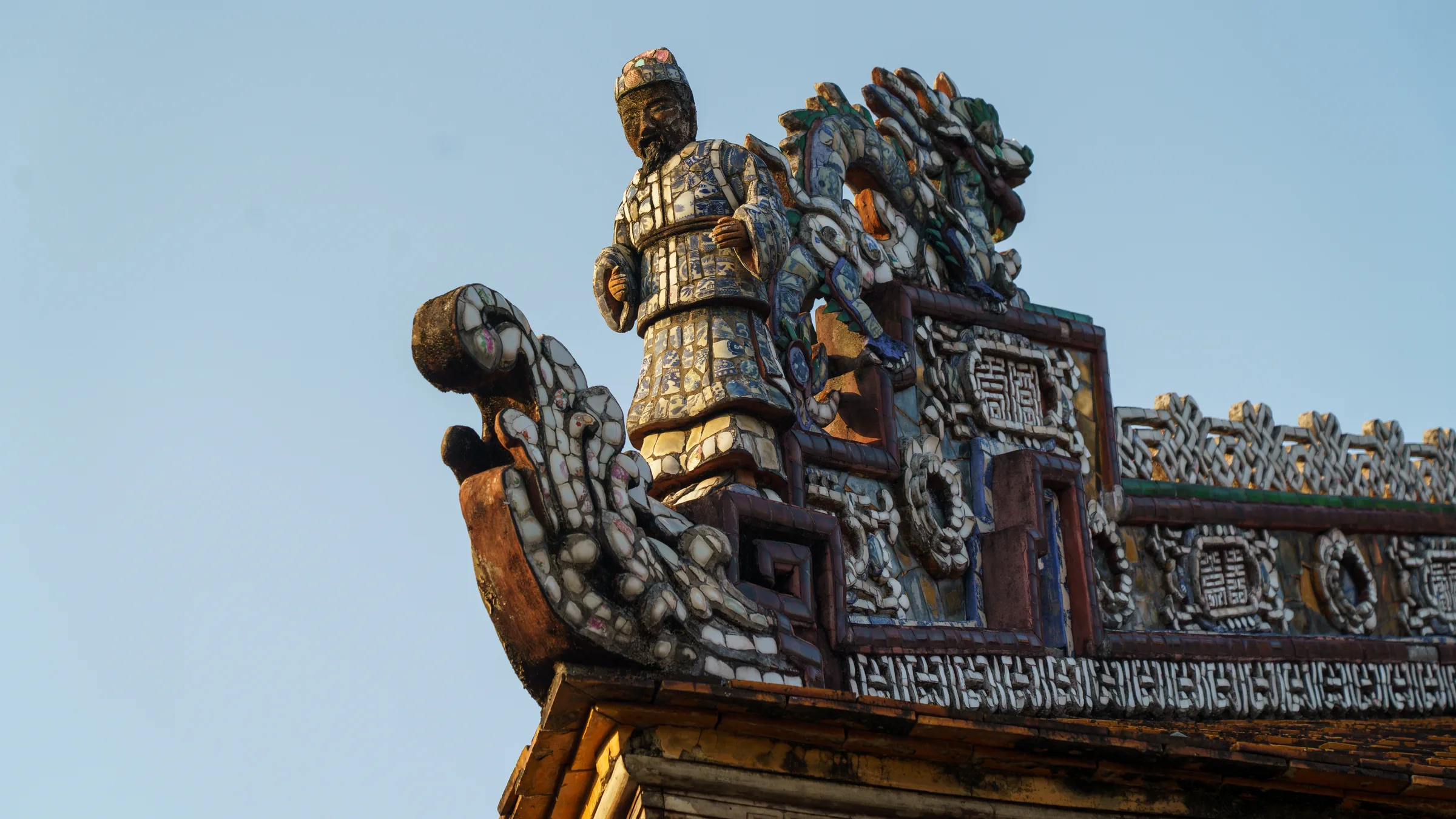
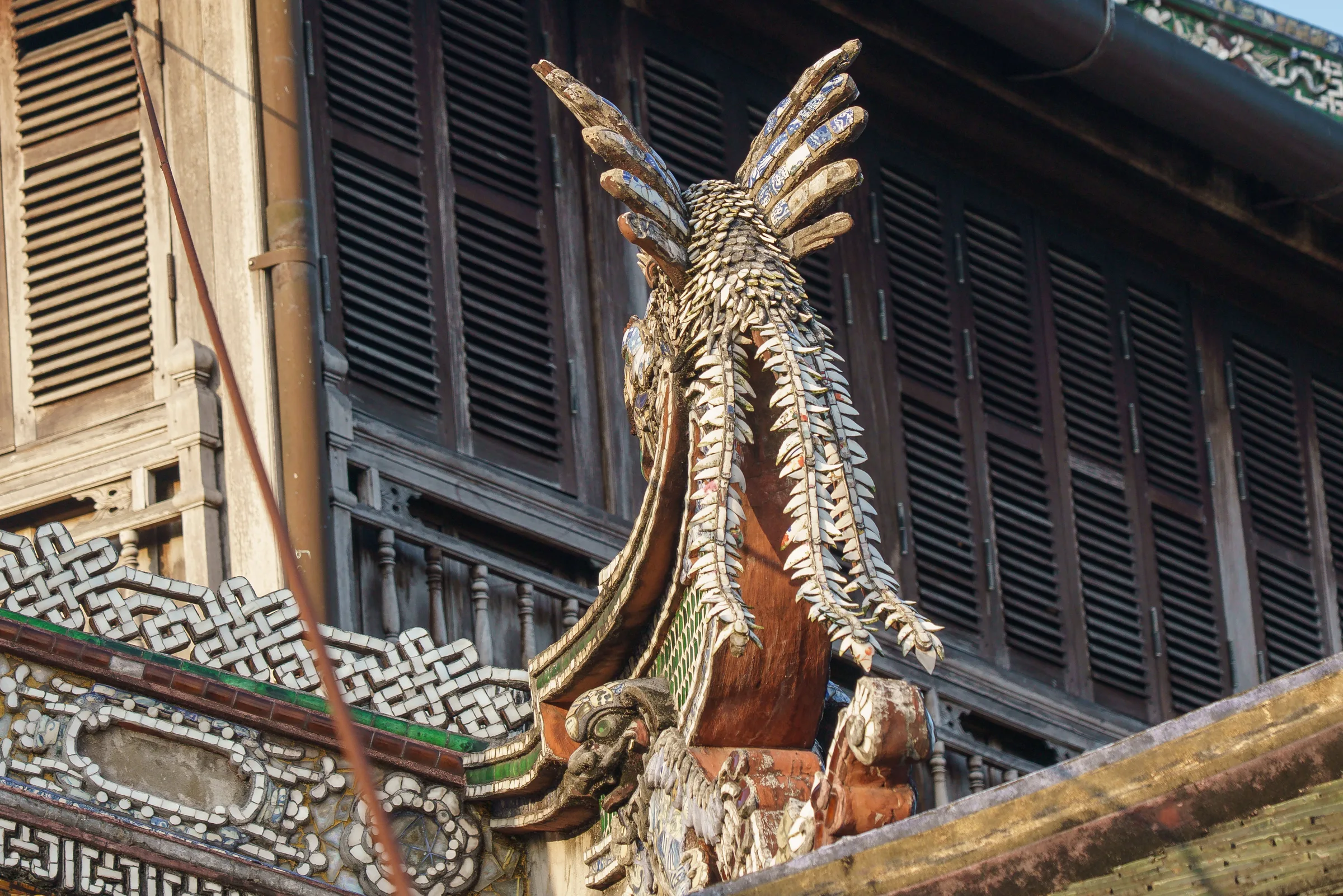
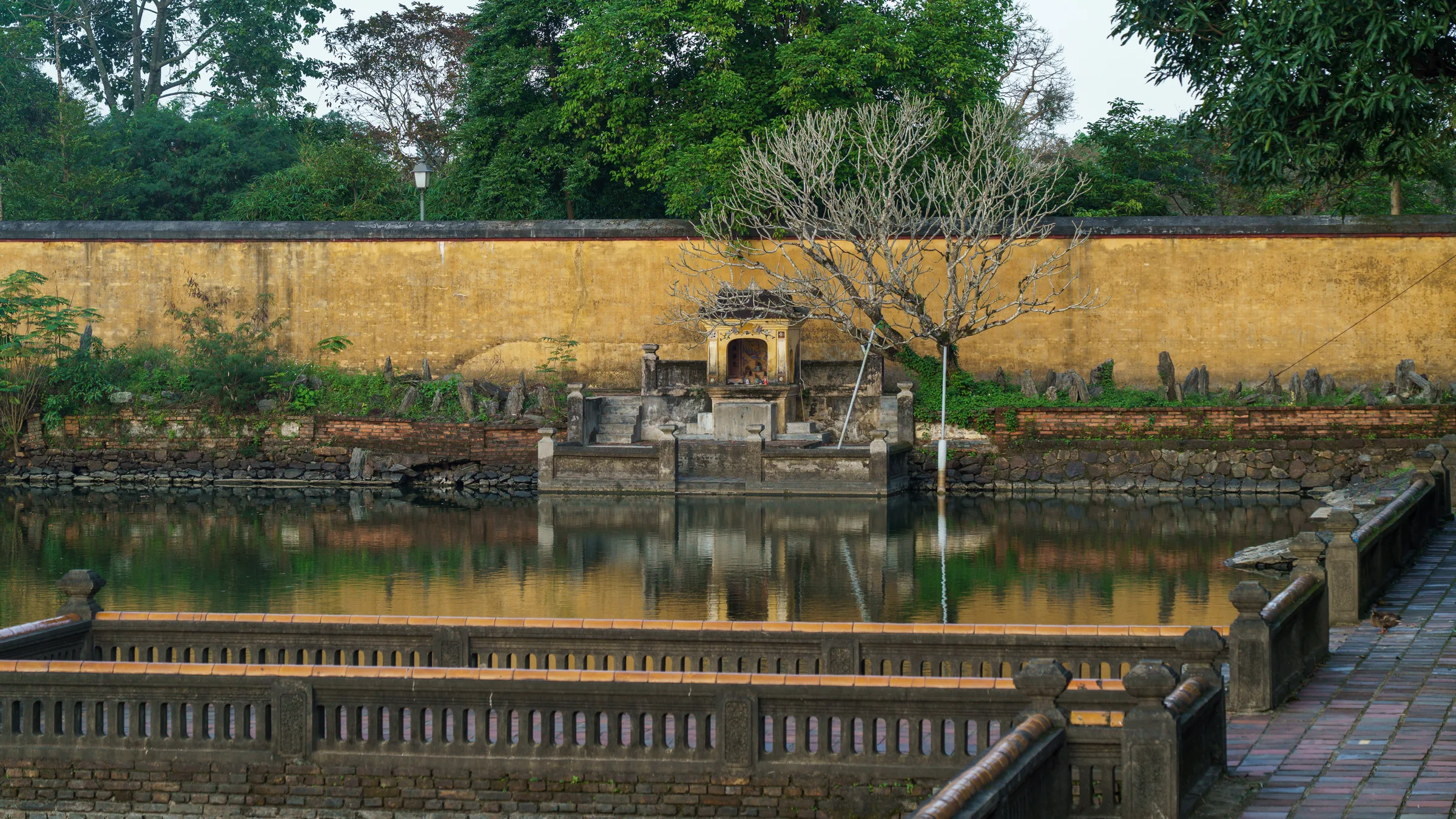
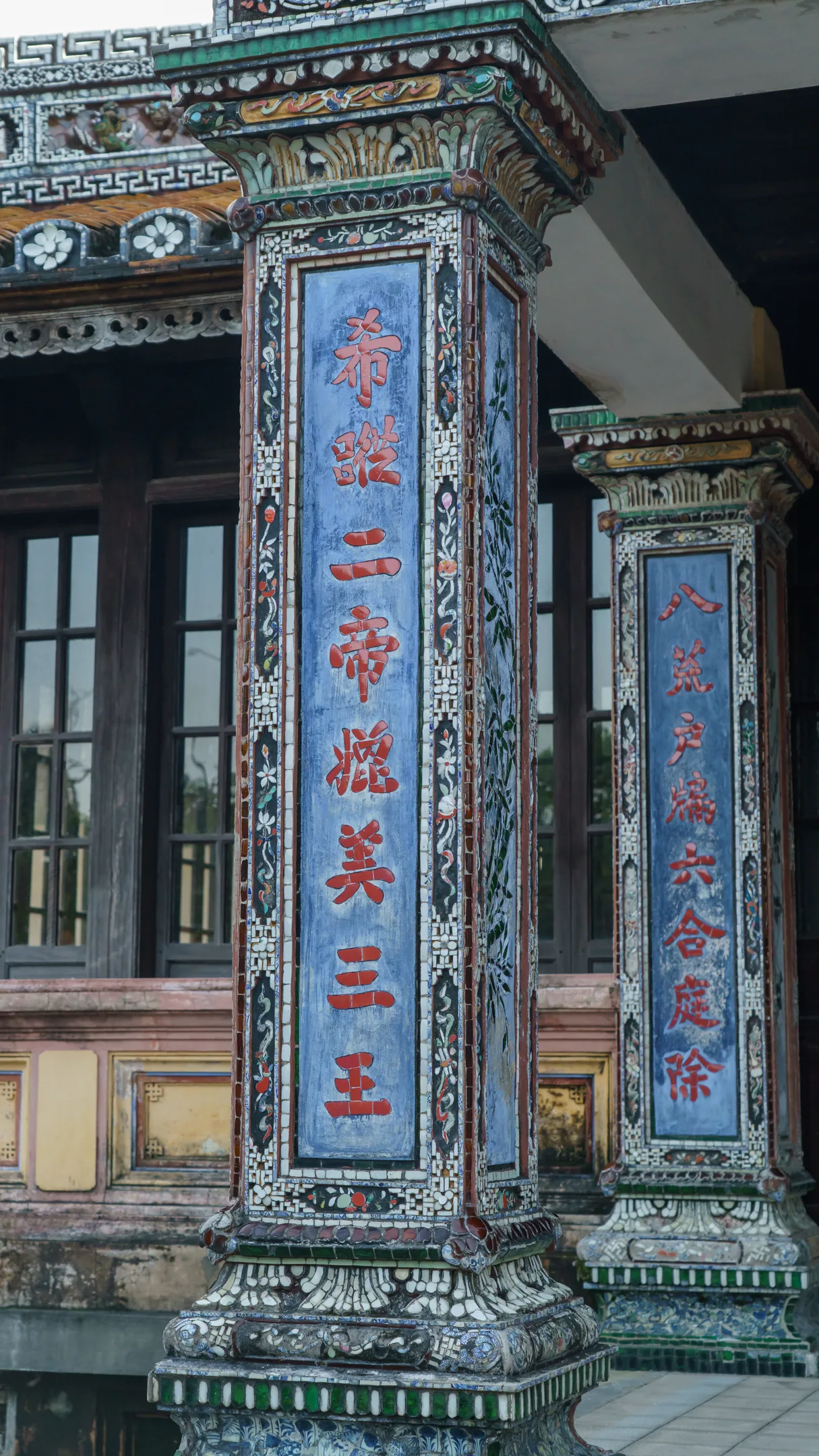
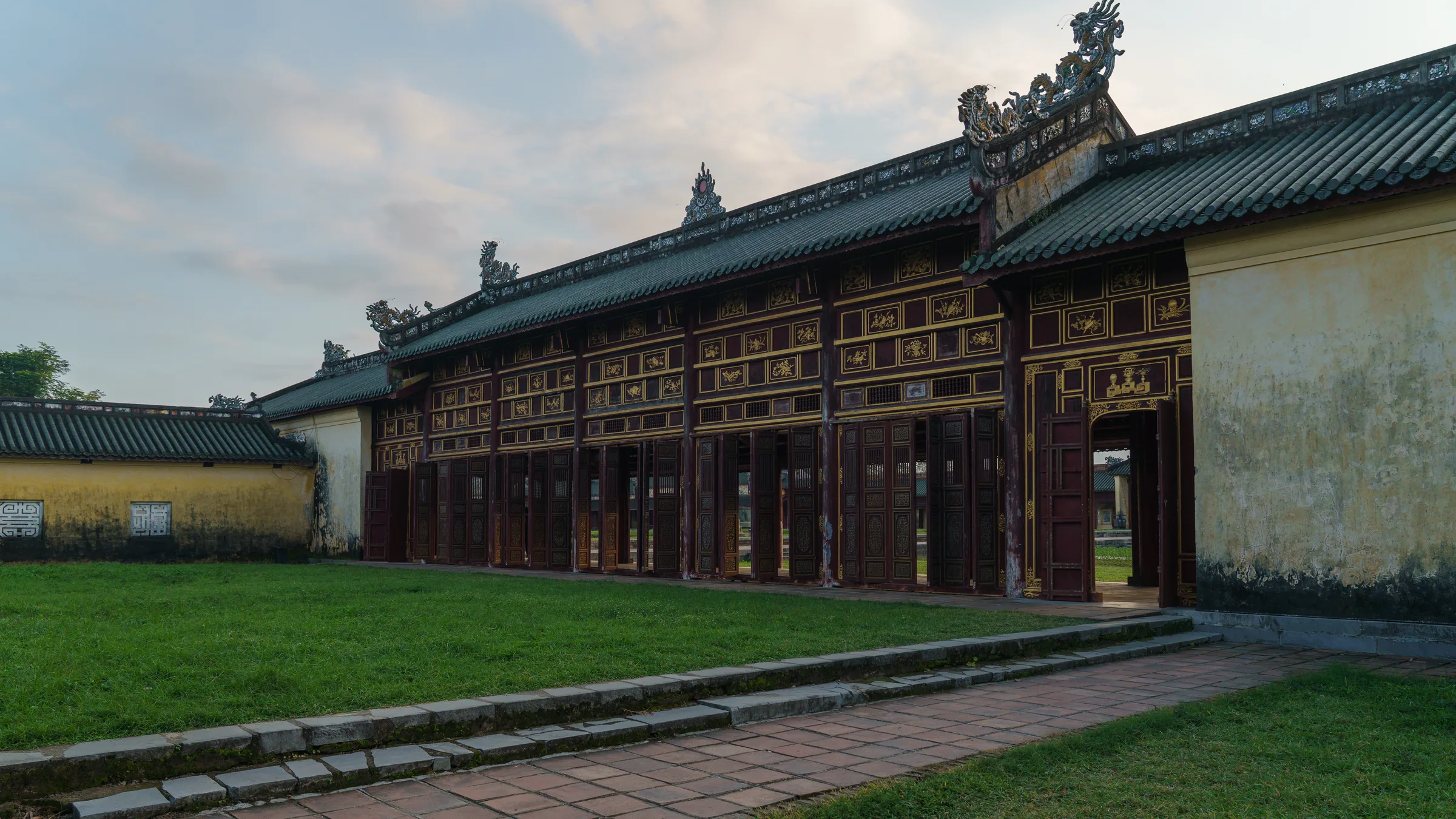
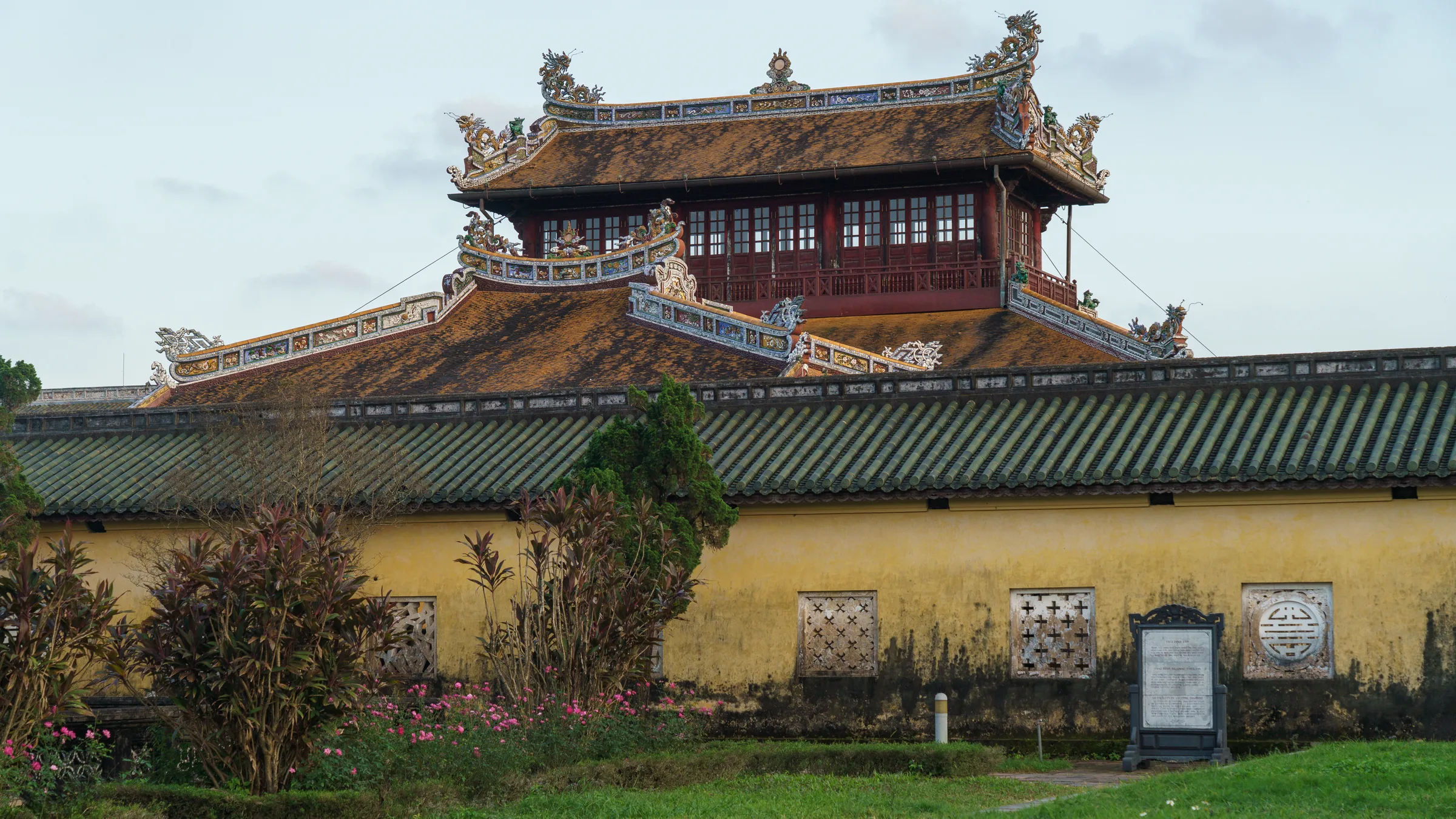
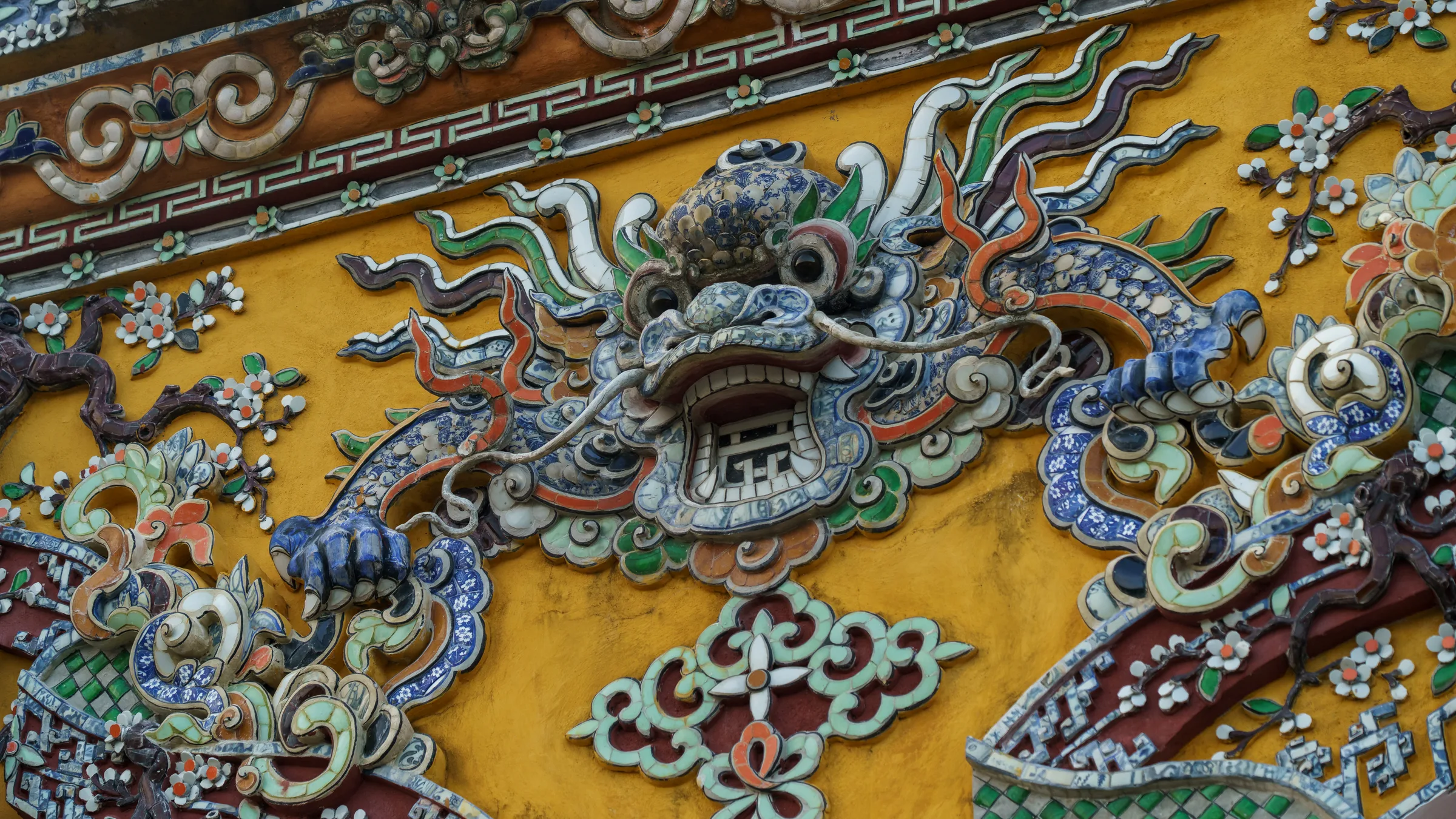
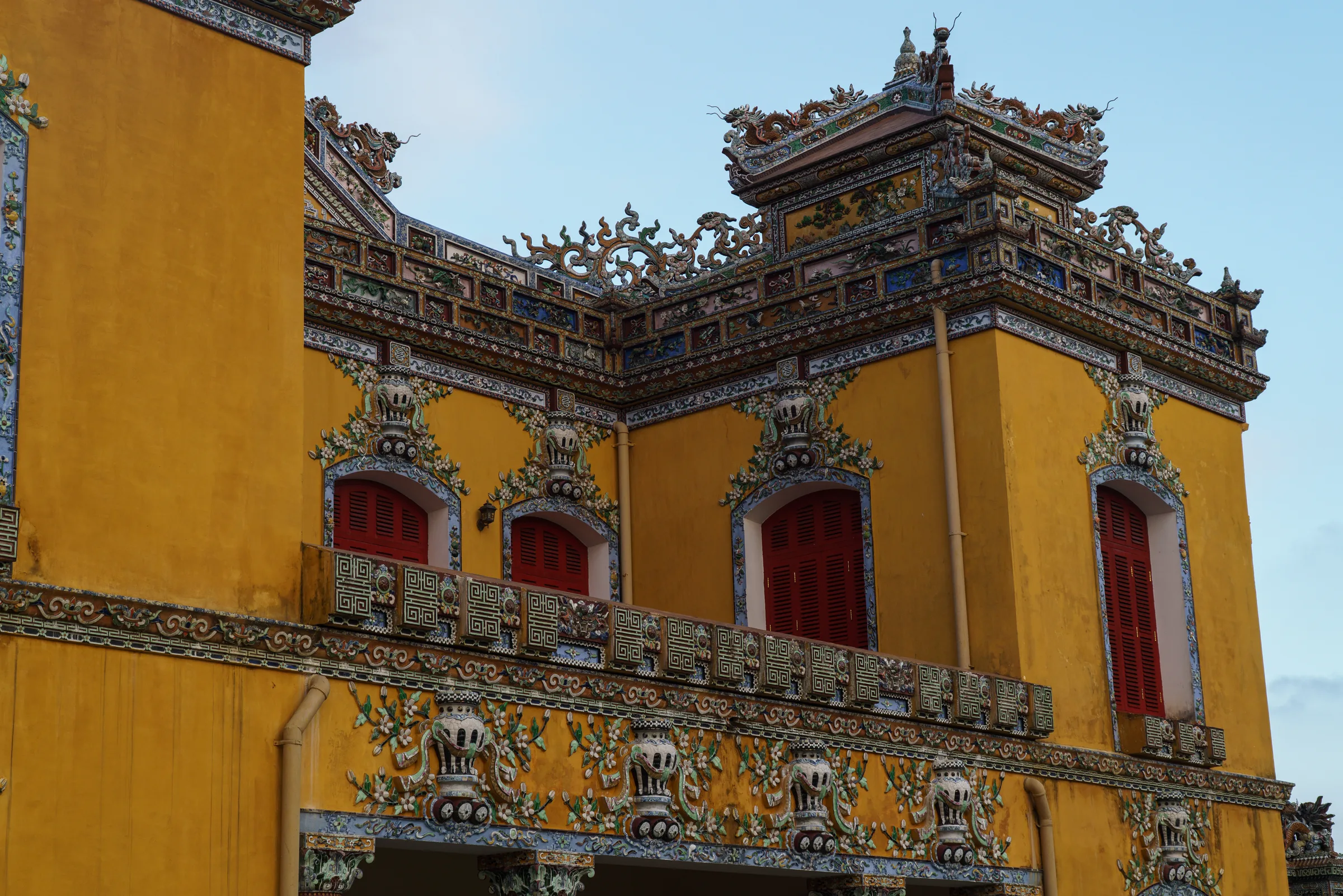
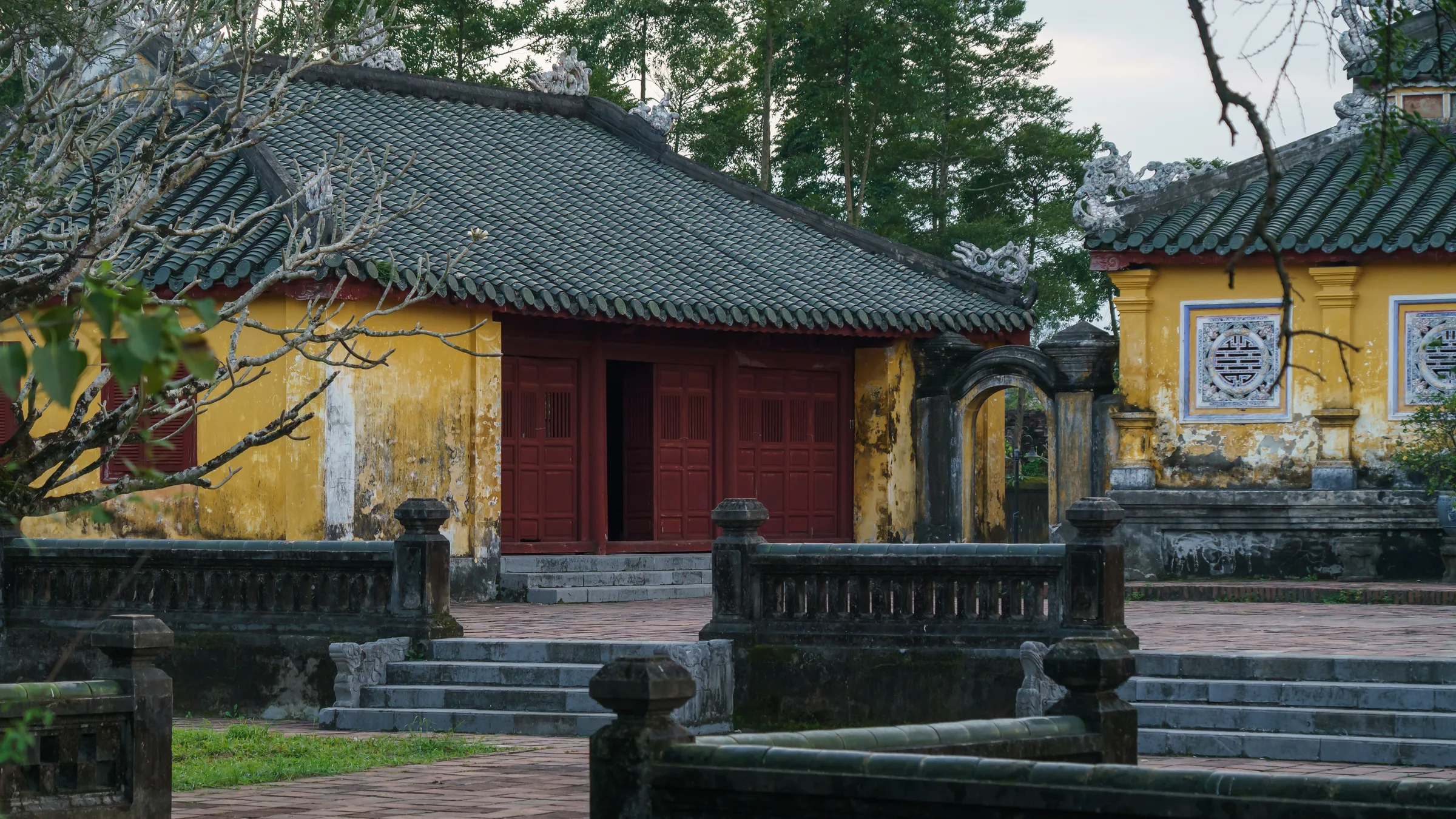
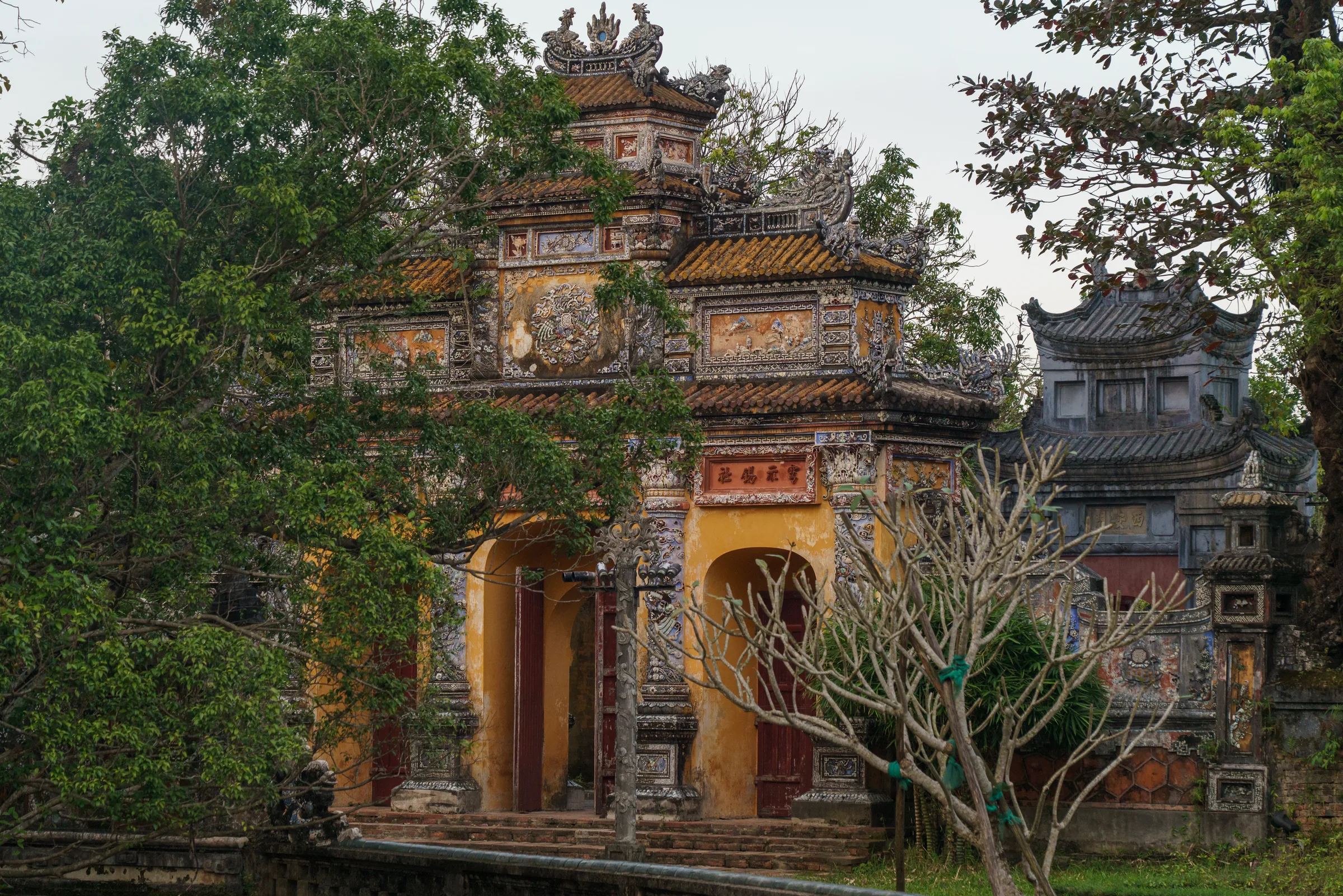
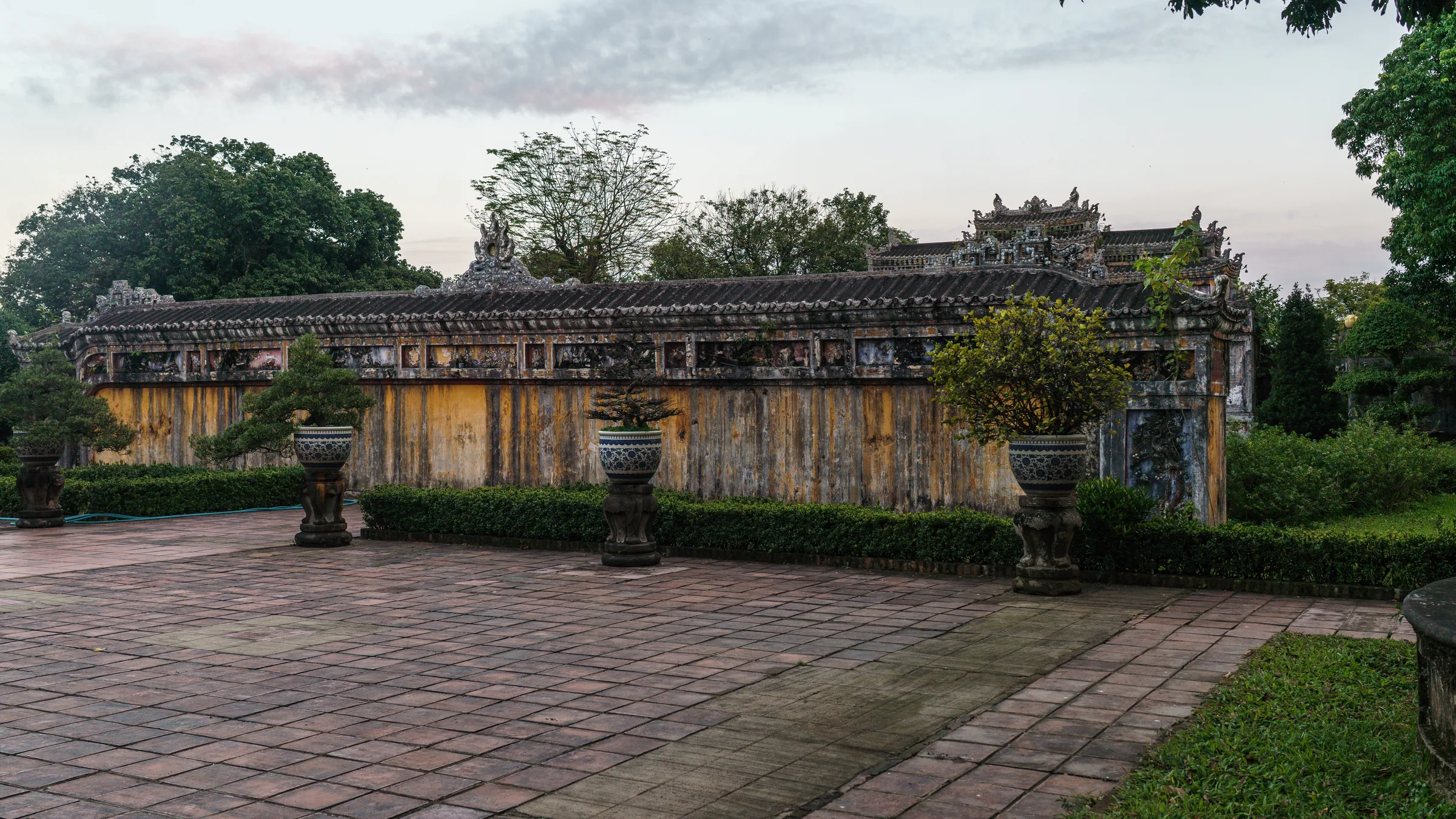
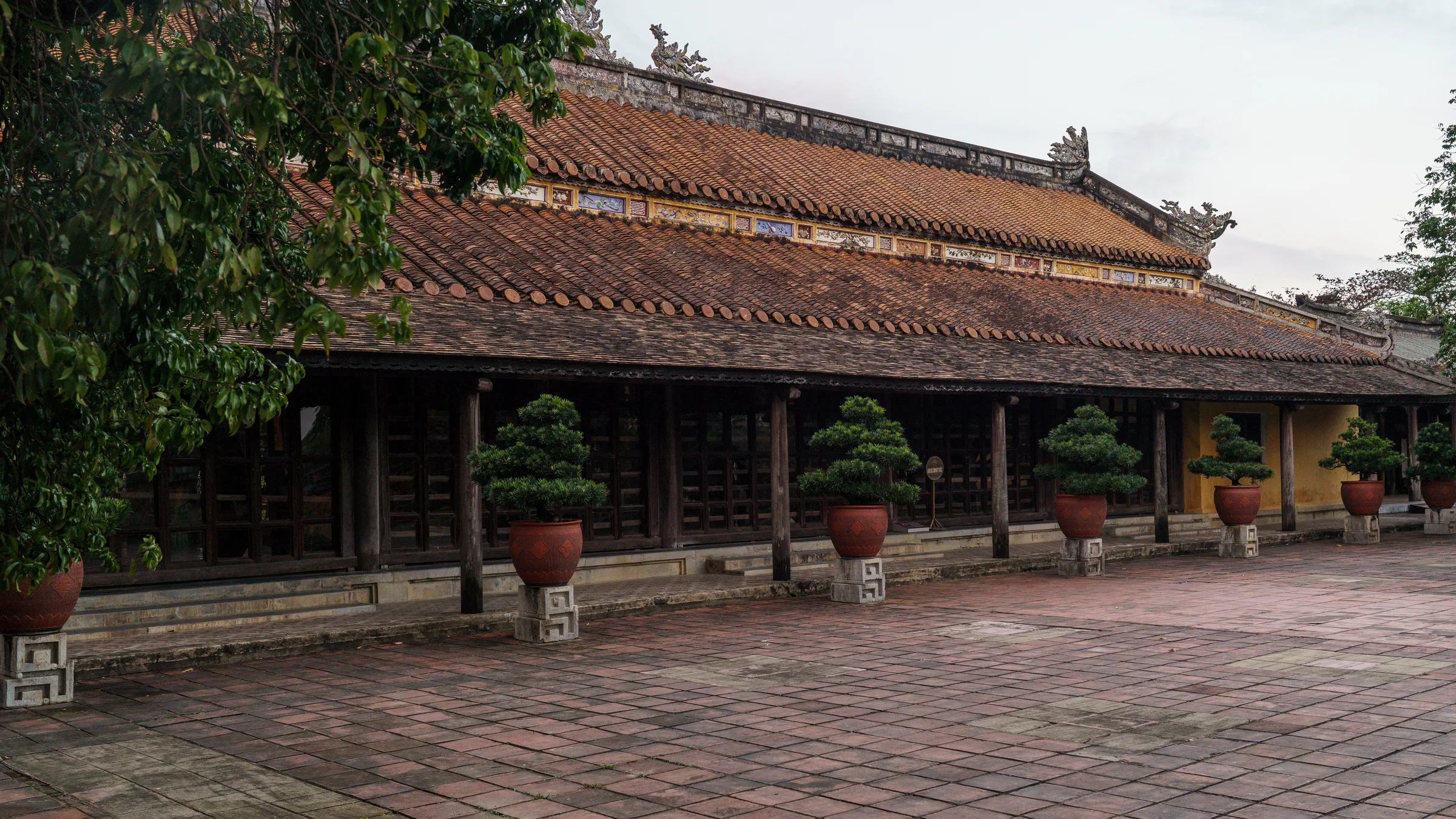
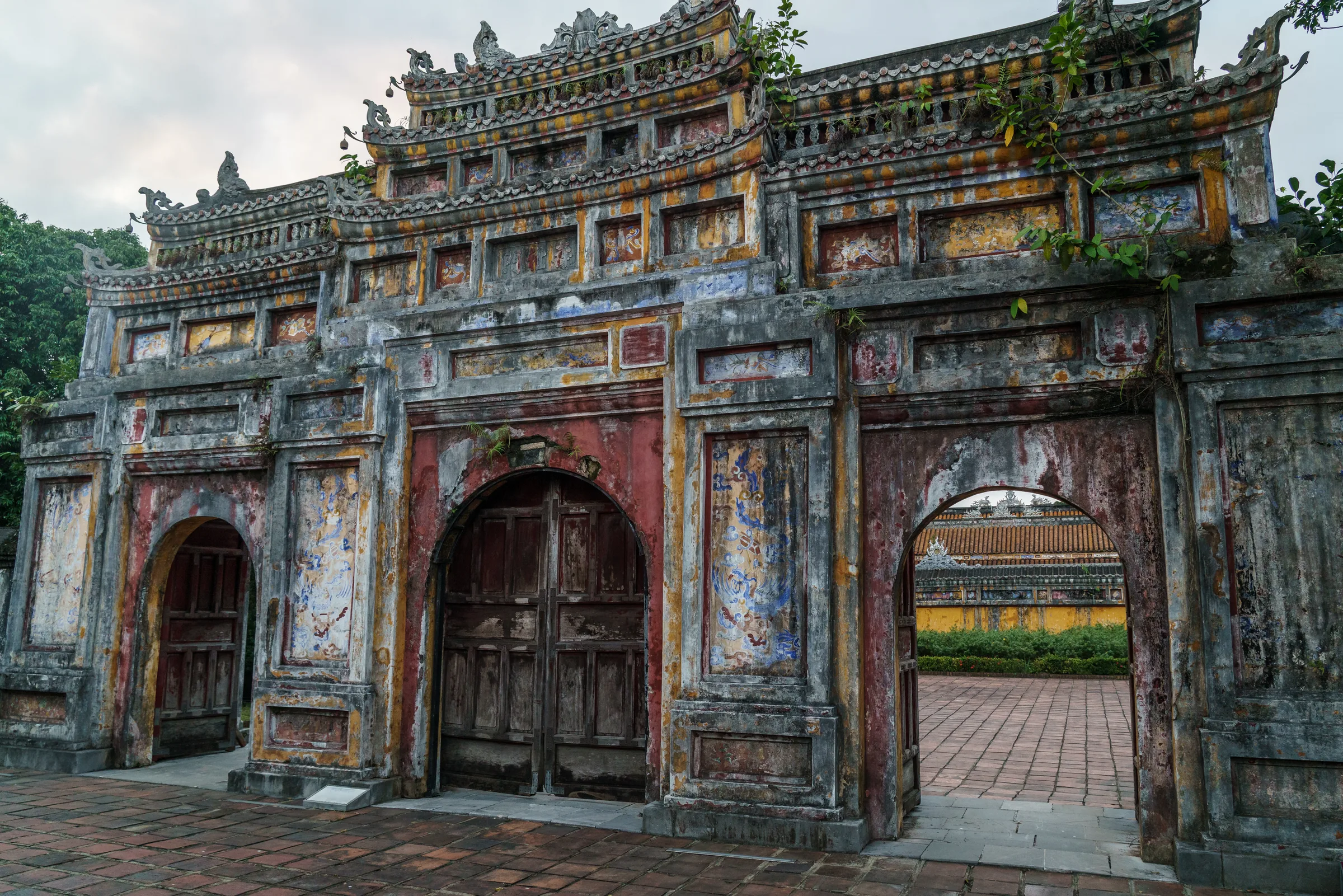
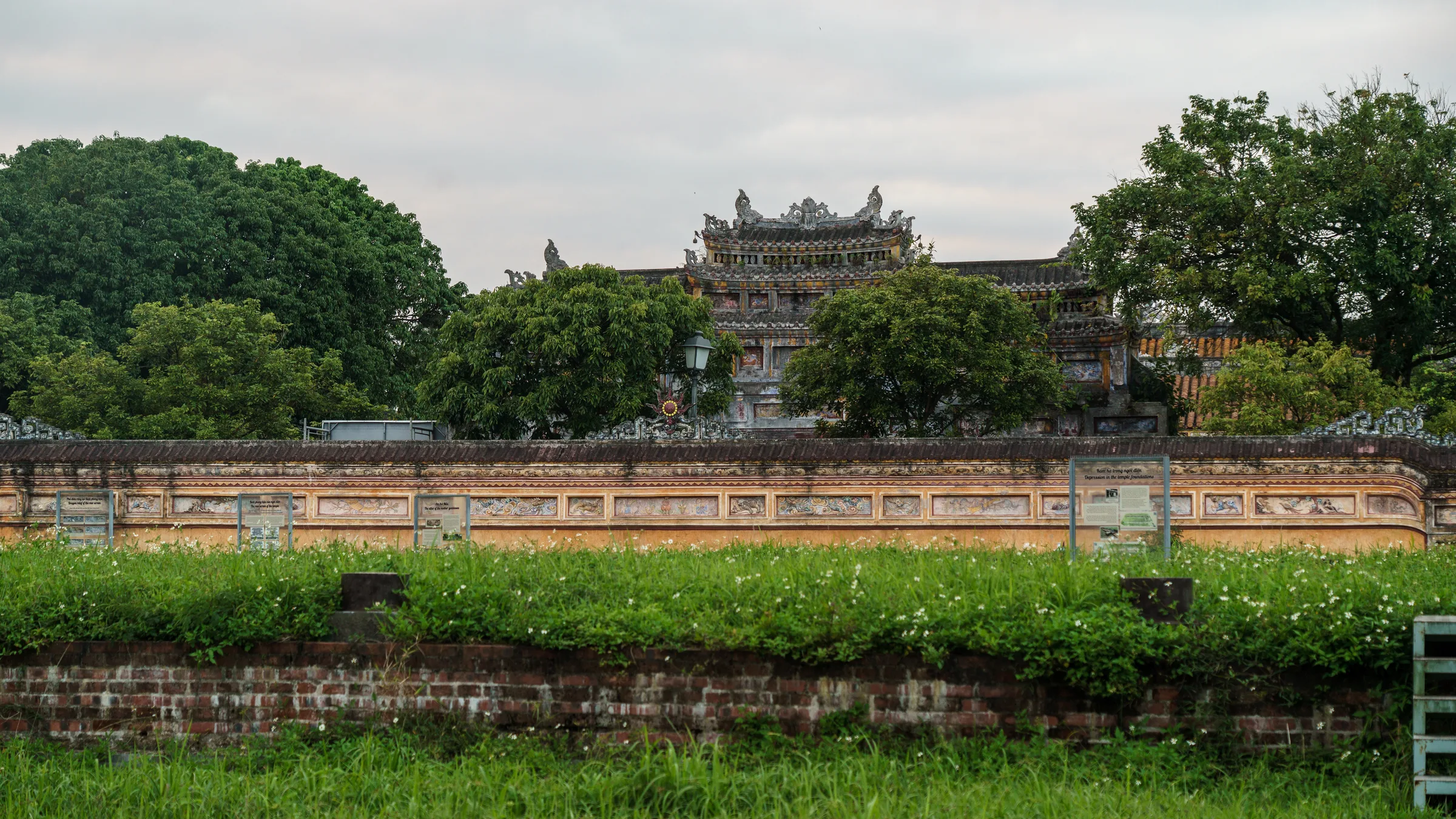
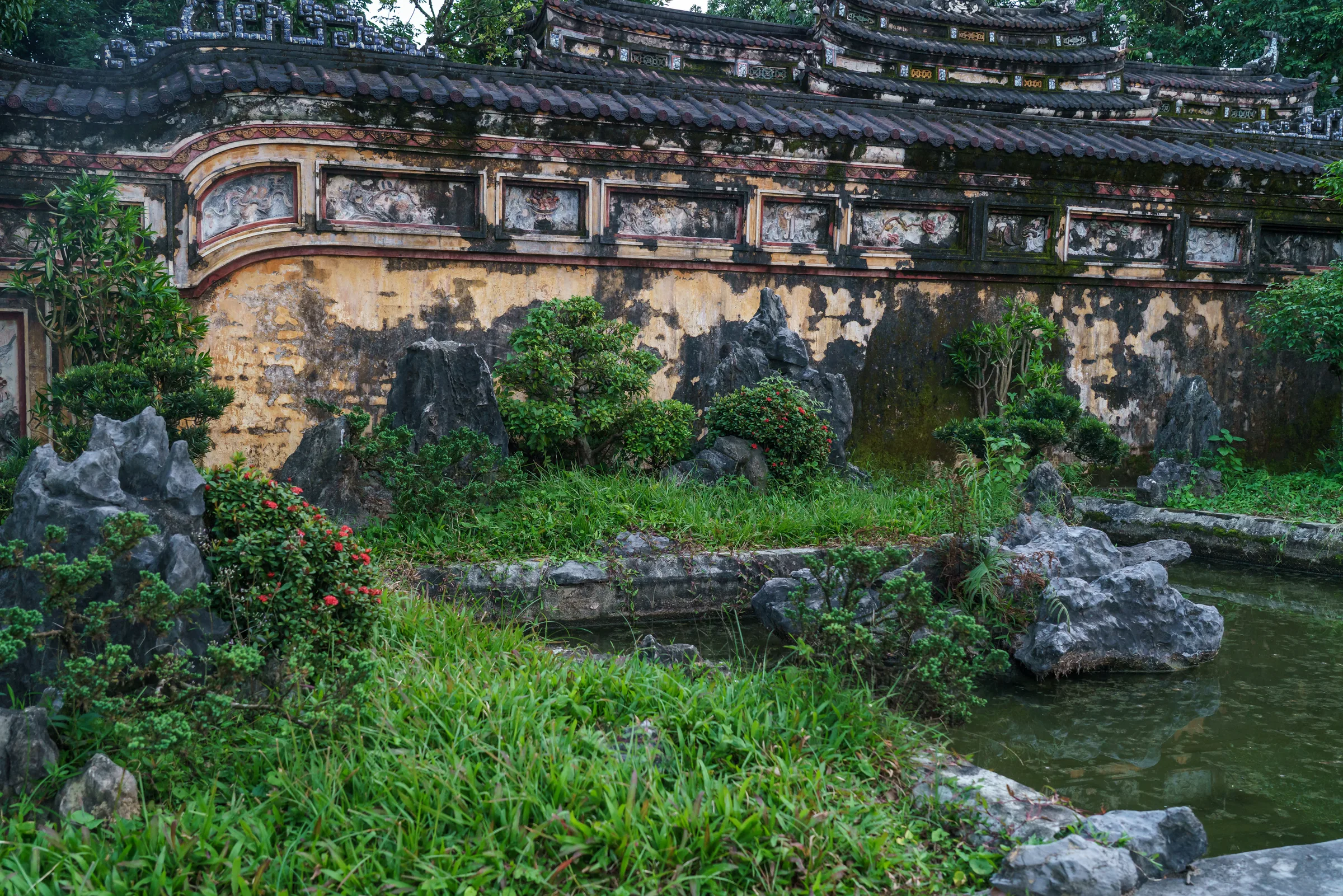
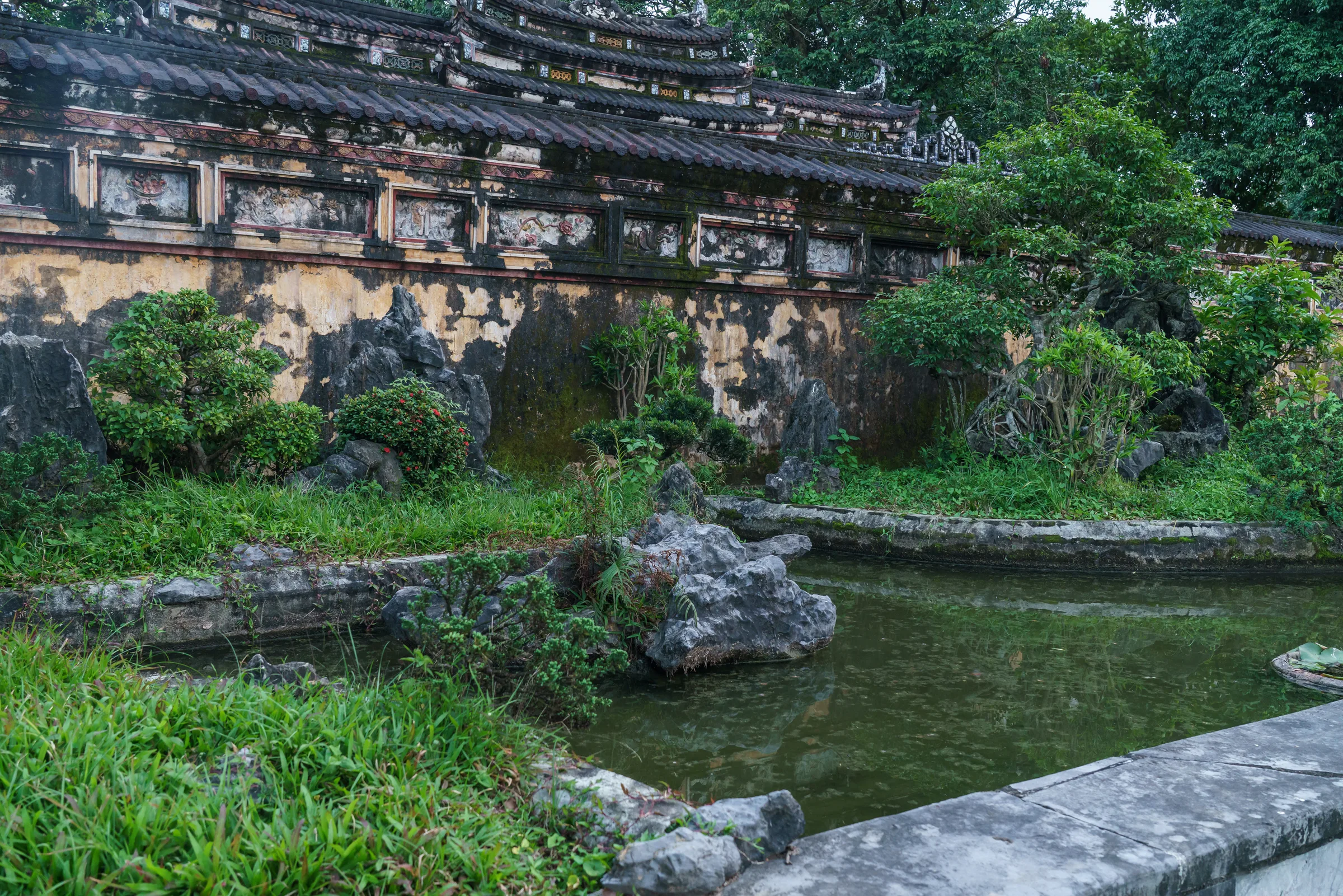
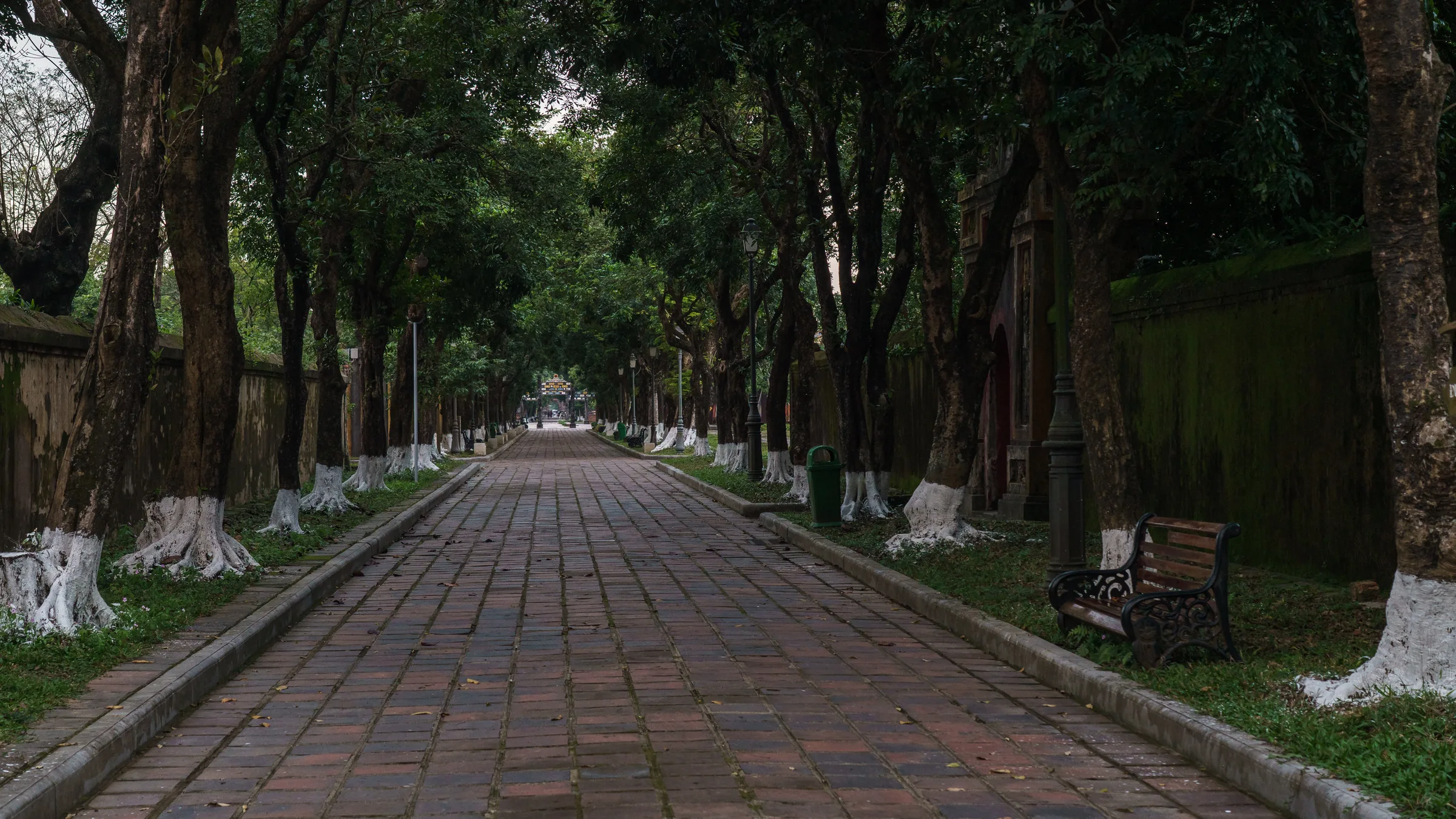
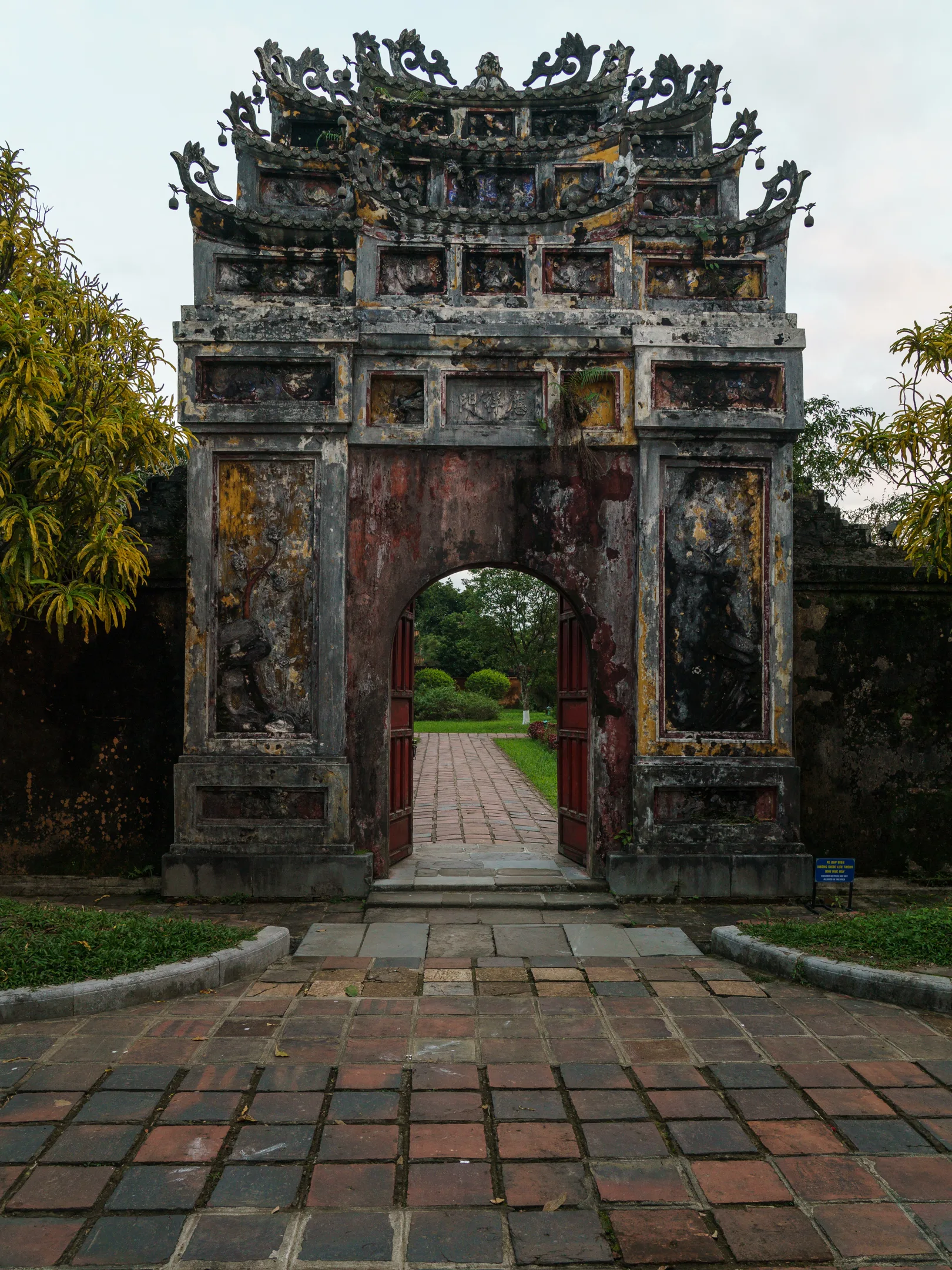
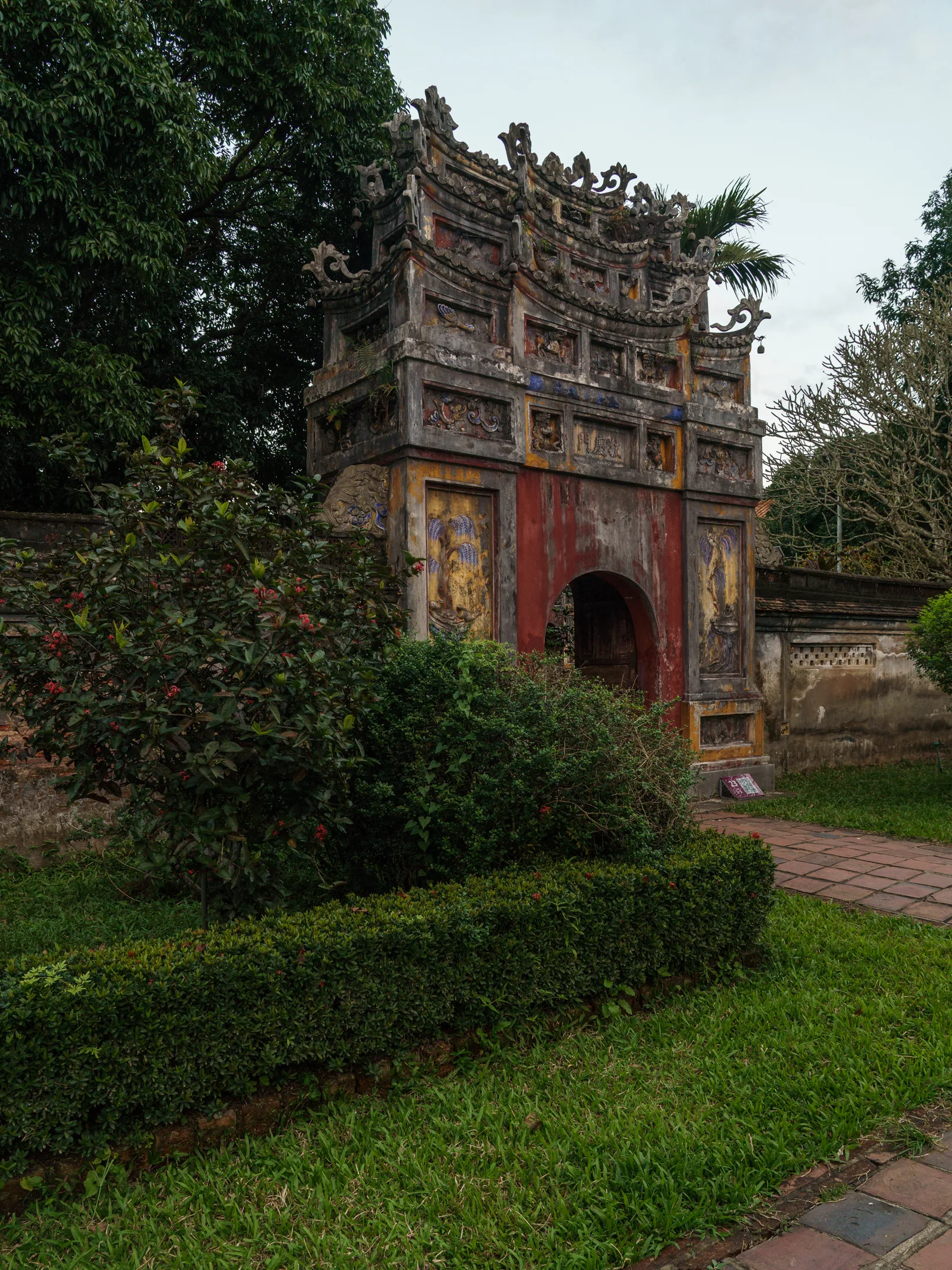
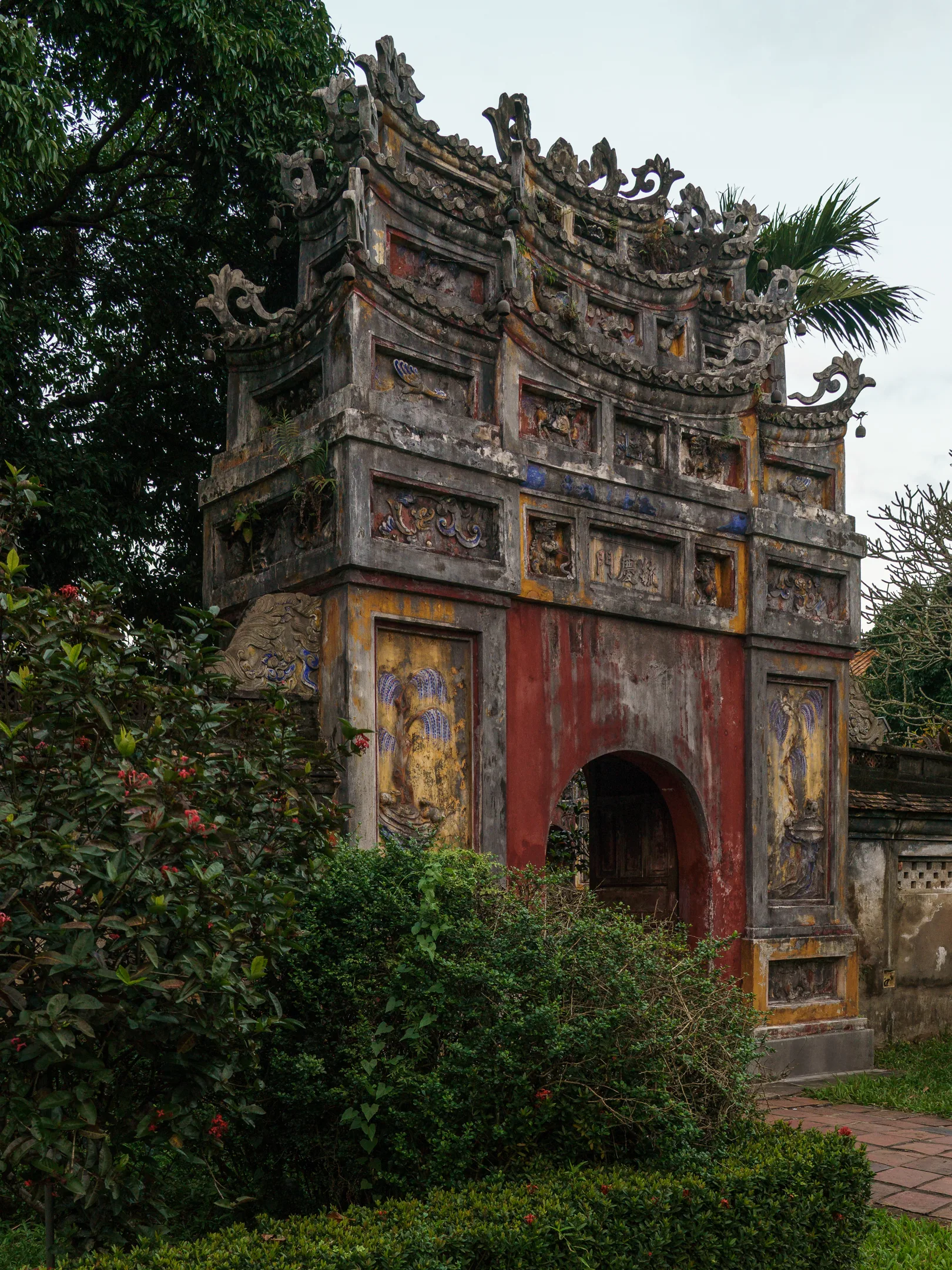
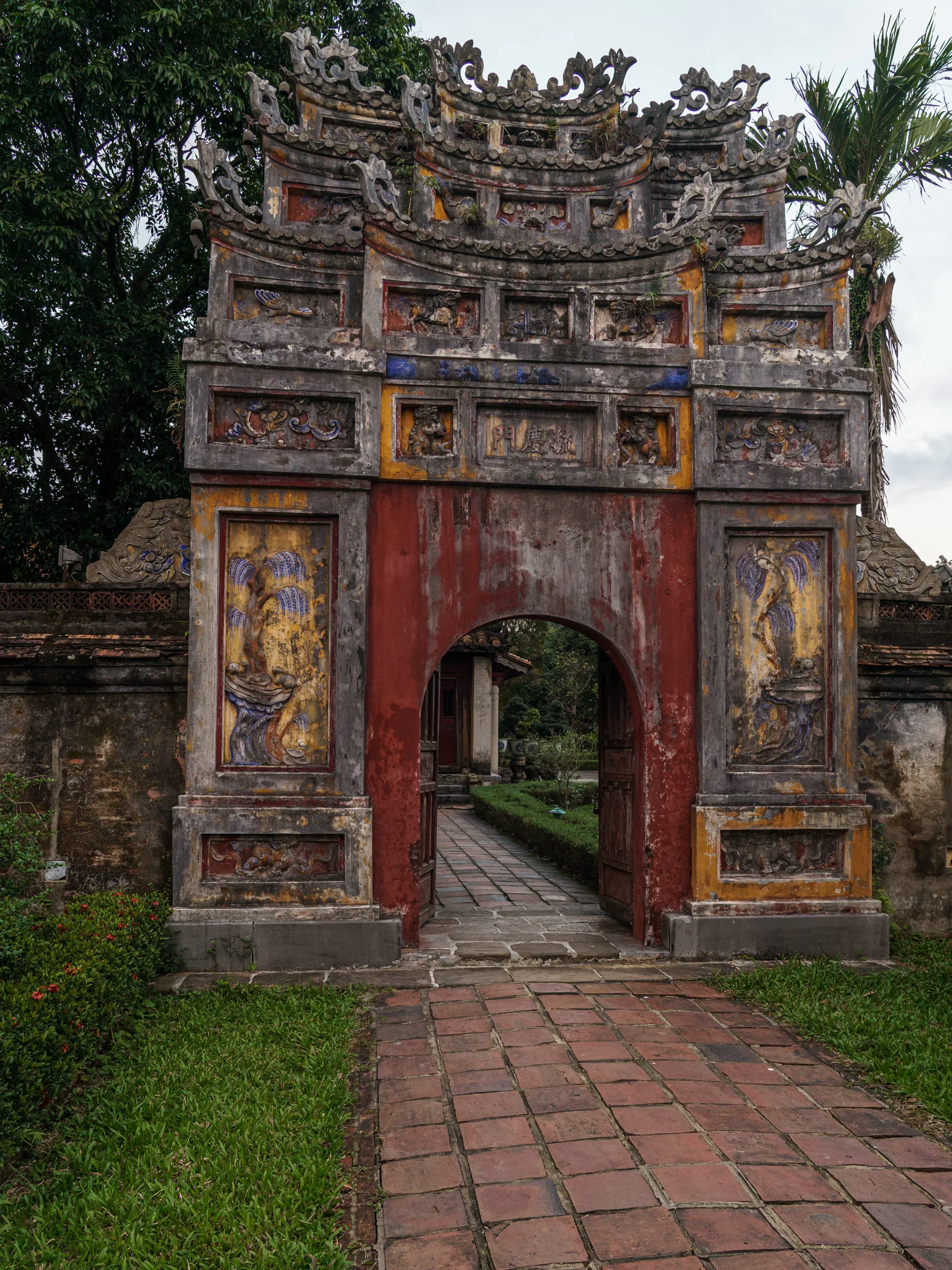
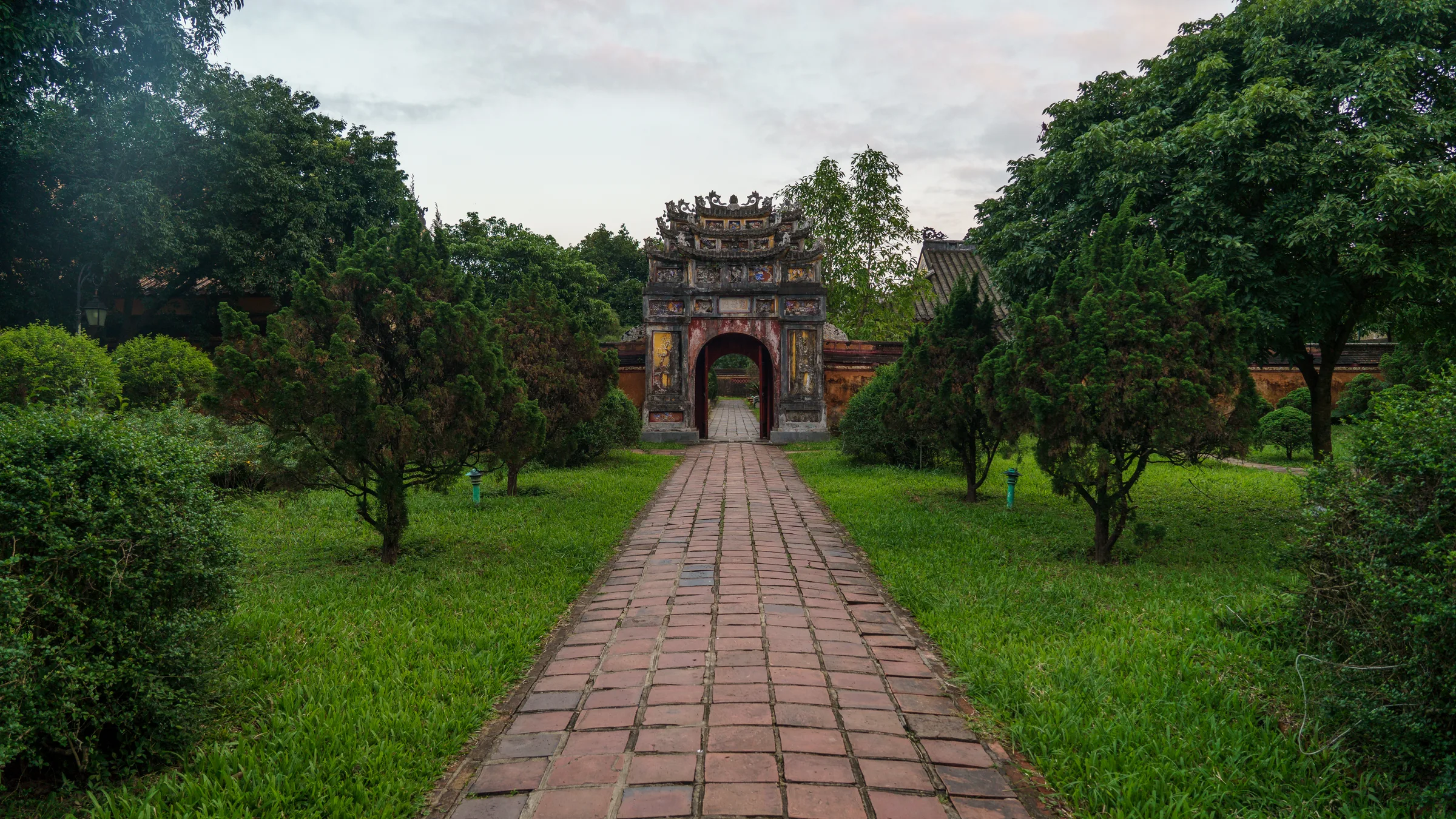
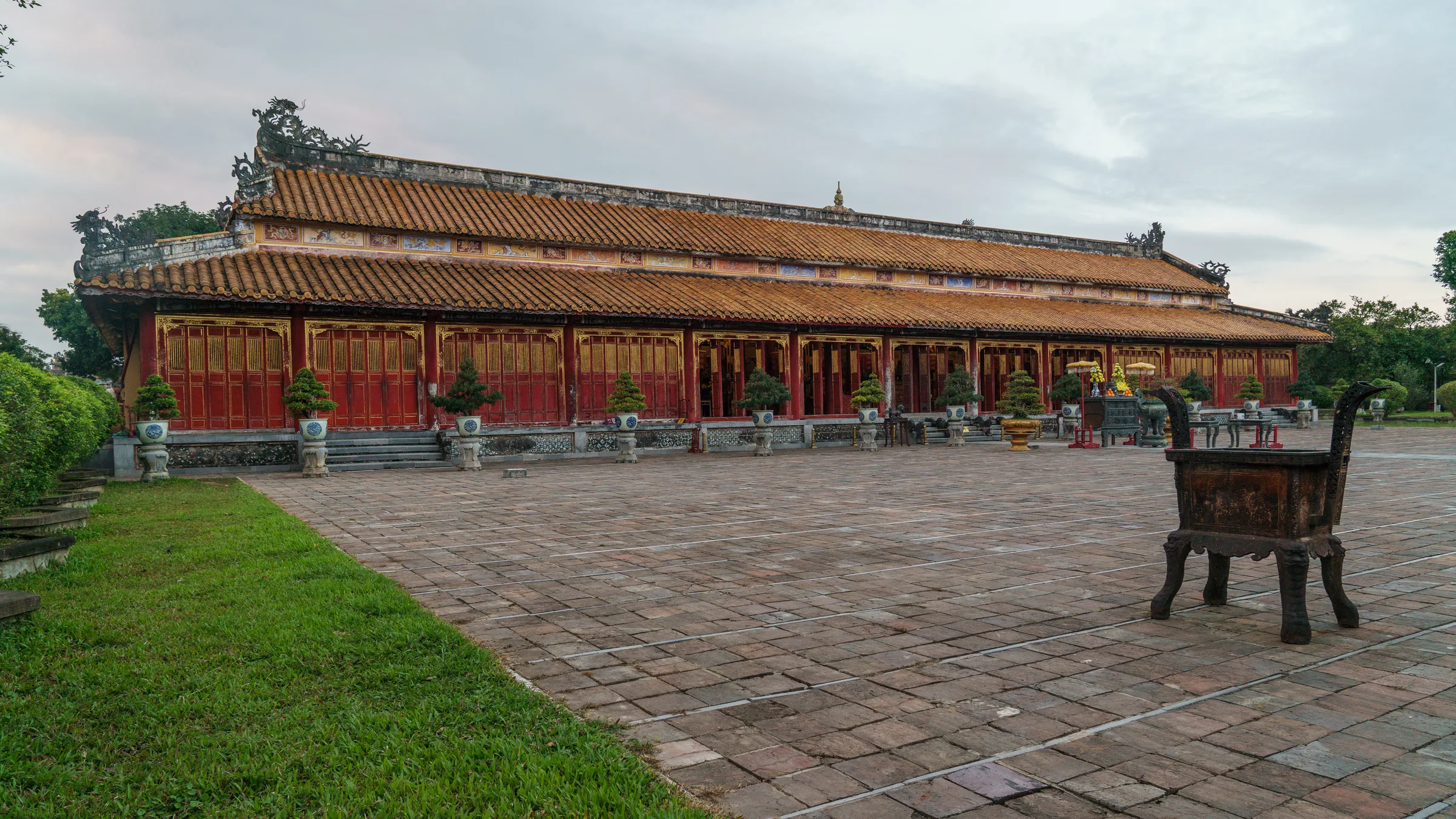
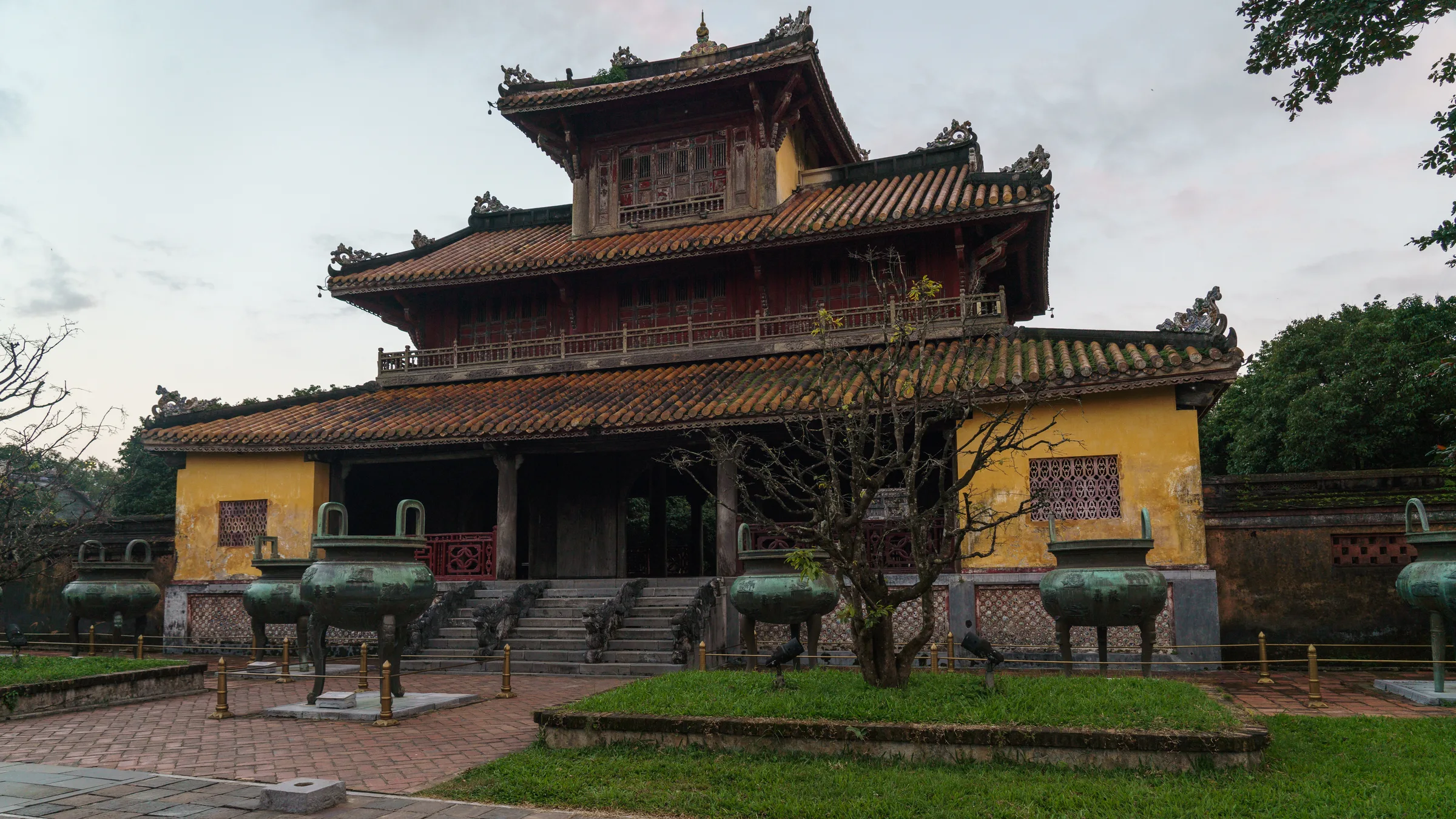
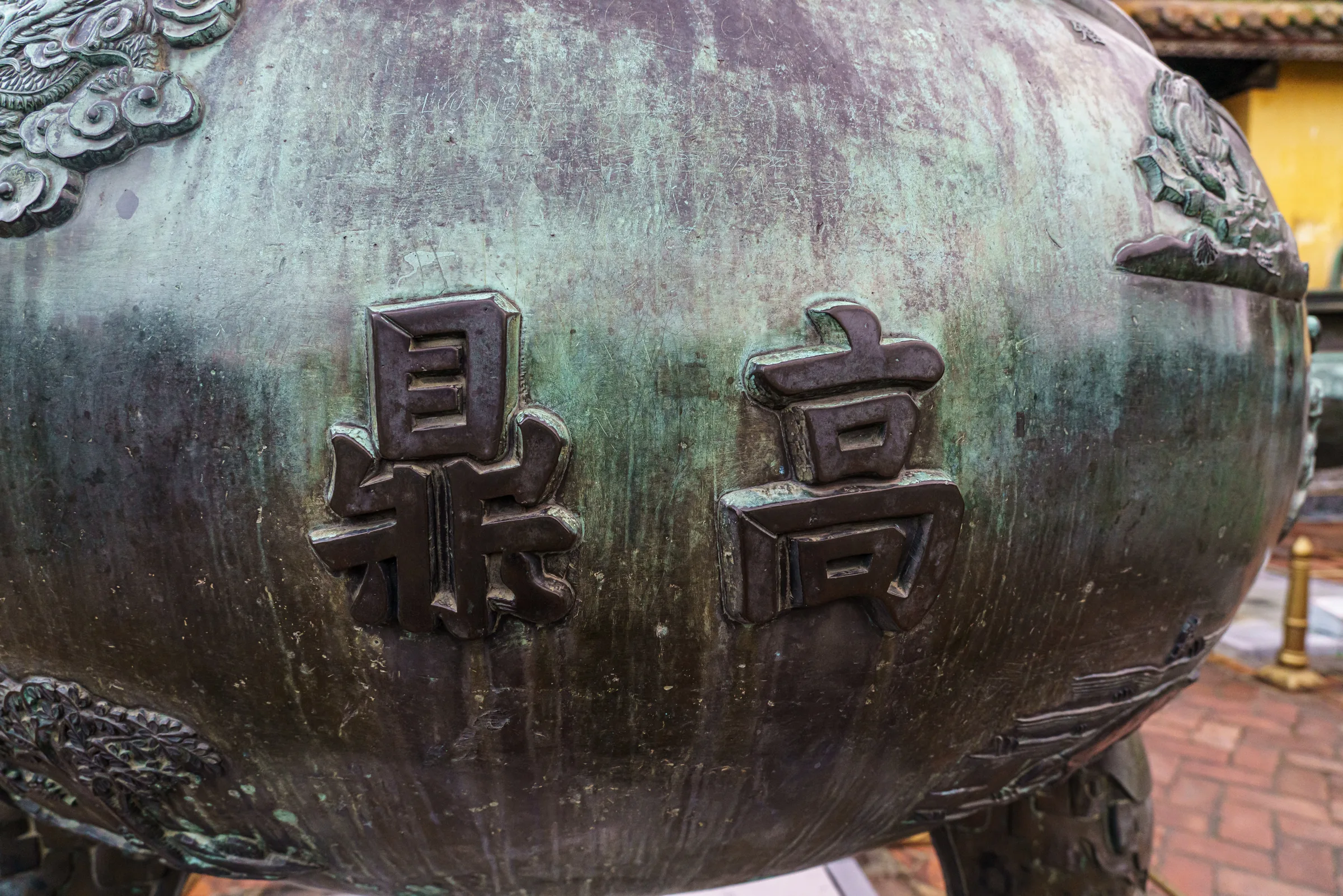
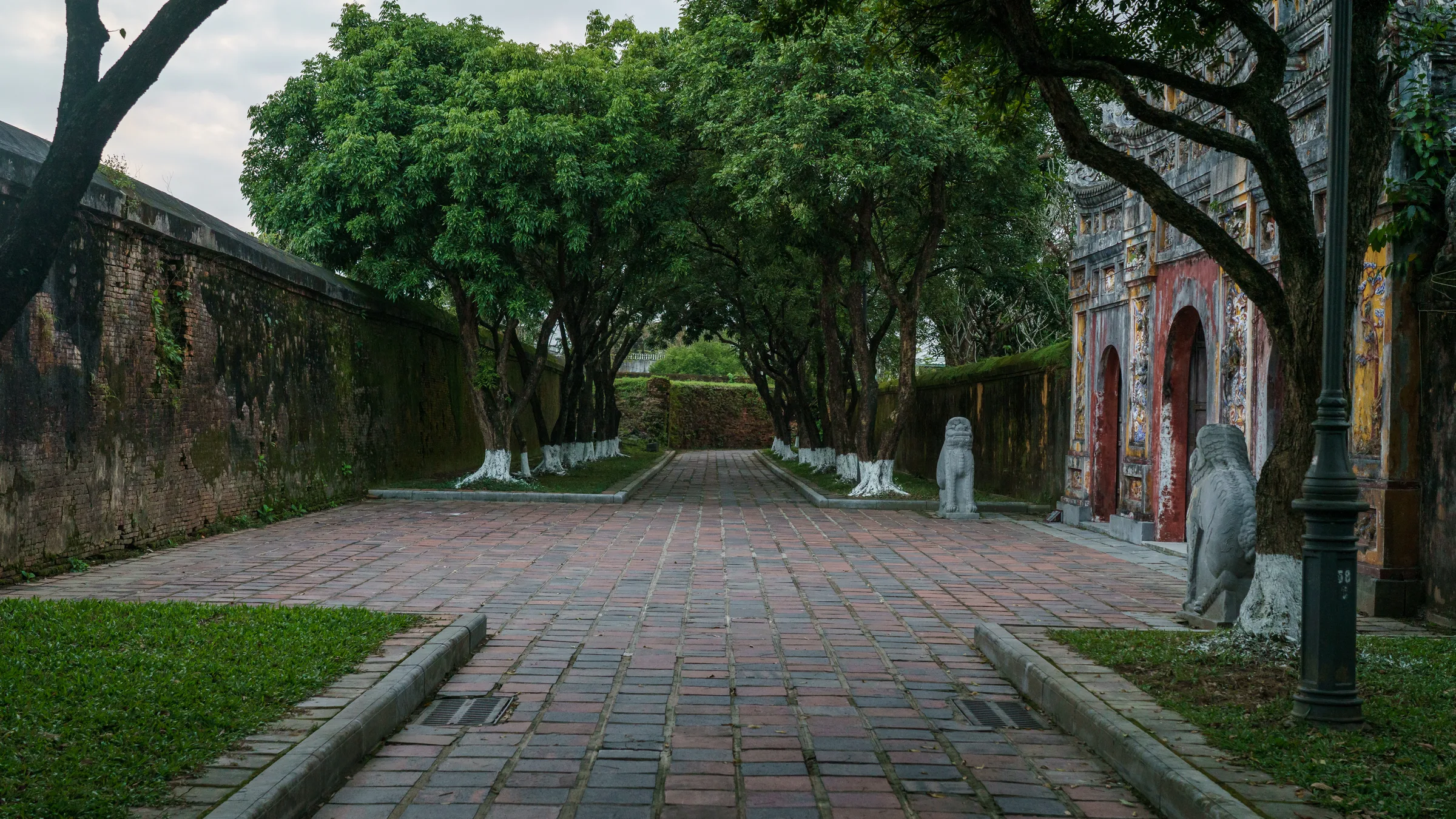
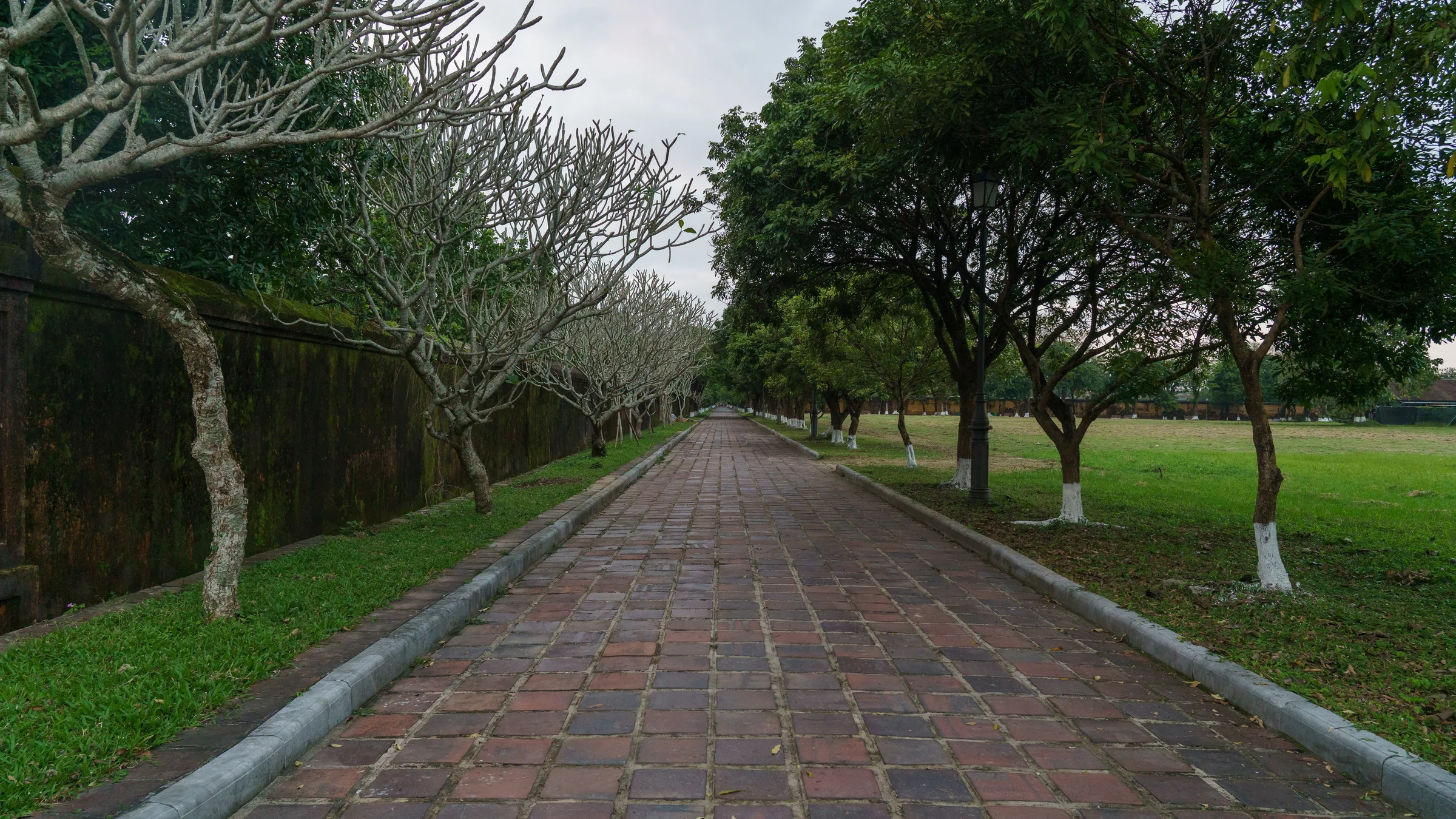
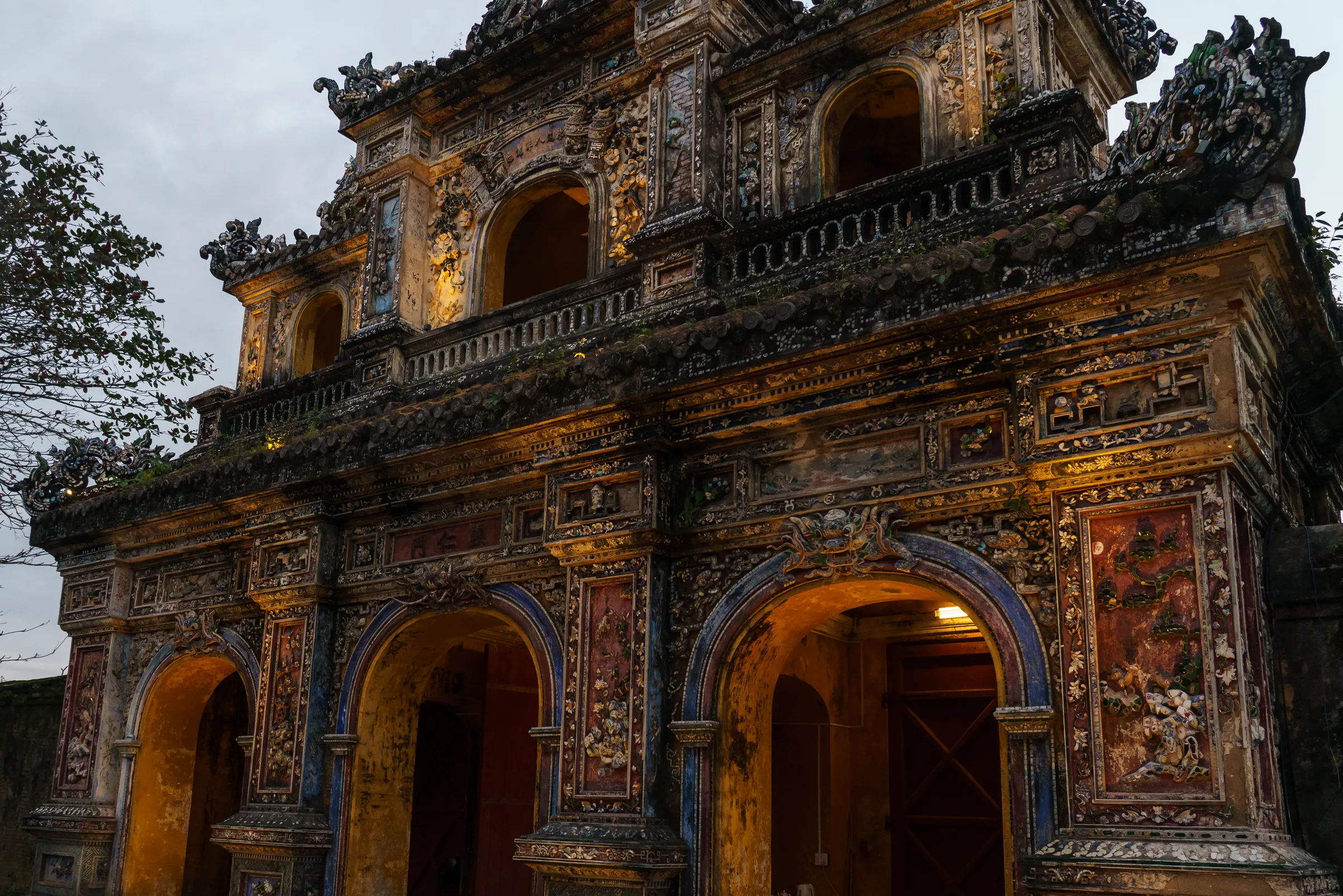
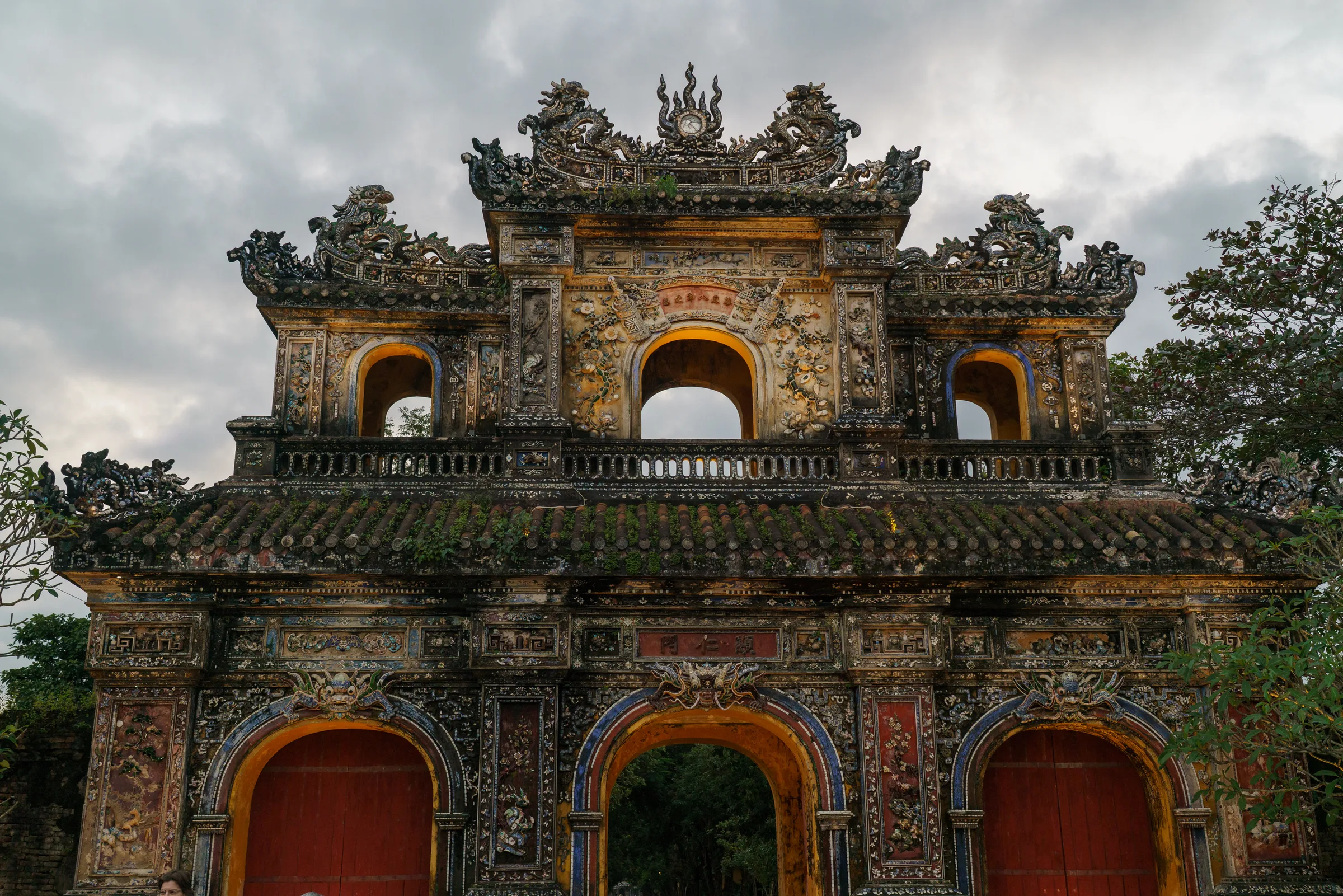
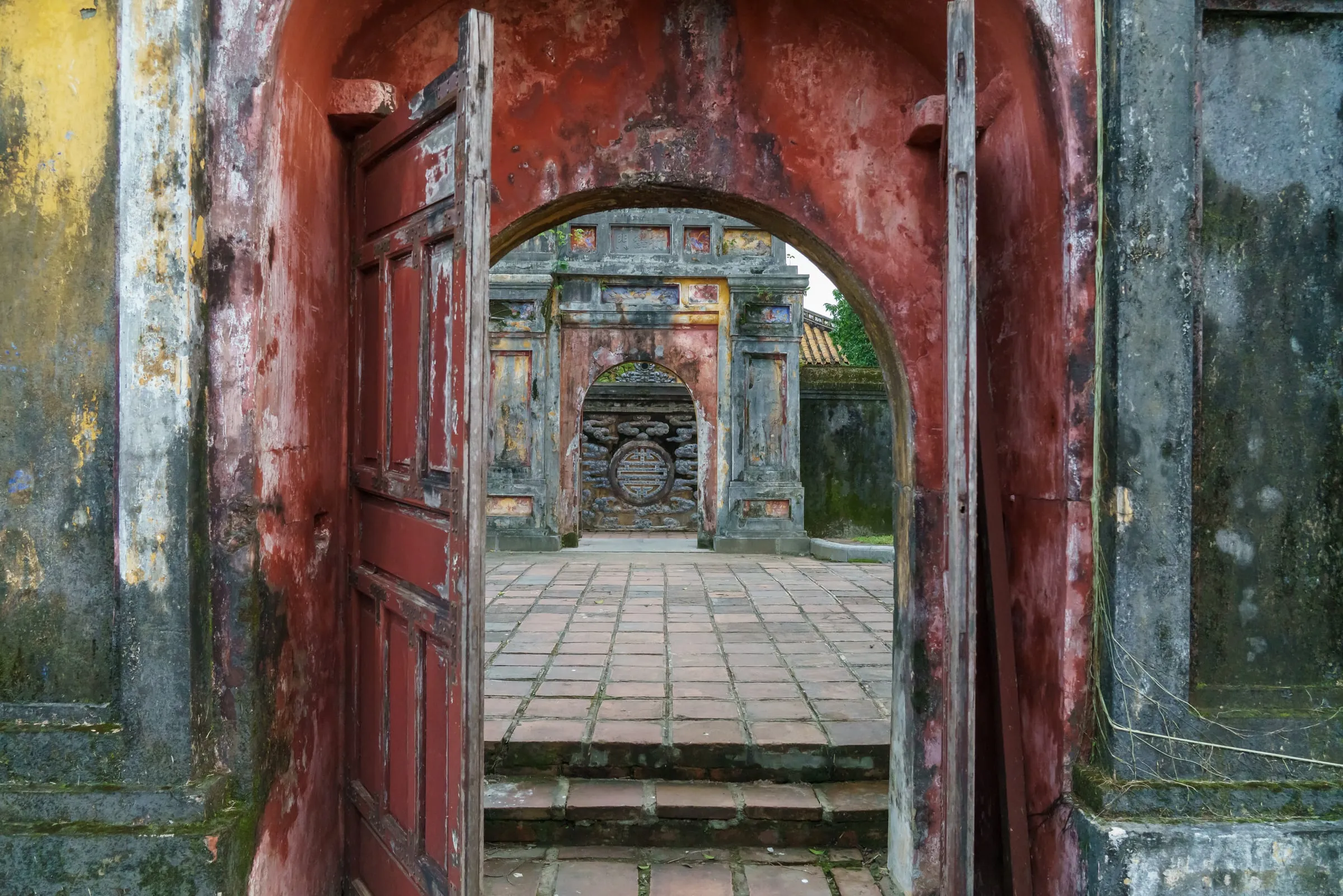
The Citadel of Huế — a city within a city
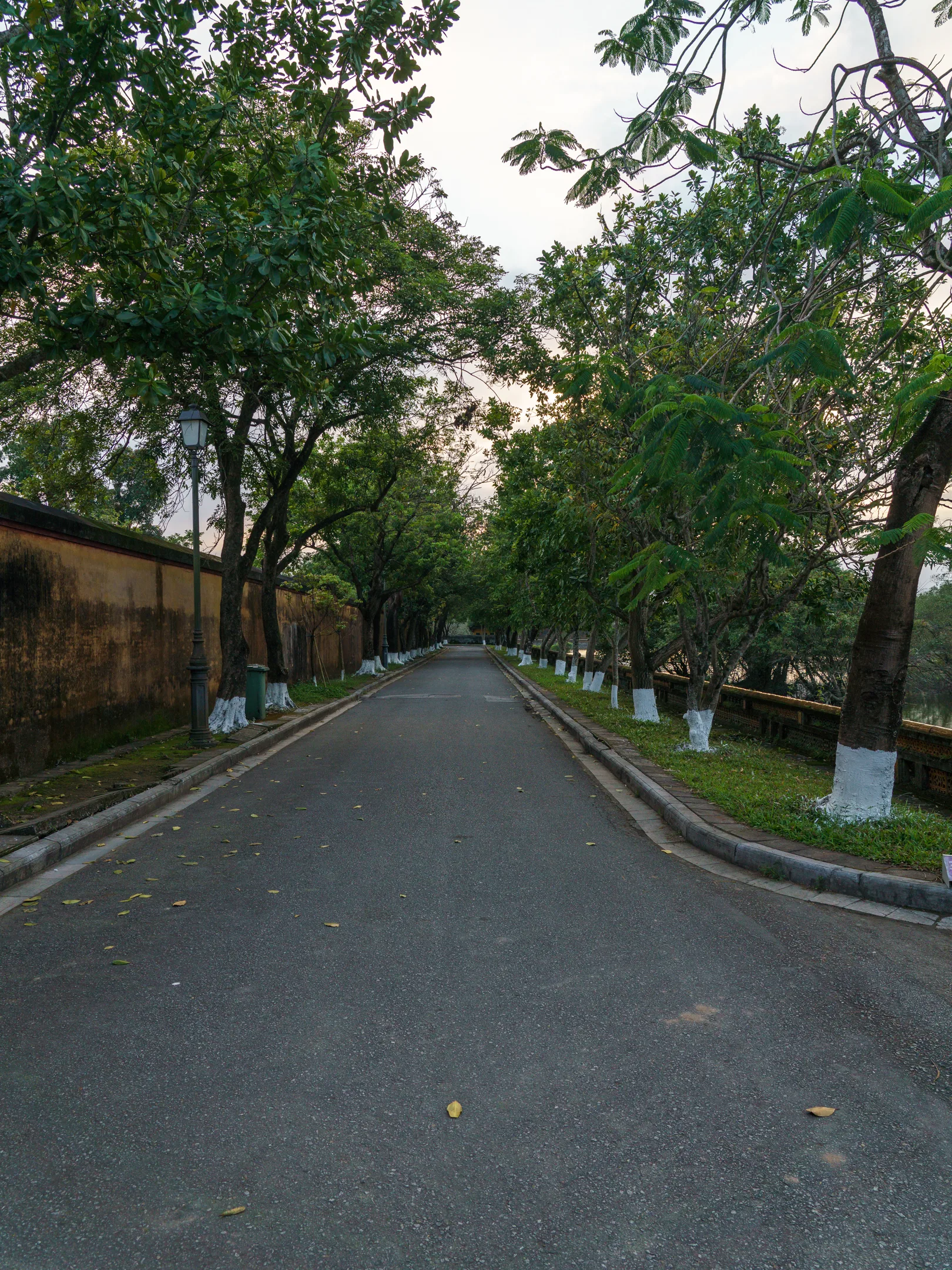
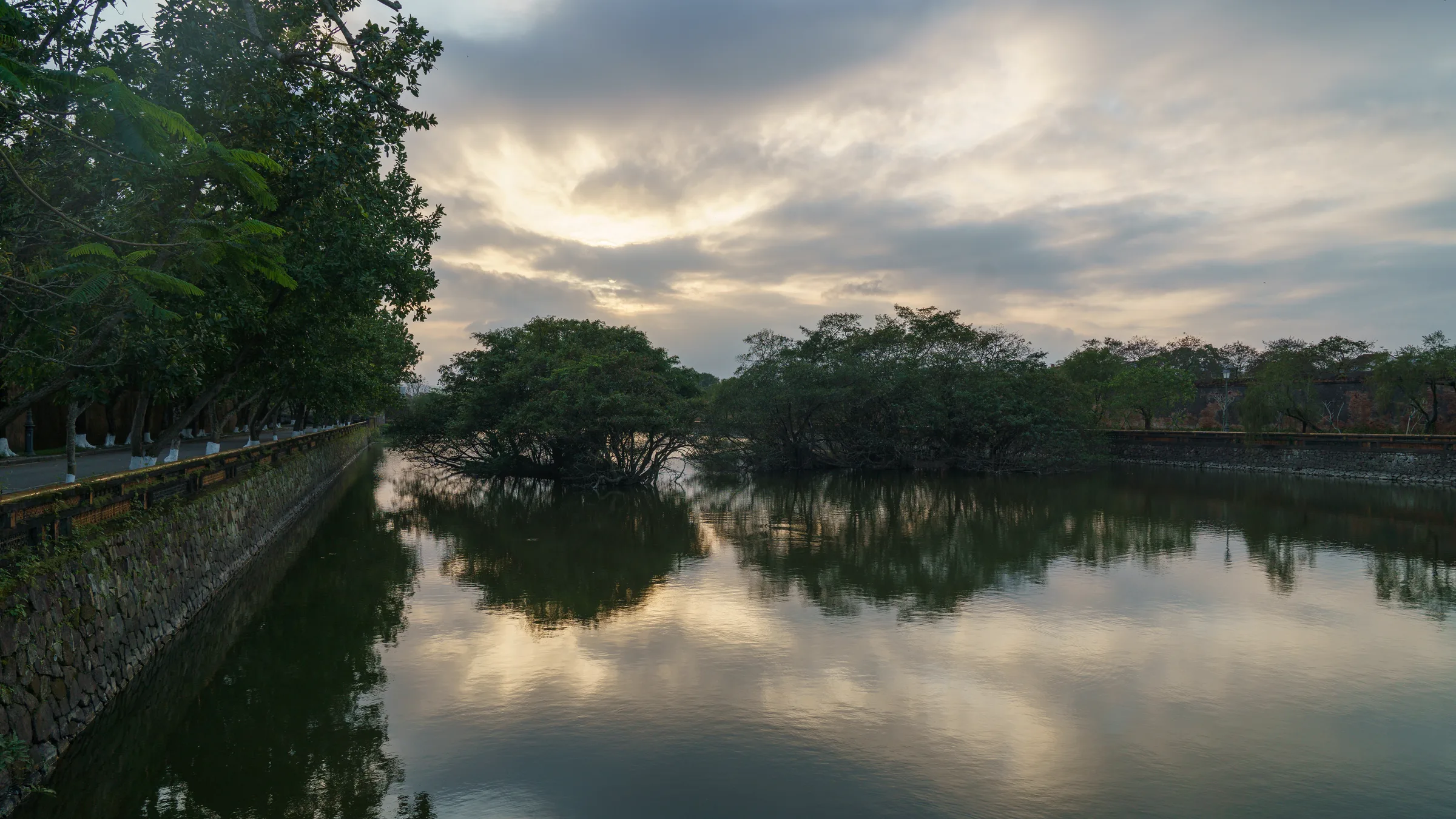
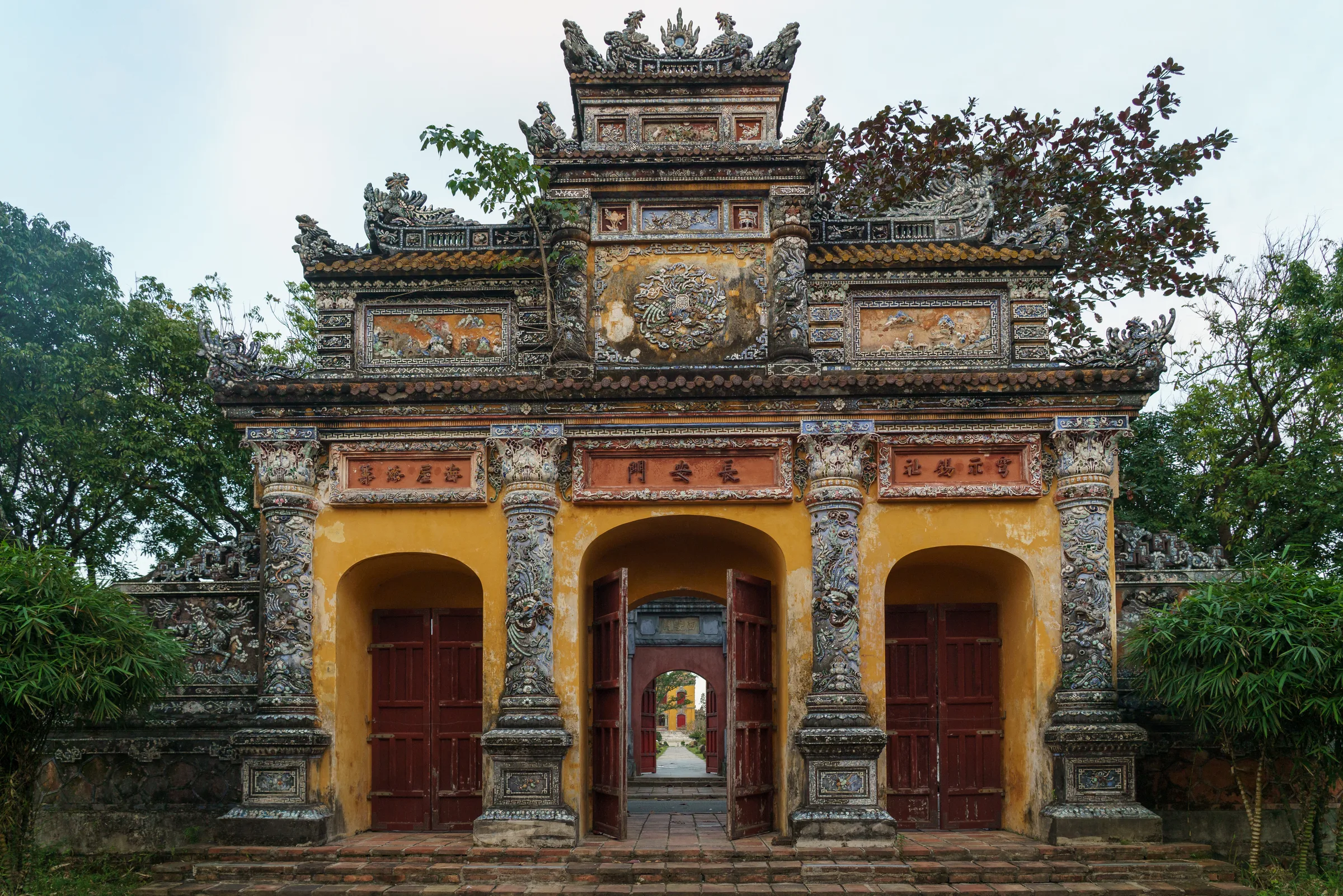
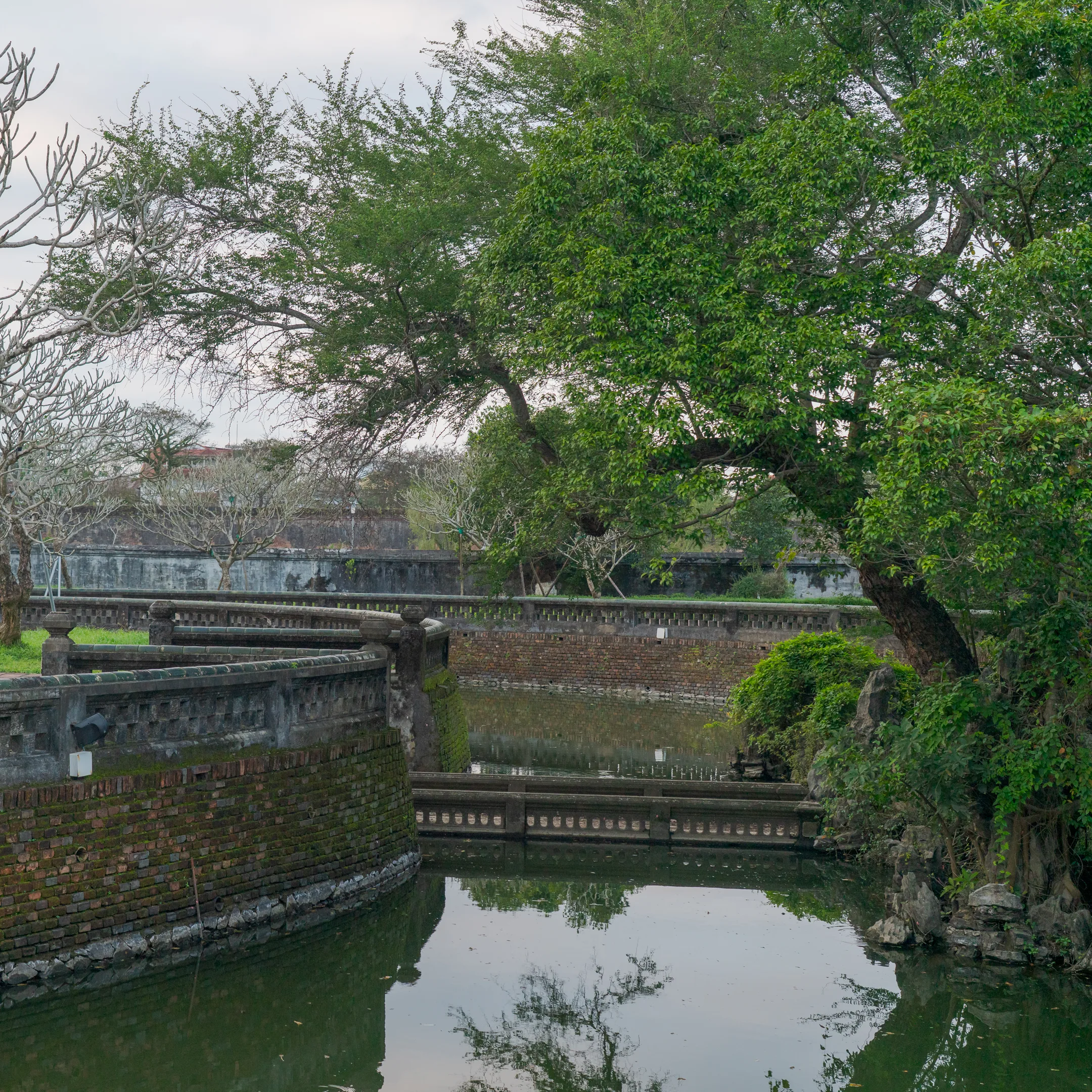
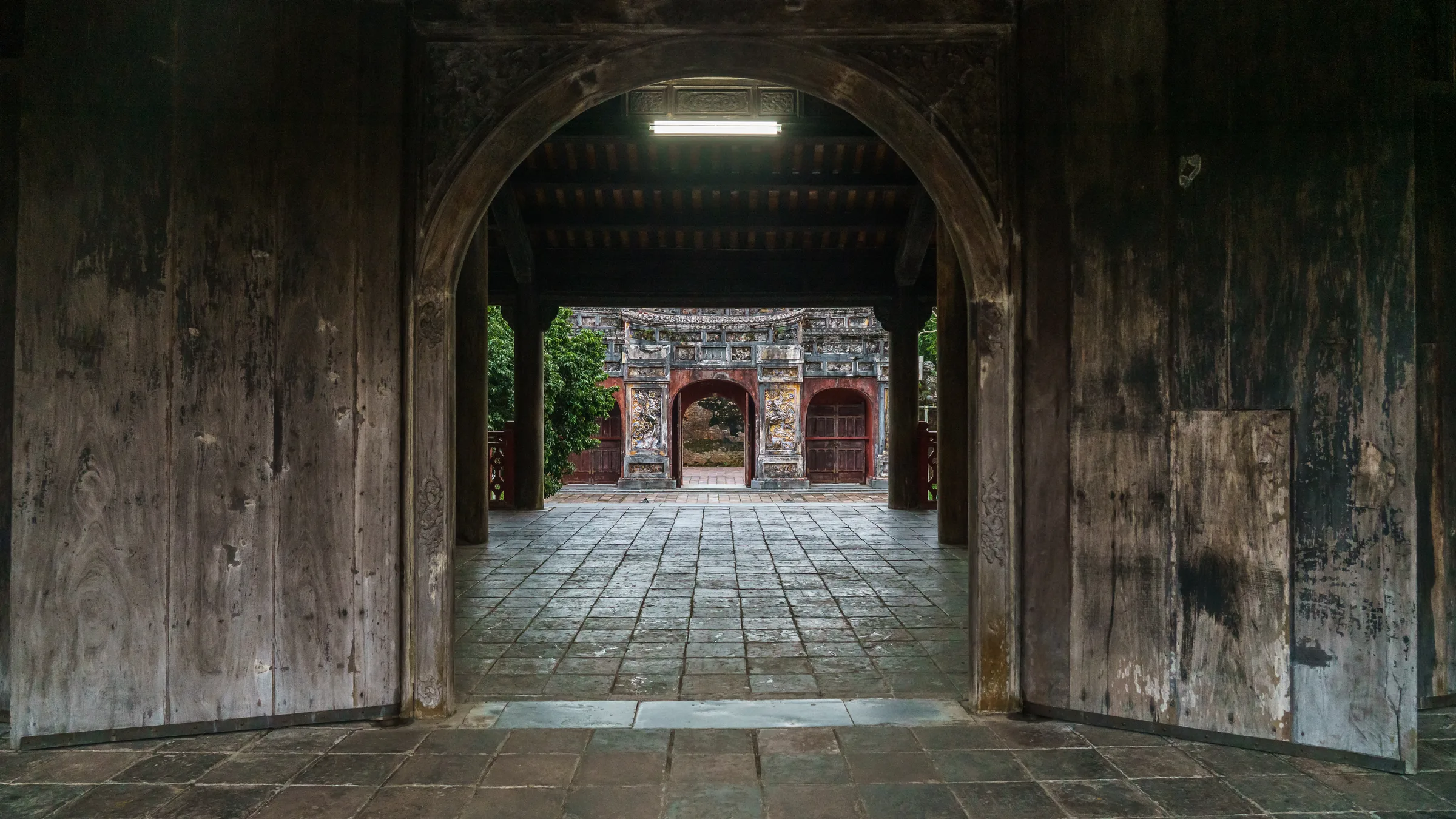
The brick walls are over twenty metres thick at the base. You only really see it when you drive through the gate — you’re not crossing a wall, you’re crossing a building. The perimeter: nearly ten kilometres, ten gates, a moat thirty metres wide.
Huế was the capital of unified Vietnam for just over a hundred and forty years — from 1802, when Emperor Gia Long settled here as the first of the thirteen rulers of the Nguyễn dynasty, until 1945, when the last of them, Bảo Đại, abdicated to the Việt Minh. The citadel took nearly thirty years to build, on a plan borrowed from the Forbidden City in Beijing but with French fortification know-how: the outer walls follow Vauban’s principles, brought to Vietnam by the French officers who served under Gia Long. The best known of them, Olivier de Puymanel, designed the citadels at Saigon (1790) and Diên Khánh — but he died in 1799, several years before construction at Huế began.
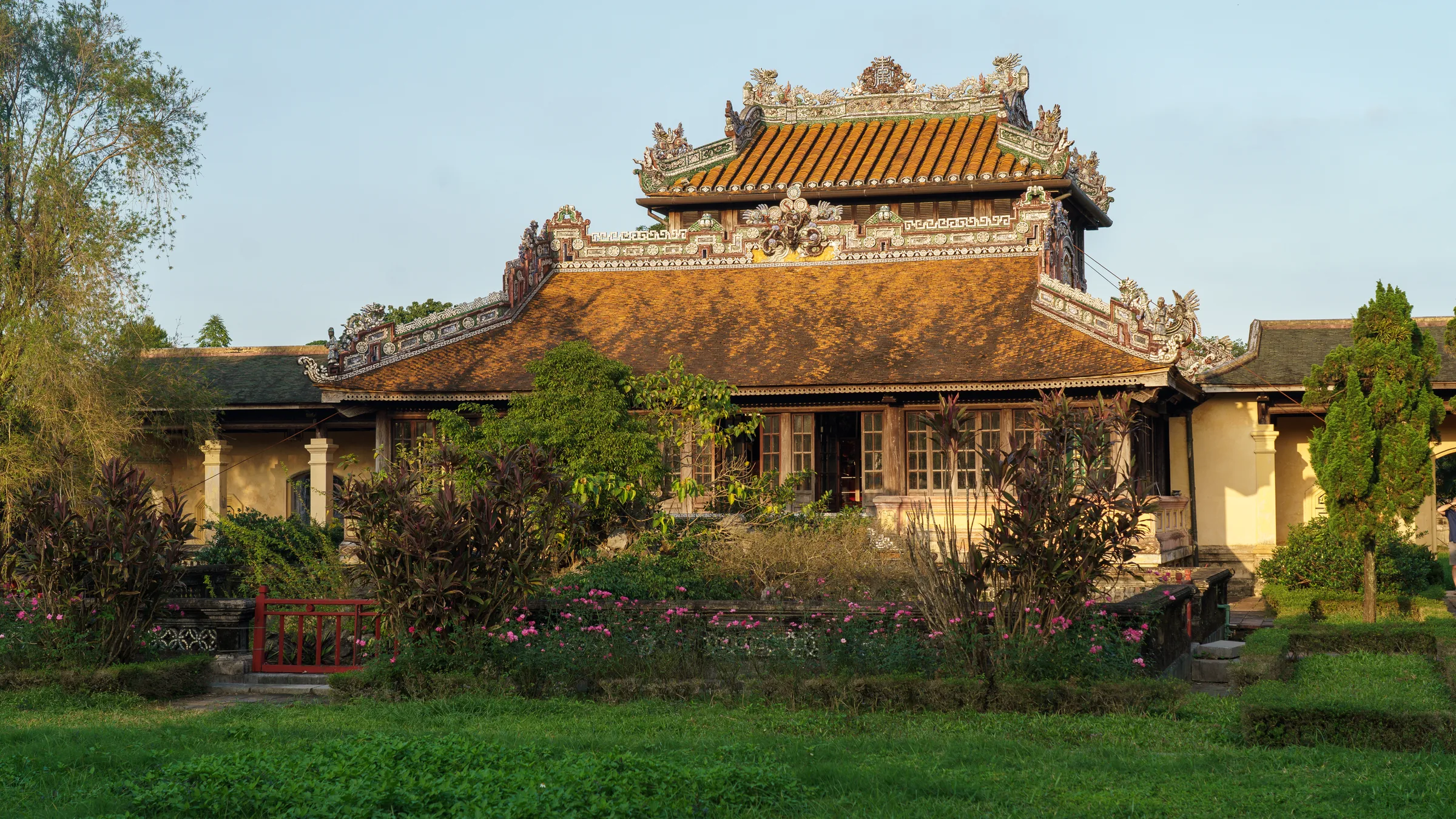
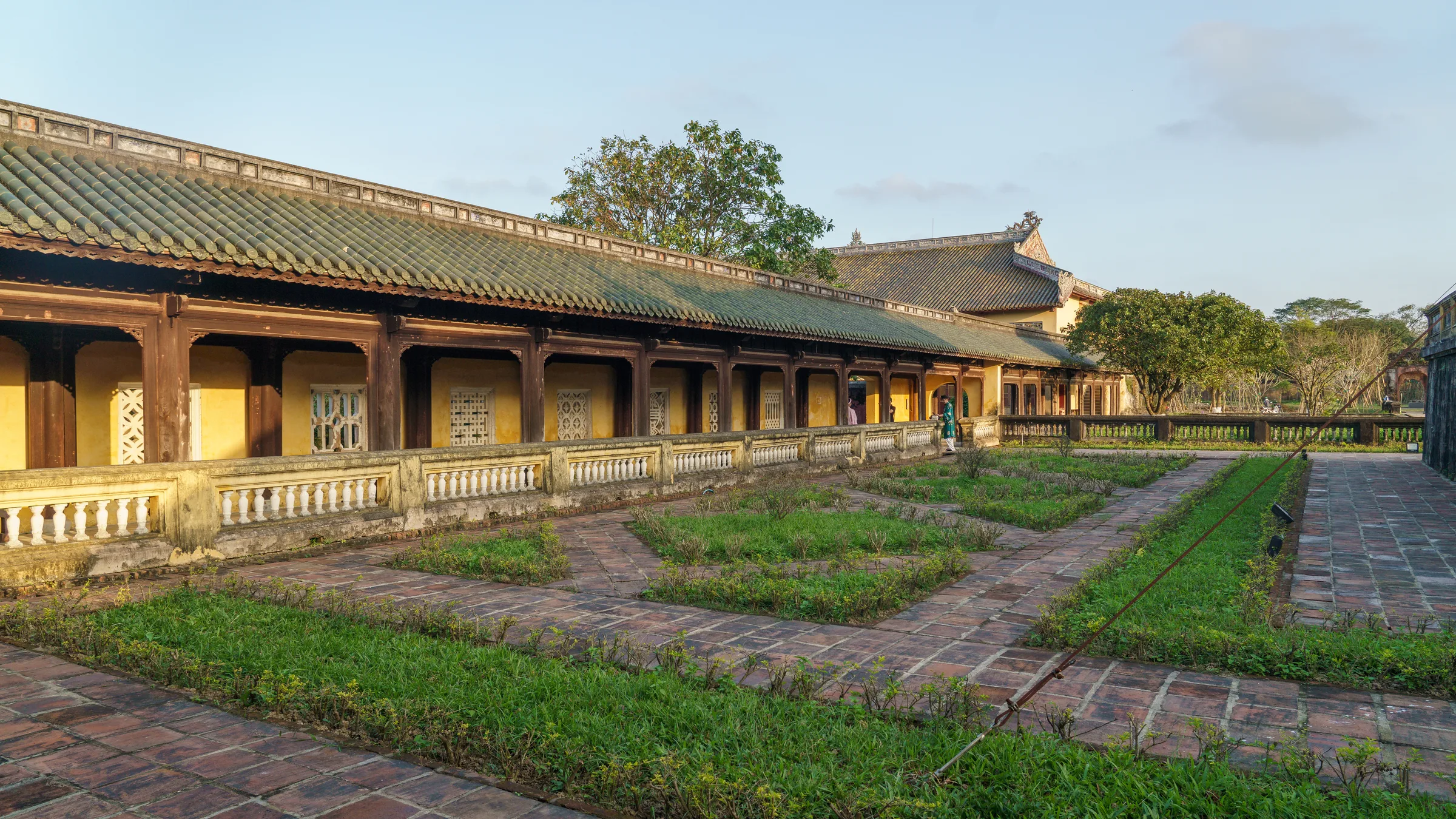
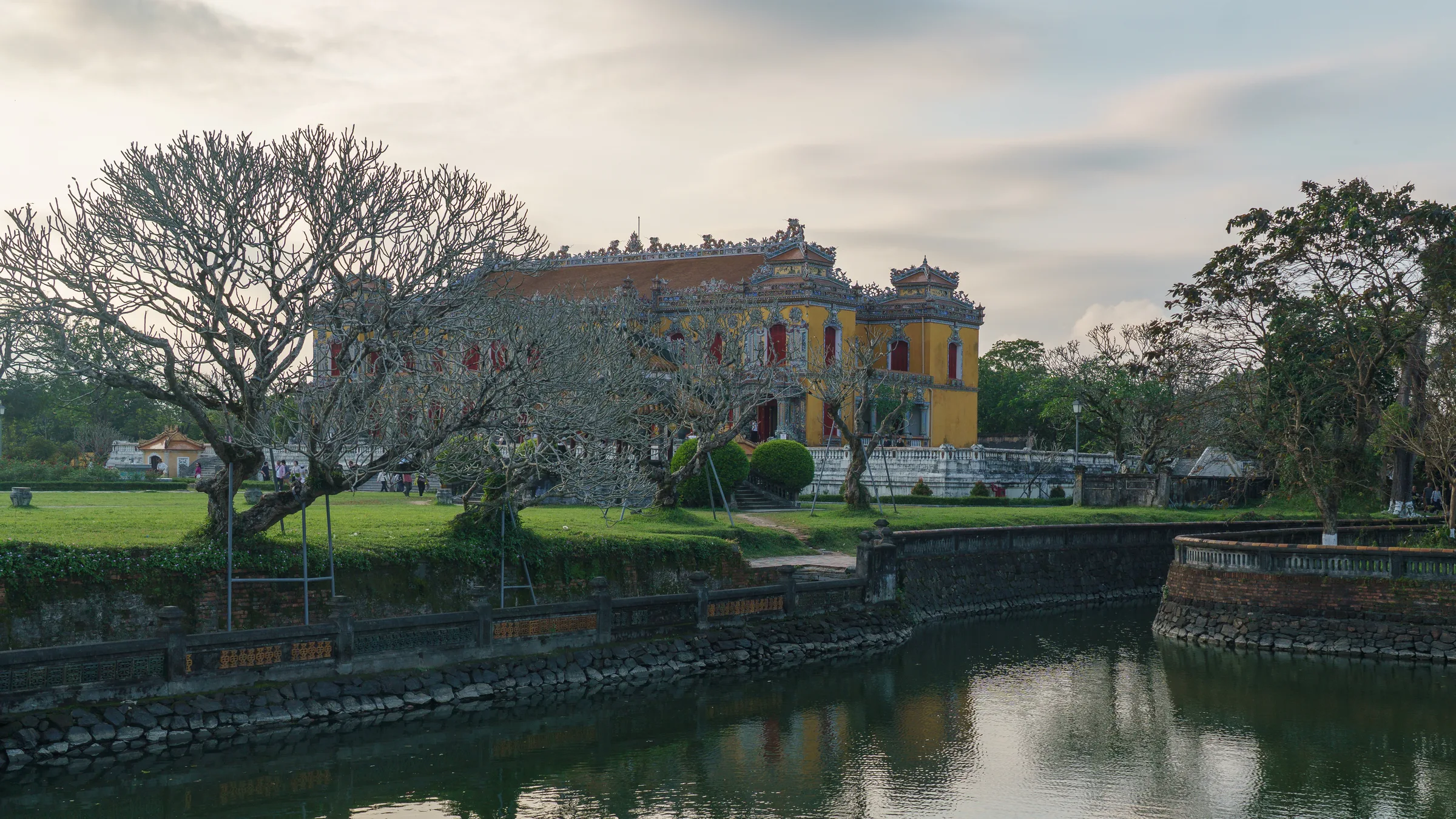
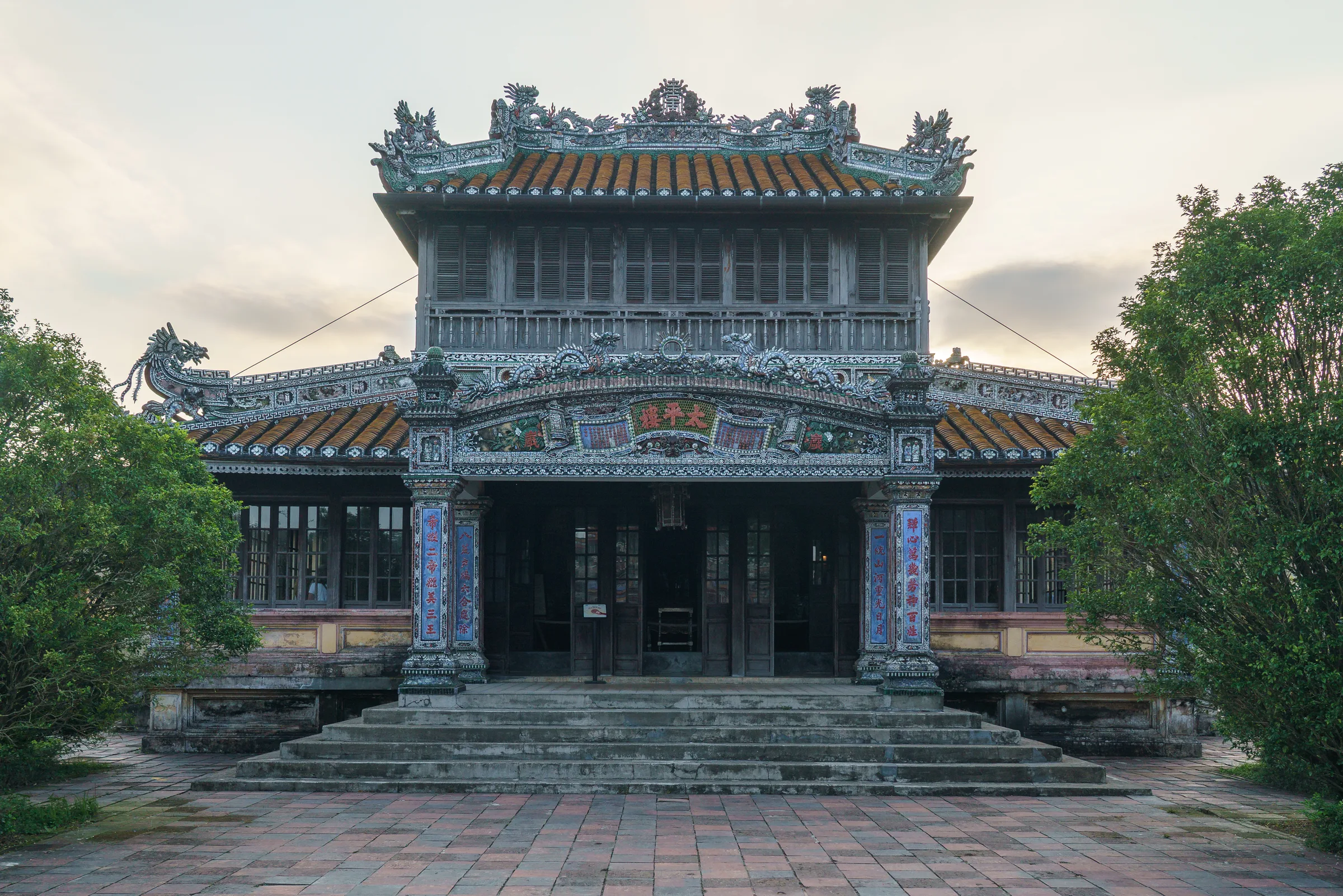
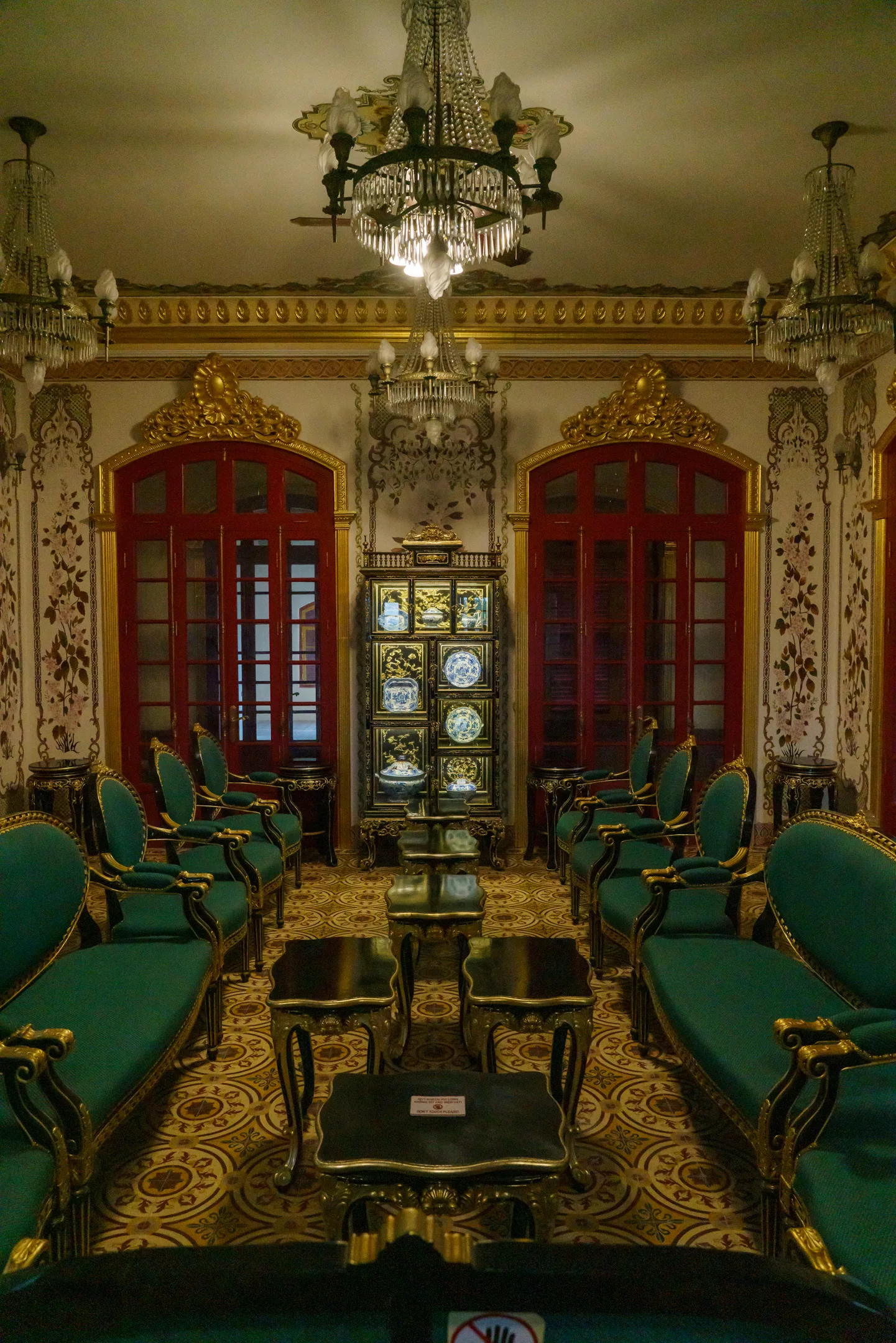
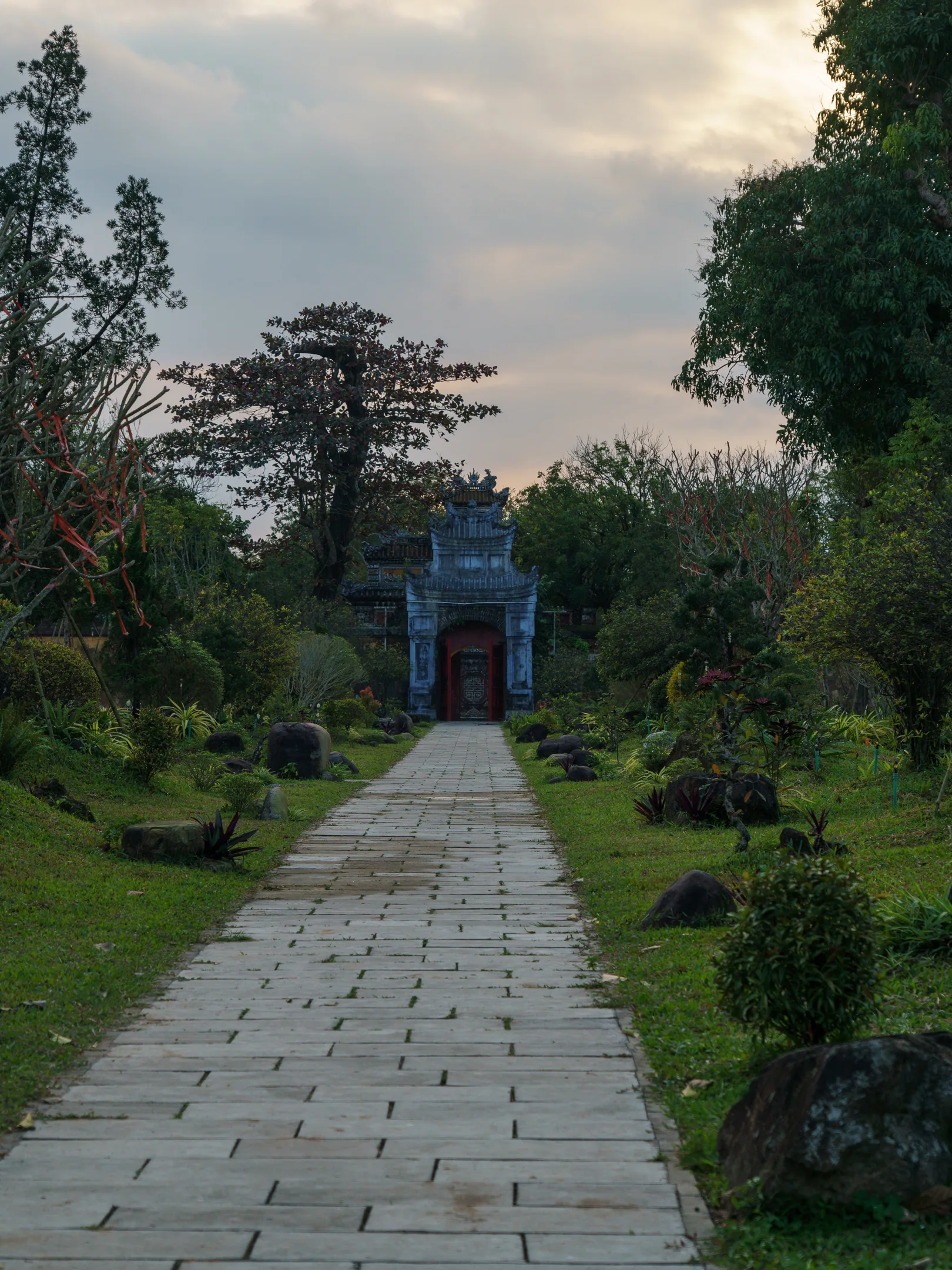
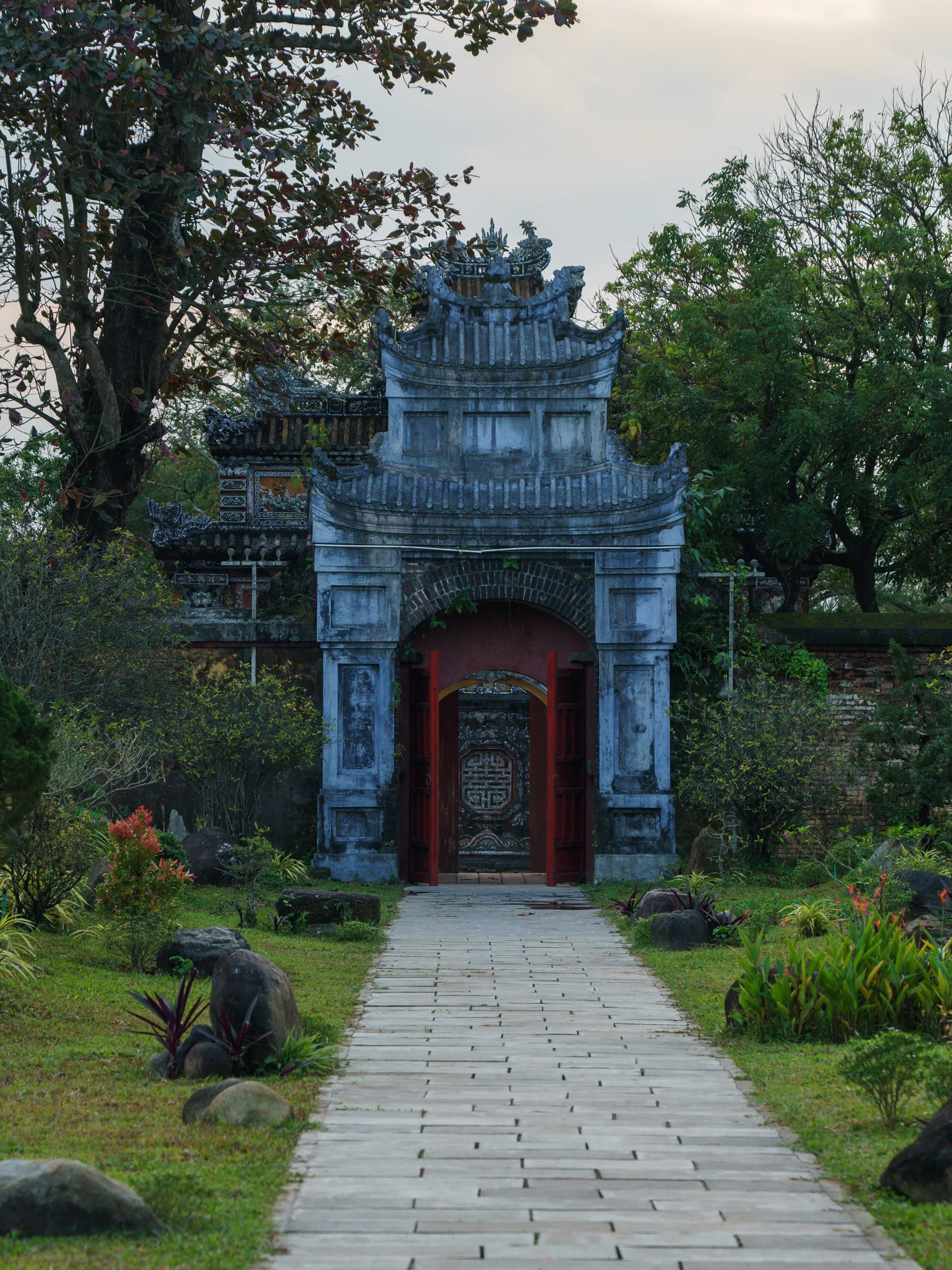
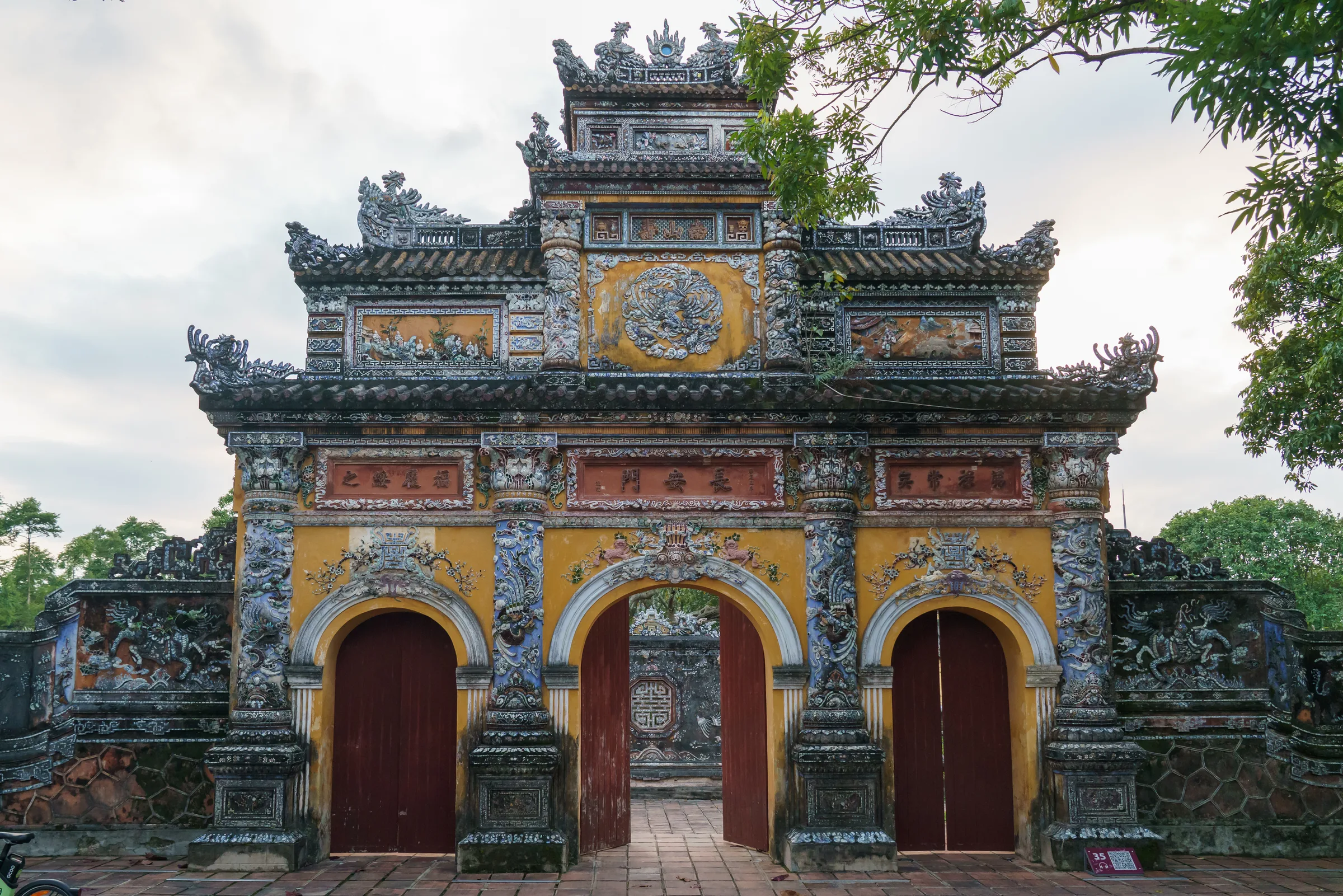
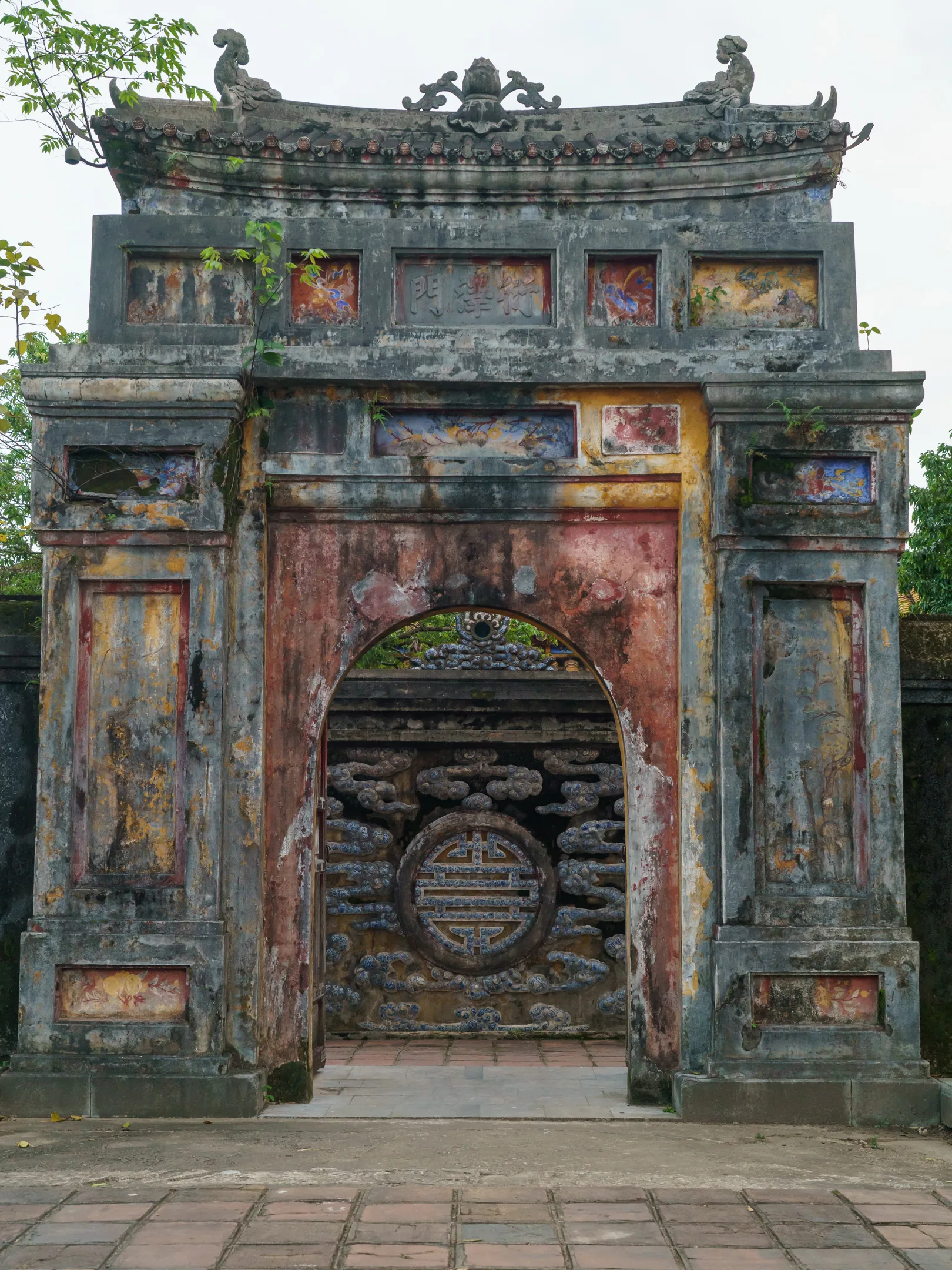
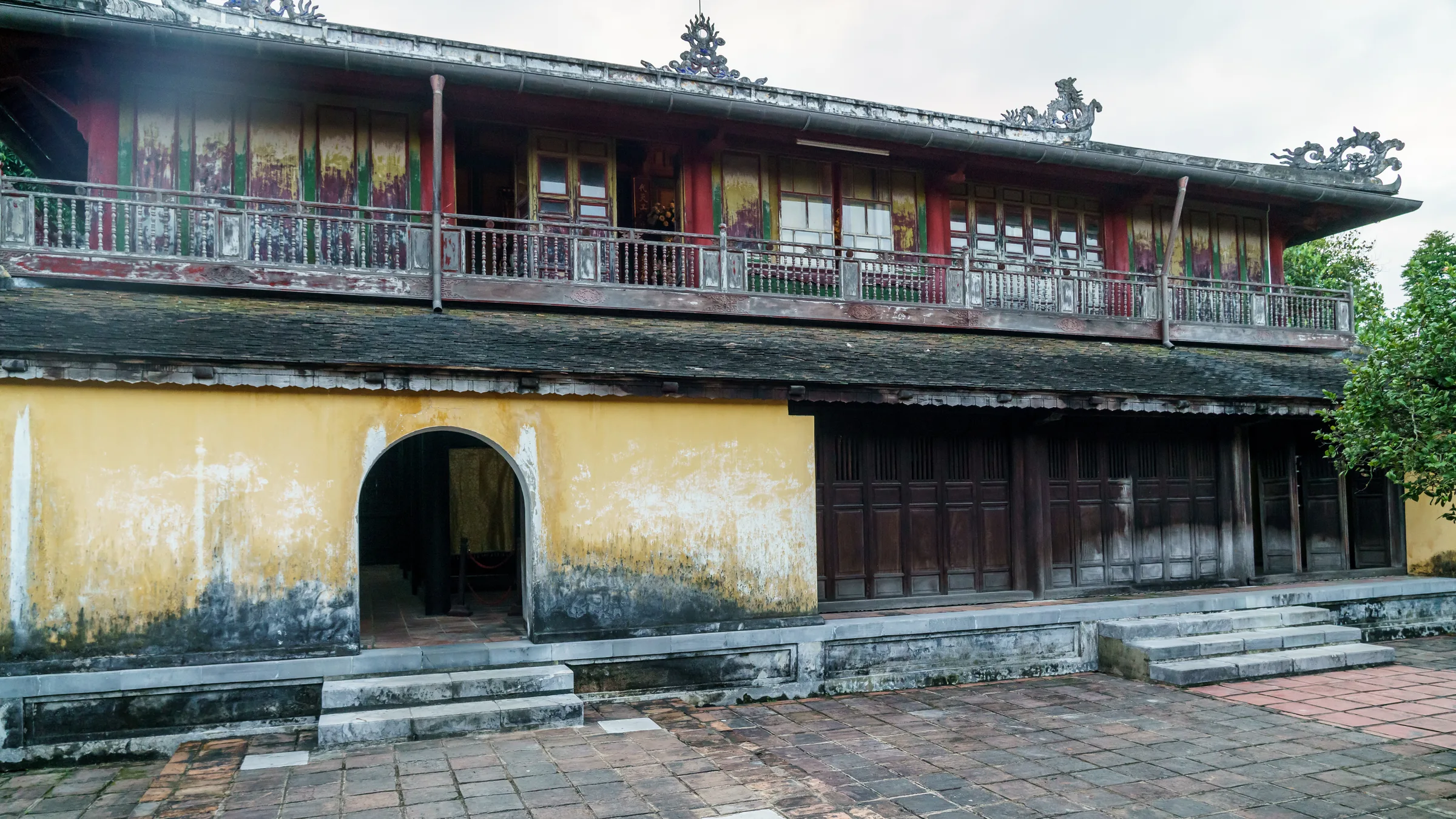
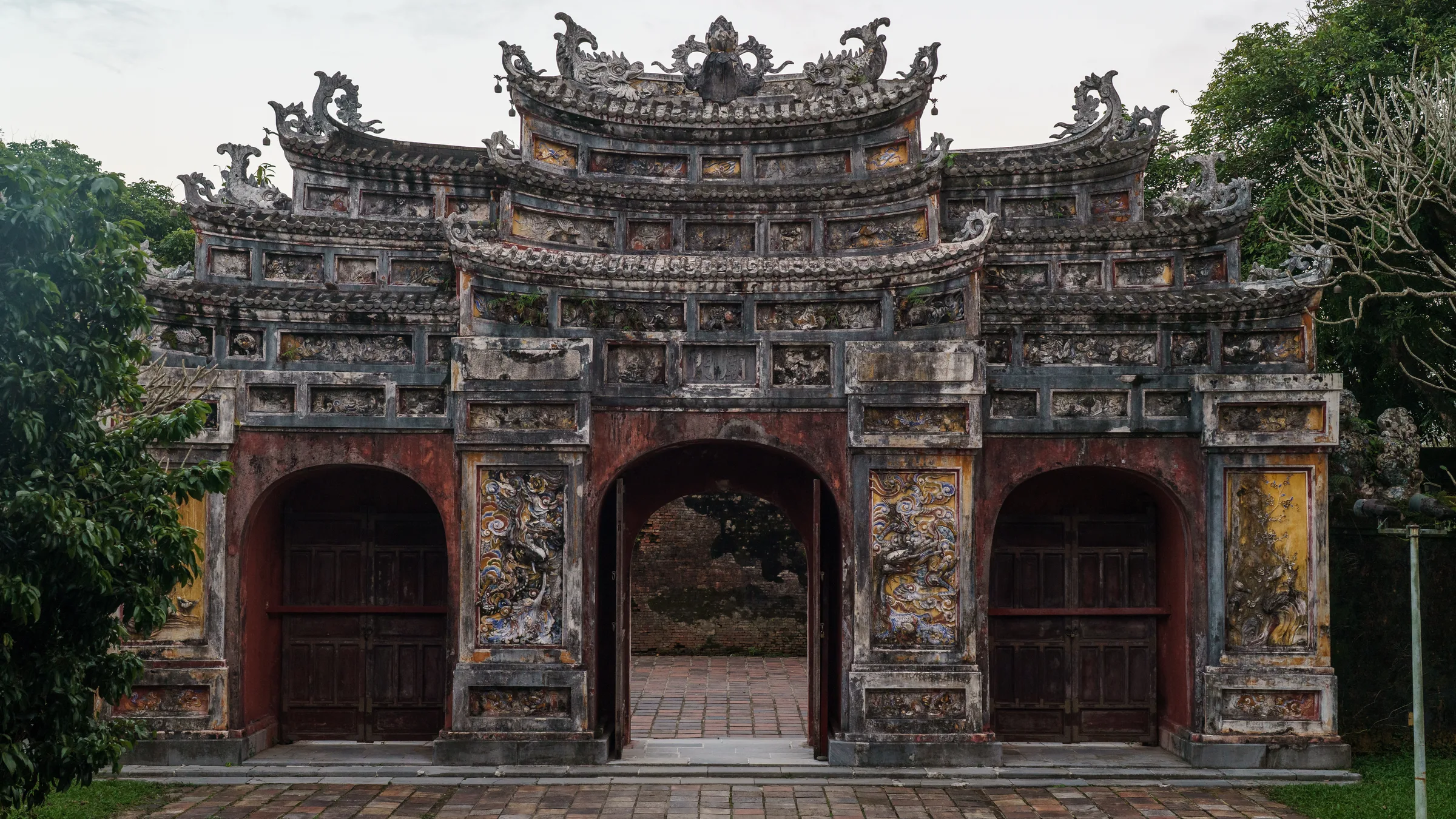
The citadel is only the outer layer. Inside lies Hoàng Thành — the Imperial City, the court residence. And deeper still, Tử Cấm Thành — the Purple Forbidden City, accessible only to the emperor, his closest family, and his staff. Three concentric worlds, each behind its own gate and moat.
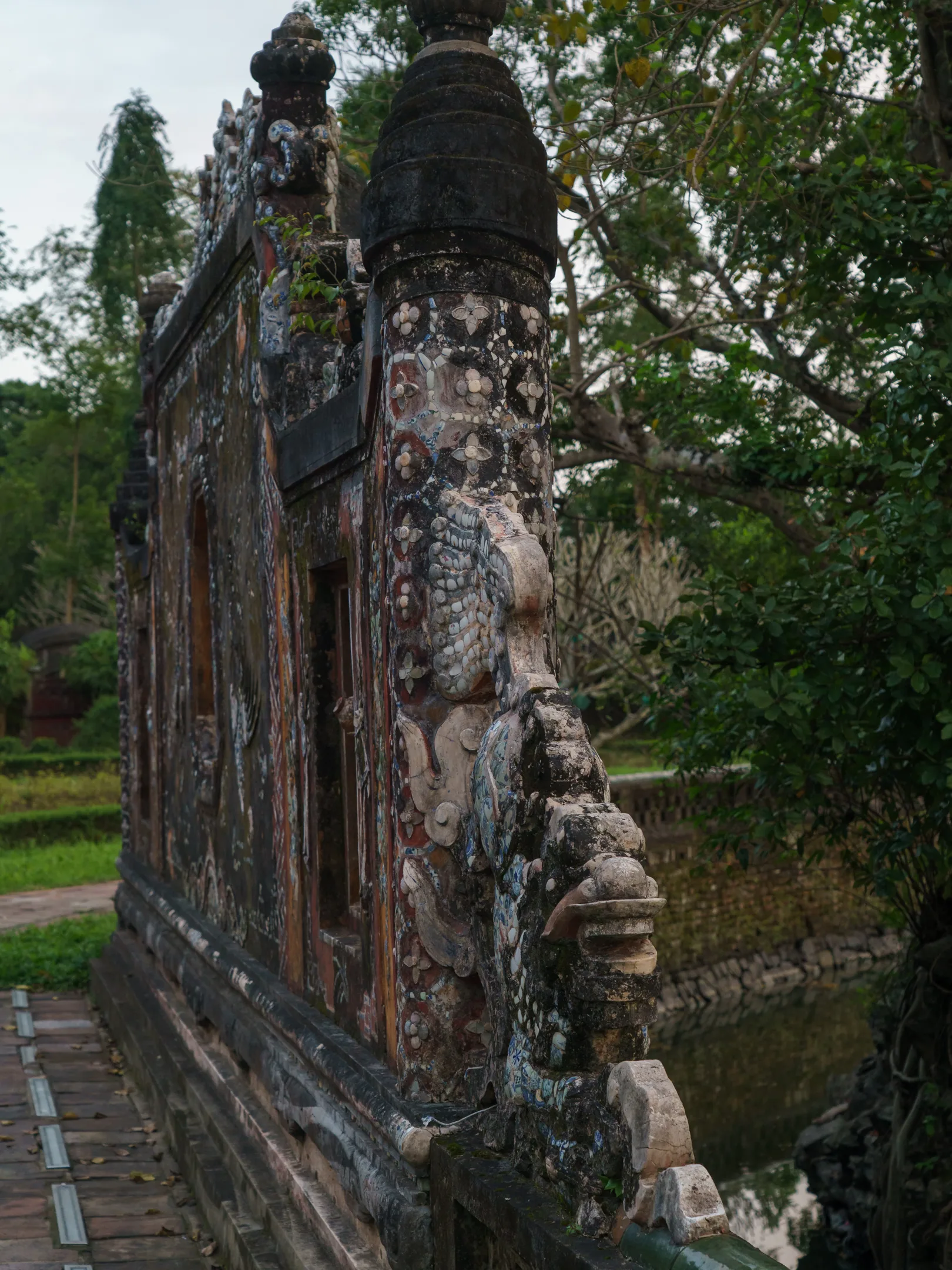
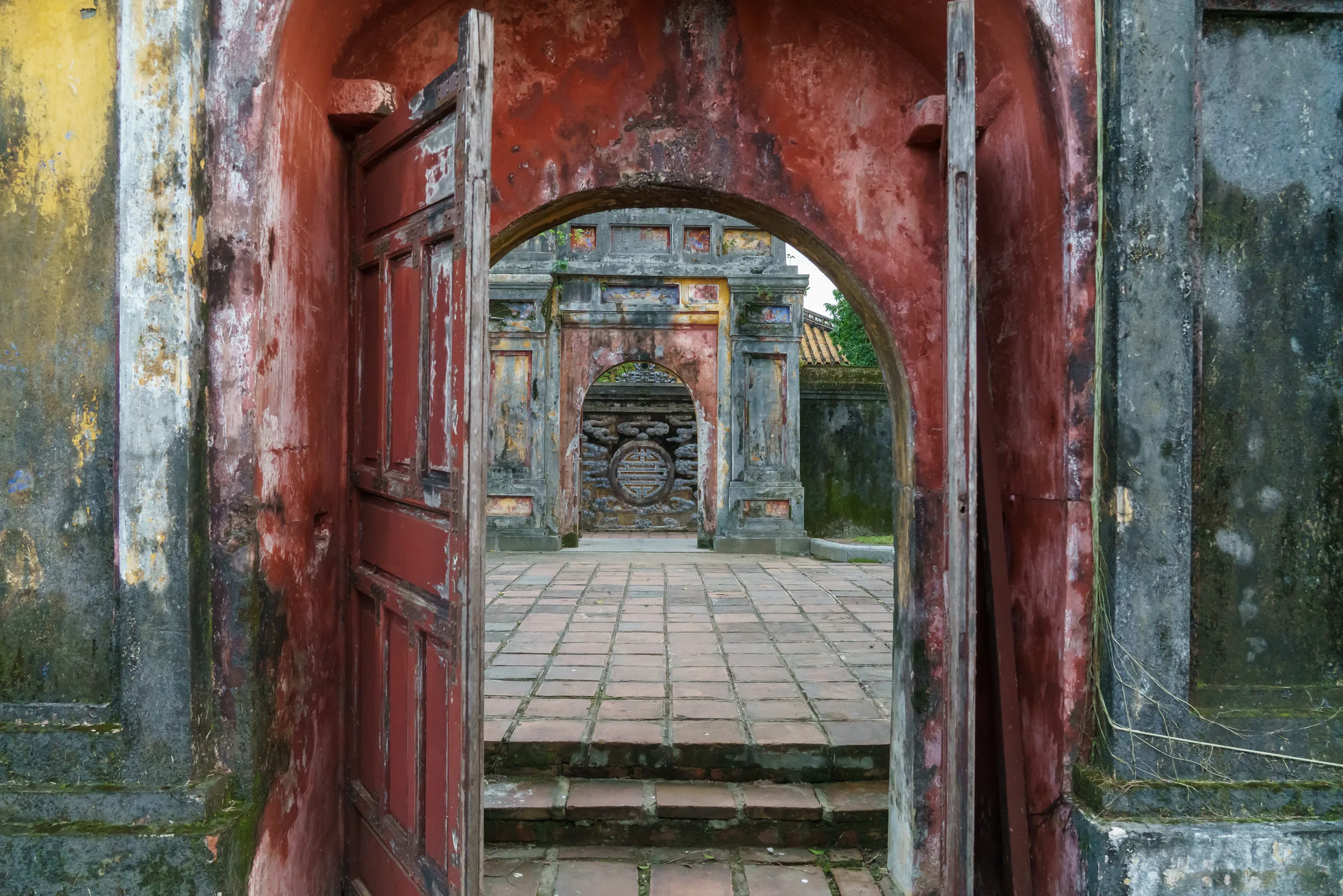
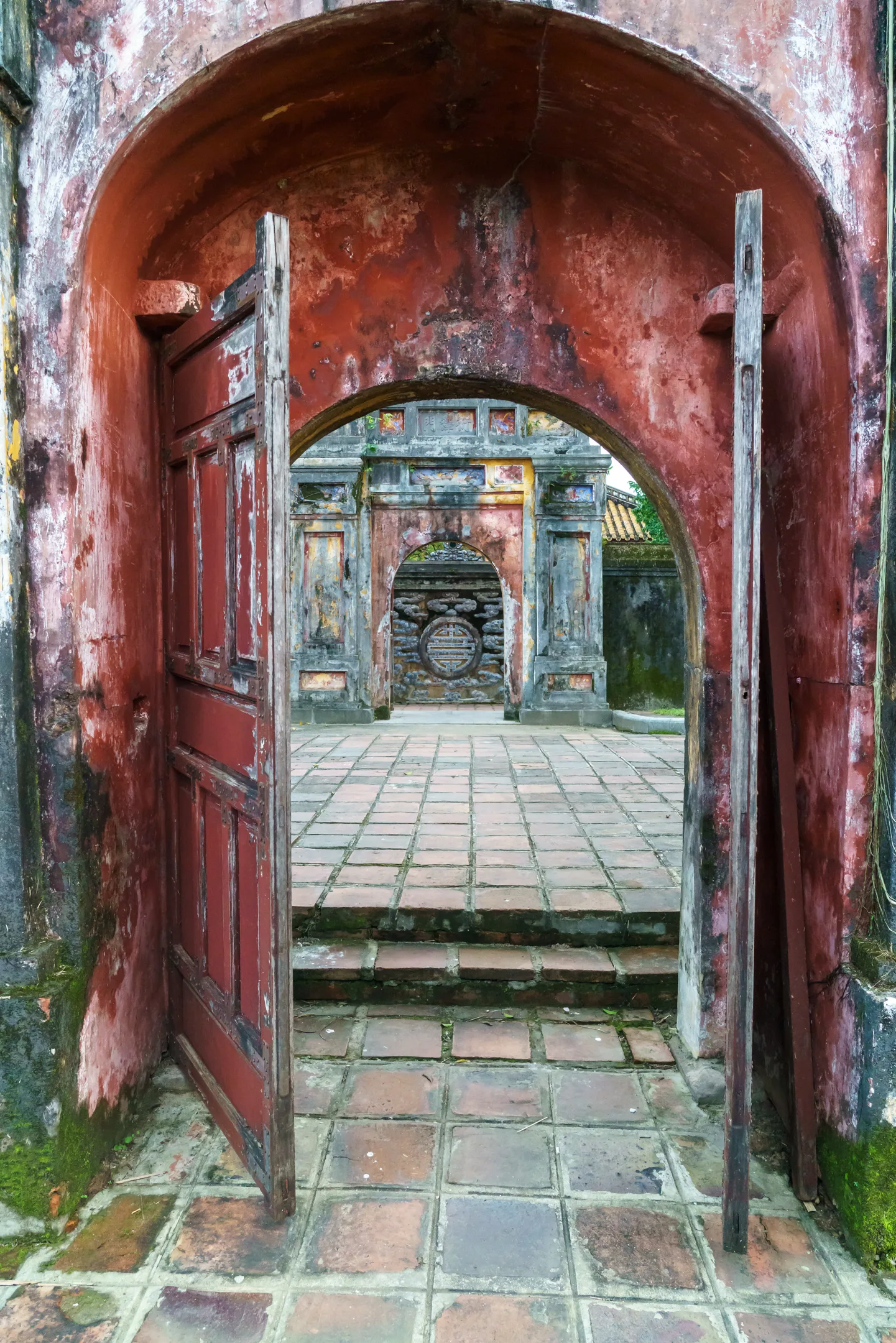
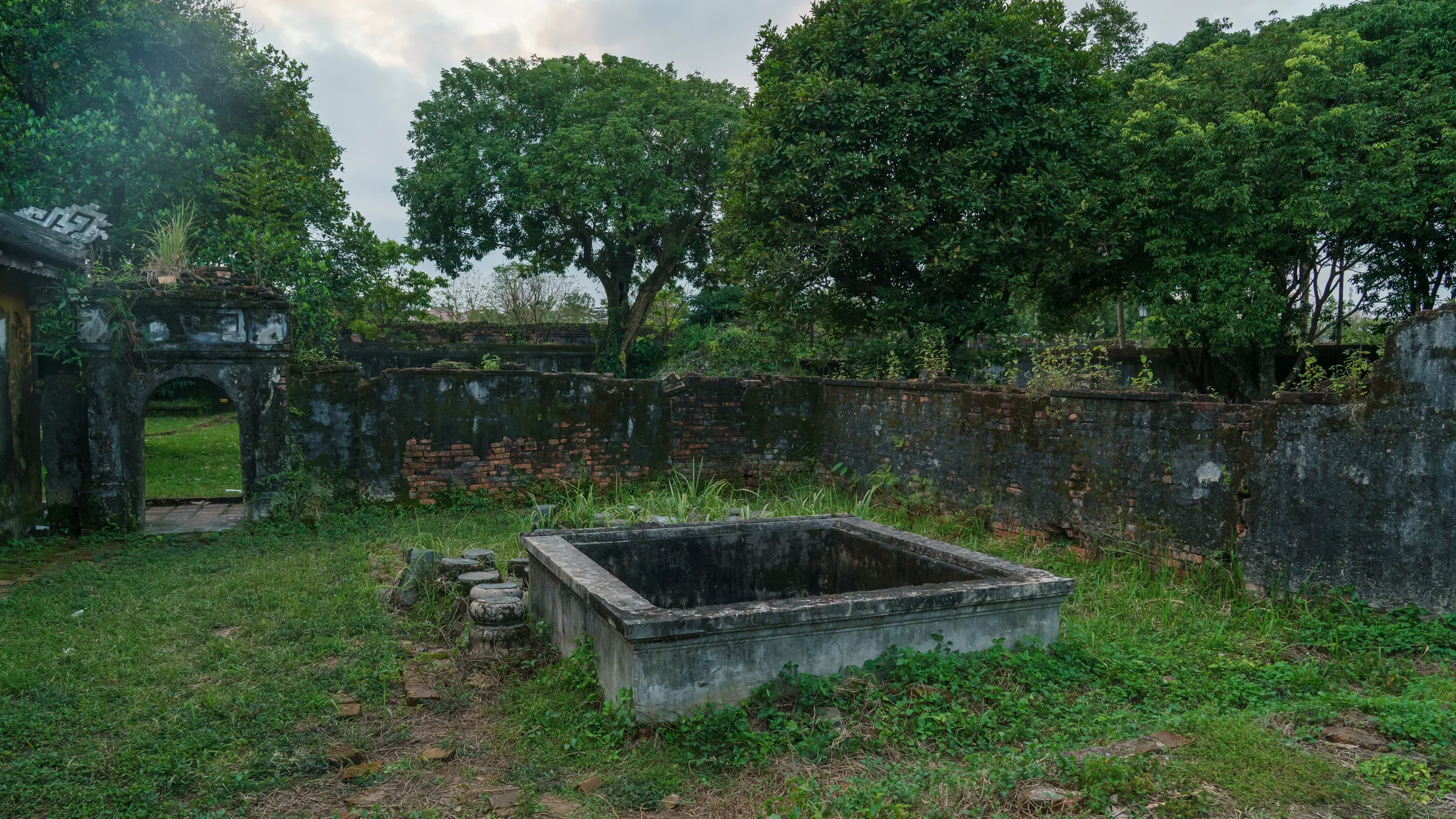
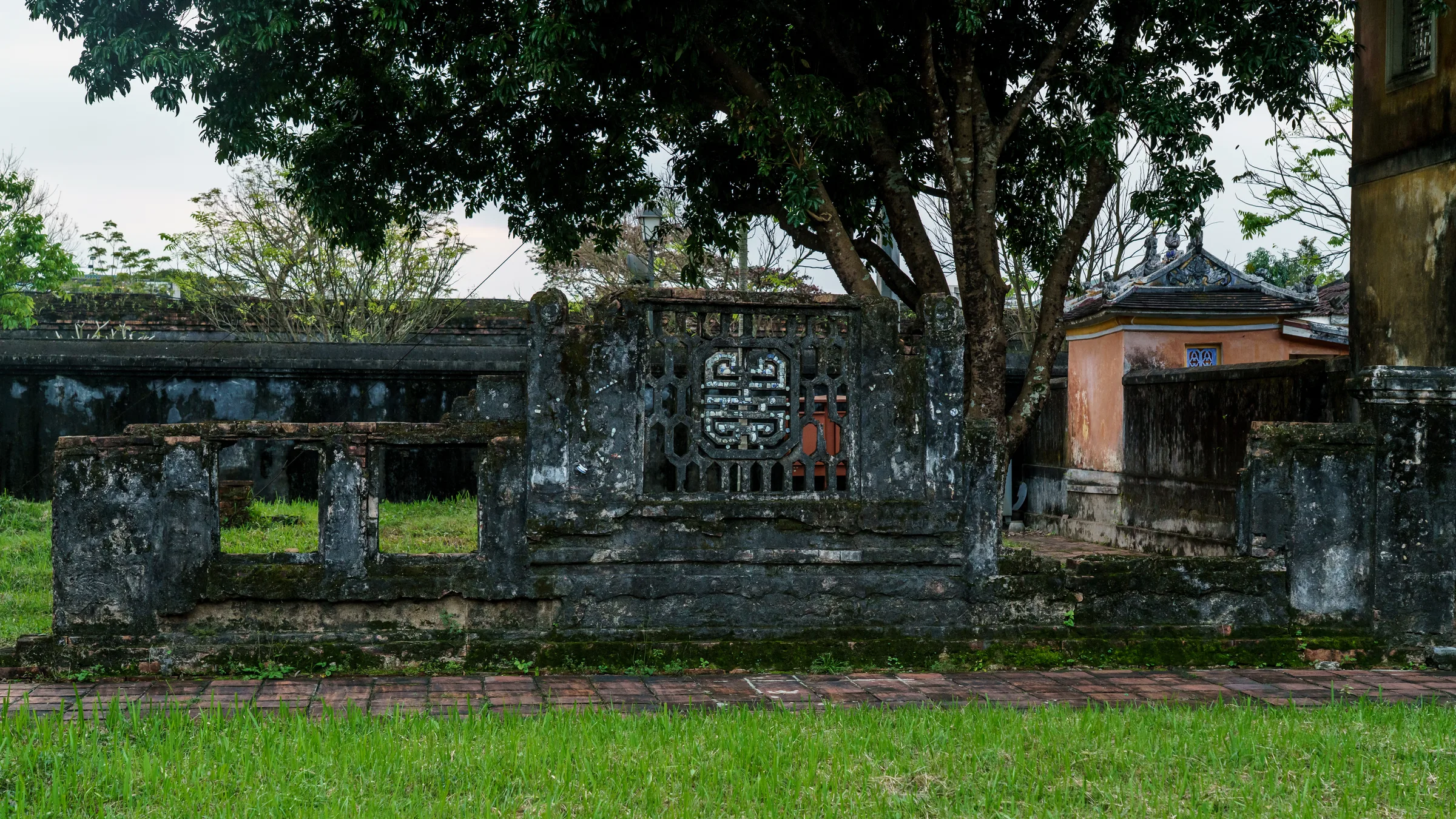
Parts of the complex still lie in ruins. No one tries to hide it, and that’s a good thing — the scorched columns and shards of roof tile remember the Tết Offensive of February 1968. The Battle of Huế lasted twenty-six days and remains one of the bloodiest of the Vietnam War; much of the historic palace complex was levelled in the fighting. The restored palaces are beautiful, but the gaps in the walls are what stay with you. UNESCO inscribed Huế on its heritage list in 1993; restoration has been continuous for over two decades.
The imperial tombs lie outside the city along the Perfume River — seven large mausoleums, each a different composition. Khải Định (d. 1925) — the last before the abdication, a mausoleum in black cement and porcelain mosaic, the most European in style. Tự Đức (d. 1883) — the most lyrical, with a lake and a pine pavilion where the emperor wrote poetry. Minh Mạng (d. 1841) — the most conservative, Confucian symmetry in classic form.
The Perfume River (Sông Hương) — the name comes from the flowers of trees growing upstream from Huế that drop into the water in autumn. In the evening, women on boats sing nhã nhạc, traditional court music (UNESCO, 2003). Huế cuisine is its own subject — it was the imperial menu, so beyond the ubiquitous bún bò Huế it contains dozens of dishes that exist nowhere else.
It’s best to enter the citadel in the morning, before the tour groups arrive. By the western gate a woman with a cart sells coffee in plastic cups. Recommended.
Gallery